




There is a strange idea hiding in one of the most famous books about evolution: perhaps some of the things living inside a human mind are not entirely its own. Not memories, not neurons, not some literal creature behind the eyes, but ideas, words, melodies, habits, stories and beliefs, that reproduce by moving from one human mind to another. The man who proposed the idea was not a mystic or an internet theorist. He was evolutionary biologist Richard Dawkins, writing in the final chapter of The Selfish Gene in 1976. He gave the thing a name: the meme.
That origin story is real. So is what happened afterward. The meme became the foundation for an entire intellectual movement called memetics, and some researchers pushed Dawkins’s analogy far beyond his original proposal, eventually asking whether the self itself might be little more than a coalition of cultural replicators pretending to be a person. Psychologist Susan Blackmore gave that idea one of its most provocative formulations. She called the resulting structure the selfplex: a collection of memes that has learned to behave as though there is a single “I” at the center of it all.
But there is another part of the story that is much easier to miss. Memetics never became an uncontested scientific revolution. Its dedicated journal closed in 2005. One of its own contributors published a final assessment arguing that the gene-meme analogy had failed to deliver the scientific substance its advocates hoped for. Another academic critic dismissed memetics as pseudo-scientific dogma. The idea survived, evolved and escaped into popular culture, but the strongest version of the claim remains deeply disputed.
So the question is not whether a tenant sits behind the eyes. There is no established scientific evidence for one. The more interesting question is how a metaphor about cultural transmission became a theory about the nature of the self, and why serious scholars still disagree about how far that metaphor can legitimately be taken.
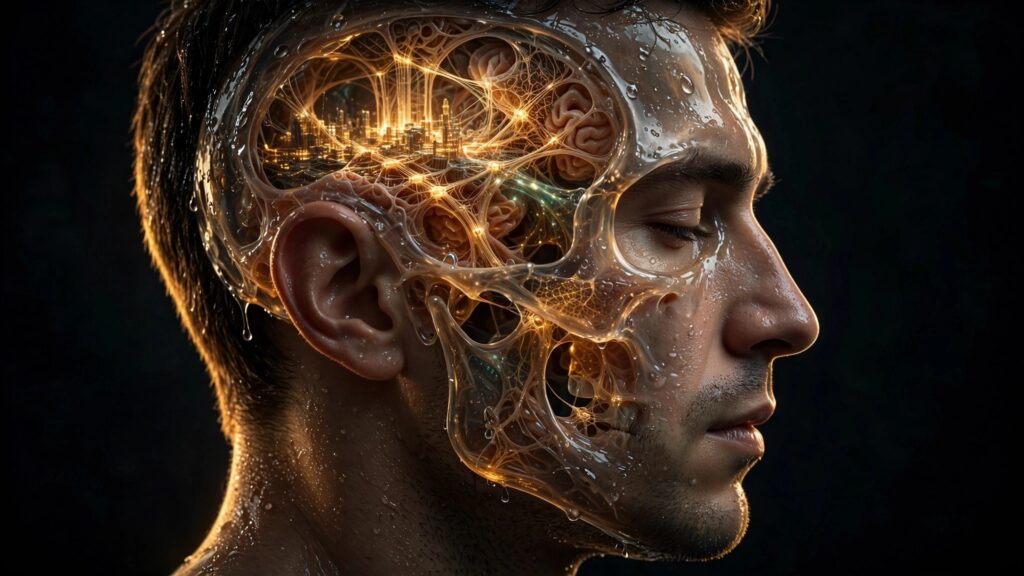
The Idea Started With a Metaphor
To understand what Dawkins actually proposed, it helps to go back to the argument he was making in The Selfish Gene. The book’s central move was to shift the usual perspective on evolution. Organisms behave as though they are the protagonists of natural selection, but Dawkins argued that genes provide the more fundamental unit of selection: information capable of being copied, preserved and passed into future generations. Bodies become the vehicles through which those replicators survive.
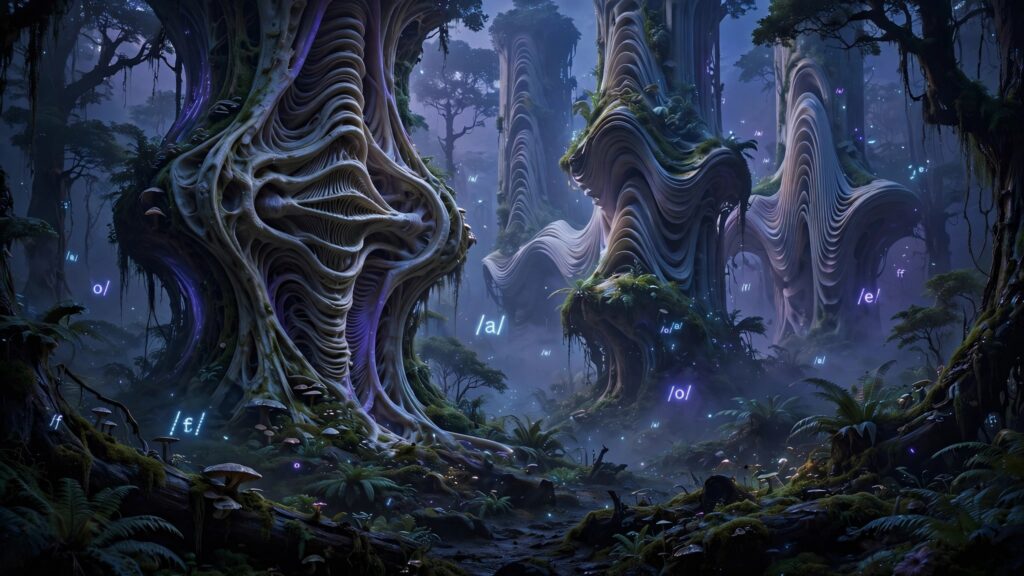
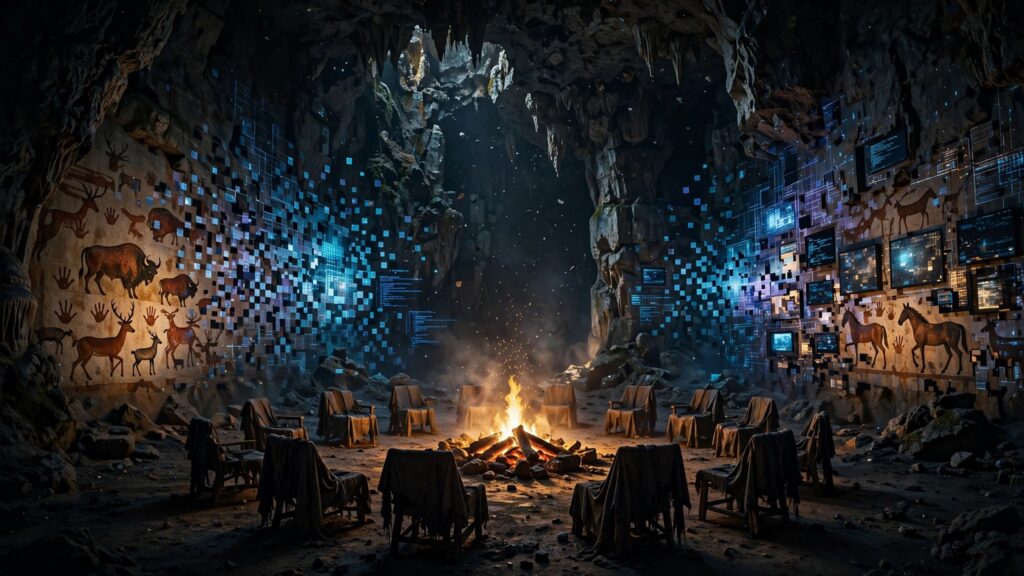
Then, almost at the end of the book, Dawkins made a remarkable conceptual leap. If natural selection rewards information that can reproduce, why assume DNA is the only possible medium? Human culture appeared to contain things that behaved, at least metaphorically, in a similar way. A tune could be copied. A phrase could be repeated. A custom could pass from one generation to another. An idea could enter one person’s mind, survive there long enough to be communicated, and then appear in another.
Dawkins called these cultural replicators memes. The word was deliberately chosen to echo “gene,” while drawing on the Greek idea of imitation, built from mimeisthai, to imitate. His original proposal was not that scientists had discovered tiny independent organisms living inside human brains. It was an attempt to ask whether the logic of replication and selection might apply outside biology as well. The metaphor was doing conceptual work: if information can reproduce, perhaps information can evolve, not the kind of literal foreign presence explored in the site’s own split-brain research piece.
That distinction matters because the popular version of the idea eventually became much stranger than the original. Dawkins gave the world a way of talking about how ideas spread. Others began asking whether the ideas themselves might be the real actors, and whether human beings were merely the environments in which those actors competed.
Then Susan Blackmore Asked Who Was Actually in Charge
Psychologist Susan Blackmore took the meme idea considerably further. In her 1999 book The Meme Machine, published with a foreword by Dawkins, she developed the argument that memes could be understood as replicators in their own right, competing for opportunities to be copied through human culture. Language, imitation, fashion, rituals, technologies and other cultural patterns could therefore be viewed not merely as things people possessed, but as patterns with their own reproductive interests.
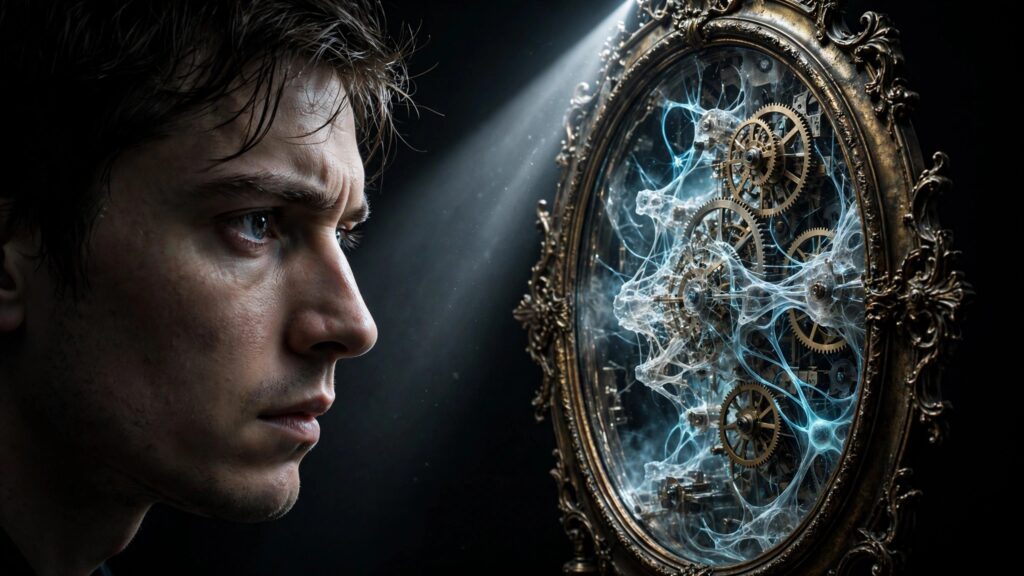
From there comes the unsettling part. If the human mind is filled with replicating cultural information, perhaps the thing experienced as a single, coherent self is not quite what it appears to be. Blackmore called this structure the selfplex: a collection of memes that has become organized around the idea of a person who owns them. The sensation of being a single enduring “I” could therefore be understood as part of the system rather than as evidence of some separate executive sitting behind the controls.
Blackmore pushed the argument into deliberately uncomfortable territory, including the claim that when the selfplex dissolves, there is no substantial “I” left behind to defend. That is a serious philosophical position, worth treating as one. But it is not the same thing as saying neuroscience has discovered that a foreign entity operates the brain. The first is a theory about how the experience of self might be constructed. The second would be an empirical claim requiring evidence that does not currently exist.

The Problem Was the Science
This is where the story becomes more interesting than the metaphor. Memetics attracted serious intellectual attention, but it never achieved the kind of settled scientific status its strongest formulations sometimes implied. The Journal of Memetics, the field’s dedicated academic publication, ceased publication in 2005. Bruce Edmonds, one of its contributors, marked the end with an assessment whose title was almost devastatingly direct: “The Revealed Poverty of the Gene-Meme Analogy.”
Edmonds’s criticism went to the heart of the problem. Comparing memes to genes is intuitively powerful, but analogy is not automatically mechanism. Genes have a physical substrate, identifiable processes of replication, mutation and inheritance, and a mature body of evolutionary theory explaining how those processes produce population-level change. Ideas clearly spread, mutate and compete for attention, but whether they behave sufficiently like biological replicators to justify treating them as an equivalent evolutionary unit is a much harder proposition.
Other critics have been harsher. Physician and researcher Luis Benitez-Bribiesca described memetics as pseudo-scientific dogma. At the same time, the intellectual tradition never simply disappeared. Philosopher Daniel Dennett incorporated memes into his broader theory of consciousness and culture, while Dawkins himself continued to use the concept in later discussions of religion and cultural transmission. The argument therefore did not end with the journal’s closure. It became something more complicated: a disputed framework that continued to influence how people think about culture even as its scientific ambitions were challenged.
That distinction is essential. The failure of memetics to become a settled scientific theory does not mean that cultural transmission is imaginary. People imitate one another. Languages change. Stories spread. Technologies reproduce through teaching. Beliefs persist across generations. Songs become impossible to forget. Social conventions can survive long after the individuals who created them have disappeared. There is abundant scientific work on cultural transmission, learning, imitation, language and social cognition.
The disputed part is the stronger claim that these patterns should be treated as independent replicators analogous to genes, and, further still, that the self is primarily a machine assembled by them. That is where an intriguing metaphor becomes a controversial theory.
And there is a useful warning hidden in that distinction: an idea can be extraordinarily good at spreading without being an independent organism. A catchy song does not need to “want” reproduction for people to sing it. A political slogan does not need intentions of its own to survive. Selection-like processes can emerge from human psychology, social networks and cultural incentives without requiring the things being selected to possess agency.
That may sound like a technical disagreement. It isn’t. It changes the entire meaning of the tenant metaphor.
The metaphor suggests that something else is living through a person. The more conservative scientific interpretation is that human beings themselves are extraordinarily good at learning, imitating and transmitting information, and that minds are consequently shaped by the cultural environments in which they develop.
Those two pictures can feel remarkably similar from the inside. They are not the same claim.
The popular history of the word “meme” makes the distinction even stranger. Long after Dawkins introduced the term, the internet transformed it into something almost entirely different. In a 1994 Wired essay titled “Meme, Counter-Meme,” lawyer Mike Godwin described his attempt to deliberately engineer the spread of an idea online, using his observation about Hitler references in internet arguments as a kind of memetic experiment. The internet eventually turned “meme” into shorthand for the captioned images, jokes and cultural fragments that replicate through social media.

But the Original Observation Survives
Strip away the grandest claims and something genuinely fascinating remains. Children acquire enormously complicated systems of language without anyone sitting them down and explicitly teaching every grammatical rule. Music can become embedded in memory with astonishing persistence. Stories can survive for centuries, crossing generations that never meet. Symbols, rituals and beliefs can shape the behavior of people who never encountered their original creators.

Human beings are not sealed systems. People are built through inheritance, development, imitation, language, memory and culture. Much of what eventually feels most intimate, the words available to a person, the stories used to explain a life, the categories through which the world gets interpreted, arrives from somewhere else before it becomes part of the person experiencing it.
That does not make the self an illusion in the simplistic sense. Nor does it require a separate occupant hiding behind consciousness. A human personality can be understood as an embodied process: continuously changing, internally complex, shaped by the brain and body and profoundly influenced by the social world. The fact that something has many causes does not make it unreal.

So Who Is Thinking the Thoughts?
Perhaps the most useful lesson of the meme debate is that the original question was better than some of the answers that followed it. Where do thoughts come from? Why do certain ideas become impossible to dislodge? Why can a melody cross a room, enter another person’s mind, and still be recognizable decades later? Why do some stories become so successful that people will sacrifice for them?
Those questions do not require a tenant. They do, however, point to something less comfortable: the mind is porous. Human beings continuously receive information, transform it, store it, reproduce it and pass it onward. Some of the most influential things inside a person began as something outside them.

Blackmore’s more radical interpretation turns that observation into a philosophical challenge. If the self is assembled from countless influences, perhaps there is no single permanent entity sitting at the center directing everything. But even if that is true, it does not follow that the person disappears. A river remains a river even though every molecule of water eventually moves on. A mind can remain recognizably itself while its contents continually change.
And there is something strangely liberating about that possibility. If the self is not a perfectly fixed object, then perhaps identity is less like a prison and more like an ongoing process. The stories a person inherits matter. The ideas that reproduce through a mind matter. The surrounding culture matters. But those influences leave room for something else too: the capacity to examine them.

That is the point at which the metaphor becomes useful again. Believing in a tenant behind the eyes was never necessary to recognize that not every thought arrives by conscious invitation. Accepting memetics as a complete theory of cultural evolution was never necessary either, to recognize that ideas can outlive their creators and reshape the people who carry them.
And when a thought feels persistently alien, intrusive or distressing, the evidence-based response isn’t to interpret that experience as proof of a hidden occupant. It’s to treat it as a human experience and, when necessary, to talk to a qualified professional about it.

The remarkable thing is that the mystery survives without the mythology. Dawkins never needed to prove that memes were literal organisms. Blackmore never needed to establish a creature hiding behind consciousness. The deeper question was always simpler: how much of what gets called “me” is something inherited, absorbed, learned, imitated and reconstructed from the surrounding world?
There is no scientific answer that turns that question into a secret tenant.
But there is something perhaps more unsettling.
The things inside a mind did not all begin there.