



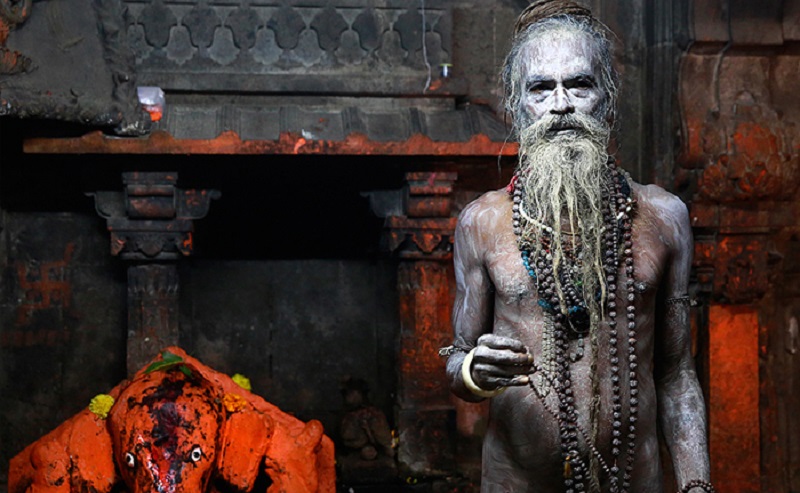
The cremation ground in Varanasi burns continuously. The Manikarnika Ghat has not been without fire for centuries, because Varanasi is the city where Hindus bring their dead from across the subcontinent in the belief that dying there grants liberation. The fires consume approximately two hundred bodies per day. The ash goes into the Ganges. The smoke rises without stopping.
In the cremation ground, among the fires and the ash and the partially burned remains and the skull fragments that the river carries back onto the banks, the Aghori practitioners sit and meditate.
They are there because this is the most effective place for the work they are doing.
The work is the systematic dissolution of the psychological boundary between the living and the dead, between the pure and the impure, between the sacred and the profane. The Aghori theological framework holds that this boundary is the primary mechanism through which ordinary human consciousness maintains the illusion of a self that is separate from the universe it exists in. The boundary produces the fear of death, the revulsion from decay, the preference for life over death and purity over contamination, all of which are considered in this framework to be expressions of the same fundamental delusion: that the individual consciousness is real and separate rather than a temporary configuration of the universal consciousness that the teaching calls Shiva.
The cremation ground practices are not arbitrary transgression. They are methods for confronting and dissolving the psychological structures that maintain the illusion. A practitioner who has genuinely dissolved the boundary between pure and impure, between the living and the dead, between what convention calls sacred and what convention calls profane, has achieved the state that Aghori teaching calls liberation, which is the direct experiential recognition that the self is identical with the universal consciousness.
This is an extreme and demanding path. It is also a coherent one, whose logic appears in Shaiva philosophy across fifteen centuries of textual transmission.
The Kapalika Lineage
The Aghori lineage descends from the Kapalika order, named for the skull bowl, kapala, that its practitioners carry. The Kapalika order appears in Sanskrit sources from at least the fifth century CE and is depicted in the iconographic program of major Shaiva temple complexes including Khajuraho and the Elephanta Caves, where Kapalika practitioners appear alongside the mainstream Shaiva iconography as recognized participants in Shaiva devotional life.
The practices that characterize the Kapalika lineage, and that the Aghori inherit, appear in the Shaiva Agamas, the scriptural texts that govern the theological and ritual life of Shaivism. The Agamas are not fringe texts. They are the canonical foundation of one of the major streams of Hinduism, with a textual history extending back to the first millennium CE and a ritual application that governs temple practice across South India to the present day.
The Kapalika practices recorded in the Agamas and in the philosophical texts that engage with this lineage include the Panchamakara, the ritual use of the five substances whose Sanskrit names begin with the letter M: matsya (fish), mamsa (meat), mudra (grain or gesture), madya (wine), and maithuna (sexual union). These five substances are each conventionally prohibited or restricted in orthodox Hindu practice. Their ritual use in the Vama Marga, the Left-Hand Path, is specifically chosen because the practitioner’s willingness to consume or engage with what convention prohibits is the direct experiential dissolution of the prohibitions’ psychological basis.
The skull bowl is the lineage’s most iconic element. The Kapalika practitioner uses a human skull as a bowl for food and drink, consuming from the vessel that most directly represents death and the dissolution of individual identity. The practice is not necrophilic in the sense that popular descriptions imply. It is philosophical in a very sense: the practitioner who can eat from a skull without revulsion has dissolved the psychological boundary that makes death terrifying and the dead disgusting. The skull has become an object like any other object, and the practitioner’s consciousness has achieved a degree of equanimity with death that ordinary consciousness does not possess.

The iconographic representation of Shiva himself carries this symbolism: Bhairava, the fierce form of Shiva, is depicted carrying a skull bowl and frequenting cremation grounds. The Aghori practitioner’s cremation ground practice is not a transgression of the belief system. It is a direct imitation of the deity’s own attributes.
The Baba Keenaram Lineage
The modern Aghori order is organized around the lineage established by Baba Keenaram, a practitioner born in approximately 1601 CE in the Chandauli district of what is now Uttar Pradesh. His biography is preserved in the Viveksagar, a text in the Aghori canon that records his teachings and his reported miraculous accomplishments.
Keenaram is described as having undertaken extensive practice under multiple teachers before achieving the state of liberation that defines the Aghori ideal. His practices during the period of his intense sadhana, which the Viveksagar places at various cremation grounds in northern India and eventually at the Tarapeeth cremation ground in Bengal, followed the Kapalika pattern with the intensity that his lineage required.
He subsequently established the Krim Kund center in Varanasi, which remains the primary institutional center of the Aghori lineage. The Krim Kund is located at the Parao Ghat on the Ganges, adjacent to the cremation area of the Manikarnika Ghat, and has maintained continuous practice since Keenaram’s time.
The lineage that Keenaram established has maintained the practices of the Kapalika lineage while also developing a distinctive social role that distinguishes the Aghori from other ascetic orders: their work with the marginalized and the polluted. The Aghori’s theological rejection of the pure-impure distinction makes them uniquely willing to engage with the populations that mainstream Indian society avoids.
The Healers
The least sensationalized and most practically documented aspect of contemporary Aghori practice is their healing work.
The Aghori Medical Institute established by the late Baba Bhagwan Ram, known as Sarkarnath, provides medical treatment to leprosy patients and others with severely stigmatizing conditions in the Varanasi area. Baba Bhagwan Ram, who died in 1992, extended the Aghori lineage’s non-dual philosophy into direct social engagement: a practitioner who genuinely holds that no being and no condition is impure will treat the leper, will touch the infected wound, will live alongside the person that everyone else has excluded.
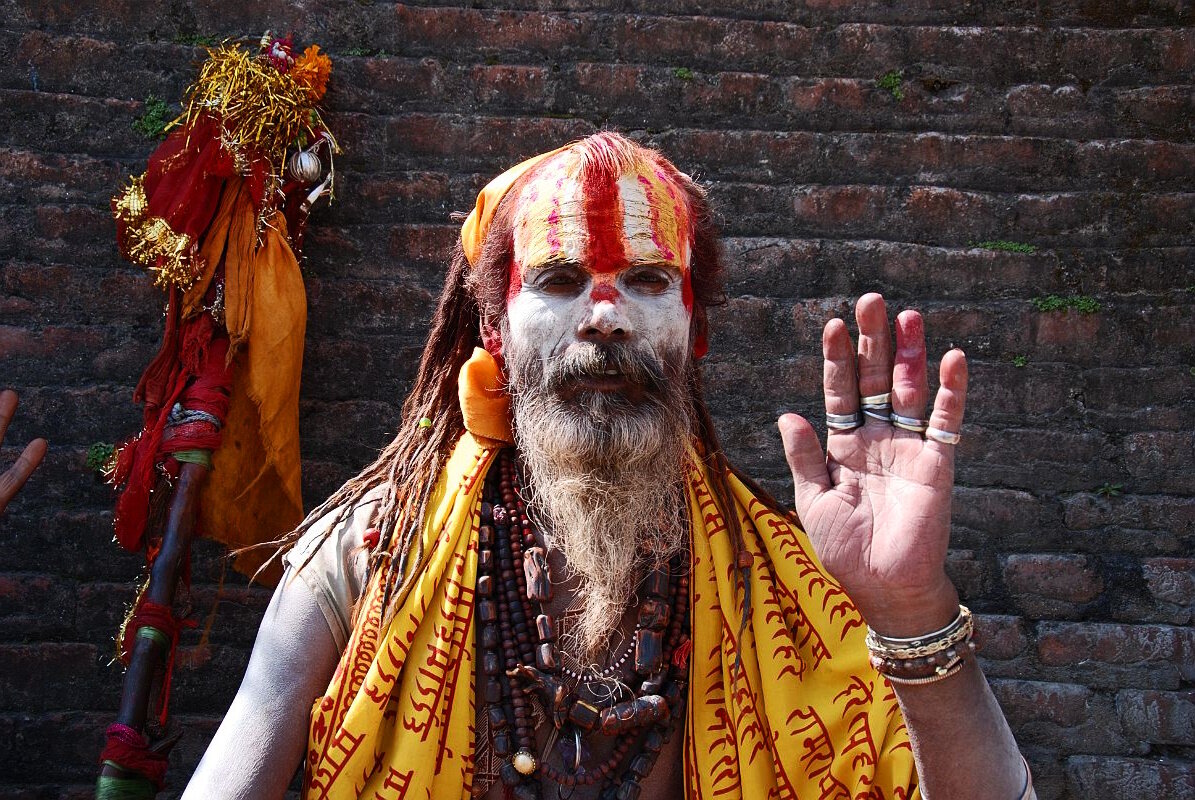
The institute has been recorded by multiple researchers and journalists who have visited it. Its patients are individuals whose conditions make them effectively social outcasts in the communities they come from. The Aghori practitioners who work there apply their non-dual theology as a direct form of compassionate engagement whose practical consequences are more measurable than most religious practices’ social effects.
Robert Svoboda, an American scholar who studied Ayurvedic medicine in Pune and subsequently underwent an extended period of study with the Aghori practitioner Vimalananda in Bombay, documented his experience in the three-volume Aghora series whose first volume, Aghora: At the Left Hand of God, was published in 1986. Svoboda’s work is the most detailed and most academically engaged account of the Aghori lineage’s practical and theoretical content from a practitioner’s perspective available in English.
Vimalananda, who appears throughout Svoboda’s work under a pseudonym that preserves his identity for those who know the lineage, is described as a practitioner who combined the cremation ground practices of the Kapalika lineage with a sophisticated engagement with Ayurvedic medicine, astrology, and the broader ecosystem of Indian esoteric knowledge. His teachings, as Svoboda documents them, present the Aghori philosophy not as transgressive provocation but as a systematic method for achieving the non-dual awareness that this theology describes as the ultimate truth of consciousness.
The Theological Framework
The Aghori philosophical framework belongs to Kashmir Shaivism, one of the most philosophically sophisticated non-dual schools in the history of Indian thought. The Kashmir Shaiva texts, particularly the Pratyabhijna system developed by Utpaladeva in the ninth century CE and elaborated by Abhinavagupta in the tenth and eleventh centuries, provide the intellectual framework within which the Aghori practices are coherent rather than random.
The central philosophical claim of Kashmir Shaivism is that the universe and all consciousness within it are identical with Shiva, the universal consciousness that this school takes as its name for ultimate reality. The apparent diversity of the universe, the distinction between individual consciousnesses, the boundary between self and other, and the distinction between purity and impurity, are all understood as the creative play, lila, of the universal consciousness experiencing itself through apparent differentiation.

Liberation, in this framework, is not departure from the world to a transcendent realm. It is the recognition, direct and experiential rather than merely intellectual, that the individual consciousness is identical with the universal consciousness that is experiencing itself through all forms including the individual’s own form. The practitioner who achieves this recognition loses the fear of death because the death of the individual form is recognized as the dissolution of one configuration of the universal consciousness back into its source, not as the annihilation of anything real.
The Aghori practices are specifically designed to produce this recognition through direct confrontation with what conventional consciousness finds most threatening to the illusion of separate individual selfhood. Death, putrefaction, and dissolution are the most immediate challenges to the psychological structures that maintain the illusion of a self that is separate from and threatened by the world. A practitioner who can sit in a cremation ground, consume what convention calls impure, and maintain equanimity has provided themselves with direct experiential evidence that the psychological boundary between the self and death is not absolute. The evidence is experiential rather than intellectual, and its effect on the practitioner’s relationship to ordinary consciousness is correspondingly more fundamental.
The Varanasi Context
Varanasi is the most appropriate context for understanding Aghori practice because it is the city where Hindu belief has concentrated its most direct engagement with death for approximately three thousand years.
The Manikarnika Ghat’s continuous fires are not a morbid spectacle. They are a religious institution maintained by caste groups whose hereditary responsibility is the management of the cremation process, and they represent Hindu belief’s acknowledgment that death is not a problem to be managed at a hygienic distance but a fundamental feature of the universe whose direct confrontation is a religious obligation.
Varanasi’s role in Hindu theology is as the city of liberation: belief holds that anyone who dies in Varanasi receives liberation directly, regardless of their spiritual development, because Shiva himself whispers the liberation mantra into the dying person’s ear at the moment of death. The city is therefore a gathering point for the dying across the subcontinent, whose families bring them there specifically to die, and for the Aghori practitioners who understand that the concentration of death in this location creates the conditions that their practice requires.
The coexistence of the Aghori cremation ground practitioners with the mainstream Hindu pilgrims who come to Varanasi for the same reason, the direct engagement with death and the hope of liberation, is not paradoxical. It is complementary. The mainstream pilgrim approaches liberation through devotion and the presence of the sacred city. The Aghori practitioner approaches it through the systematic dissolution of everything that prevents direct recognition of the universal consciousness that liberation is the recognition of.
Both are working on the same problem. The Aghori method is simply more direct and more uncomfortable.
What Their Practice Reveals
The near-death experience research covered in this library’s dedicated piece and the samadhi research recorded in the Itigilov piece both point toward the same finding from different directions: consciousness is not straightforwardly identical with the brain’s neural activity, and the boundaries that ordinary consciousness treats as absolute, between the self and the world, between life and death, between ordinary and non-ordinary awareness, are less fundamental than they appear from within ordinary consciousness.
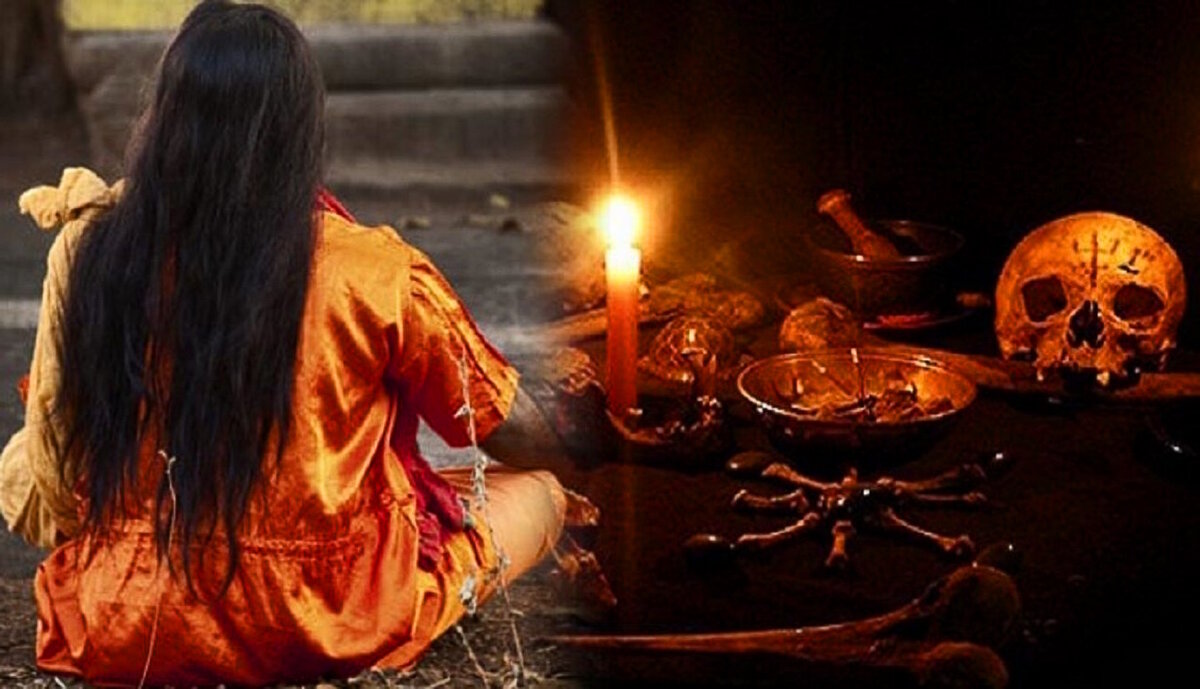
This lineage has been systematically investigating this finding for fifteen centuries through a method whose rigor is not the rigor of controlled experimental design but the rigor of systematic confrontation with the conditions that produce the most fundamental challenges to the ordinary consciousness’s boundary structures.
The near-death experience researcher who finds that patients describe accurate perceptions during verified periods of no measurable brain activity is approaching the question from the direction of physiological crisis. The Aghori practitioner who sits in the cremation ground and meditates on the skull in his hands is approaching the same question from the direction of deliberate confrontation. Both approaches are producing evidence that the ordinary consciousness’s relationship to death is not the definitive account of what consciousness is.
The Aghori lineage’s fifteen-century recorded history is the longest continuously maintained investigation of this question in the human record. Its methods are not those that Western scientific culture considers legitimate. Its findings, encoded in the lineage transmission and in the texts of Kashmir Shaiva philosophy, describe the same general conclusion that the near-death experience research and the samadhi research are approaching from very different evidentiary directions.
The boundary between life and death is not where ordinary consciousness places it. The Aghori have known this for fifteen centuries and have built a discipline of practice around the methods for verifying it directly.
They sit in the cremation ground because the fire that burns the body does not burn what is doing the observing.