





The third pharmacy doesn’t have it either. A truck drifts over the line just enough to make you brake. Five minutes later a dog lunges at the fence as you pass. Then your phone dies at exactly the moment you need it, and when you finally get home, something else goes wrong. None of these events is impossible. None of them, by itself, means anything. Yet placed together, they can produce a deeply unsettling sensation: not that you have had a bad day, but that the day itself has somehow turned against you.
That feeling is more interesting than the conclusion people sometimes draw from it. When unrelated misfortunes arrive close together, the human mind is extraordinarily good at turning coincidence into a sequence, a sequence into a pattern, and a pattern into an apparent cause. Suddenly the traffic isn’t merely traffic. The missing medicine isn’t merely bad inventory. The dog isn’t merely a dog behind a fence. They become evidence. Evidence of what, exactly, is harder to say. Fate. Bad energy. A curse. An enemy. Some invisible force that seems to have noticed you. But there is another possibility, and it is considerably stranger: sometimes randomness itself produces patterns so convincing that a perfectly functioning human brain experiences them as deliberate.
Psychologists have spent decades studying precisely this problem. Their findings do not mean that every coincidence is meaningless, or that every intuition about a pattern is wrong. They reveal something subtler. Human beings are pattern-detecting animals living inside a world where genuine randomness can produce clusters, repetitions and streaks that look anything but random. And once stress enters the picture, the mind becomes even more likely to notice the events that confirm the feeling that something is wrong while allowing everything ordinary to disappear into the background.

Why Randomness Refuses to Look Random
One of the most counterintuitive facts about chance is that genuine randomness does not necessarily look scattered. It clumps. It produces runs. It produces repetitions that feel statistically suspicious precisely because our intuition has learned to expect randomness to be more evenly distributed than it really is. Flip a coin repeatedly and a sequence of heads can appear several times in succession. The sequence does not become less random because it contains a streak. In fact, streaks are exactly the sort of thing random processes naturally generate. The mistake is imagining that randomness should look like a carefully shuffled deck in which every small section contains a reassuring mixture of everything.
This is part of what is often called the clustering illusion: the tendency to underestimate the amount of clustering that ordinary chance can produce and then to interpret those clusters as evidence of a meaningful underlying pattern. The classic example comes from basketball. In a landmark 1985 study, Thomas Gilovich, Robert Vallone and Amos Tversky examined the belief that a player who had just made several shots was more likely to make the next one, the famous “hot hand.” Their analysis challenged the idea that apparent shooting streaks necessarily represented a temporary increase in ability. But the story did not end there. Decades later, Joshua Miller and Adam Sanjurjo identified a subtle statistical bias in the original methodology. When the data were reconsidered with that bias corrected, evidence emerged for a genuine, though modest, hot-hand effect. That correction is important because it makes the lesson stronger rather than weaker: our intuition about streaks can mislead us, but so can an analysis that fails to account for the peculiar mathematics of streaks. The proper response to a pattern is therefore neither blind belief nor automatic dismissal. It is better measurement.
That distinction matters far beyond basketball. A cluster of accidents may contain a real statistical pattern. It may also be entirely compatible with chance. Those two possibilities cannot be separated merely by asking how strange the sequence feels. The human brain is not a neutral measuring instrument for improbability. It experiences a run of bad events from the inside, where every new event arrives after all the previous ones and therefore feels like another piece of the same story. Probability, meanwhile, has no memory and no sense of drama. It simply keeps generating outcomes.
Your bad half hour, in other words, may not have been a glitch in the machine. It may have been the machine working exactly as chance works, while a mind built to detect causes watched the outputs and started looking for an author.
The Lantern, Not the Storm
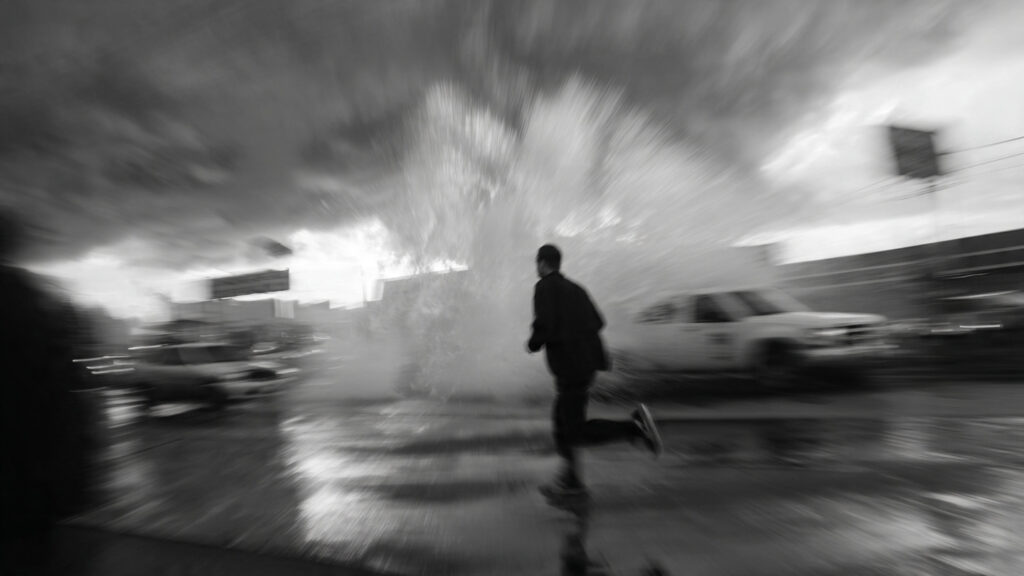
There is another mechanism that can make a bad streak feel even more coordinated: attention itself changes under pressure. When people are frightened, angry or exhausted, the mind does not continue scanning the world with equal interest. Threat becomes more salient. Negative information demands attention. Problems that might normally pass unnoticed suddenly become impossible to ignore. The ordinary parts of the day, the green lights, the friendly stranger, the email that arrived on time, the ten things that did not go wrong, lose their psychological weight. The failures remain brightly illuminated.
That is where negativity bias becomes so important. Bad information can carry greater psychological weight than equally significant good information, particularly when a person is already under strain. The result is not necessarily that the brain invents events. The events can be completely real. What changes is their relative prominence. A single inconvenience becomes memorable. The second one connects to it. The third feels like confirmation. By the fourth, the mind may no longer be evaluating isolated events at all. It is evaluating a theory: something is happening to me.
Imagine walking through a dark room with a flashlight. The objects inside the room have not changed because you are afraid. But the beam has narrowed. The chair directly in front of you becomes enormous while everything outside the circle of light effectively disappears. Stress can work in much the same way. The world has not necessarily become more hostile. Your attention has become more selective about what counts as evidence of hostility.
Why We Prefer the Storm Sent by Someone
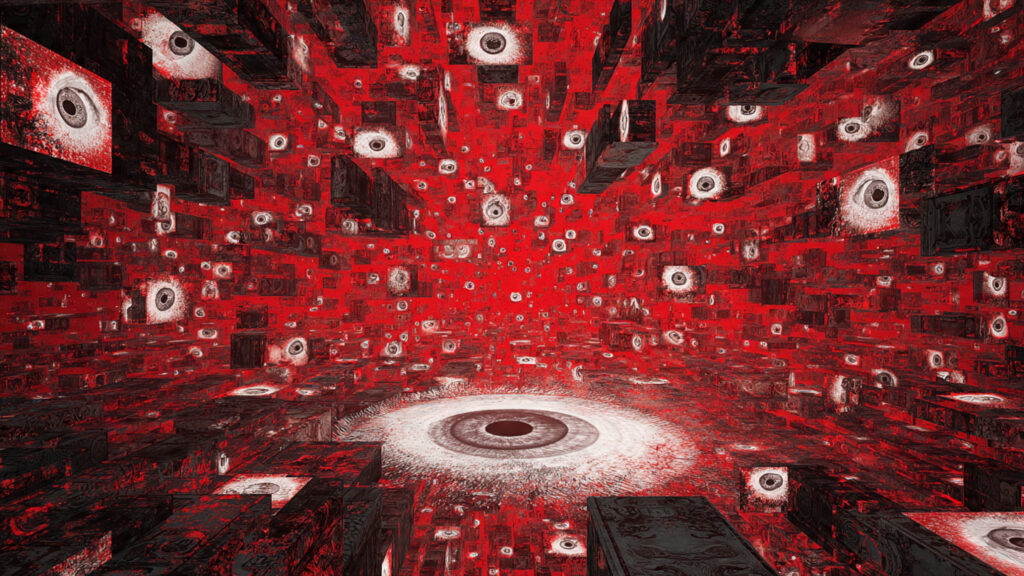
There is an even deeper reason the mind is tempted to turn coincidence into intention. Human beings are exceptionally sensitive to agency. We do not merely perceive events; we instinctively ask what caused them, who caused them and whether the cause is still out there. From an evolutionary perspective, that bias is understandable. Mistaking a shadow for a predator may be inconvenient. Failing to notice a predator can be fatal. A mind inclined to investigate possible agents therefore has an obvious advantage, even if that same tendency occasionally sees agency where none exists.
But there is an emotional dimension to this as well. A storm sent by someone can feel easier to understand than a storm that simply arrived. If an invisible enemy is responsible for your suffering, then at least the suffering belongs to a story. There is someone to blame. There might be rules to discover, precautions to take, prayers to offer, rituals to perform or enemies to defeat. Pure chance is colder. It offers no villain and therefore no obvious conversation with the universe.
That is why the idea that “something is after me” can paradoxically feel more psychologically satisfying than the possibility that several unrelated things simply went wrong. A hostile world is frightening, but an indifferent world can be harder to negotiate with. The first gives you an opponent. The second gives you probability.

What Plato and Pythagoras Actually Believed
The ancient philosophers were not strangers to the problem of apparent meaning. Plato treated the relationship between the visible world, the soul and a deeper order of reality as a serious philosophical question. In the Republic, the myth of Er places human lives inside a larger moral and cosmic structure; in the Phaedo, the fate of the soul becomes central to the philosophical examination of death. Pythagoras and the community associated with him likewise combined mathematics, religious practice and a belief in the transmigration of the soul. Number was not merely a tool for measuring the world. It could also be understood as revealing something fundamental about its order.
That history matters because modern people sometimes smuggle contemporary ideas about “signs,” synchronicity or coded coincidences backward into the ancient world. Plato and Pythagoras were certainly interested in hidden order. But that does not mean they taught that every run of unlucky events was a personalized message from the cosmos. Their questions were philosophical and metaphysical: What is reality? What is the soul? Is there an underlying order to existence? What does mathematical structure tell us about the nature of things? Those questions are much larger, and much more interesting, than the modern habit of treating every coincidence as a private telegram from the universe.

What Prayer and Fasting Actually Do
There is another distinction worth making because rejecting a supernatural explanation does not require rejecting the value of spiritual practice. Prayer can give suffering a vocabulary. Fasting can interrupt habit. Ritual can impose structure on a period of life that otherwise feels chaotic. These practices have been used across cultures for centuries to create discipline, reflection and a sense of connection to something larger than the immediate problem. Their psychological and social effects can be real without requiring us to demonstrate that they alter the laws of probability.
That may actually be the more useful way to understand them when a person feels trapped inside a run of bad luck. The point is not necessarily to appease whatever invisible force supposedly caused the accidents. The point can be to interrupt the mental loop that turns every subsequent inconvenience into confirmation. Slow down. Sleep. Eat. Pray if prayer matters to you. Step away from the stream of evidence your frightened mind has been collecting. Give attention somewhere other than the latest thing that went wrong.
Eventually the pharmacies get their stock again. Traffic returns to its ordinary mixture of idiots and competent drivers. The dog goes back behind the fence. The phone gets charged. The apparent pattern loses its grip. Nothing needed to be defeated. The world simply continued producing an unpredictable mixture of good, bad and utterly unremarkable events while your attention widened enough to see the whole distribution again.

The Quieter Question
A bad day does not have to be a coded attack to deserve compassion. And randomness does not have to be emotionally comforting to be real. Sometimes several unpleasant things really do happen close together. Sometimes the clustering is remarkable. Sometimes there is a genuine cause hiding underneath what first appears to be coincidence. The important point is that the feeling of pattern is not itself proof of the pattern’s cause.
That is the trap. Once the mind decides that a sequence means something, every new event can be recruited as evidence. The missed train confirms it. The broken glass confirms it. The strange look from a stranger confirms it. Even an event that would ordinarily have meant nothing suddenly acquires a place in the story. The theory begins interpreting the evidence, and the evidence begins strengthening the theory. What started as a handful of coincidences becomes a world that appears to be speaking directly to you.
So when the day suddenly feels cursed, the most useful question may not be, “Why is the universe doing this to me?” It may be something quieter: What am I noticing right now that I would normally have ignored? And beneath that: What has stress taught my attention to search for?
Those questions do not make the strange feeling disappear. They do something better. They put you back in the position of an observer rather than a character trapped inside a story.

Because the unsettling truth is not that the world secretly knows when you are having a bad day. It is that randomness can produce patterns convincing enough to make a perfectly ordinary world feel personal, and once the mind starts looking for the pattern, it can become remarkably difficult to see everything that does not fit it.