




A strange thing happened to a legitimate scientific paper in 2025. Antal Veres published a mathematical framework in Acta Astronautica asking when a civilization like ours could statistically be alone in the observable universe. The paper called that statistical window the “Solitude Zone.” It did not argue that advanced aliens are deliberately hiding from Earth. It did not resurrect the Zoo Hypothesis. And it did not prove that humanity is alone. In fact, one of the numbers circulating around the paper, a roughly 29 percent probability for the Rare Earth scenario, is real. The problem is what happens when a conditional probability becomes a headline. Veres’s actual result is considerably stranger and more interesting than the simplified version: under some assumptions, having exactly one civilization can be more probable than having many, while under other assumptions the most probable outcome is that there are none at all. The universe does not have to be crowded and hiding. It may simply be statistically capable of being quiet.
The distinction matters because another famous idea has repeatedly been dragged into the story. The Zoo Hypothesis was proposed by Harvard-associated astrophysicist John A. Ball in 1973, more than half a century before Veres’s paper. Ball’s proposal was almost the opposite starting point: suppose extraterrestrial intelligence is abundant, he argued, but advanced civilizations have deliberately chosen not to interfere with Earth. That is a hypothesis about why a populated universe might look empty. Veres is asking a different question: under what statistical conditions might there actually be only one civilization at our level of complexity? Those are not the same argument, and combining them creates a story neither paper actually tells.
The Paper Is Real. The Headline Version Is the Problem.
Veres’s paper, “The Solitude Zone: A Probabilistic Window for Singular Lifeform Existence,” is a genuine research article in Acta Astronautica. It was published online in September 2025 and subsequently appeared in Volume 238 of the journal in January 2026. Its central idea is not a new telescope observation, a detection of extraterrestrial life or a measurement showing that Earth is unique. It is a mathematical framework for asking how the probability distribution of civilizations changes as the assumed probability of emergence changes.
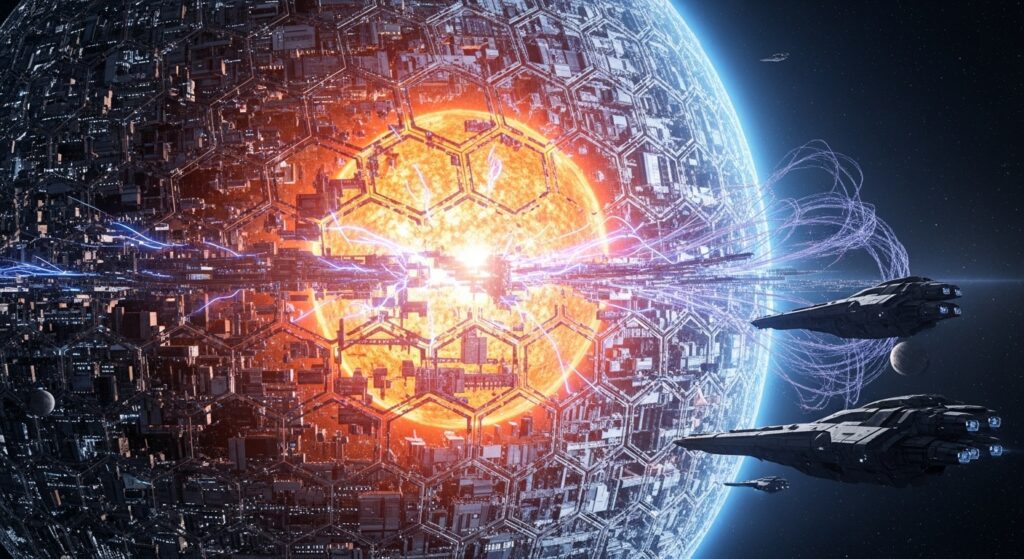
The “Solitude Zone” is therefore not a region of space. It is not a bubble around Earth. It is not a quarantine perimeter and it is certainly not a giant alien force field. It is a region in probability space where the chance that exactly one lifeform of a specified level of complexity exists is greater than the chance that multiple such lifeforms exist. Veres also requires that the probability of at least one such lifeform existing exceed the probability that none exist. That second condition is crucial. It prevents “solitude” from simply meaning an extremely sterile universe in which nobody exists.
In ordinary language, the model asks whether there is a statistical middle ground between two extremes. If intelligent life is extremely easy to produce, there should be enormous numbers of civilizations and we should not expect to be alone. If intelligent life is almost impossibly difficult to produce, the most likely result may be that nobody exists at all. But between those extremes there can be a narrow regime in which one civilization is statistically more likely than either zero or many. That is Veres’s Solitude Zone.
The 29 Percent Number Is Real, But It Doesn’t Mean What the Headlines Suggest
This is where the original retelling needs the most important correction. The roughly 29 percent figure should not be described as an invented number that cannot be traced to Veres. It can be traced to reporting on the paper’s Rare Earth scenario. Universe Today reported a probability of about 29.1 percent for Earth being in the Solitude Zone under that scenario, while a related “Critical Earth” regime reached about 30.3 percent. Those numbers are genuine outputs of the model as reported in coverage of the paper.
But 29 percent does not mean “there is a 29 percent chance aliens exist.” It does not mean “scientists have calculated a 29 percent chance that humanity is alone.” It does not mean that Veres has measured the number of extraterrestrial civilizations. And it certainly does not mean that astronomers have discovered evidence that Earth is isolated.
It means something much more conditional: if the assumptions built into the Rare Earth scenario are adopted, the model places the probability of our civilization occupying this statistical Solitude Zone at roughly 29 percent. Change the assumptions, and the answer changes. That is not a weakness unique to Veres. It is the unavoidable nature of mathematical models built around parameters we cannot currently measure.
There is another number that is even more important. In the scenarios discussed in reporting on the paper, the probability of being in the Solitude Zone does not exceed 50 percent for humanity’s present technological level. The model therefore does not say that being alone is the overwhelmingly likely explanation. It says that solitude becomes mathematically possible, and under some assumptions meaningfully probable, without requiring the galaxy to be populated by civilizations that are somehow hiding from us.
Veres Is Not Saying the Universe Is Empty
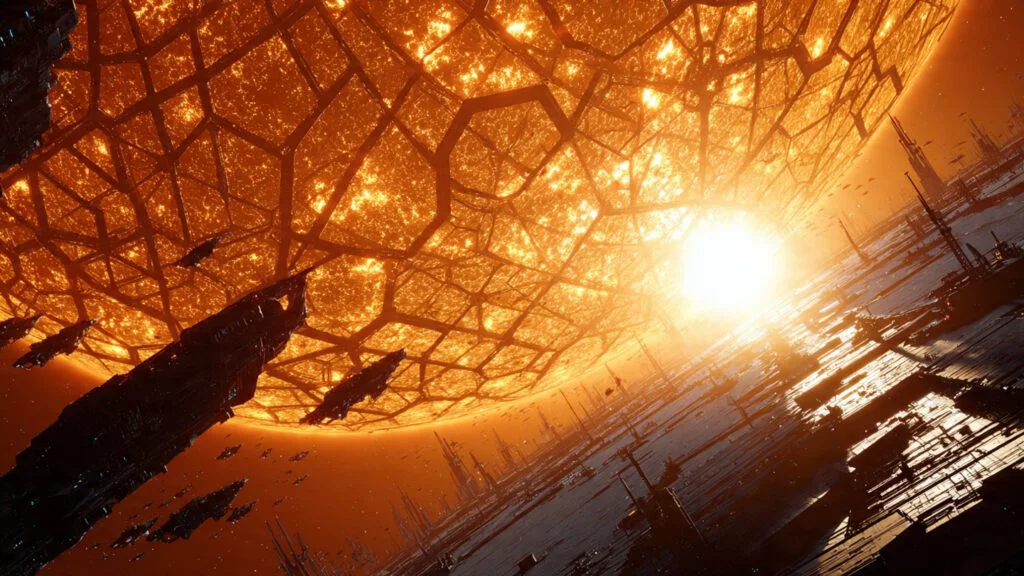
This distinction is easy to lose because “alone” sounds binary. In reality, the paper is asking about a particular level of complexity and technological development. There could be primitive life elsewhere while humanity remains the only civilization at our particular level. There could also be civilizations substantially more advanced than ours while no civilization comparable to us exists elsewhere at this exact moment. The model is therefore not simply asking whether life exists. It is asking about the statistical distribution of lifeforms at specified levels of complexity.
That is why the Kardashev Scale enters the discussion. Nikolai Kardashev’s 1964 framework classified civilizations according to their energy use, from planetary-scale Type I civilizations to stellar Type II and galactic Type III civilizations. Veres uses technological complexity as part of a broader framework for asking how the probability of singularity changes as the level of complexity rises. The farther up the technological ladder one goes, the fewer civilizations may be capable of occupying that level at the same time.
None of this means the Kardashev Scale is a census of extraterrestrials. It is a conceptual framework for thinking about technological development. We do not know how many civilizations exist at Type I, Type II or Type III levels because we have not detected any confirmed extraterrestrial civilization at all. The scale gives the model a language for complexity; it does not provide the missing observations.
The Drake Equation Is the Ancestor, Not the Answer
The intellectual background is the Drake Equation, introduced by astronomer Frank Drake in 1961 as a framework for discussing the number of detectable civilizations in the Milky Way. Its famous factors include the rate of star formation, the fraction of stars with planets, the number of potentially habitable planets, the probability of life emerging, the probability of intelligence and technology developing, and the length of time a technological civilization remains detectable.
The equation was never a crystal ball. Its power is that it exposes the assumptions hidden inside the question. Some terms can be estimated from astronomy. Others remain almost completely uncertain. We now know vastly more about exoplanets than Drake did in 1961, but we still do not know the probability that life begins on a suitable world, the probability that complex life emerges, the probability that intelligence evolves, or the fraction of technological civilizations that become detectable.
Veres takes that basic probabilistic spirit and changes the question. Instead of asking only how many detectable civilizations might exist in the Milky Way, the framework asks about the probability distribution of singular existence across a vastly larger population of potential planetary systems. The model uses an estimate on the order of 10²⁴ terrestrial planets across the observable universe. That enormous number is not a count of inhabited worlds. It is the size of the statistical stage on which the model asks how rare a civilization would have to be for exactly one to become the most probable outcome.
And This Is Where the Model Becomes Counterintuitive
Imagine that the probability of producing a civilization at a particular technological level is made extremely small. At first, lowering that probability sounds as though it should simply make humanity more special. But if the probability becomes small enough, the model can swing past “one” and into “none.” The universe may contain so few successful civilizations that our existence becomes statistically surprising rather than typical.
That is why the Solitude Zone exists at all. There is a mathematical middle ground between a universe in which civilizations are commonplace and a universe in which they are almost impossible. In that middle ground, exactly one can become more likely than either zero or many. The strange result is that being alone does not necessarily require an almost miraculous Earth. It can emerge from a particular balance between the number of opportunities and the probability of success.
Under an “Astrobiological Optimism” scenario, where evolution toward complex technological life is relatively easy, the Solitude Zone effectively disappears for a civilization at humanity’s level because there should be many comparable civilizations. Under an “Evolutionary Hard Step” scenario, where the evolutionary barriers are extraordinarily severe, the Solitude Zone also becomes unlikely because the dominant outcome is no civilizations at all. The Rare Earth scenario occupies the more interesting middle ground: life and intelligence are possible, but sufficiently uncommon that one civilization can become statistically plausible.
But There Is a Statistical Catch
The most interesting criticism of Veres’s framework is not that the mathematics is meaningless. It is that probability questions become slippery when we condition them incorrectly. Data scientist John Mount’s detailed examination of the paper, published on the Win Vector LLC blog, focused on precisely this issue. Veres defines a distribution for the number of relevant lifeforms and studies conditions such as the probability that exactly one exists compared with the probability that two or more exist. Mount asks a different but closely related question: what is the probability of exactly one civilization given that we already know at least one exists?
That distinction sounds technical because it is technical. But it matters enormously for Earth. We are not observers floating outside the universe asking whether at least one technological civilization exists. We know that at least one exists because we are sitting inside it. Any inference about how unusual our situation is has to confront that observer-selection problem. A probability distribution describing all possible universes is not automatically identical to the probability that an observer like us should assign after discovering that our own civilization exists.
This does not make Veres’s framework useless. It tells us what kind of claim it actually is: a mathematical exploration of a probability landscape, not a measurement of extraterrestrial population density. The distinction between a model showing that solitude is possible and an observation showing that we are alone is the entire story.
The Zoo Hypothesis Came From Somewhere Else
John A. Ball’s “The Zoo Hypothesis” appeared in Icarus in July 1973. Ball’s starting point was radically different from Veres’s. He entertained the possibility that extraterrestrial intelligent life could be “almost ubiquitous” while the apparent absence of contact was explained by a deliberate decision not to interfere with Earth. In Ball’s metaphor, humanity could be like animals inside a protected wilderness area.
That is the classic Zoo Hypothesis: they exist, they could contact us, but they choose not to.
Veres is asking almost the inverse question: what if the reason we see no one is that, under certain assumptions, there may simply be almost no one to see?
Those ideas can both appear in a discussion of the Fermi Paradox, but that does not make them one theory. Ball’s hypothesis requires a populated universe and a behavioral explanation for silence. Veres’s framework can produce solitude from the statistics of emergence itself. One says the silence may be intentional. The other asks whether silence may be the natural statistical consequence of rarity.
The Paper Does Not Reverse the Great Filter
Another claim that should be treated carefully is the idea that Veres somehow demonstrated that the probability of civilization self-destruction decreases as civilizations become more advanced. That is not the clean conclusion of the paper’s abstract or the principal result used to define the Solitude Zone. The Great Filter is part of the broader conceptual landscape in which the paper operates, but the Solitude Zone is fundamentally a probability framework for the number and complexity of existing lifeforms.
That distinction matters because the Great Filter remains one of the most consequential possibilities in the Fermi Paradox. If civilizations routinely destroy themselves before becoming detectable, the silence could have a very different explanation from a universe in which technological intelligence is simply extraordinarily rare. Veres’s framework does not magically tell us which of those possibilities is true. It shows how different assumptions about emergence produce different probability landscapes.
The Paper Has Already Been Pulled in Opposite Directions
The strangest part of the story is what happened after publication. One interpretation of the paper pushed toward “we may be alone.” Another pushed toward “the universe may be full of intelligent life.” Sabine Hossenfelder discussed the paper under the deliberately provocative title “Odds Are The Universe is Full Of Intelligent Life, Mathematician Finds,” while other coverage emphasized the possibility that humanity occupies a statistical solitude zone. These are not necessarily mutually contradictory descriptions of every part of the model, but they demonstrate how easily a conditional probability framework can be transformed into an apparently definitive claim about the universe.
That is the trap. The paper does not hand us a number and say, “This is how many civilizations exist.” It gives us a mathematical framework in which the answer changes according to assumptions about emergence, complexity and the number of possible systems. A headline can turn that into “scientists say aliens are everywhere” or “scientists say we’re alone,” but neither headline captures the actual intellectual structure.
What the Solitude Zone Actually Tells Us
The strongest conclusion is surprisingly modest. We often talk about the Fermi Paradox as though the universe must choose between two stories: either extraterrestrial civilizations are everywhere and somehow hiding from us, or they do not exist. Veres’s framework inserts an important third possibility. There may be a statistical regime in which technological civilizations are possible, but their emergence is rare enough that exactly one can exist at a given level of complexity without requiring either a cosmic conspiracy or a complete biological impossibility.
That does not prove Earth is unique. It does not detect extraterrestrial life. It does not tell us that advanced civilizations are monitoring humanity. It does not revive the Zoo Hypothesis. And it does not eliminate the possibility that the universe contains millions of civilizations we simply have not detected.
What it does is change the question.
Instead of asking only, “Where is everybody?”, we can ask something more uncomfortable: “How rare would intelligence have to be for the silence we observe to be exactly what probability predicts?”
That is a much harder question because we do not yet know the probabilities that matter most. We have discovered thousands of exoplanets. We know planets are common. We know organic chemistry is widespread. We know Earth produced life and, eventually, technological intelligence. But we still have only one confirmed example of biology, one confirmed example of complex technological intelligence, and zero confirmed examples of extraterrestrial civilization.
That leaves an enormous amount of uncertainty between the first known civilization and the rest of the universe.

And that is why the Solitude Zone is interesting.
It does not tell us that the aliens are hiding.
It does not tell us that the universe is empty.
It tells us that, depending on assumptions we cannot yet verify, “one” can occupy a mathematically real middle ground between “none” and “many.” And until we actually detect another civilization, that uncomfortable middle ground is still where the evidence leaves us.
The declassified CIA Gateway Process research asks a very different question about human consciousness, but it raises the same larger problem: how much can an extraordinary framework tell us before the evidence catches up with it?