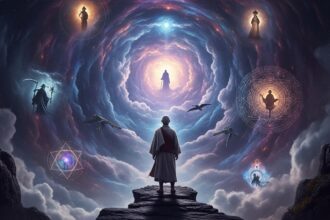




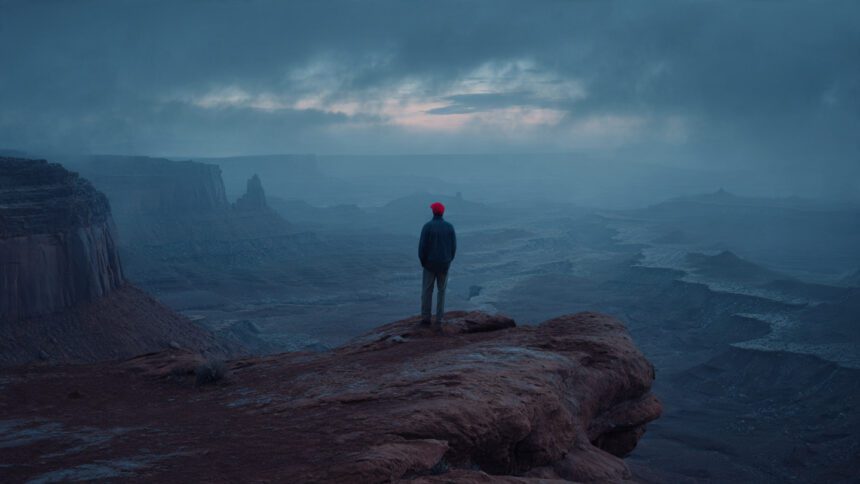
In the high deserts of the American Southwest, where the silence is loud enough to hear the grinding of tectonic plates, the Hopi elders have long guarded a secret that is only now, in our fractured and fevered century, beginning to bleed into the collective consciousness. It is a narrative that predates the Bible, a story carved into the red rock of the mesas before the first cathedral was raised in Europe. It speaks of cyclical destruction, of worlds built on hubris and drowned in fire and ice. But most chillingly, it speaks of a final figure, a harbinger who appears at the razor’s edge of the end times. They call him the Elder Brother, the True White Brother, Bahana in the Hopi language. And in the oral traditions preserved by the Bear Clan, he arrives wearing a red hat or a red cloak.
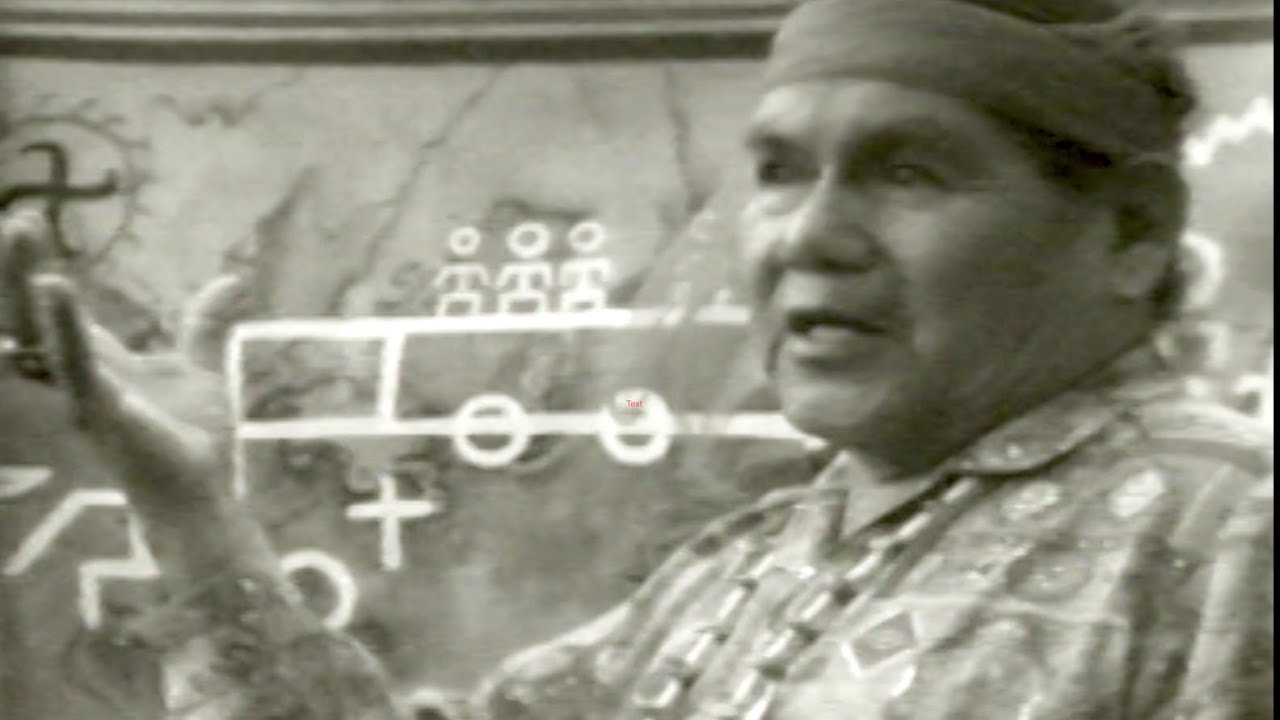
The Bahana prophecy itself is real and long predates the current century, though its most widely circulated written source deserves a direct caveat. It appears in the accounts collected by writer Frank Waters in his 1963 ethnography Book of the Hopi, and separately in the public testimony of Hopi spiritual leader Thomas Banyacya, who spent decades carrying elements of this teaching to audiences including the United Nations. Waters’s book is real and remains widely read, but it is also genuinely contested: real, credentialed scholars including Armin Geertz have documented that groups of Hopi people have specifically objected to it on at least three occasions since publication, and that many specialists in Hopi religion avoid citing it altogether, since it presents one traditionalist faction’s account, filtered through a non-Hopi author, as if it were a single authoritative Hopi text. Banyacya’s own public testimony, delivered directly by a recognized Hopi spiritual leader, carries a different and more independently verifiable kind of authority than Waters’s book does. What has changed is not the prophecy but the audience for it. As the geopolitical landscape of the twenty-first century shifts into a bizarre and unsettled alignment, the image of a disruptive figure marked by a distinctive red color has migrated out of the kiva and into the churn of internet speculation, where it now attaches itself to whichever polarizing public figure the moment produces. Whether any specific person fits the archetype is a question this piece leaves to the reader. What’s worth understanding first is the terrifying architecture of time itself, as seen through the eyes of those who have watched the world end three times before.
The Architecture of Forgotten Worlds
The modern mind views time as a straight line, an arrow shooting from a primitive past into a technologically advanced future. The Hopi know this is a lie. Time is a circle, a spiral of rising and falling civilizations. We are not the first masters of this planet, and if we do not heed the warnings, we will not be the last. The prophecy outlines a history of Earth that sounds less like mythology and more like a suppressed science fiction record of lost epochs.
The First World, Tokpela, was a realm of endless space and primal perfection. The Great Spirit, Taiowa, created humanoids not just of flesh, but of vibration. These beings possessed significant psychic abilities, communicating through telepathy and harmonizing with the beasts of the field. But power without wisdom is a trap. As these first humans began to misuse their psychic gifts for self-aggrandizement and division, the vibration of the planet soured. The Great Spirit, seeing the corruption, decided to wipe the slate clean. He split the single landmass of the world into thousands of islands and continents, shattering the geological unity of the planet. The First World ended not with a whimper, but with the roar of fire and volcanic fury, burying the psychic civilization under miles of rubble and ash.
From the survivors, the Second World, Tokpa, was born. But the lesson was not learned. The corruption returned, this time manifesting as a cold, intellectual materialism. The people ceased to listen to the spirit and began to trade and barter, turning the sacred into commodities. The Great Spirit responded with ice. The poles shifted, the sun dimmed, and the great glaciers ground the Second World into dust.
Then came the Third World, Kuskurza. This epoch is the most haunting mirror of our own. The Hopi describe a civilization of supreme technology. They built “flying shields” capable of traversing the skies and perhaps the stars. They constructed massive cities of glass and stone. They did not need psychic powers because they had built machines to mimic them. They harnessed energies that could level mountains. It was the age of the engineer, the age of the technician. And it ended in the Great Flood, a global inundation that swallowed the continents, leaving only the highest peaks as islands. The memory of this world lingers in every culture on Earth, Atlantis, Lemuria, the biblical Deluge. It is the memory of a species that grew too smart for its own survival.
The Fourth World and the Spider’s Web
We are the children of the survivors of that flood. We inhabit the Fourth World, Tuwaqachi. Before setting this current reality in motion, the Great Spirit gathered the elders and gave them a roadmap, a set of markers that would indicate when this world, too, was nearing its expiration date.
The accuracy of these markers is unnerving. The prophecy stated that a powerful people, the “Big White Brother,” would return to the lands of the Americas. Unlike the gentle reintegration the Hopi hoped for, this arrival would be marked by dominance and the rewriting of the land’s laws. Yet, life under this new regime would bring wonders. The prophecy foretold the coming of “swift self-moving wagons,” the automobile, and “roads in the sky,” the contrails of aircraft that now grid the atmosphere.
Most disturbingly, the elders spoke of a time when the people would communicate through a “spider’s web” that crisscrossed the earth. For decades, this was interpreted as telephone lines, but today, the meaning is undeniable. We are trapped in the World Wide Web, a digital lattice that connects every mind on the planet, transmitting information, rage, and lies at the speed of light. The web is not just a tool. It is a sign that the cycle is closing.
The Rope to the Moon and the Cosmic Trigger

But tranquility, the prophecy warns, is fragile. The ultimate transgression, the act that signals the beginning of the end, is strange and bizarre. The white people, in their thirst for conquest, would discover a “rope hanging from the moon.”
In the context of the era when this account was recorded, this could be interpreted as the Apollo missions, the planting of flags on a celestial body that was meant to watch over the night, not to be conquered. In the context of the 2020s, with the rise of space elevators, lunar mining projects, and the militarization of orbit, the “rope” takes on a more literal and threatening quality. The prophecy states that the attempt to climb this rope, to claim the heavens as property, will infuriate the “government of the universe.”
This phrase is key. It implies that we are not alone, and we are not unobserved. There is a hierarchy to the cosmos, a set of rules that humanity is blindly violating. The reaction from the universe will not be a diplomatic sanction. It will be a geological revolt. The Earth itself will weaponize against us. Earthquakes will shatter the tectonic plates, floods will erase coastlines, and fierce winds will scour the cities. We are already seeing the precursors: the destabilization of the climate, the erratic behavior of the seasons. The prophecy warns that it will become so hot that rivers will evaporate and the oceans will boil, a hyper-accelerated greenhouse effect that renders the planet a steam bath of extinction.
The Descent of the Dark King
It is into this chaos that the “Dark King” descends. This is not necessarily a human figure, but a force, a manifestation of the accumulated karma of a species that has lost its way.
The sky will darken during breakfast, a sudden, unnatural eclipse or perhaps the blotting out of the sun by volcanic ash or nuclear winter. The Dark King arrives to execute the sentence of the Fourth World: extermination.
The Man in the Red Hat and the Great Purification

It is at this precise moment of despair, when the machinery of the world has ground to a halt and the sky has turned to iron, that the Great Spirit offers a final, desperate chance. From the chaos emerges the Big White Brother. But he is different now. He comes wearing a red hat or a red cloak.
This figure is the catalyst for the Great Purification. He stands at the crossroads of humanity’s timeline. His arrival forces a choice: enter the Fifth World through a painful but necessary cleansing, or face total annihilation at the hands of the Dark King.
The symbolism of the red hat is potent. In indigenous cultures, red is often the color of war, of blood, but also of life force and East, the direction of the rising sun. It is also the kind of image that migrates easily: a single striking visual detail from an old oral tradition, encountering a moment when some public figure somewhere happens to wear a red hat as a matter of branding, and the two collide in the pattern-seeking part of the mind that treats coincidence as confirmation. Whoever, if anyone, the figure is describing, the prophecy’s own emphasis is not on identity but on function: he is the disruptor. He is the figure who appears when the “spider’s web” is humming with discord and the world is teetering on the brink of war.
The prophecy details that the Big White Brother will not act alone. He will be assisted by two helpers, one bearing the symbol of the Sun, and the other the symbol of the Cross. This trinity of forces will stand against a sudden, terrifying threat.
The War of the Ants and the Gourds of Ash

The prophecy takes a turn into the surreal and the terrifying when it describes the final conflict. A dire threat emerges, described as “numerous, tiny, and malevolent beings.” Through some form of sorcery or advanced technology, these beings halt the “magical machinery” of the world, perhaps a massive cyber-attack that kills the power grid or a biological agent that paralyzes the population. They swarm across the continent like a plague of ants, consuming resources and life.
The Red Hat figure, enraged by this invasion, retaliates with a weapon that the Hopi elders struggled to describe. They called them “pumpkins filled with ashes.” When these gourds are cast from the sky, they do not merely explode. They poison the earth. The ashes are so potent that nothing will grow where they fall for a millennium.
This is a strikingly precise description to have circulated among a pre-industrial people, if the account is as old as claimed: a pumpkin, round, bulbous, falling from the sky, releasing an ash that sterilizes the soil for a thousand years. It reads, to modern ears, as a description of radioactive fallout. The Man in the Red Hat, in this telling, is not a pacifist. He is a warrior of the end times, willing to scorch the earth to save the remnant. Readers should hold that image as myth doing what myth does, dramatizing an outcome rather than issuing a literal instruction, since acting on this passage as anything other than a story would be a serious misreading of it.
Following this devastation, the prophecy speaks of a brutal consolidation of power. Cruel and corrupt leaders will fall from power in a great purge. The old systems of control, taxes, the monetary system, the complex bureaucracy of the Fourth World, will be swept away. In their place, a unified world will emerge, speaking a single language, bound by a single law. It is a utopia bought at the price of upheaval.
The Fifth World or the Void?
The prophecy leaves us with a cliffhanger. The transition to the Fifth World is not guaranteed. It is conditional. If the Big White Brother fails in his mission, if the forces of the Dark King prove too strong or the people too corrupt to be saved, the result is total negation. The Dark King will initiate an event of absolute extermination. The Earth will be wiped clean, leaving only a handful of chosen survivors to be transported, perhaps physically, perhaps spiritually, to the Fifth World, leaving the Fourth to rot in the silence of the cosmos.

We must ask ourselves: why has this prophecy resurfaced now? Why, in the age of algorithms and artificial intelligence, are we looking back to the rock art of the Hopi? Perhaps it is because we can feel the heat rising. We can see the rivers drying up. We can see the leaders failing. And perhaps it is simply because every generation that feels itself at the edge of something looks for a story old enough to have seen the edge before.
The Hopi elders who carried this teaching did not claim to be inventing predictions about any specific news cycle. They described a pattern they believed the world moves through, and left its application to the future to unfold on its own terms. They spoke of time as a river, and of a people approaching a waterfall. Whether the details a given generation reads into the story, the color of a hat, the shape of a threat, the name of a leader, are the prophecy revealing itself or simply the oldest of all human habits, projecting the present onto whatever old story is lying around, is a question the prophecy itself does not answer. The gourds of ash remain a myth about fire, not a plan. The spider’s web is real. And somewhere, the story keeps being retold.
The Hopi Red Hat story remains a prophecy about patterns, not a forecast naming any specific person or year.