



The journalist who published the story was real. The investigation was real. The book became an international sensation. Eight years later, Karl Brugger was shot dead on a street in Rio de Janeiro, and his murder was never solved. But the man who had given Brugger the story had been living under a false identity, and when German investigators finally reconstructed his past, the Amazonian civilization he claimed to represent had collapsed with it.
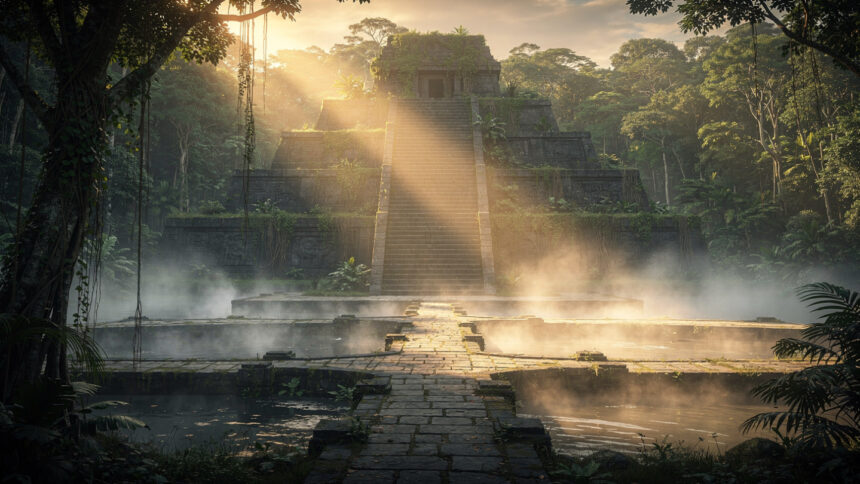
This is the part of the Akakor story that tends to disappear beneath the pyramids, extraterrestrials, underground cities and ancient spacecraft. Karl Brugger was not a novelist who invented a jungle adventure from an armchair. He was a credentialed German correspondent working in Brazil when, in 1972, he met a mysterious man in Manaus who called himself Tatunca Nara. Tatunca claimed to be the hereditary chief of the Ugha Mongulala, an ancient Amazonian people whose oral history supposedly stretched back 15,000 years and began with beings arriving from beyond the Earth. Brugger did not simply hear the story and publish it the next morning. He spent years investigating it. In 1976 he published Die Chronik von Akakor, The Chronicle of Akakor, and the legend escaped into the world.

The Man Who Said He Was Tatunca Nara
The first problem with Akakor is not archaeological. It is biographical. Tatunca Nara was not who he said he was.
German investigators identified him as Hans Günther Hauck, born on October 5, 1941, in Grub am Forst near Coburg, Bavaria. His documented life began not in an ancient Amazonian civilization but in Germany. In 1966, while facing financial problems and a jail sentence connected with his failure to support his wife and two young sons, Hauck abandoned his family in Nuremberg and eventually made his way to Brazil. There, he acquired a new name, a new biography and an entirely different place in the world. He presented himself as Tatunca Nara, the indigenous ruler of a people almost no outsider had ever heard of.
The story he told about himself was almost as elaborate as the story he told about Akakor. He claimed to be the son of a German nun and an indigenous chief. The German Federal Criminal Police Office instead traced his identity through birth and military records, while interviews with relatives in Bavaria reconstructed a very different past: Hauck had been a mechanic and soldier before disappearing into the Amazon and reinventing himself.
That matters because Akakor was not merely a story about an ancient city. It was a story whose authority depended almost entirely on its supposed custodian. The Chronicle did not arrive accompanied by inscriptions, excavated ruins, an independent written tradition or a population of identifiable Ugha Mongulala willing to confirm what Tatunca was saying. The chain of evidence ultimately led back to one man.

Brugger Spent Four Years Trying to Find the City
And this is where the story becomes considerably more uncomfortable than the usual “journalist was fooled by a hoax” version suggests. Brugger was not simply repeating a rumor. He spent four years attempting to verify Tatunca’s account. The resulting book presented the material as the testimony of an ancient tradition, and its details were spectacular enough to become part of the wider mythology surrounding the Amazon.
According to the Chronicle, the Ugha Mongulala preserved a history stretching back roughly 15,000 years. One hundred and thirty families of beings were said to have arrived from beyond the sky and encountered early humans living in a primitive, pre-agricultural condition. These visitors supposedly introduced agriculture, law, monumental construction and extraordinary technologies. Among them were “magic stones” capable of allowing their users to observe distant places, a description that modern readers have inevitably compared with remote sensing and satellite imaging.
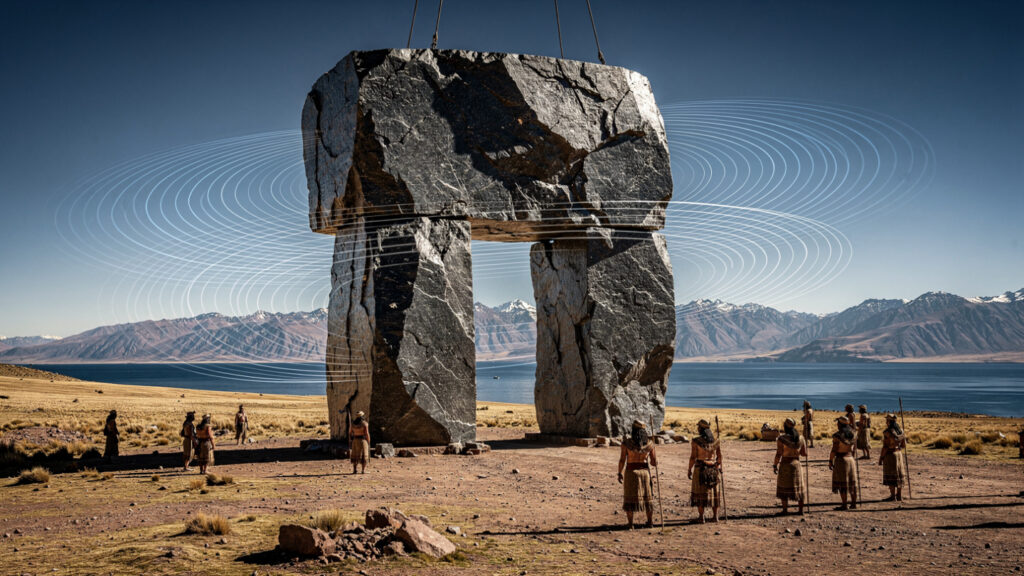
The Chronicle went further. It attributed the construction of Tiahuanaco to these mysterious beings, described an immense underground tunnel network running beneath the Amazon basin and connecting regions of Bolivia, Peru, Brazil and Venezuela, and claimed that two thousand German soldiers arrived at Akakor after the Second World War and were incorporated into the tribe.

The Details That Sounded Impossible
For decades, these details have been treated by some readers as evidence that Tatunca knew things he could not possibly have known. The supposed remote-viewing stones are often presented as an ancient prediction of satellite surveillance. The tunnels are invoked whenever modern discoveries reveal previously unknown structures in the Amazon. The German soldiers become another thread connecting the story to the darker history of postwar South America.
But there is a much simpler problem with this interpretation: Tatunca was constructing his story in the twentieth century. He was a German living in an age of television, aerial photography, modern reconnaissance and the early development of satellite intelligence. The first reconnaissance satellites were already operating by the time his Amazonian identity was taking shape. A device that allowed an ancient civilization to observe places thousands of kilometres away was not necessarily knowledge from the distant past. It was also exactly the kind of idea a twentieth-century storyteller could construct from the technological world around him.
The same caution applies to the German soldiers. Postwar Germans disappearing into South America were not a fantasy invented by Tatunca. Nazi fugitives and the networks that helped some of them escape Europe were a real historical phenomenon. But a real historical backdrop does not authenticate an extraordinary claim grafted onto it. The presence of recognizable twentieth-century material inside the Chronicle is not evidence that the Chronicle preserves a 15,000-year-old oral tradition. It may instead tell us something about the world from which the story actually emerged.
Then Someone Finally Took Tatunca Into the Jungle
The decisive test did not come from a laboratory or a university. It came from a journey.
In 1990, German adventurer Rüdiger Nehberg and filmmaker Wolfgang Brög organized an expedition specifically designed to test Tatunca’s claims. They did not merely ask whether the story sounded plausible. They asked the most obvious question imaginable: could the man who claimed to have spent his life in this territory actually lead them to the place he described?
He could not.
During the expedition, Tatunca repeatedly failed to recognize terrain, routes and landmarks that he had previously described as familiar territory. The supposed guide to an ancient civilization was unable to behave like a man who knew the country he claimed as his own. The resulting documentary, Das Geheimnis des Tatunca Nara, was broadcast on German television in 1991. Nehberg’s subsequent account reached the conclusion that had been almost impossible to reach while Tatunca’s testimony remained the principal evidence: there was no city of Akakor and no Ugha Mongulala civilization corresponding to the one he had described.
At that point the mythology had a problem that no amount of interpretation could easily solve. If Tatunca was the hereditary chief of an ancient people, why could he not reliably navigate the territory of that people? If he was preserving an oral history handed down through generations, where was the community that preserved it? If Akakor was a monumental city of enormous historical importance, why did the expedition fail to locate it?

The Story Had Already Become Something More Dangerous
By then, however, Akakor was no longer simply an argument about archaeology. People had entered the story, and some of them never came back out.
Tatunca continued operating as a jungle guide through the 1980s, taking tourists and adventurers toward the supposed location of Akakor. American John Reed disappeared in 1980. Swiss national Herbert Wanner disappeared in 1983. Swedish national Christine Heuser disappeared in 1987. In 1984, Swiss tourists found a skull that forensic analysis identified as Wanner’s.
And in that same year, Karl Brugger was shot and killed on a street in Rio de Janeiro.
There is an important distinction here. The existence of these deaths does not establish that Tatunca personally killed anyone. The supplied record does not justify turning suspicion into a murder conviction, and Brugger’s killing remained formally unsolved. But the deaths radically change the character of the story. The Akakor legend was not merely an eccentric tale about extraterrestrials and an invisible city. Around the man at its center accumulated disappearances, a confirmed death and an unsolved murder.

What German Investigators Found
German investigators eventually pursued the matter far beyond the question of whether Akakor existed. By 1988, the Federal Criminal Police Office reportedly believed it had enough evidence to connect Hauck to at least three deaths and sought an arrest warrant for his extradition to Germany. Hamburg prosecutors did not pursue the case. Hauck was never formally charged.
That legal outcome matters. “Suspected” is not “convicted,” and “investigators believed they had evidence” is not the same thing as a court establishing guilt. But the absence of a conviction should not be rewritten in the opposite direction either. The failure to prosecute did not restore the credibility of Tatunca’s original identity. By this point, the central historical claim had already been dismantled: the man presenting himself as an ancient Amazonian chief was a German fugitive living under an invented name.
The Amazon Really Did Hide Lost Cities
There is, however, one final complication, and it is the reason the Akakor story continues to tempt people.
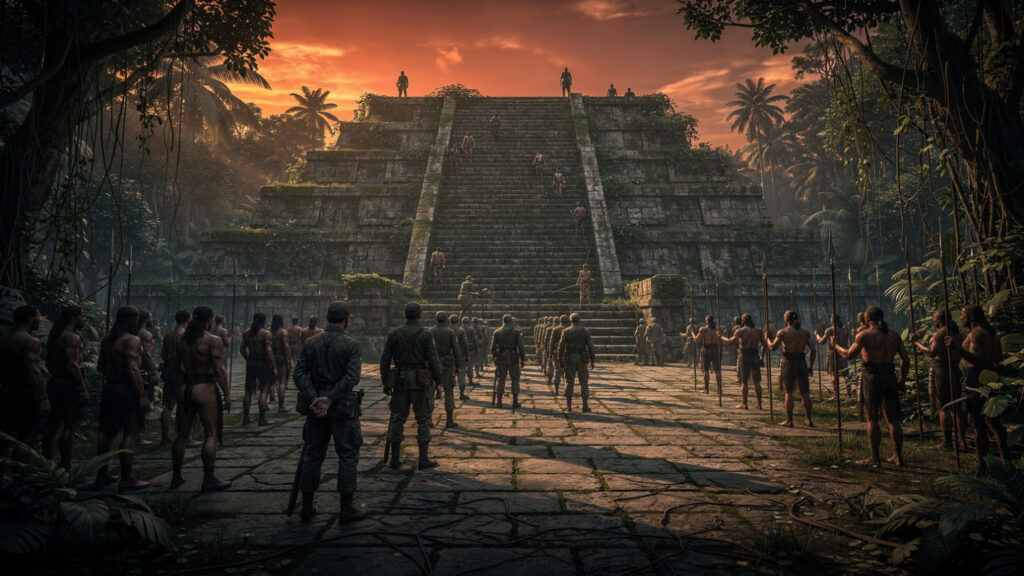
Modern archaeology has demonstrated that the old image of the Amazon as an almost completely untouched wilderness was badly wrong. LIDAR surveys and archaeological projects carried out across parts of Amazonian Brazil and Bolivia have revealed extensive pre-Columbian infrastructure, including geometric earthworks, causeways, agricultural systems and evidence of substantial organized settlement. The scale of some of these discoveries genuinely surprised archaeologists.
But this does not rescue Akakor. It does something more interesting: it shows why the story was capable of surviving as long as it did. Tatunca attached his mythology to a landscape that really did contain archaeological surprises. The Amazon really did contain sophisticated societies whose scale was underestimated by older scholarship. Ancient people really did reshape enormous areas of the forest. What has not been established is that any of those discoveries validate Tatunca’s alleged Ugha Mongulala, his 15,000-year chronology, his extraterrestrial visitors or the city of Akakor.
That distinction is crucial. Otherwise a modern archaeological discovery can be made to function as retroactive evidence for an unrelated twentieth-century fabrication. The logic becomes circular: Tatunca said there were hidden civilizations, archaeologists later discovered hidden civilizations, therefore Tatunca must have known the truth. But that conclusion does not follow. Archaeology discovered those structures independently of him.
What Happened to Karl Brugger?
This leaves the most haunting question in the entire story.
Karl Brugger was not responsible for creating Tatunca Nara. He was a journalist who encountered a remarkable source, investigated him, believed enough of what he found to publish it, and helped turn that man’s story into an international legend. Eight years after The Chronicle of Akakor appeared, Brugger was dead. His murder remains formally unsolved.
That coincidence does not prove that his book killed him. It does not prove that Tatunca ordered his murder. It does not prove that Brugger discovered some secret about Akakor and was silenced for it. Those are precisely the kinds of conclusions that turn an already extraordinary case into mythology. The sober fact is stranger: the journalist at the beginning of the story was murdered, the man whose testimony made the story famous was later exposed as an impostor, and the murder itself never acquired a definitive public explanation.
Brugger Died Investigating a Story He May Have Known Was False
Rüdiger Nehberg spent years pursuing the truth about Tatunca Nara. His 1993 book gave the conclusion an intentionally blunt title: The Self-Made Chieftain: Tatunca Nara alias Günther Hauck, or the Murderer in the Rainforest. Hauck reportedly threatened Nehberg with violence. Nehberg, in turn, continued investigating the case for years, eventually describing himself and Hauck as having become each other’s hobby. In 2024, Nehberg’s daughter Kirsten returned to the Amazon with a German television crew and continued looking into the story surrounding the man her father had spent years pursuing.
But the enduring mystery is not whether Akakor is still waiting somewhere beneath the Amazon canopy.
The city has never been found. The Ugha Mongulala civilization described by Tatunca has never been independently established. His identity was reconstructed as that of Hans Günther Hauck, a German man who had reinvented himself in Brazil. The expedition that was supposed to lead investigators to Akakor instead exposed a man who could not reliably navigate the world he claimed to know.
And yet Karl Brugger really was a journalist. He really did spend years investigating the story. People really did disappear around Tatunca’s expeditions. Herbert Wanner’s remains really were found. Brugger really was murdered. Those facts do not revive Akakor. They make the real story considerably darker.
The tribe was not waiting to be discovered. The city was not waiting beneath the forest. The ancient chronicle was not a message from another civilization. What survived was something much more human: a fabricated identity, an extraordinary story, a journalist who believed he had found something worth investigating, and a trail of unanswered questions that remained long after the central lie had been exposed.