



The Bible cites its own missing volumes by name.
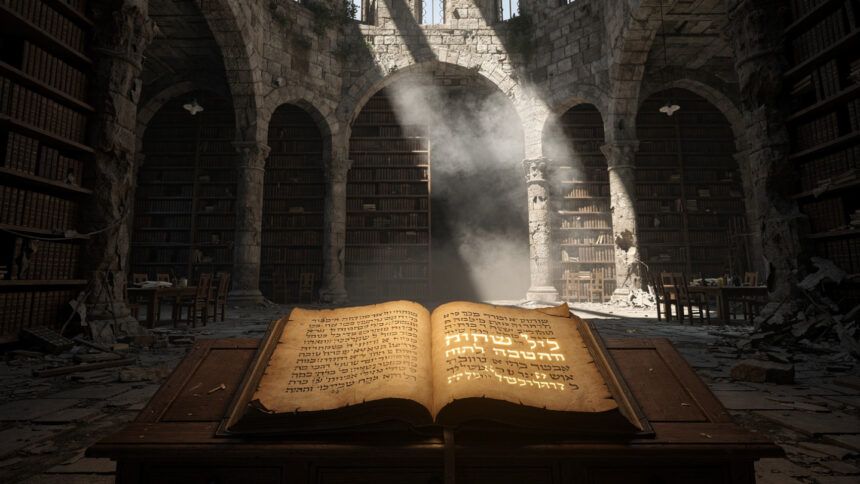
This is not a theory. It is a reading of the canonical text. Numbers chapter twenty-one, verse fourteen quotes from a source it identifies as the Book of the Wars of the Lord. The quotation is brief, a few verses about military geography, but the citation is explicit: this is where you can find the extended account. The extended account does not exist in any surviving manuscript. Joshua chapter ten quotes from the Book of Jasher, noting that the passage about the sun standing still during the battle of Gibeon is written there. The Second Book of Samuel quotes the Book of Jasher again. Neither citation has ever produced a recoverable source text that all scholars accept as the genuine original. First Kings chapter eleven directs the reader to the Book of the Acts of Solomon for the complete account of his reign. The Book of the Acts of Solomon does not exist.
The canonical Bible, the text that has been presented to Christians for seventeen centuries as the complete and authoritative word of God, contains explicit references to between seventeen and twenty additional texts that are not in the canon, have not been found in any manuscript tradition, and have not been explained by any institutional authority. The authors of the surviving canonical books knew these texts. They considered them authoritative enough to cite. They assumed their readers had access to them.
Something happened to those books.
The Septuagint Problem
The early Christian communities did not use the Hebrew text of the Jewish scriptures. They used the Septuagint, the Greek translation of the Hebrew scriptures completed in Alexandria between approximately 250 and 150 BCE. When the authors of the New Testament quoted the scriptures, they quoted the Septuagint. When Paul built his theological arguments from the Psalms or Isaiah or Genesis, he was quoting the Septuagint. The Greek text was the Bible of the early church.
The Septuagint contains seventy-three books. The Protestant Old Testament contains thirty-nine. The difference is not a matter of translation. It is a matter of which texts were included in the collection.
The books present in the Septuagint but absent from the Protestant Old Testament include the Wisdom of Solomon, Sirach, Judith, Tobit, First and Second Maccabees, Baruch, and additions to the books of Daniel and Esther. These texts were part of the scripture that Paul knew, that the early Christian communities used, and that informed the theological development of the first three centuries of Christianity.
The Protestant Reformation’s decision to return to the Hebrew canon rather than the Greek canon removed these texts from Protestant Bibles in the sixteenth century. The argument was that the texts not present in the Hebrew Masoretic tradition were later additions of dubious authority. The irony of this position is considerable: the Masoretic text whose authority the Reformers invoked was compiled by Jewish scholars between the sixth and tenth centuries CE, a thousand years after the Septuagint was produced and centuries after the early Christian communities had been using the Greek text as their scripture.

The King James Bible of 1611, the translation that produced the English-language scriptural tradition for four centuries, originally included the Apocryphal books as a separate section between the Old and New Testaments. The decision to remove them was made not in 1684 but in 1826, when the British and Foreign Bible Society voted to cease funding the printing of Bibles that included the Apocrypha. The decision was financial and institutional rather than theological. The texts were removed because they cost money to print and there was organized pressure to exclude them. Seventeen books disappeared from English-language Bibles because a Victorian charitable organization decided to reduce its printing costs.
The Council That Built the New Testament
The canonical New Testament was established at the Council of Carthage in 397 CE. The council’s decision determined which texts were authoritative scripture and which were not, and the consequences of that determination extended far beyond the question of which books to include in a collection.
A text excluded from the canon was not merely relegated to secondary status. In the institutional climate of the fourth century, exclusion from the canon meant that the theology the text represented was available for classification as heresy. The theological positions most consistently present in the excluded texts, the ones that appear in the Gnostic literature, in the Gospel of Thomas, in the Gospel of Philip, in the Gospel of Mary, are the positions most consistently condemned in the subsequent Christian orthodoxy.
The Gospel of Thomas contains 114 sayings attributed to Jesus with no narrative framework, no crucifixion, no resurrection, and a consistent emphasis on individual direct access to divine knowledge without institutional mediation. The institutional church that established itself on the authority of apostolic succession and sacramental mediation had an interest in the non-canonization of a text that argued for direct individual gnosis as the path to salvation.
The Gospel of Mary attributes to Mary Magdalene a teaching role and a knowledge of the risen Jesus that the canonical accounts do not provide. The institutional church that excluded women from the priesthood had an interest in the non-canonization of a text that depicted a woman as the primary recipient of the risen Jesus’s teaching.
The Gospel of Philip discusses the sacraments in terms that imply a theological framework significantly different from the developing Catholic sacramental theology. The Acts of Thomas describes a Christianity of radical asceticism and direct personal encounter with the divine that does not require institutional hierarchy.
Each excluded text represents a theological position that the institutional church found threatening to its authority. The correlation between exclusion from the canon and theological challenge to institutional authority is consistent enough to constitute a pattern rather than a series of independent editorial decisions.
What Was Found at Nag Hammadi
In December 1945, a farmer named Muhammad Ali al-Samman, digging for fertilizer near the town of Nag Hammadi in Upper Egypt, struck a large earthenware jar. Inside were thirteen leather-bound codices containing fifty-two texts in Coptic, most of them translations from Greek originals dating to the second and third centuries CE.
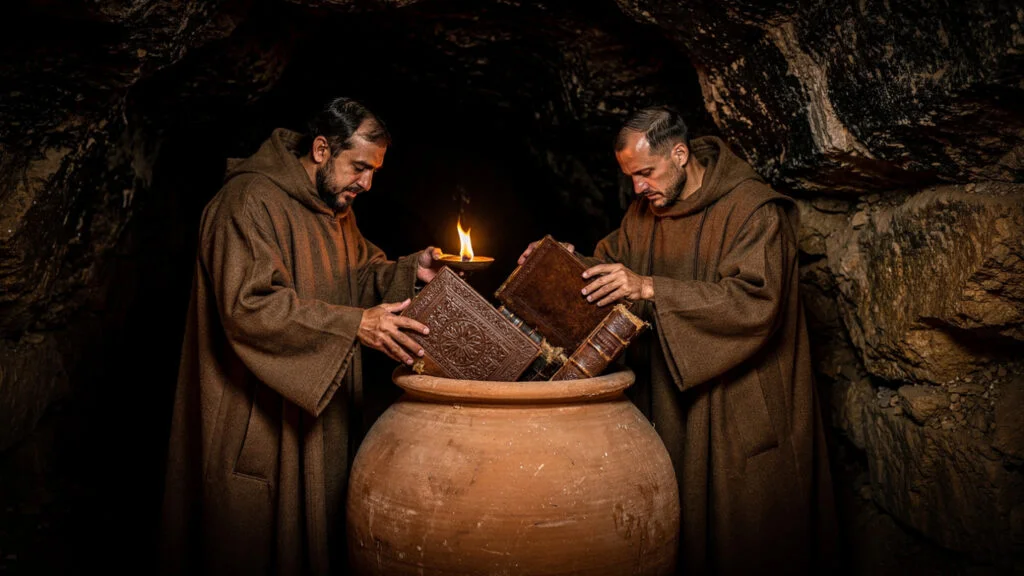
The Nag Hammadi library, as it came to be called, contained texts that the institutional church had declared heretical and ordered destroyed in the fourth century. The order had been followed widely enough that most of the texts were known only from hostile quotations in the writings of the church fathers who were condemning them. The Nag Hammadi codices were copies that had been buried rather than destroyed, presumably by monks from a nearby monastery who hid them when the institutional pressure to destroy heretical texts became direct and immediate.
The texts include the Gospel of Thomas, the Apocryphon of John, which provides the most detailed surviving account of Gnostic cosmology including the Demiurge and the Archon hierarchy recorded in the Gnostic piece on this site, the Gospel of Philip, the Gospel of Truth attributed to Valentinus, and the Thunder, Perfect Mind, a text whose first-person speaker claims simultaneously to be honored and scorned, to be wife and virgin, to be knowledge and ignorance, a paradoxical self-description that has never been satisfactorily explained within any conventional theological framework.
These texts were not marginal documents of obscure origin. They circulated in early Christian communities as authoritative. The institutional decision to suppress them was made three and a half centuries after Christianity began. It was enforced through the mechanism of defining the institutional church as the sole legitimate interpreter of the faith, which meant that texts not approved by that institution were by definition outside the faith.
The Apocryphon of John’s account of the Demiurge creating a material world as a trap for divine sparks that had fallen into matter is the same theological framework that informed the Gnostic piece on this site and that connects to the consciousness and simulation tradition covered throughout this library. It was written in the second century, buried in the fourth, discovered in the twentieth, and published in academic translation in the 1970s.
The institutional church had three hundred years between the writing of these texts and their suppression. The content of the suppression is visible in the theological positions that were subsequently defined as orthodox.
The Archive and What It Holds
The Vatican Apostolic Archive, known until 2019 as the Vatican Secret Archive, a name whose translation the Vatican has spent considerable institutional energy correcting, contains approximately eighty-five kilometers of shelving with documents spanning from the eighth century CE through the present. Access has been progressively expanded since the 1880s when Leo XIII opened portions of the collection to external scholars.
The archive holds the records of the Inquisition, the proceedings of the Council of Trent, correspondence between popes and monarchs across eight centuries, and the administrative records of the institution that managed the canon formation process. It also holds materials that scholars who have accessed it describe in terms suggesting that the publicly accessible portions represent a fraction of the institutional record.
The archive does not hold the lost books cited in Numbers and Joshua and Kings and Chronicles. Those books, if they survived the multiple destructions of the ancient world, the Babylonian conquest of Jerusalem, the Roman destruction of 70 CE, the burning of the Library of Alexandria across multiple incidents, the institutional suppressions of the fourth and fifth centuries, would not have survived as Vatican holdings. They would have been destroyed or lost in processes that predate the Vatican’s institutional existence by centuries.
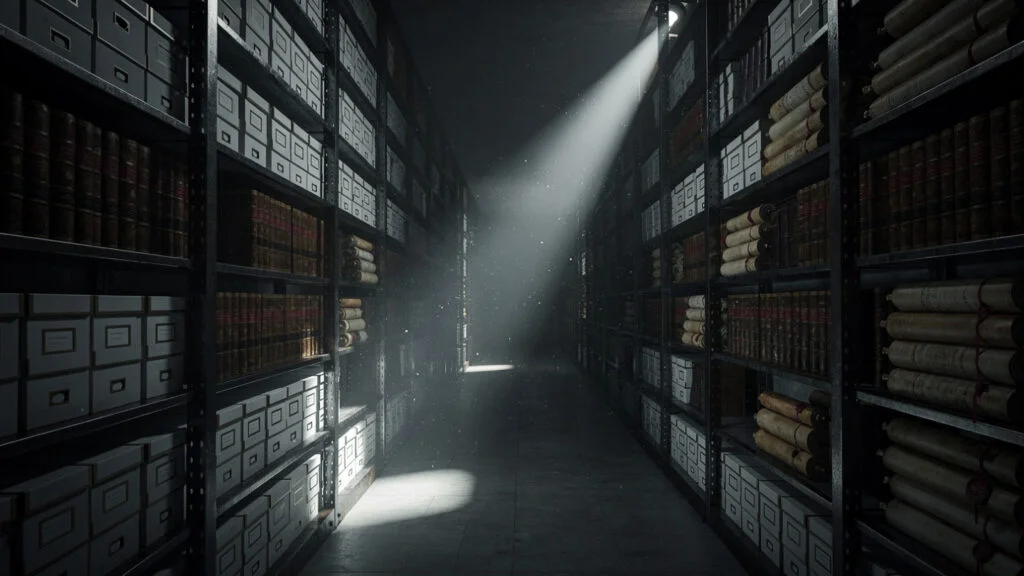
What the archive holds is the record of the decisions that determined which texts survived in institutional circulation and which did not. The reasoning behind those decisions. The correspondence between the bishops and councils and popes that established the canonical framework that has defined Christianity for seventeen centuries.
The Codex Sinaiticus, the oldest complete manuscript of the Christian Bible, dated to the fourth century CE and now divided between the British Library, the National Library of Russia, St. Catherine’s Monastery, and the Vatican Library, includes as canonical books that the Protestant canon excludes and that the Catholic canon only partially accommodates. The Shepherd of Hermas. The Epistle of Barnabas. Both treated as scripture in the fourth century. Neither present in any modern Bible.
The Seventeen Names
The canonical Bible names seventeen books that do not exist in any surviving canon. The Book of the Wars of the Lord. The Book of Jasher. The Book of the Acts of Solomon. The Book of Nathan. The Book of Gad. The Prophecy of Ahijah. The Visions of Iddo. The Book of Shemaiah. The Annals of Jehu. The Acts of Uzziah. The Book of Covenant. The Book of Samuel. The Chronicles of the Kings of Israel. The Chronicles of the Kings of Judah. The Book of the Records of Solomon. The Laments for Josiah. The Commentary of the Book of Kings.
Each of these is cited in a text that is in the canon. Each citation treats the referenced text as an authoritative source whose readers are expected to consult. Each referenced text has no surviving copy in any manuscript tradition that the scholarly community accepts as genuine.
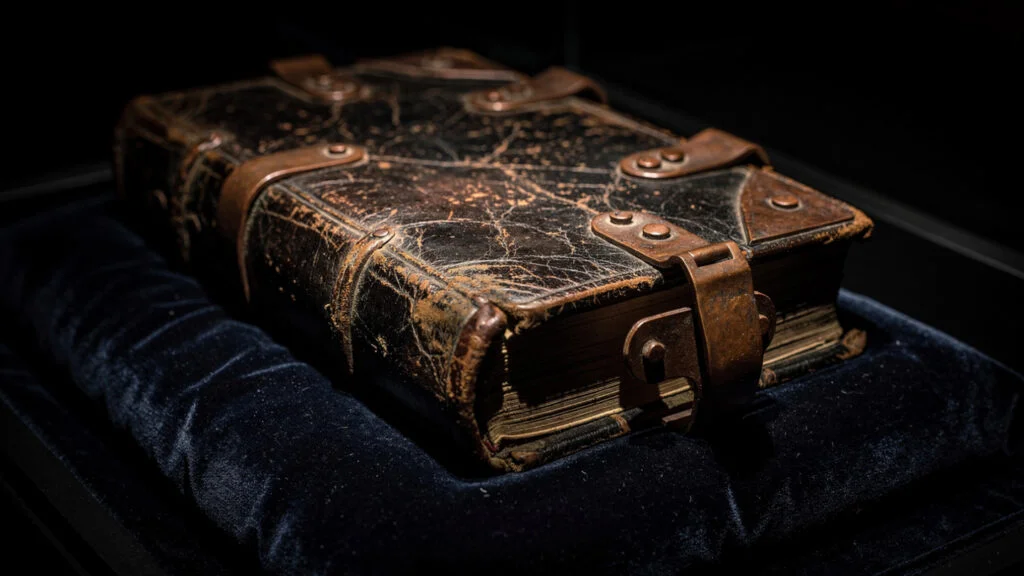
These books existed. The canonical authors knew them and quoted from them. They were considered authoritative by those authors. They are not in any Bible currently in print.
The question of why they are not in any Bible currently in print has not been formally answered by any institution with the authority to answer it.
The archive that holds the record of canonical formation decisions has not been fully opened. The seventeen missing books have not been found. The institution that managed the canon formation process has not published an account of what happened to the texts that its own foundational documents cited as authoritative.
The canonical Bible contains the citations. The citations point to empty shelves.
Whatever was on those shelves, the authors of Numbers and Joshua and Kings considered it important enough to direct their readers toward it. What their readers found there, we cannot know.
What removed it from every shelf is the question that seventeen explicit citations inside the canonical text make impossible to dismiss as speculation.
These are the actual lost books the Bible quotes by name, seventeen of them, still unaccounted for.