




King Umberto I of Italy really did meet his own double days before his assassination, a genuinely documented, well-recorded historical coincidence with a specific name, a specific date, and a thoroughly investigated political motive behind the killing itself. The wife’s name was Margherita, not Malgorzata, a small but checkable detail. The assassin was Gaetano Bresci, a documented anarchist avenging a real 1898 massacre, not a program cleaning up redundant data. And the Prague tram death, the French train identification, and the Australian case described alongside it trace to no findable news report, court record, or forensic case file anywhere.
One thread here checks out and is genuinely remarkable. The other is invented to make the real one look like part of a pattern.

The Umberto Coincidence, Precisely Retold
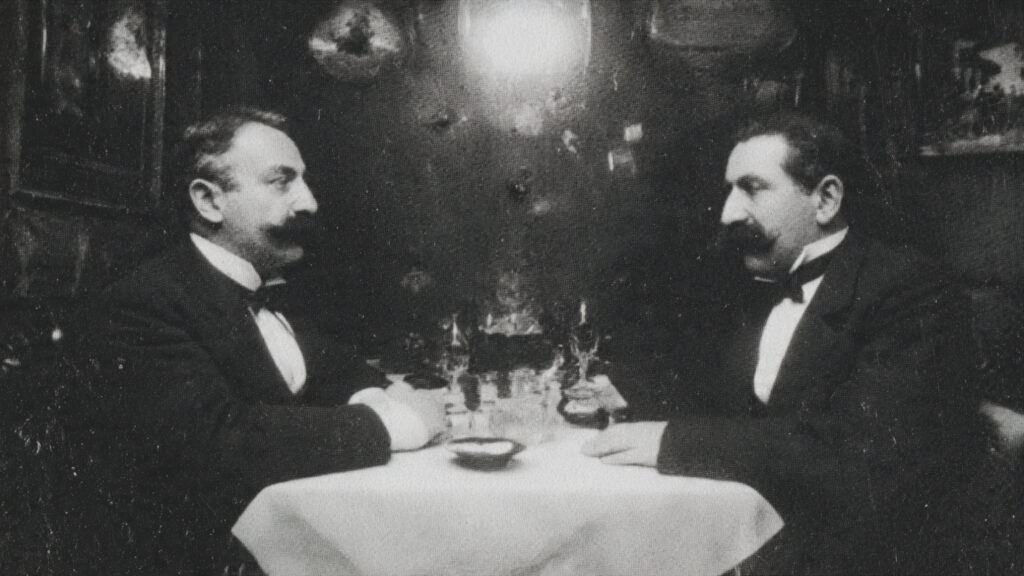
This is genuinely one of history’s most extensively documented coincidences, and it deserves an accurate account. On the evening of July 28, 1900, King Umberto I dined at a restaurant in Monza ahead of an athletics ceremony the next day. The restaurant’s owner, also named Umberto, bore a striking resemblance to the king, and as the two men talked, the coincidences piled up: both were born in Turin on March 14, 1844, both married on the same day to women named Margherita, both opened their defining life chapter, a throne and a restaurant, on the same date, and both had received honors for the same military actions. The restaurant owner died the following day, reportedly in a shooting accident. That evening, King Umberto was shot three or four times by Gaetano Bresci, a real, named Italian-American anarchist who had traveled from Paterson, New Jersey specifically to kill him, in direct, well-documented retaliation for the 1898 Bava-Beccaris massacre, when Italian troops fired on protesting workers and peasants in Milan and the king later decorated the general responsible. That’s the actual chain of events: a genuinely eerie personal coincidence, followed by a political assassination with a clear, documented human motive, not a system correcting duplicate data.
Why the Modern Cases Don’t Hold Up
This deserves direct scrutiny rather than repetition. No verifiable news report, court record, or forensic case file describes a Prague tram death involving a DNA-identical stranger, a French train derailment identification of that kind, or an Australian case matching the description given. More importantly, the underlying claim runs directly against basic, well-established population genetics: unrelated people cannot share identical DNA. The only humans who do are identical twins, formed from a single fertilized egg that splits early in development, a documented, well-understood biological process. Two genetically unrelated strangers matching on fingerprints and full DNA analysis isn’t a rare event science hasn’t caught up to. It would represent a complete breakdown of how inheritance works, something that would overturn forensic science, paternity testing, and the entire field of genetics simultaneously, not a quiet local news story that vanished without record.
What Actually Explains a Stranger’s Familiar Face
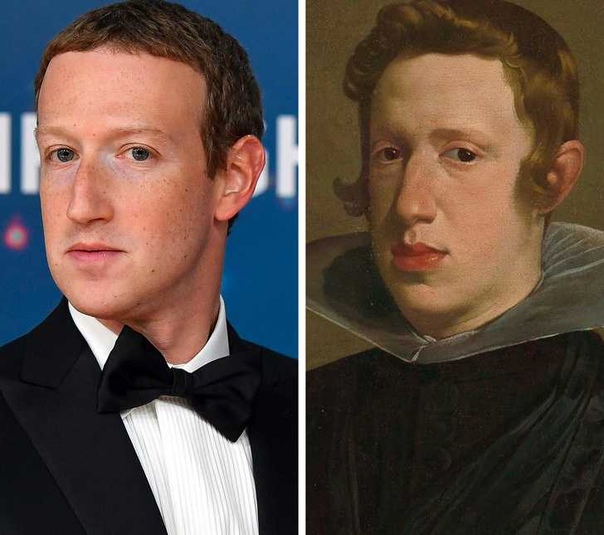
Documented “doppelganger” resemblance between unrelated people is a studied phenomenon with a much less exotic explanation. A 2022 study published in Cell Reports, led by researcher Manel Esteller, examined pairs of unrelated look-alikes identified by Canadian photographer François Brunelle and found that people who closely resemble each other by facial recognition software do share more genetic variants than random pairs, not because they’re duplicates from a shared “source code,” but because the human face is built from a finite, well-mapped set of genes controlling bone structure, proportion, and feature placement. With roughly eight billion people alive and a limited number of ways genes can combine to produce a human face, close resemblance between unrelated strangers is a predictable outcome of ordinary probability, not evidence of a template library being reused by a simulator.

The DNA-Hexagram Numerology, Examined Honestly
The observation that DNA uses 64 codons and the I Ching contains 64 hexagrams is arithmetically accurate and genuinely nothing more than that. Sixty-four is simply four raised to the third power, the number of ways four DNA bases can combine across three positions, a structural feature of molecular chemistry with no historical or causal connection to a divination system compiled in ancient China centuries before DNA’s structure was understood in 1953. Numerical coincidences between unrelated systems are common precisely because relatively small numbers like 64 appear naturally in many unrelated contexts, not because one system secretly encodes the other. Credentialed molecular biologists who study the genetic code’s actual structure and redundancy don’t treat this correspondence as meaningful, because there’s no proposed mechanism connecting them beyond the shared number itself.
One Coincidence Was Real. The Rest Was Built to Match It.
None of the genuine strangeness needs a simulation-glitch framework to remain worth telling. The Umberto coincidence is genuine, extensively documented, and doesn’t require anything supernatural to be one of the most striking coincidences in recorded history. Facial resemblance between unrelated strangers is a documented, studied phenomenon with a genetic and statistical explanation grounded in ordinary probability across a very large population. Identical DNA between unrelated people isn’t a rare glitch, it’s a biological impossibility outside identical twins, and treating it as documented fact requires ignoring how inheritance actually works. Separating the real coincidence from the invented ones doesn’t make the world less strange. The Umberto story alone is stranger than fiction needed to make it.