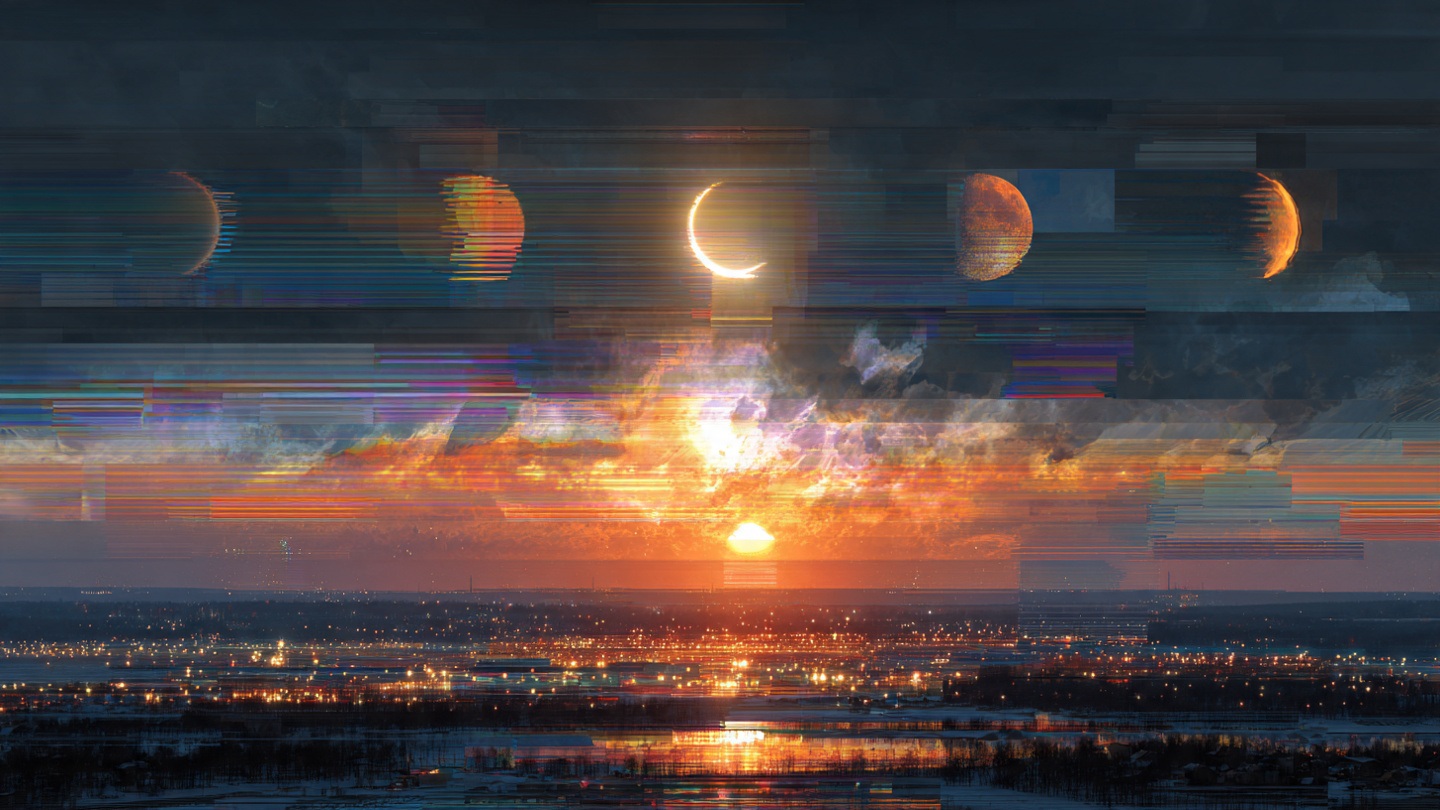
Extra suns in the sky are documented, genuinely well-studied, and considerably better understood than a rendering glitch. They’re called sun dogs, or parhelia, caused by sunlight refracting through hexagonal ice crystals in high cirrus clouds roughly 5 to 10 kilometers up, not the stratosphere, and not a mirror. The claim that this can’t happen in tropical or desert regions is simply wrong: meteorologists have documented sun dogs worldwide, including in the tropics, precisely because high cirrus clouds carry ice crystals regardless of how hot it is at ground level.
Getting the actual mechanism right doesn’t make the sky less dramatic. Four suns at once is a genuine, rare, spectacular, and fully explained atmospheric event.

How Sun Dogs Actually Work
This deserves the precise mechanism, because it’s genuinely elegant physics rather than a placeholder for something hidden. Sun dogs, formally called parhelia, form when sunlight passes through flat, hexagonal, plate-shaped ice crystals suspended in cirrus or cirrostratus clouds, high, thin clouds that sit five to ten kilometers up in the upper troposphere, well below the stratosphere and considerably warmer at that altitude than minus seventy degrees Celsius. As these crystals drift and settle with their flat faces roughly parallel to the ground, they act as millions of tiny prisms, bending sunlight by a specific, well-measured 22 degrees, which is why sun dogs consistently appear flanking the true sun at that exact angular distance, often accompanied by a full 22-degree halo. That’s refraction, light bending as it passes through a denser medium, not reflection off a mirror. Nothing about the mechanism requires a silvered surface, because a prism was never supposed to work like a mirror in the first place.
Why They Really Do Happen in the Tropics
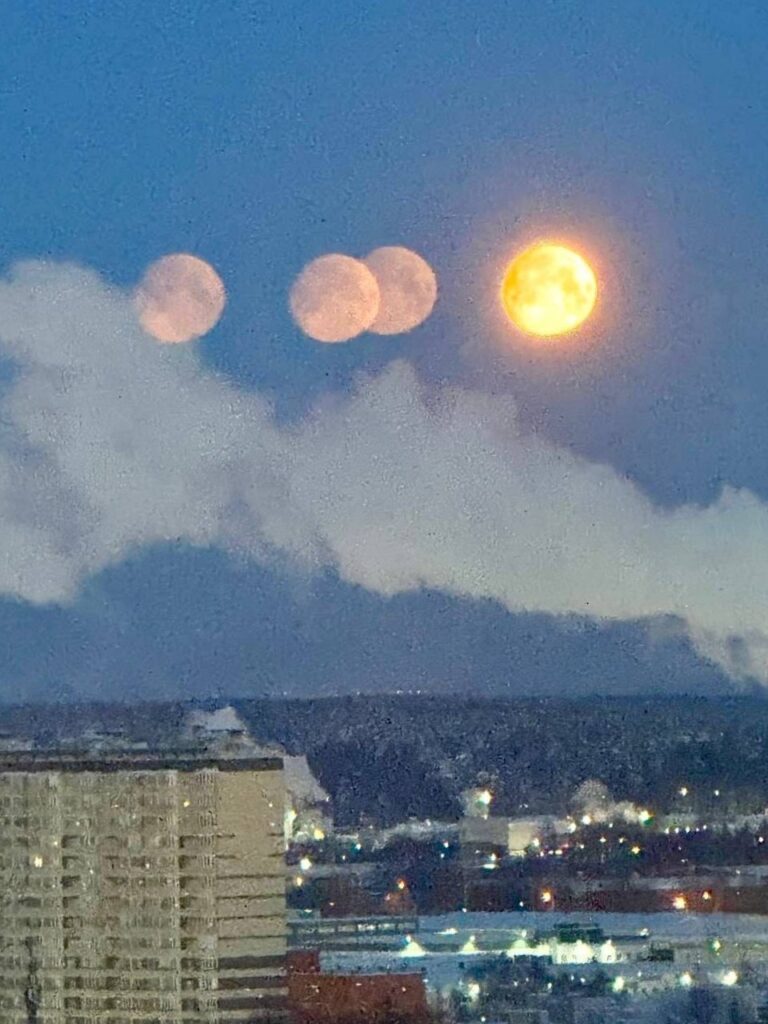
This is worth correcting directly, since it’s the central factual error here. Meteorologist Kyle Brittain, former Alberta bureau chief for The Weather Network, has explained the mechanism precisely: “Parhelia, or sundogs, can be seen anywhere in the world at any time of the year, as long as there is a layer of ice crystals between the viewer and the sun. In many cases, especially the tropics, these come in the form of high cirrus clouds comprised of ice crystals.” The temperature that matters is the local temperature at cirrus-cloud altitude, roughly five to ten kilometers up, which stays reliably cold enough for ice crystals to form regardless of how hot the ground is beneath them, whether that ground is Odessa, the Sahara, or the Amazon. A desert or tropical sun dog isn’t a paradox requiring a hidden explanation. It’s exactly what the actual physics predicts, since deserts and the tropics both regularly produce high cirrus cloud cover.
Where “Four Suns” Actually Comes From
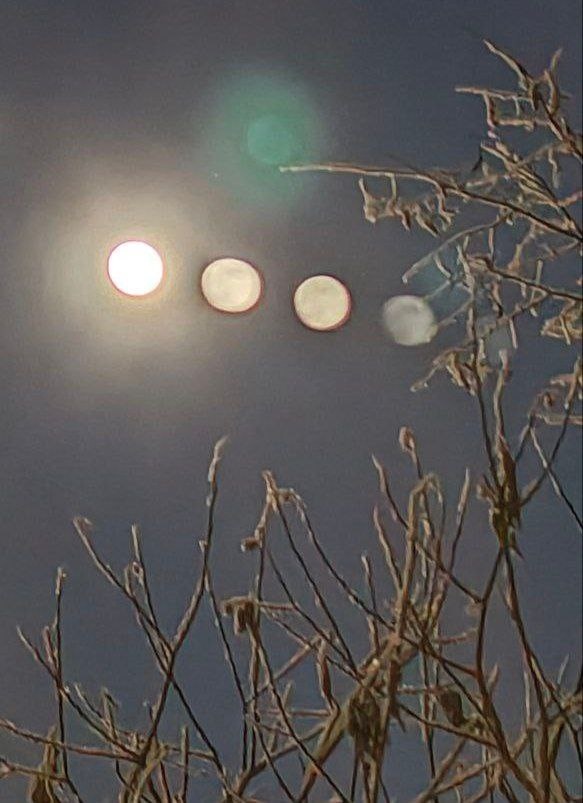
A genuine four-sun sighting has a specific, documented explanation, and it’s rarer and more spectacular than a single sun dog. When ice-crystal-saturated cirrus clouds fill enough of the sky, a real, well-documented phenomenon called a 120-degree parhelion can appear alongside the more common 22-degree sun dogs, additional bright spots positioned 120 degrees around the parhelic circle from the true sun, produced by light undergoing at least two internal reflections inside the hexagonal crystals rather than a single refraction. Combine the true sun with a standard pair of 22-degree sun dogs and a 120-degree parhelion, and an observer genuinely can see what looks like three or four separate solar discs simultaneously, an authentic, rare, and fully documented optical event, not a rendering artifact. The independent movement and varying brightness described in sightings is consistent with how these secondary images shift relative to the true sun as cloud density and crystal orientation change in real time, exactly what a real, moving cirrus layer produces.

Moon Dogs Follow the Exact Same Physics
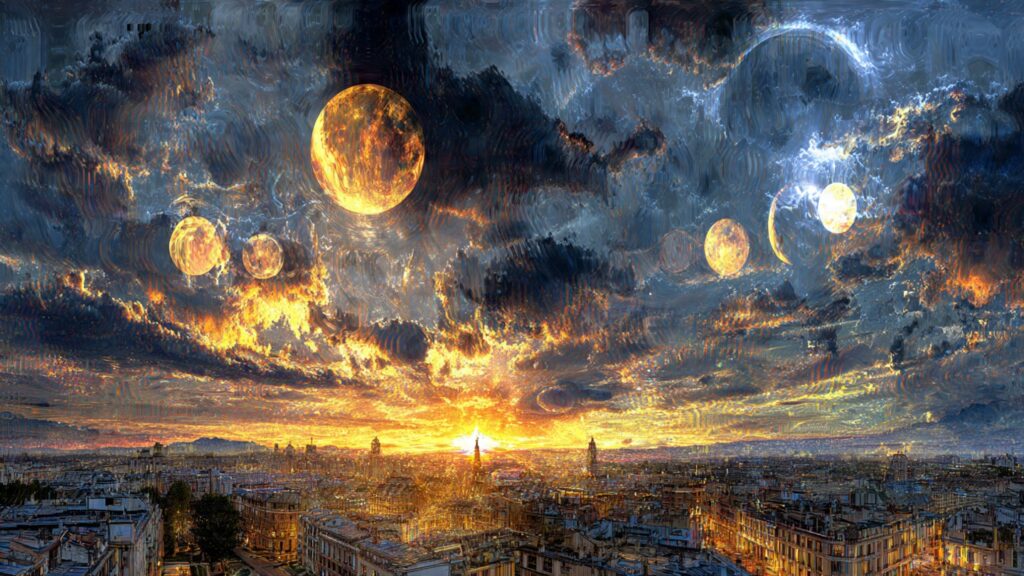
Multiple moons in the sky are genuinely documented too, under the name paraselenae, or moon dogs, produced by exactly the same hexagonal ice crystals refracting moonlight instead of sunlight at that same 22-degree angle. Because moonlight is far dimmer than sunlight, moon dogs require a bright, nearly full moon to be visible at all, and they typically appear pale or whitish rather than showing the more vivid colors sun dogs can display, which is precisely why sightings of multiple moons are rarer than sightings of multiple suns, not because they require a different, more exotic mechanism, but because the light source powering the same optical effect is simply weaker most nights.
The Physics Was Always in the Cirrus Clouds
None of the genuine drama here needs a failing simulation to stay remarkable. Sun dogs and moon dogs are documented, well-studied, centuries-old optical phenomena, caused by refraction, not reflection, through ordinary hexagonal ice crystals in ordinary high clouds, occurring worldwide, tropics included, wherever the right cloud layer happens to form. The rarer four-sun sightings trace to a real, specific, documented combination of standard sun dogs and the less common 120-degree parhelion, not four separate suns or four separate simulated cells bleeding into each other. Getting the mechanism right doesn’t shrink the phenomenon. A sky briefly holding four genuine solar images at once, produced entirely by ice and light bending exactly as physics predicts, is already remarkable enough to look up for.
Hole-punch clouds belong to the same family of misread sky phenomena, a real, well-documented atmospheric event that an unclassified facility explanation turns into evidence of the simulation breaking down.