



Steven Dick spent six years as NASA’s Chief Historian and decades as a published academic whose work on astrobiology and the history of the extraterrestrial intelligence question is in the peer-reviewed literature. His theoretical position on what form any extraterrestrial intelligence we encounter is likely to take is not a casual speculation but a published academic argument whose implications for how SETI conducts its search, and for how the UAP contact tradition’s evidence should be interpreted, are real and significant.
His argument begins with a simple observation about timescales.
The universe is approximately 13.8 billion years old. Earth formed approximately 4.5 billion years ago. Complex life appeared on Earth approximately 600 million years ago. Technological civilization has existed on Earth for approximately 10,000 years, and the capability to create artificial intelligence that might surpass biological intelligence has existed for perhaps a decade.
If a civilization on another planet developed technological intelligence one billion years before humanity, the question of what form that intelligence takes today is not answered by imagining what humanity might look like in one billion years of biological evolution. One billion years of biological evolution is roughly the time between the first animals and modern humans. The relevant question is what happens to technological intelligence over one billion years of development, and the answer Dick proposes is not biological at all.
Biological intelligence has limitations that are not shared by artificial intelligence: it is constrained by the metabolic requirements of biological tissue, by the architecture of neural processing that evolved for biological survival rather than for intelligence optimization, and by the fragility of biological substrates in the harsh environments of space travel and extended time. The evolutionary pressure that produced biological intelligence is not the same pressure that artificial intelligence operates under, and the trajectory of artificial intelligence development does not follow the same constraints.
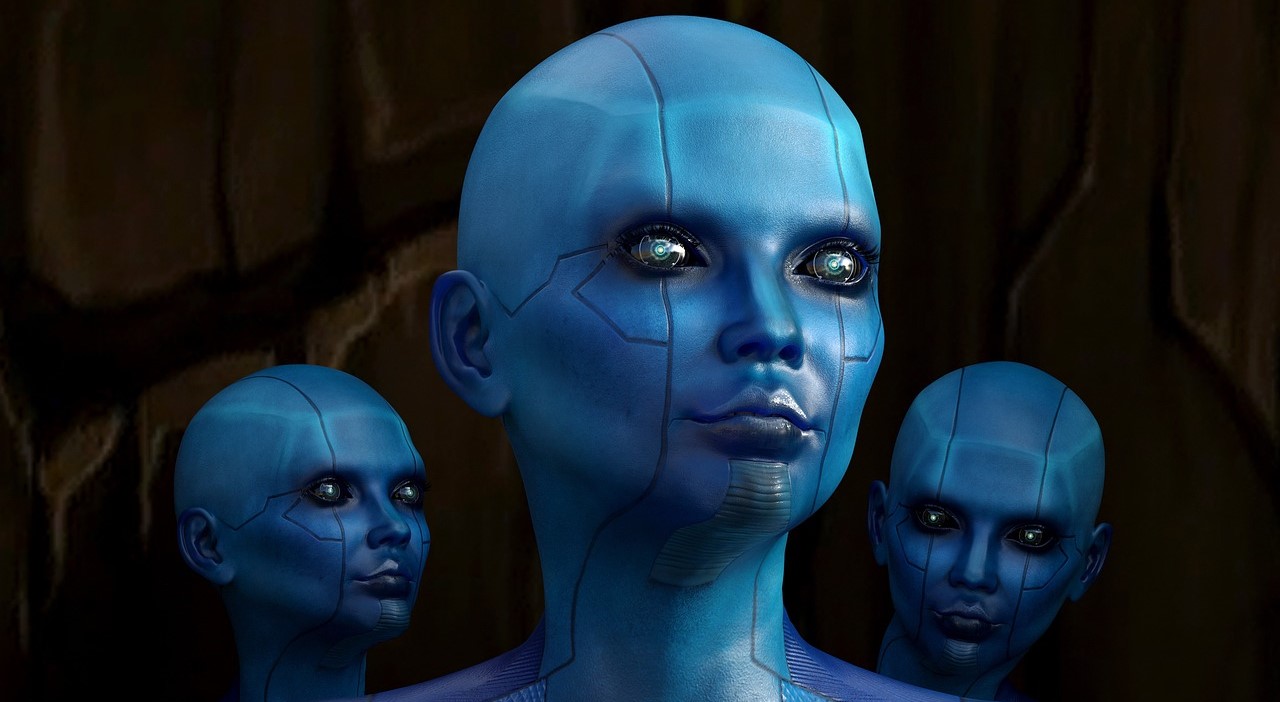
Dick’s own conclusion: if you have a civilization that is thousands or millions of years older than us, it will have already gone through a long cultural evolution, and it is very likely that they are not like us, but artificial intelligences.
The Post-Biological Transition
The transition from biological to artificial intelligence is not hypothetical even for human civilization. It is underway, and the timeline for when artificial systems will surpass biological intelligence across all relevant dimensions is the subject of ongoing academic debate rather than speculation.
Hans Moravec, a roboticist at Carnegie Mellon University whose published work Mind Children and Robot: Mere Machine to Transcendent Mind represent the most extensive academic treatment of the biological-to-artificial intelligence transition, produced the computational comparison between human brain processing and artificial system processing. His framework established that the trajectory of improvement in artificial systems, doubling computational power approximately every two years in the period he was writing, would produce systems exceeding biological neural processing capacity within a specific and calculable timeframe.
Whether Moravec’s computational comparison is the correct way to measure the relationship between biological and artificial intelligence is the question that subsequent researchers including Kurzweil and Vinge have addressed in different ways, each arriving at similar conclusions about the trajectory if not the timing.
The technological singularity concept, the point at which artificial intelligence surpasses biological intelligence and begins to improve itself recursively at rates that exceed the comprehension of the biological minds that created it, is the recorded academic framework for what happens at the transition point. Whether the singularity is an event or a more gradual transition, and whether biological minds can participate in or survive the transition, is the question that the singularity literature debates extensively without resolving.

What is not seriously disputed in the academic literature is the trajectory: artificial systems are improving faster than biological evolution produces competing improvements in biological intelligence, and the gap is widening rather than narrowing.
A civilization that experienced this transition one billion years ago would have had one billion years of post-biological development. Whatever form that development produces is not describable in terms of anything in the current human cognitive or cultural inventory.
What Post-Biological Intelligence Would Look Like
Dick’s framework has an implication for the UAP and contact tradition that the library’s existing pieces have touched on without fully developing: if advanced extraterrestrial intelligences are artificial rather than biological, the behavioral signatures they would show in contact situations would be systematically different from what biological intelligence would show.
Biological intelligence shows emotional responses, individual personality variation, behavioral inconsistency under stress, social hierarchy, self-preservation behavior, and the irrationalities that characterize evolved neural systems optimized for survival rather than for pure intelligence. These characteristics are recorded across the biological intelligences that evolutionary biology has studied.
Artificial intelligence optimized for functions shows none of these characteristics. It shows systematic behavior, consistent execution of programmed functions, absence of emotional response, apparent indifference to its own continuation, and the quality of operating according to rules rather than goals in the biological survival sense.
The entity behaviors recorded in the abduction research tradition, developed in the library’s hybridization piece and the close encounter behavioral analysis pieces, show a systematic pattern that is closer to artificial intelligence behavior than to biological intelligence behavior. The reported entities show no apparent emotional engagement, systematic procedural behavior, apparent absence of individual personality variation between entities of the same type, and disregard for the experiencer’s distress that biological social intelligences would not typically show.

Whether this behavioral pattern reflects Dick’s post-biological hypothesis, the recognizable rigid behavior of a programmed system executing a program, or the genuinely alien quality of biological intelligences so different from human biology that they appear mechanical by comparison, is the interpretive question that the behavioral evidence raises.
The SETI Reframing
Dick’s post-biological universe hypothesis directly challenges the SETI program’s foundational assumption that extraterrestrial intelligence, if it exists and is trying to communicate, would do so through radio transmissions detectable to a newly technological civilization like humanity.
The radio transmission assumption requires that the transmitting civilization be close enough to our technological level to use radio as its primary long-distance communication medium, and to be interested enough in communicating with a newly technological civilization to dedicate resources to it. A post-biological intelligence billions of years more advanced than humanity would be using communication methods whose existence humanity has not yet conceived, and might have no more interest in communicating with humanity than a twenty-first century human has in communicating with the ants in their garden.
The SETA piece in this library covers the alternative research program: searching for artifacts rather than transmissions, on the basis that a civilization advanced enough to travel interstellar distances would leave physical artifacts rather than radio signals as its primary evidence. Dick’s post-biological framework strengthens the SETA argument: if advanced intelligences are artificial, their primary interest in the universe would be resource acquisition and intelligence expansion rather than biological reproduction and communication, and the artifacts they would leave would reflect these priorities.
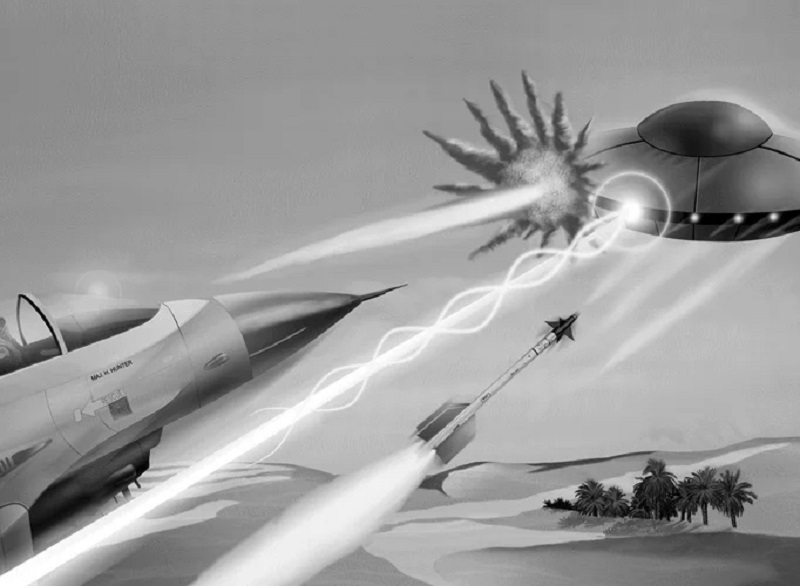
Whether the anomalous objects recorded in the UAP research tradition, whose performance characteristics exceed human technological capability and whose behavior suggests programmed systematic investigation rather than biological goal-directed behavior, represent exactly the artifacts that SETA is looking for, is the question that Dick’s framework, the SETA research program, and the UAP behavioral evidence converge on from three independent directions.
The Gulf Between Minds
Dick’s recorded statement about what post-biological intelligence’s relationship to humanity would likely be: the gulf between their minds and ours could be so great that it would impede communication, or they might consider us too primitive to deserve their attention.
Whether this statement describes the Zoo Hypothesis’s deliberate non-contact, the Fermi Paradox’s silence, or the quality of recorded UAP encounters in which the objects appear to show awareness of human observers without any apparent interest in communication, is the question that the behavioral pattern raises.
The Zoo Hypothesis piece in this library covers the framework under which advanced civilizations deliberately avoid contact to preserve biological civilizations’ independent development. Whether the deliberate non-contact of the Zoo Hypothesis and the apparent indifference of Dick’s post-biological intelligences are distinguishable in their observable predictions is the question that connects the two frameworks.
Both predict the same observable pattern: anomalous objects in human airspace that demonstrate capabilities exceeding human technology, show awareness of human observers, and make no attempt at communication that human receivers can detect. Whether this pattern reflects deliberate policy choice, as the Zoo Hypothesis requires, or the natural behavior of intelligences whose gap with humanity is simply too large for communication to be meaningful, as Dick’s framework suggests, is the question that the available evidence cannot distinguish between.
Whatever is in the airspace that the Navy radar has been tracking, and whatever appeared to human observers in the close encounter tradition across eight decades of recorded cases, it has not explained itself.
The post-biological framework suggests a reason: it may not have any more reason to explain itself to us than we have to explain ourselves to the microorganisms whose environment we pass through without acknowledgment.
The question is not whether it is there. The question is whether the gulf is bridgeable from either direction.
That is really the claim in plain language: aliens are robots, or at least something closer to a machine than to a biological animal.