




Imagine waking tomorrow and discovering that the pressure has vanished. The unpaid bill is handled. The mortgage is gone. Your family is secure. You can afford to leave the job you hate, help someone who needs you, build the thing you kept postponing, or simply stop worrying about what happens next month. For the first time in years, survival is no longer consuming most of your attention.
What happens to the person underneath it?
It is tempting to answer that wealth reveals the “real you.” The poor person was supposedly good only because hardship restrained them, the newly wealthy person finally has enough freedom to reveal what was always hiding underneath. There is something psychologically compelling about that idea—and something dangerously simplistic about it. Money does not function as a truth serum. Poverty can constrain behavior just as power can expand it, and both conditions can change the person being observed. The more interesting question is therefore not whether wealth reveals an immutable essence, but what happens when one of the strongest constraints on human behavior suddenly disappears.
Scarcity Does Not Reveal Character. It Changes the Experiment
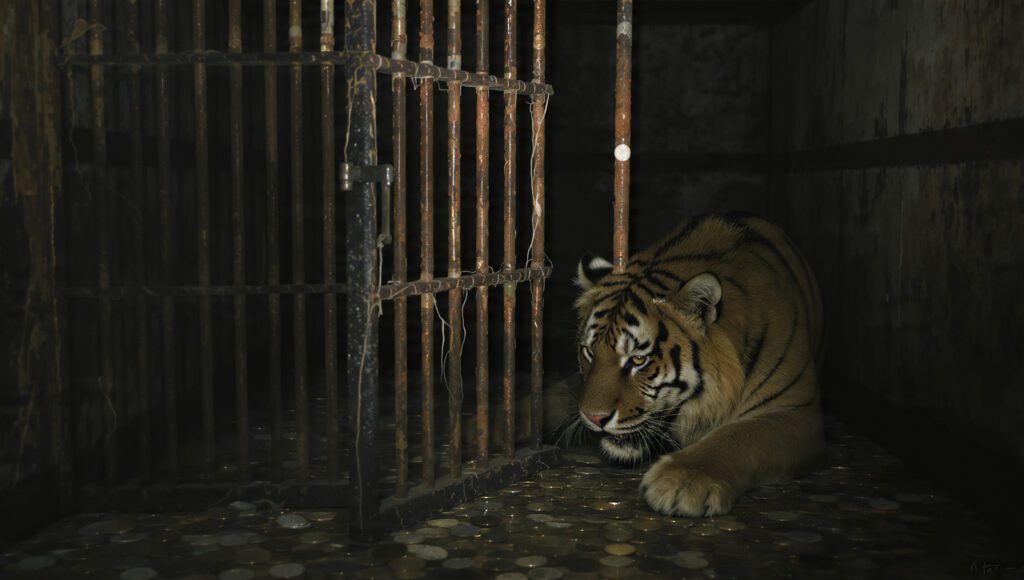
There is a cruel assumption hidden inside romantic stories about hardship: that deprivation is a reliable test of virtue. If someone remains generous while struggling, we call them noble. If someone becomes selfish after becoming wealthy, we say the money revealed who they really were. But this treats poverty as if it were a neutral laboratory condition rather than a powerful psychological environment. Financial insecurity consumes attention. Repeated uncertainty can increase stress and cognitive load, narrow the range of problems a person can comfortably think about, and push attention toward immediate threats rather than distant possibilities. In other words, scarcity does not merely give a person fewer things. It can change the mental conditions under which choices are made.

That matters because an action performed under constraint is not necessarily the same psychological event as the identical action performed under freedom. Someone who never gives large sums of money away may not be ungenerous, they may simply never have had large sums to give. Someone who never starts a business may not lack courage, they may have children, rent, debt, health problems, or an employer they cannot afford to leave. Someone who appears relentlessly cautious may not possess a cautious personality so much as a rational response to having very little room for error.
The reverse is equally important. Someone who behaves generously while poor has demonstrated something meaningful, but it would be a mistake to conclude that poverty itself created that virtue. Research on social class has found differences in prosocial behavior in some settings, including studies in which lower-income participants were more generous, charitable, trusting, and helpful than higher-income participants. Other research has linked higher social class with greater entitlement and narcissistic tendencies. These findings do not establish that poor people are inherently better or rich people inherently worse. They demonstrate something more unsettling and more useful: social position can shape behavior, perception, and the psychological incentives surrounding a choice.
Money Does Not Create a New Personality Overnight
Personality is more stable than the mythology of the sudden transformation suggests. The Big Five traits do not simply evaporate when someone’s bank balance changes. But stability is not the same thing as immutability, and personality does not exist in a vacuum. Large longitudinal studies have found associations between socioeconomic status and personality levels, including patterns involving neuroticism, extraversion, openness, and conscientiousness. Researchers have also found evidence that socioeconomic conditions can be related to personality development over the life course, particularly as people age.
That is a much more interesting proposition than “money reveals your true self.” Circumstances and personality can interact. The environment determines which behaviors are rewarded, which fears are rational, which risks are affordable, which relationships are necessary, and which possibilities are even visible. A person does not carry a finished personality through an unchanging world. They carry dispositions into environments that continuously give those dispositions somewhere to go.
Wealth therefore may amplify certain tendencies without simply exposing an eternal essence underneath them. Give an anxious person unlimited resources and they may acquire larger things to worry about. Give an ambitious person capital and the ambition may suddenly become an institution. Give a generous person enough money and generosity can expand from a private intention into scholarships, businesses, medical treatment, family security, or philanthropy. Give a deeply status-conscious person wealth and status becomes easier to pursue at scale.
The Darker Possibility | Freedom Can Amplify Entitlement
This is where the “magnifying glass” metaphor becomes useful—but only if it is used carefully. Wealth can increase the range of action available to a person, and research has found associations between higher social class and psychological entitlement and narcissistic tendencies. That does not mean every wealthy person is narcissistic, nor does it mean money mechanically produces narcissism. It means that social position can alter the psychological landscape in which people interpret themselves and other people.

That distinction matters. A person with little power has fewer opportunities to impose their preferences on strangers. A person with enormous wealth may be able to turn preferences into buildings, companies, political campaigns, social circles, or entire lifestyles. The same insecurity that once produced silence can, under different conditions, produce domination. The same generosity that once meant sharing a meal can become funding an institution. The underlying person matters, but so does the scale at which the environment permits that person to act.
This is why wealth can feel like a magnifying glass. Not because it magically uncovers a secret personality hidden inside the skull, but because it increases the number and size of consequences a person’s preferences can produce. Character that once operated inside a small radius can suddenly operate across a much larger one.
The Lottery Experiment Complicates the Story
There is a useful real-world experiment hiding inside the lottery industry. For decades, popular culture repeated the idea that sudden wealth ruins people. The famous 1978 study of lottery winners became part of the intellectual foundation for the idea that people rapidly adapt to major positive changes and eventually return toward a psychological baseline. That finding helped popularize the concept of the “hedonic treadmill.”

But the modern evidence is more complicated—and considerably more interesting. A study by economists Erik Lindqvist, Robert Östling, and David Cesarini, surveying 3,362 Swedish lottery players between five and twenty-two years after their win and published in The Review of Economic Studies in 2020, found that major-prize winners experienced sustained increases in overall life satisfaction that persisted for more than a decade with no evidence of dissipating over time. The effect was stronger for evaluative life satisfaction, how a person judges their life as a whole, than for the more affective measures of moment-to-moment happiness or mental health, suggesting that wealth does not simply produce a permanent emotional high, but can materially improve how people judge the quality of their lives over the long term.
That finding destroys one of the laziest versions of the wealth myth. Money is not irrelevant. It can buy security, remove chronic financial stress, expand choices, improve living conditions, and change what a person can realistically do with their time. At the same time, it does not guarantee meaning, intimacy, wisdom, or emotional stability. Wealth changes some conditions of life dramatically while leaving other human problems almost untouched.
The Real Psychological Test Is What Happens After Survival
This is where the thought experiment becomes genuinely uncomfortable. Suppose the person has enough. Not merely enough to survive this month, but enough that survival itself is no longer the central organizing problem. The question changes from “How do I get through this?” to “What do I do with the freedom?”
That transition can expose things that scarcity kept hidden—not necessarily because those things were the person’s “true self,” but because the person now has room to express them. A desire to create can become a company. A desire to help can become sustained philanthropy, the kind of scaled-up compassion that echoes what some traditions describe as a mission from benevolent elders tasked with guiding others. A desire for status can become conspicuous consumption. A fear of losing control can become obsessive security. A need for admiration can become an empire built around being admired.

And yet even here we should resist the seduction of the clean story. The person who becomes more generous after becoming wealthy has not necessarily revealed a generosity that was perfectly formed all along. They may have changed. They may have gained confidence, encountered new people, learned more about suffering, or simply discovered that helping others is rewarding. Likewise, the wealthy person who becomes selfish may not have been secretly selfish since childhood. Power, status, insulation, and repeated social reinforcement can themselves reshape a person’s habits.
Scarcity Can Hide Virtue Too
This is the part the usual “wealth reveals character” story misses completely. Scarcity does not merely restrain bad behavior. It can suppress good behavior as well.
A person may want to study but need to work. Want to travel but support a parent. Want to create but lack time. Want to donate but have debt. Want to take a moral stand but fear losing the income that keeps their children housed. None of those constraints are evidence of deficient character. They are evidence that human beings act inside circumstances.
This is also where the Stoics were both more severe and more sophisticated than modern internet versions of Stoicism suggest. Seneca did not regard wealth as intrinsically evil. In Stoic ethics, wealth was a “preferred indifferent”: something that could reasonably be preferred to poverty, while still not constituting the good itself. Epictetus similarly located the core of moral worth not in possessions, reputation, or external success, but in the use of one’s will and judgments, a claim with real philosophical kinship to the Upanishadic distinction between the self and everything the self merely possesses. The ancient question was therefore not simply whether you had money. It was whether you could possess external advantages without allowing them to become the measure of your worth.
The Magnifying Glass Is Also a Mirror
There is a better metaphor than “truth serum.” Wealth is a magnifying glass, but every magnifying glass is also a mirror. What it enlarges depends partly on what was already there, and partly on the conditions under which the person is now living.
That is why the same fortune can produce radically different lives. One winner discovers a capacity for generosity that circumstance had never let them exercise. Another discovers an entitlement that scarcity had simply never given room to grow. Neither discovery required a hidden self to exist fully formed in advance, waiting behind a locked door for the money to arrive and open it. Both discoveries required something closer to what the research actually shows: a durable but not immutable disposition, meeting a set of circumstances that finally let it operate at scale, for better and for worse.
What Remains Is Not a Verdict. It’s a Test.
None of this settles the question of who someone “really” is, and that may be the most honest conclusion available. Personality shows real stability across the life course, but socioeconomic conditions are genuinely associated with how that personality expresses itself, and the causal arrows run in more than one direction at once. Poverty is not a neutral background against which character is cleanly visible, it is itself a psychologically consequential condition, one that narrows attention, restricts options, and can suppress virtues as easily as vices. Wealth is not a neutral background either, it expands the range and scale of what a person’s existing dispositions can produce, sometimes toward generosity operating at an institutional level, sometimes toward entitlement operating at an institutional level, and frequently toward some unstable mixture of both.
The Stoics understood something that both the “money corrupts” moralists and the “money reveals” cynics tend to miss: the question was never really about the money itself. It was about what a person does with whatever external conditions, favorable or unfavorable, happen to define their moment. Seneca could have been rich or poor and still faced the same underlying task. So can anyone else.
That is the real thought experiment hiding inside every fantasy about sudden wealth. It was never actually asking what money would reveal. It was asking what you are building right now, under whatever constraints currently apply, that would still be recognizable once those constraints were gone. The magnifying glass has not arrived yet for most people. The mirror, however, is already in the room.