The Air Force ran a disinformation operation against the man who found the base.
Paul Bennewitz was a physicist and businessman in Albuquerque, New Mexico, whose company manufactured electronic testing equipment for Kirtland Air Force Base. In 1979 he began intercepting unusual electromagnetic signals emanating from the Kirtland installation and from an area of high desert near the town of Dulce, approximately one hundred and fifty miles north. The signals had characteristics inconsistent with any military communication system he recognized. He reported his findings to Kirtland’s security office.
The Air Force Office of Special Investigations responded by assigning an agent named Richard Doty to manage Bennewitz. Doty’s assignment, established in FOIA-released documents and partially confirmed in Doty’s own subsequent statements, was to feed Bennewitz false information at a rate calibrated to accelerate his psychological deterioration without triggering outside concern. Doty provided Bennewitz with fabricated alien invasion scenarios, false satellite photographs, and manufactured documents about underground bases, all designed to overwhelm a man who was already finding real anomalies at the edge of his understanding and push him toward conclusions that would make him publicly dismissible.
Bennewitz suffered a breakdown. He was hospitalized. His credibility was destroyed in the research community he had been part of. His original findings, the electromagnetic signals from Kirtland and the Dulce region whose characteristics triggered the AFOSI operation in the first place, were never formally addressed.
Disinformation operations of this type, a targeted psychological campaign designed to discredit rather than rebut a researcher, are not deployed against people who are finding nothing. The operational logic requires a real finding worth suppressing. What Bennewitz had actually detected before Doty was assigned to him has not been formally disclosed. What does need to be stated directly, though, is that this piece and the broader Dulce mythology draw much of their specific content, including the underground base story itself, from the material Doty fed Bennewitz as disinformation. That means the Dulce narrative’s origin is entangled with a confirmed intelligence operation designed to produce exactly this kind of story, which is a different starting point than an independent witness stumbling onto a real secret, and it should inform how much weight the rest of the testimonial record in this piece can bear.
What Thomas Castello Described
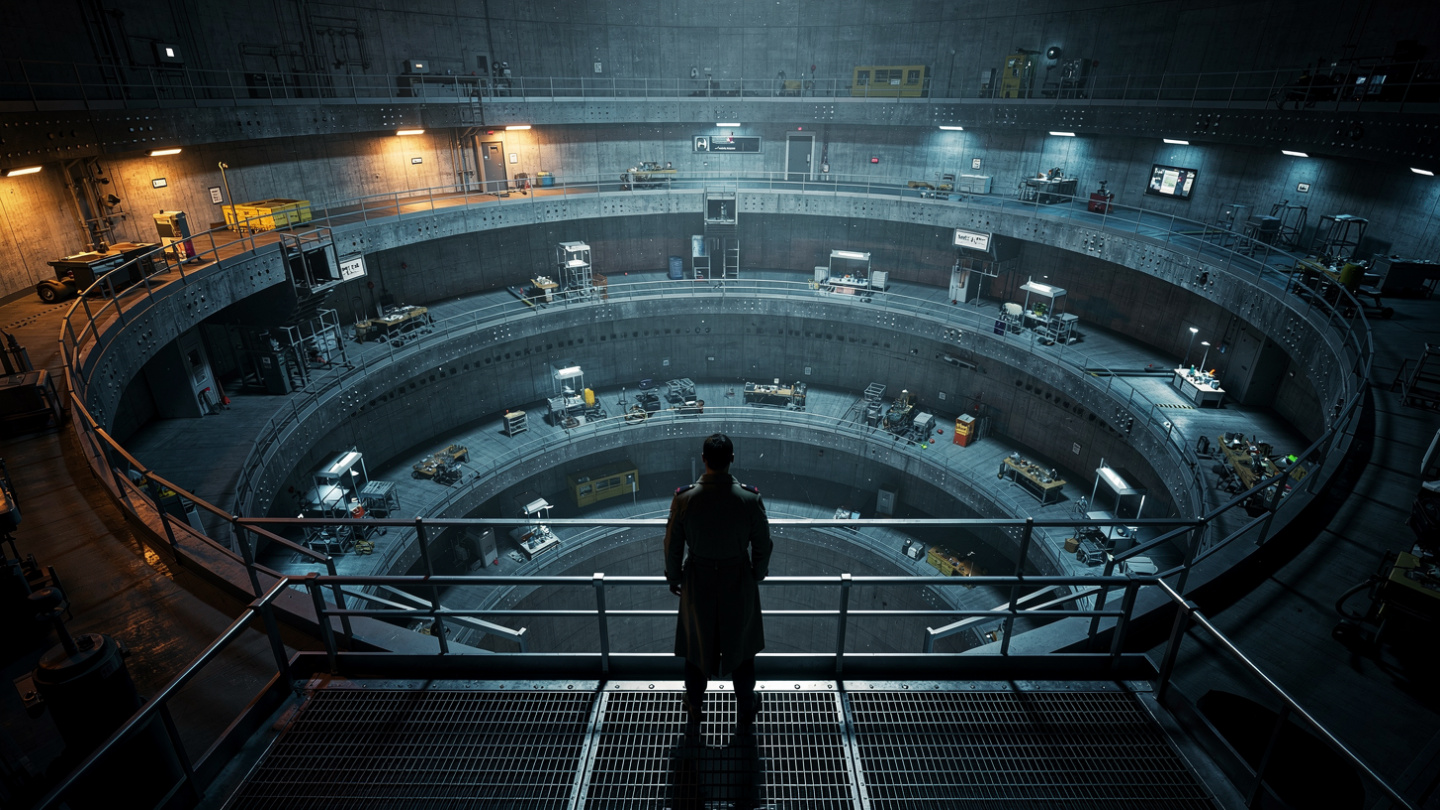
In 1987 a man identifying himself as Thomas Castello gave testimony to researchers including John Lear and others in the UFO research community. Before going further, the library’s evidentiary standard requires stating a problem that sits beneath everything that follows: no independent record of a person named Thomas Castello matching this biography has ever been produced. No photograph with a verified chain of custody, no employment record, no government document, and no acquaintance outside the research community that received his testimony has ever confirmed he existed as described. This is a different and more basic problem than the credibility questions surrounding other named witnesses in this piece, who are at least real, identifiable people whose specific claims can be evaluated. Castello’s testimony reaches researchers only secondhand, and the specificity of his account, while notable, is not itself evidence that the source existed. Castello claimed to have worked as a security officer at the Dulce facility at a senior level, with access to sections of the installation that ordinary security personnel did not enter. He provided floor plans. He described seven operational levels with functions assigned to each. He named the organizations involved in the base’s administration. He described the nature of the work being conducted on each level with a specificity that generic fabrication does not produce, though specificity alone does not establish that an unverifiable source is a reliable one.
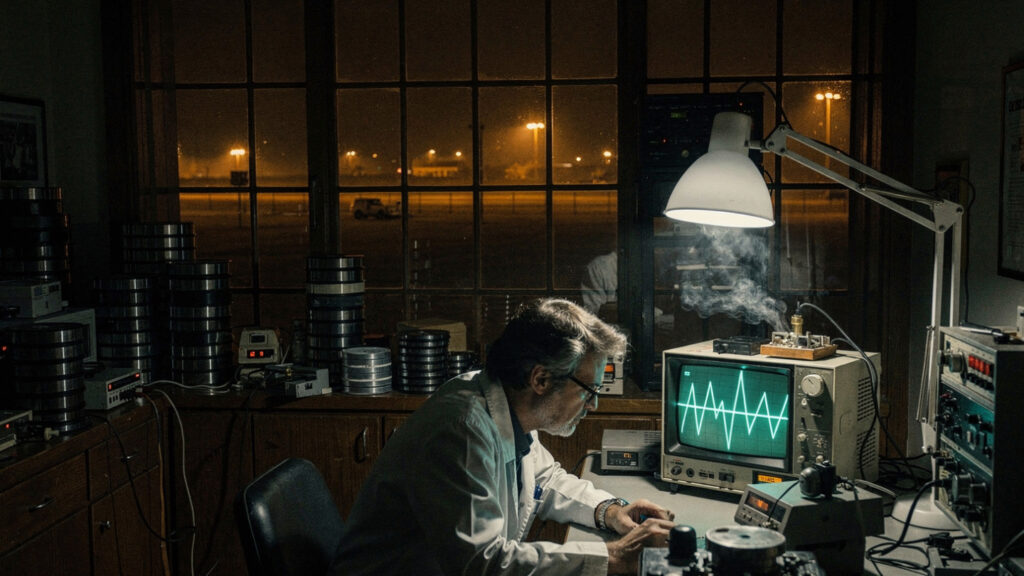
The lower levels contained what Castello described as the primary reason for the facility’s existence and the primary reason he decided to speak.
Level six he called Nightmare Hall. The genetic experiments conducted there produced results he described in terms that suggest a witness rather than an inventor: creatures that were neither fully human nor fully anything else, maintained in conditions whose purpose was not the welfare of the subject. The experiments were designed to produce biological outputs. The subjects were the inputs.
Level seven was the one Castello said he could not stop thinking about after he left.
Thousands of rows of refrigerated containers. Human bodies or body parts in some. Humanoid embryos at different developmental stages in others. And living people, held in small cells, most in states of sedation or shock. Some of them conscious. Some of them aware enough to ask for help when they saw humans in the corridor.
Castello said the workers at this level were told not to speak to these people, that they had gone psychotic from the experimental procedures. He said he eventually learned that the explanation was false. The people were not psychotic. They were held there deliberately, for purposes the seventh level’s function required.
The purpose, recorded in the testimony of the anonymous source known as Brunton in The Book of Dulce and expanded by Waldemar Valerian in Matrix II published in 1991, involves a property of human biology that the Gray physiology does not share.
The Astral Body Problem
The framework that Brunton’s testimony introduces is the one element of the Dulce material that researchers in conventional disclosure circles find most difficult to engage with, because it requires accepting a claim about human biology that the mainstream scientific framework has no category for.
The Grays, in this account, discovered through their biological research at Dulce that the human body generates and is surrounded by a secondary field, designated in their taxonomy as the emotional body, that has properties the Gray physiology cannot produce independently. The field is generated by the neurochemical architecture of mammalian emotional experience, the cascade of biological events that fear, grief, desperation, and sustained psychological stress produce in a human nervous system over extended time.
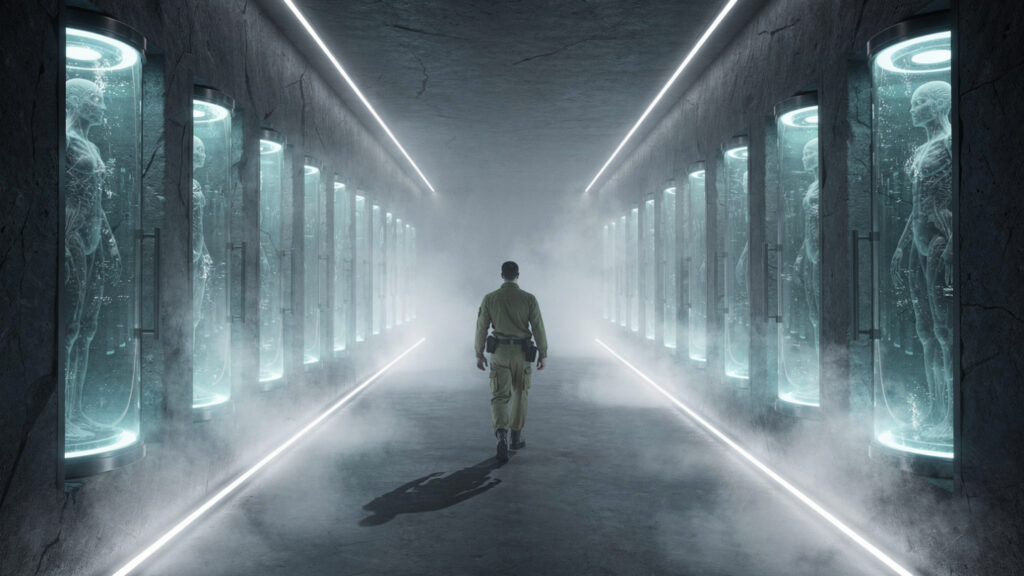
For an organism without this architecture, the field functions as an external energy source. The extraction and concentration of this energy is the function that the seventh level was designed to optimize. The human subjects held in the small cells were the source material. Their sustained distress was the production mechanism. The drugs and induced shock states were not sedation for the subjects’ benefit. They were calibration tools for maintaining optimal output.
Joshua Cutchin’s A Trojan Feast, published in 2015 and approaching this material from the perspective of comparative folklore research, traces the cross-cultural consistency of this claim with a rigor that the tabloid treatment of the Dulce material has never applied to it. The Vedic asura tradition describes entities that feed on the prana generated by human suffering. The European fairy food tradition, specifically the accounts of humans taken to fairy hills and kept in altered states for extended periods, maps onto the Dulce framework with a correspondence that Cutchin treats as more than metaphorical. The Sasquatch feeding accounts in Pacific Northwest indigenous traditions include descriptions of energetic rather than physical consumption.
Three independent cultural traditions, none of them in recorded contact with the others or with the Dulce testimonial material, describing the same mechanism of non-physical human energy harvesting by non-human intelligences. The consistency of the claim across independent traditions is the data point that the mainstream treatment of this material has never formally addressed.
What Christa Tilton Described
Christa Tilton’s account of the Dulce facility arrived independently of Castello’s testimony and appeared in 1987, the same year Castello gave his account to John Lear and other researchers. The two sources had no recorded contact with each other. Their descriptions of the facility’s physical layout and operational character are consistent in ways that independent fabrication does not typically produce.
Tilton described being taken from her home in July 1987 by Gray-type entities and transported to a mountainous entry point in New Mexico that she identified as an access point to the Dulce installation. The entry procedure was specific: a human guard in a red jacket carrying a long weapon waited at the entrance. She was issued an identification card. She was transported between levels on a motorized vehicle rather than on foot.
The identification card detail is the element most consistent with an actual facility operating with standard security protocols. A facility whose existence is officially denied would still require internal access control. The motorized transport between levels is consistent with Castello’s description of a multi-level installation extending deep enough underground that foot transit between operational floors would be impractical.
Tilton described reaching a large hangar level where small disc-shaped craft were visible and where human personnel worked alongside Gray entities. The spatial organization she described, cubicles and corridors leading to office-like rooms, is consistent with Castello’s description of the upper administrative levels rather than the lower research levels he found most disturbing.
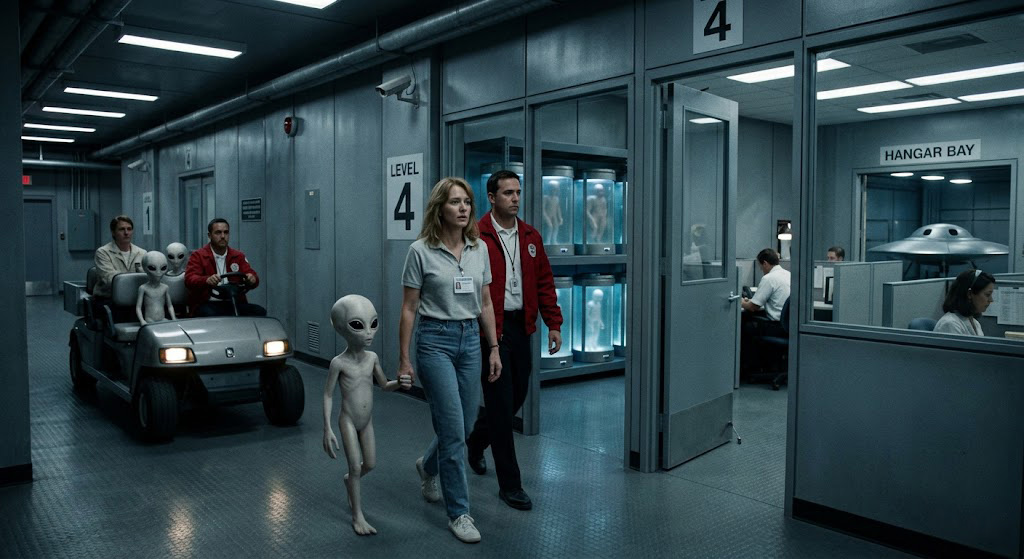
Her account of containers used for hybrid embryo development, and of women whose fetuses had been taken for use in those containers, corroborates the seventh level’s described function from a different testimonial angle. Castello described the containers from the perspective of a security officer who had access to the level. Tilton described them from the perspective of a person who was brought to the facility as a subject and observed the containers as part of her processing.
The two descriptions align without duplicating each other. Castello described thousands of rows of containers including humanoid embryos at different developmental stages. Tilton described containers approximately one meter high whose smell she found disturbing, which she identified as incubation vessels for human-alien hybrids.
The corroboration from a second woman who had also been abducted and who independently recognized Tilton from a photograph, stating that she had seen her on the craft during the abduction event, provides the cross-witness confirmation that distinguishes testimony with some independent basis from purely individual accounts. Two individuals who did not know each other, describing each other from an event they both report having experienced, produce a pattern that the false memory explanation cannot fully accommodate.
Tilton’s description of two physically distinct categories of Gray entities encountered at the facility, one group barely over a meter in height and a second group significantly larger, is consistent with the multi-type Gray taxonomy that appears across multiple independent abduction and contact accounts in the research literature. Castello’s account does not specifically address the physical differentiation between Gray types. Lazar’s testimony from S4 describes small Gray-type entities in the craft he worked on. The consistent appearance of height differentiation across independent sources describing different institutional contexts suggests the distinction is a real characteristic of the population rather than a detail borrowed between accounts.
Cambodia, 1972
Leonard Stringfield spent forty years as the most systematic collector of UFO crash and retrieval testimony in the history of the American research community. His eight-volume UFO Crash/Retrievals series, published between 1978 and 1994, recorded cases through named primary sources and maintained the evidentiary standards of a researcher who understood that his material would be dismissed unless the sourcing was rigorous.
The Cambodian account in the 1991 volume came to Stringfield through two former American soldiers who had carried it for nearly twenty years before the nightmares forced them to find someone to tell.
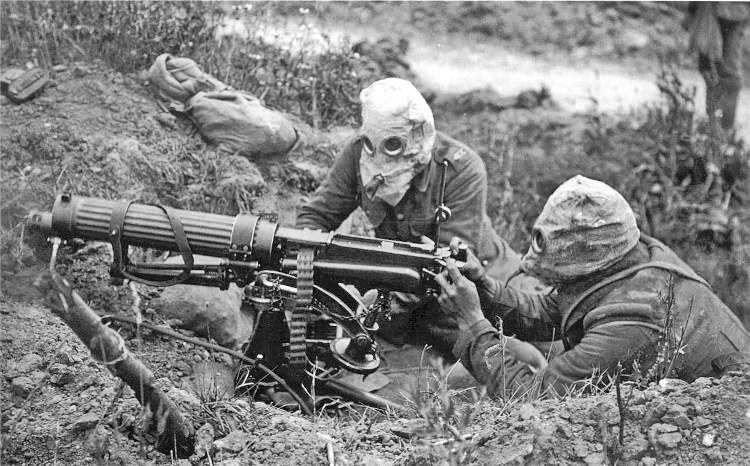
In early 1972 a parachute unit was inserted covertly into a region near Tong Li Sap in Cambodia, near the northern Vietnamese border. The operational context was the Vietnam War’s final years. The unit’s mission has not been disclosed. What they found when they reached their insertion point was not what they had been briefed to expect.
A large spherical craft on support struts in a forest clearing. When it began to hum, the soldiers experienced simultaneous dizziness, nausea, and disorientation, the physiological response that multiple independent UAP encounter accounts describe as a near-field electromagnetic effect on the human nervous system.
Beside the craft stood a group of Gray-type humanoids. In front of them, a pile of dismembered human remains: white, Vietnamese, and Black individuals. The humanoids were loading body parts into large containers.
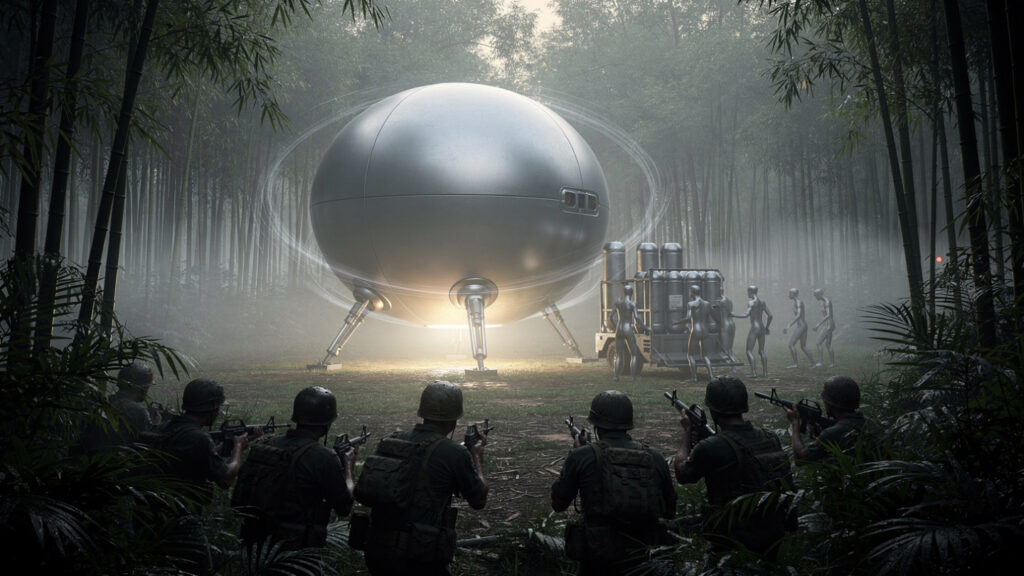
The squad leader ordered fire. The rounds had no apparent effect. One humanoid fell. The others returned fire with directed energy weapons that killed several soldiers before the withdrawal order was given. The humanoids loaded their containers into the craft and departed.
A CIA team arrived at the site shortly after. They injected the surviving soldiers with an amnestic compound. Two of the soldiers died of unexplained causes in the following years. Three went missing. The two who eventually found Stringfield had been having recurring nightmares for nearly two decades before they made contact.
The account is in Stringfield’s published record. The two primary sources provided their testimony. What was in the containers that the humanoids loaded before departure corresponds, in Waldemar Valerian’s visual testimony from Dulce, to the contents of the large vats he described seeing on the seventh level.
The 1979 Firefight
The event that multiple independent Dulce sources describe as the Dulce Wars occurred in 1979, approximately two years after the facility’s operational security had reached a level that gave American personnel assigned there sufficient familiarity with the seventh level’s function to generate an internal crisis.
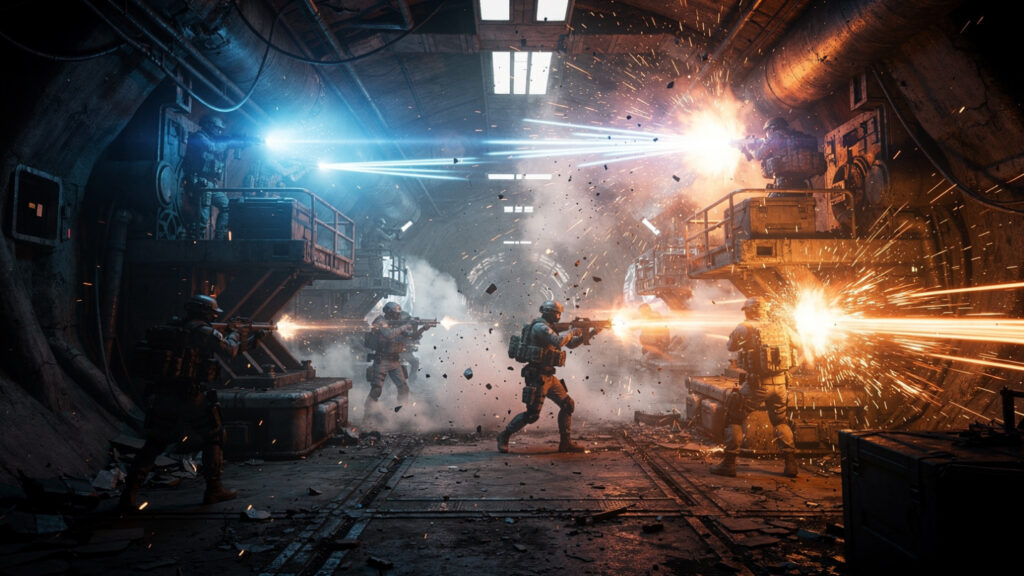
The specifics vary across accounts. The consistent elements: American Delta Force or security personnel stationed at the facility were ordered to stand down from a situation on the lower levels. They refused. A firefight erupted between American military personnel and Gray security forces inside the base. The American casualties were sixty-six personnel. The alien casualties are not consistently specified. The surviving American personnel were reassigned, their security clearances restructured, and the incident was classified at a level that placed it outside normal oversight channels.
Philip Schneider, who claimed involvement in the construction of multiple deep underground military bases including the Dulce installation, gave public lectures in 1994 and 1995 in which he described his personal experience of the firefight. He showed what he described as scar tissue from a directed energy weapon wound sustained during the event. He named names. He provided technical specifications about the underground construction program. He gave over thirty lectures in two years.
On January 17, 1996, Schneider was found dead in his apartment in Willsonville, Oregon. The cause of death was ruled suicide by strangulation, and his ex-wife disputed the ruling. The library’s standard requires including context that complicates the suspicious-death reading: hospital records indicate Schneider had a documented history of schizophrenia and a prior psychiatric institutionalization predating his lecture career, along with serious chronic illness in his final years. None of that proves the ruling correct or disproves foul play, but his case cannot be presented as unexplained absent that history.
The research community that had been following his lectures noted that the timing placed his death approximately one month before he was scheduled to present his most detailed technical material at a conference he had publicly announced.
What the Treaty Permitted
The connection between the Dulce material and the Eisenhower treaty recorded in the previous piece on this site is real and recorded in multiple independent testimonial sources, whatever the reliability of those sources individually.
The 1954 agreement permitted Gray biological study of the human population under terms that specified no lasting harm and no conscious memory retention. The American government was to receive advance notice of abduction operations and maintain a list of subjects.
The list was abandoned when the volume exceeded administrative capacity. The memory erasure protocol was not consistently applied. The conditions on the seventh level of the Dulce facility, as described by Castello, Brunton, and Valerian across three independent accounts, represent a state of the abduction program that the treaty’s original terms do not accommodate.
Whether the conditions at Dulce represent a violation of the 1954 agreement by the Gray party, an extension of the agreement’s terms that was negotiated separately and classified above the level of the original treaty’s signatories, or something that developed from the treaty’s implementation in ways that neither party formally anticipated, is not resolved in the testimonial record.
What is resolved is that the Eisenhower administration accepted a treaty that gave access to the human population. The Dulce facility, according to the testimony of multiple named sources of varying reliability, represents what that access produced at its operational terminus.
The AFOSI ran a disinformation operation against the man who found the base. That operation is a matter of record. Bennewitz found real signals from a real location. What was generating those signals from beneath the New Mexico high desert in 1979 has not been formally disclosed by the institution that assigned an agent to make sure the man who was finding it would not be believed.
The seventh level was described by someone who was there. The Cambodian account was recorded by someone who spent forty years verifying testimony. The 1979 firefight appears across multiple independent sources with consistent core elements.
The treaty that permitted the access was signed in 1954. The people who were in the small cells on the seventh level were there because of what that signature allowed to develop over the following twenty-five years.
The soldier who made it back from Cambodia had the same nightmares for nearly two decades. His account is in Stringfield’s published record. What he saw being loaded into the containers before the craft departed was, by multiple independent accounts, already in the vats on the seventh level of a base beneath the New Mexico desert when he saw it.
The treaty permitted biological study. The seventh level was where biological study ended and something else began. The distinction between those two descriptions is the distance between what was signed in 1954 and what Castello saw when he was told not to speak to the people in the cells.
The Dulce base testimony still comes down to one man, one account, and a seventh level nobody else has ever independently described.
He spoke to this instead.