




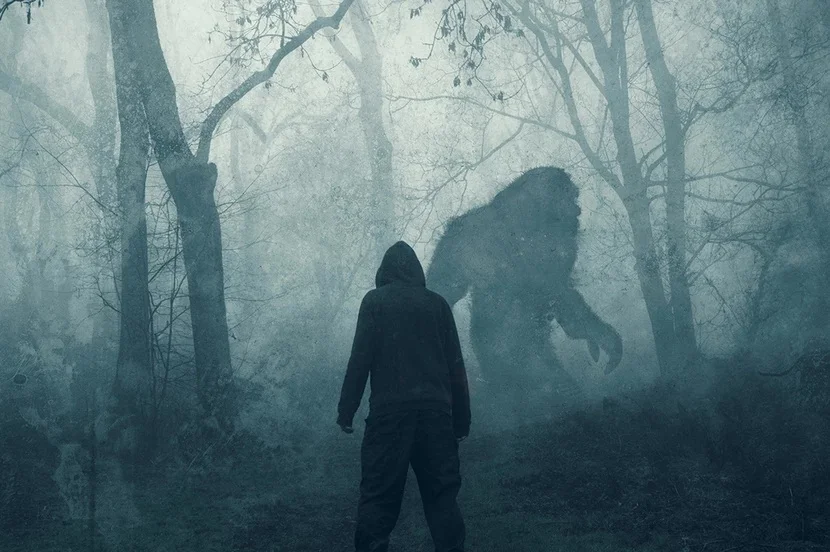
For centuries, humanity has been captivated by tales of mysterious creatures lurking in the shadows of our world. From modern hikers glimpsing towering, monkey-like figures striding through dense forests to medieval sailors trembling at the sight of colossal leviathans churning the seas beneath their ships, stories of unknown beasts have woven themselves into the fabric of our collective imagination.
These enigmatic entities—dragons breathing fire, the elusive Loch Ness Monster, the hairy Bigfoot, and the diminutive Orang Pendek—straddle the line between myth and reality, sparking endless curiosity. Are these creatures mere figments of folklore, or could some of them exist, hidden from scientific scrutiny? Let’s embark on a journey through history, science, and speculation to explore the tantalizing possibility that some mythical beings might not be entirely fictional.
The Enduring Allure of Mythical Creatures
The fascination with mythological creatures spans cultures and eras, fueled by a blend of awe, fear, and the human penchant for storytelling. These tales often arise from encounters with the unknown—strange shadows in the woods, ripples on a lake, or bones unearthed from the earth. While many dismiss them as fanciful legends, the question persists | could some of these creatures have a basis in reality? According to experts like those at Live Science, the answer isn’t a definitive no. Proving with absolute certainty that a creature doesn’t exist is a near-impossible task—after all, we can’t search every corner of the planet simultaneously. This leaves room for speculation, and science suggests that not all species on Earth have been cataloged, opening the door to the possibility of undiscovered animals that might inspire these myths.
For this exploration, we’ll focus on creatures from folklore whose existence hasn’t been entirely debunked, excluding those known to science but declared extinct, like the Tasmanian tiger (Thylacinus cynocephalus). Instead, we’ll dive into some of the most iconic mythical beings, examining the evidence—or lack thereof—and what science tells us about their plausibility.
The Loch Ness Monster | A Legend in the Lake
Few creatures are as synonymous with mystery as the Loch Ness Monster, affectionately dubbed “Nessie.” Said to inhabit Loch Ness, a deep, freshwater lake in Scotland, this legendary beast has been the subject of countless sightings, photographs, and debates. Descriptions vary—some envision a plesiosaur-like creature with a long neck, others a serpentine monster—but the question remains | could such a being thrive in Loch Ness?
Charles Paxton, a statistician and aquatic ecologist at the University of St Andrews, offers a skeptical perspective. Loch Ness is an oligotrophic lake, meaning it’s nutrient-poor and unlikely to sustain a large, unknown predator at the top of the food chain. “If there is one Loch Ness Monster, it is very few,” Paxton told Live Science. The lake’s ecosystem simply doesn’t seem capable of supporting a population of sizable, undiscovered creatures. Paxton’s approach to Nessie focuses on evidence rather than fruitless searches. After analyzing eyewitness accounts, photographs, and sonar data, he concludes that the monster likely doesn’t exist as described.
So, what explains the sightings? Paxton suggests several possibilities | human psychology (the tendency to see patterns where none exist), misidentification of known species (like otters or large fish), or even hoaxes. While Nessie remains a cultural icon, the scientific consensus leans heavily against its existence—though the mystery endures, fueled by the lake’s murky depths and the human love of the unknown.
Dragons | From Folklore to Fossils
Dragons are perhaps the most famous mythical creatures, their fire-breathing majesty etched into legends worldwide. In European tales, they’re often depicted as winged, reptilian terrors, while in Chinese mythology, they’re benevolent, serpentine beings tied to water and weather. Scholars link their fiery breath to medieval imagery of hell’s mouth, portrayed as a monstrous maw spewing flames. But could dragons have a real-world counterpart?
Physical evidence for dragons is scant, but their legend may stem from natural phenomena. Fossils of dinosaurs and other extinct giants, unearthed long before paleontology existed, likely fueled dragon lore. A striking example comes from Klagenfurt, Austria, where a skull of the extinct woolly rhinoceros (Coelodonta antiquitatis), a Pleistocene-era beast, was once displayed as a “dragon’s skull.” Local legend claimed it belonged to a dragon slain before the city’s founding around 1250, per the American Museum of Natural History. Such misidentified remains—combined with awe-inspiring tales—could explain how dragons took root in human consciousness. While no fire-breathing reptiles roam today, their echoes in nature suggest a kernel of truth behind the myth.
The Vast Unknown | How Many Species Remain Undiscovered?
To assess whether mythical creatures could exist, we must consider a critical fact | science hasn’t documented every species on Earth. A 2013 Science study estimates we’ve identified about 1.5 million of roughly 5 million living species—a figure some consider conservative. A 2011 PLOS Biology study ups the ante to 8.7 million, while a 2016 Proceedings of the National Academy of Sciences paper posits over a trillion microbial species alone. This vast gap suggests that unknown animals, particularly small or elusive ones, could still lurk beyond our reach.
In aquatic environments, Paxton believes most large, surface-dwelling species have been cataloged, with the possible exception of deep-diving beaked whales—rare cetaceans capable of holding their breath for over three hours. On land, however, the picture shifts. A 2021 Nature Ecology & Evolution study by Mario Moura, an ecologist at Brazil’s Federal University of Paraíba, highlights that discovery odds vary by species. Large animals near human settlements are rarely missed, but smaller creatures in remote habitats—like rainforests or mountain ranges—stand a better chance of evading science. Reptiles, Moura notes, are the least-explored group, hinting at untapped potential for new finds.
Bigfoot | The Pacific Northwest’s Hairy Enigma
In the dense forests of the Pacific Northwest, tales of Bigfoot—a towering, ape-like creature—persist. Known also as Sasquatch, this bipedal giant is a staple of American folklore, with sightings reported across Washington and Oregon. Could such a primate remain hidden in the modern age? Moura’s research suggests a slim chance, noting that these states offer only a “slightly elevated probability” of undiscovered mammals—likely small critters like rodents or bats, not a massive, hairy hominid.
Skeptics argue that Bigfoot sightings stem from misidentified bears, psychological projection, or hoaxes. The lack of physical evidence—bones, DNA, or clear photographs—further dims its prospects. Yet the legend endures, buoyed by the region’s rugged terrain and the tantalizing “what if” of an undiscovered primate.
Orang Pendek | Sumatra’s Elusive “Short Man”
Far from Bigfoot’s domain lies another mysterious primate | the Orang Pendek, or “short man,” of Sumatra, Indonesia. Described as a bipedal, hairy ape standing about 3 to 5 feet tall, this creature has been sighted by locals, guides, and even Western researchers. Unlike Bigfoot, the Orang Pendek inhabits one of four global hotspots for undiscovered species—Brazil, Indonesia, Madagascar, and Colombia—identified by Moura’s team. These biodiversity-rich, understudied regions offer fertile ground for cryptozoological speculation.
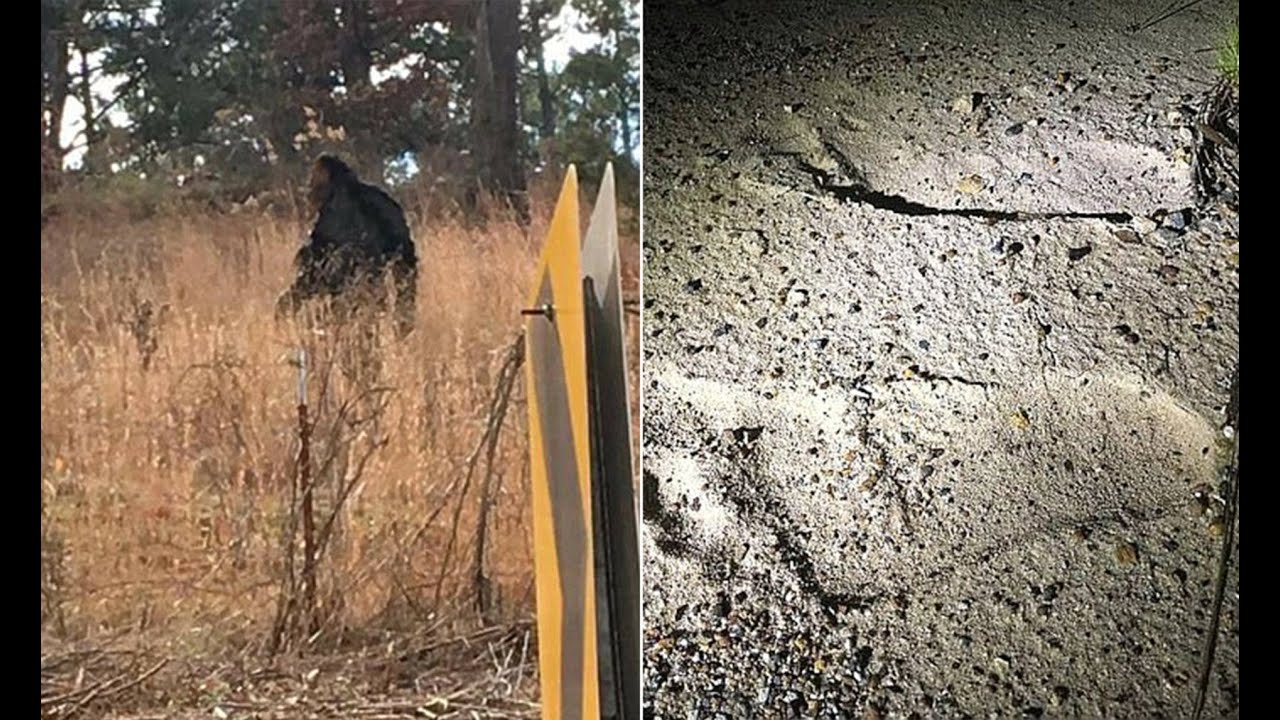
The Orang Pendek’s case is bolstered by its plausible habitat. Sumatra’s rainforests already host orangutans, large reddish apes that differ from the smaller, ground-dwelling Orang Pendek of local lore. Serge Wich, a primate biologist at Liverpool John Moores University, notes that Orang Pendek tales cluster in central Sumatra, where orangutans no longer roam. He speculates that these stories might reflect a historical population of orangutans pushed north, though he remains doubtful. Camera traps in the region have yet to capture the creature, leading Wich to conclude it’s likely a myth.
Yet not everyone agrees. Jeremy Holden, a wildlife photographer, claims a 1994 encounter in Kerinci Seblat National Park. He describes a 5-foot-tall, muscular, hair-covered biped passing just 7 meters away—too large for a gibbon, too distinct for a known species. Fearful and awestruck, Holden didn’t snap a photo, a decision he later justified by the moment’s intensity. His account, paired with casts of unusual footprints from a Fauna & Flora International expedition, keeps the Orang Pendek’s mystery alive, even as National Geographic’s 2005–2009 camera-trap efforts yielded nothing.
Bridging Myth and Reality
So, are these creatures real? The Loch Ness Monster seems improbable, dragons are likely fossil-inspired fables, and Bigfoot teeters on the edge of fantasy. But the Orang Pendek—and other small, elusive species in remote corners—offers a glimmer of hope. Science reminds us that our planet still holds secrets, from uncharted microbes to potential primates. As Moura puts it, “The work is greater, and the hands are fewer” in these biodiversity hotspots, leaving room for discovery.

These myths, whether rooted in truth or imagination, reflect humanity’s enduring quest to understand the world. They bridge the gap between the known and the unknown, inviting us to wonder | what else might be out there, waiting to step from legend into light?