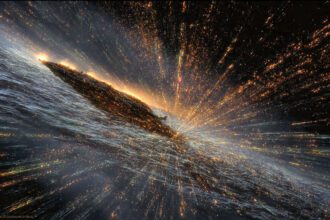




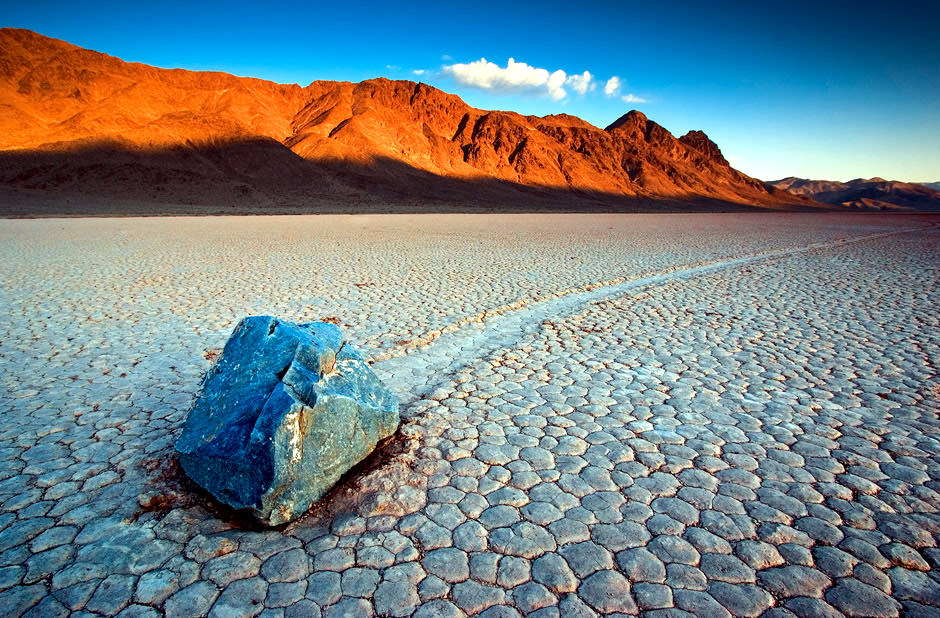
The Paiute people of the Great Basin region have held the belief in Shin-Au-Av, the Land of Spirits or Land of God, since before any written record of the region exists. This is not primarily a story about a hidden city. It is a cosmological account of the relationship between the surface world and the underground world, between the living and the dead, and between the human population and the serpentine intelligences placed at the center of the underground realm.
The creation element of the Shin-Au-Av belief describes human beings emerging from below, their descent into the underground as a response to fear and confusion, and the subsequent relationship between the underground realm and the surface world as one of continuity rather than separation. The dead do not go to a remote celestial realm. They go down, to the same underground world that their ancestors came from, where they continue a form of existence treated in Paiute belief as accessible in circumstances to the living.
The chief who descended to recover his dead wife, guided by a woman with serpentine features through underground passages to a vast space where the dead continued their social life, and returned to the surface after breaking the condition of his return, is structurally identical to the Orpheus and Eurydice story of ancient Greece, to the Sumerian account of Inanna’s descent, and to the Buddhist Milarepa account of descent to the underworld realms. The convergence of this narrative structure across cultures with no recorded contact is the pattern this library treats as indicating a shared underlying reality rather than shared mythology.
The Global Serpent Underground
Paiute belief identifies the inhabitants of the underground realm as serpentine beings, the Shin-au-av, whose relationship to the surface world is custodial and occasionally communicative but primarily separate. What is described concerns their physical characteristics, their social organization, and their relationship to the dead.
This is not an isolated account. The global distribution of underground serpentine civilization stories across six continents is the most extensively recorded convergence in the Inner Earth framework, and the Shin-Au-Av story is a specifically well-preserved American example. One distinction is worth making clearly before going further: what follows moves between three very different kinds of material, the Paiute cosmology itself, which is a genuine, living sacred belief system with real cultural and spiritual weight; a set of 1947 newspaper stories whose specific claims are unverifiable and, in at least one detail, internally suspicious; and the modern “Reptilian” conspiracy framework popularized by figures like David Icke, which is a recent, largely internet-era construction. Treating these three as equally strong evidence for the same underlying claim would be a mistake, and the library’s evidentiary standard requires keeping them distinct even while noting where their imagery overlaps.

In India, the Naga belief recorded in the Inner Earth piece in this library describes a sophisticated underground civilization of serpentine beings whose cities in the subterranean Patala realm are described across the Mahabharata, the Puranas, and multiple independent Sanskrit texts with the same characteristics: advanced technology, complex social organization, relationships with surface human populations, and occasional intervention in surface world affairs. The Naga are not mythological in the generic sense. They are described in the Mahabharata as historical actors whose political history intersects with the surface civilizations of the epic’s world across generations.
In ancient Mexico, the Quetzalcoatl story describes a feathered or winged serpent deity whose civilizational role mirrors the Naga’s in India: a serpentine intelligence that brought agricultural knowledge, calendar systems, and civilizational organization to the surface human population. Quetzalcoatl’s departure and promise to return is the defining eschatological event of the Aztec civilizational framework. His origin point in this account is below or in the sea rather than above.
The Chinese dragon belief, one of the most extensively recorded serpentine intelligence beliefs in the world, describes the long, the dragon-kings, as beings whose primary habitation is beneath rivers, lakes, and the sea, who occasionally interact with surface human rulers, who possess technical knowledge particularly in relation to water management and atmospheric conditions, and who have a complex political hierarchy of their own that parallels the surface world’s imperial organization.
In ancient Britain, the adderamim, described in certain Celtic sources as wise serpents who inhabit the underground realm, are less extensively recorded than the other accounts here but consistent with the general pattern in their characteristics: subterranean habitation, serpentine form, wisdom as the defining characteristic, and occasional communication with selected surface humans.
These four independent accounts from four continents developed without known contact between them. They describe the same class of beings in the same geographic domain, the underground realm, with the same defining characteristics, serpentine form, advanced knowledge, and occasional surface world interaction, and the same relationship to the surface human population.
The Paiute Shin-Au-Av belief is the fifth. The Hopi emergence account, in which the ancestral people of the Hopi emerged from underground through a sipapu, a hole in the earth, after a series of previous worlds had been destroyed, is the sixth. The Zuni emergence account parallels the Hopi account with sufficient specificity that the two are clearly related, and both predate European contact.
Six independent cultures across six continents all describing the same underground serpentine civilization. This convergence is well established and is not explained by any diffusion model that accounts for the geographic and temporal distribution of the sources.
Real Underground Cities
The source material mentions several confirmed underground structures that provide the physical precedent for the Shin-Au-Av claim without requiring its claims to be verified.
The Hypogeum of Hal Saflieni in Malta is among the most extraordinary documented underground structures in the world. Discovered accidentally in 1902 during construction work, it is a multi-level underground complex carved from limestone, dated to approximately 3600-2500 BCE, and used as both a temple and a necropolis. Its acoustic properties appear in research by researcher Iegor Reznikoff and others: chambers produce standing wave resonance at frequencies that correlate with the frequency range of human vocalization and chanting. The acoustic engineering, which required understanding of resonant frequency and deliberate chamber shaping to achieve it, is not expected from the conventional characterization of the Tarxien period culture that built it.
Derinkuyu in Cappadocia, Turkey, is an underground city that extended approximately eighty meters below the surface and could accommodate approximately twenty thousand people. It was discovered in its full extent only in 1963. Its ventilation shafts, water management systems, livestock areas, kitchens, chapels, and storage areas are all documented. Who built it, and the threat that motivated the construction of an underground city of this scale, is not established in the scholarly literature.
These confirmed underground cities establish that the construction of large-scale underground habitation infrastructure was within the capability of prehistoric cultures, that such construction occurred in multiple independent geographic locations, and that the scale of these constructions has been consistently underestimated by conventional archaeology until physical discovery forced revision.
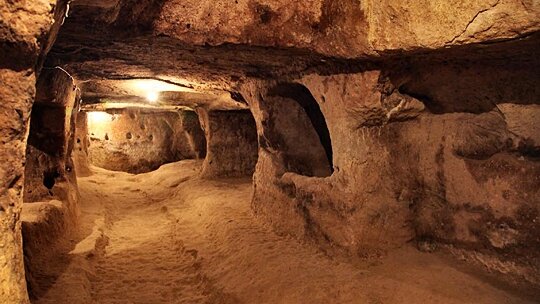
The Shin-Au-Av belief’s geographic claim, that a significant underground city exists beneath the Death Valley region, is a claim about an area whose geological characteristics, the ancient lake beds, the salt flats, and the extensive natural cave systems of the Panamint Mountains, are consistent with what is described.
The 1947 Newspaper Accounts
The Union Tribune and Hot Citizen newspaper accounts of 1947 reporting discoveries of an ancient underground city in the Death Valley region with anomalously large skeletons, ancient artifacts, and sophisticated technological objects are documented newspaper articles. Their existence is verifiable. Whether what they reported was accurate is a different question that requires treating them as claimed discoveries rather than as documented archaeological findings.
The claims in the articles are internally consistent in a way that distinguishes them from fabricated content: the description of gas lighting powered by natural gas is technologically plausible for an ancient civilization with the geological knowledge to access natural gas seeps. The spheres with slightly radioactive mineral content that served as light sources describe a real phenomenon, certain minerals luminesce under radioactive excitation, that someone with access to such minerals could have used for dim illumination. The stone doors operated by counterweight systems describe technology documented at numerous ancient sites including the Temple of Jerusalem and multiple Egyptian temples.
The anomalous elements, the objects identified as microwave ovens only after 1947, the radio-like communication devices, and the 80,000-year age estimate for the skeletons, are the claims that require the most evidentiary scrutiny. The 1947 identification of ancient artifacts as microwave ovens, in the year that the first commercial microwave oven was introduced, is a coincidence of timing that makes the identification suspicious: an artifact identified as a previously unknown technology in exactly the year that technology was introduced publicly is more likely to reflect the identifier’s recent exposure to the new technology than an accurate assessment of an 80,000-year-old artifact.
The artifacts’ subsequent disappearance from a bank vault where they were being stored, and the area’s conversion to a US Naval Weapons Testing Site that made the region inaccessible to independent investigation, follow the suppression pattern this library has recorded across multiple cases. Whether the pattern in this case reflects genuine suppression of significant archaeological findings or the natural institutional closure of an area for unrelated military purposes is not determinable from the available evidence.
The articles exist. The claims in them cannot be verified against surviving physical evidence. They are consistent with the broader pattern of anomalous archaeological discoveries in the American West that the anomalous skeletal remains piece in this library covers.
The Serpent People and the Dragon Cultures
The source’s claim that the Serpent People guided the development of pyramid-building cultures globally connects to the most extensively recorded convergence in this library’s Lost Civilizations cluster: the global distribution of pyramid construction across cultures with no recorded contact.
The connection between serpentine divine figures and pyramid construction appears in Mesoamerican belief most explicitly. The temples at Chichen Itza, designed so that the shadow of the sun at the equinoxes produces a serpent shape descending the pyramid’s staircase, are the most visually dramatic example of the serpent-pyramid connection in the physical architectural record. The design requires astronomical precision in the temple’s orientation and geometric knowledge of how shadow falls on the staircase angle at the latitude.
Egyptian belief around pyramid construction, recorded across the Egypt cluster in this library, connects to the gods of the First Time who the Egyptian texts describe as the civilizing agents of pre-dynastic Egypt. The description of these beings in the Pyramid Texts includes serpentine imagery in the context of the uraeus and the figure of Apep, though Egyptian belief distinguishes between beneficial and destructive serpentine intelligences more explicitly than some other accounts here.
The claim that the Naga guided the construction of temples and cities in ancient India appears in the Sanskrit texts. The Naga rulers of ancient kingdoms whose reigns appear in the Mahabharata and Puranas connect the Naga not just to underground habitation but to active participation in the surface world’s political and civilizational history.
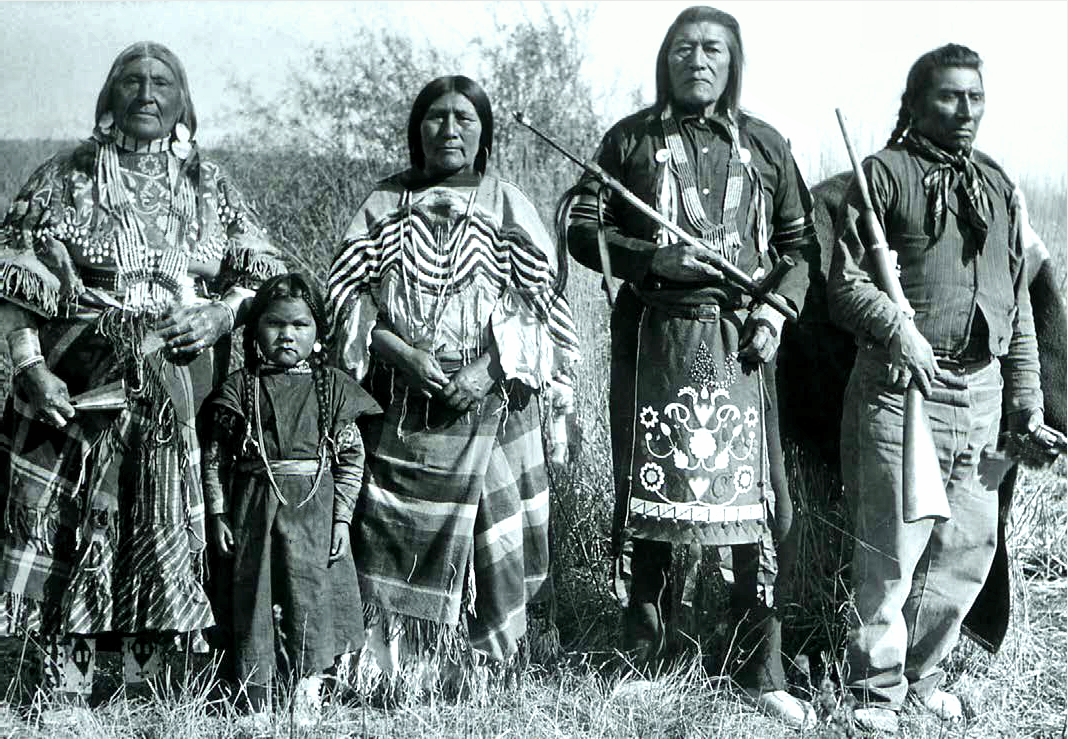
The global pyramid connection, the global belief in serpentine intelligences, and the global emergence narrative that places human civilizational origins in an underground realm, are three independent convergences that all point in the same direction: toward a civilization or class of civilizations whose primary habitation was subterranean, whose relationship to surface human populations was formative rather than incidental, and whose physical form was consistently described across independent cultures as serpentine or draconic.
Whether this civilization was the Naga account’s literal serpentine beings, the modern Reptilian framework’s shapeshifting intelligences discussed in the Nephilim and Watchers pieces, a human civilization that inhabited underground environments and developed cultural characteristics whose expression took serpentine symbolic form, or something else that the conventional categories do not adequately describe, the convergence requires a framework more than coincidence.
The Naval Weapons Testing Site
The Death Valley region where the 1947 newspaper accounts place the underground city discoveries became part of the US Naval Air Weapons Station China Lake, one of the largest land holdings of the US Navy, covering approximately 1.1 million acres of the Mojave Desert and adjacent valleys. The area of Death Valley and the Panamint Mountains falls within or adjacent to the China Lake restricted zone.
China Lake is recorded as the Navy’s primary research, development, and testing site for weapons systems and associated technologies. Its programs include classified research that is not in the public domain. The area’s conversion to a restricted military zone in the years following the newspaper accounts of underground city discoveries, and the subsequent impossibility of independent investigation in the area, follows the pattern that the Alaska Triangle piece, the Area 51 piece, and the Montauk piece in this library all cover: anomalous discoveries in geographic areas followed by military appropriation of those areas that effectively ends independent investigation.
Whether this pattern in Death Valley reflects deliberate management of an archaeological discovery that the military or intelligence community considers significant, or the coincidental conversion of a remote desert area to a weapons testing range that happened to contain the location of a disputed archaeological claim, cannot be determined from the available evidence.
What can be determined is that the area is inaccessible, that it was made inaccessible in the decades following the newspaper accounts, and that the artifacts described in those accounts have not been produced for independent examination.
What This Points Toward
The Paiute belief in Shin-Au-Av, the Land of Spirits, is not primarily a claim about a hidden city beneath Death Valley. It is a cosmological framework for understanding the relationship between the surface world and the underground world, between the living and the dead, and between human civilization and the serpentine intelligences placed at the center of the underground realm.
This framework is the same framework that Naga belief, the Quetzalcoatl story, Chinese dragon belief, the British adderamim, the Hopi emergence narrative, and the Zuni emergence narrative all describe from their independent starting points. The convergence across six continents and multiple millennia of independent cultural development is the recorded foundation beneath the Death Valley claims.
Whether an actual underground city exists beneath Death Valley is a question that the inaccessibility of the area and the disappearance of the physical evidence makes currently unanswerable. Whether the broader belief system that the Shin-Au-Av account is one expression of describes a real underground civilization whose physical infrastructure these various accounts have preserved the memory of, is a question that the Inner Earth piece’s coverage of independent accounts from multiple cultures pointing at the same reality, and the Derinkuyu and Hypogeum precedents for underground city construction at scales previously considered impossible, places in a different evidentiary context than the Death Valley claims alone would provide.
The Paiute elder described the underground realm as a place of peace, happiness, and beauty. The chief who descended to find his wife was shown thousands of the dead continuing their social life in a vast open space. He was told to leave and not look back, and when he failed to maintain that discipline, the underground world withdrew from his sight.
What is told does not primarily claim that the underground world is hidden because its inhabitants want to hide it. It claims that the underground world is hidden because the surface world’s ordinary consciousness cannot maintain contact with it. The Sphinx piece covers a chamber beneath the Sphinx that Egyptian authorities have prohibited investigating. The Inner Earth piece covers the seismic anomalies of the Earth’s interior that mainstream science is still characterizing. The Derinkuyu piece covers an underground city of twenty thousand people that was not discovered until 1963.
The underground world is hidden because the instruments available to find it have only recently been developed, because the institutional frameworks for investigating it are actively discouraged, and because the ordinary waking consciousness that the surface world operates from is, by consistent account, the wrong tool for the task.
The Paiute chief looked back. The underground world disappeared. He spent the rest of his life describing what he had seen.