



Every civilization leaves behind its own map of the unseen. For the Greeks, it was Hades. Hindu and Buddhist tradition spoke of the Nagas ruling hidden kingdoms beneath the Earth. Medieval legends searched for Agartha. Modern conspiracy theories replaced gods with reptilian aliens and secret subterranean civilizations. The names changed. The idea did not.
That continuity raises an interesting question. Why have cultures separated by geography, language, and thousands of years imagined intelligent beings beneath the surface of the Earth? Is there a shared symbolic tradition at work, a chain of stories passed from one civilization to another, or something else entirely?
Answering that requires separating three things that popular culture treats as one: ancient mythology, esoteric religious tradition, and modern speculative reinterpretation. They overlap far less than they first appear to. What follows traces each figure back to its original source, then follows the thread forward to see how later writers turned gods and demons into extraterrestrials.
The World Beneath
The Hollow Earth is one of the oldest ideas humanity has imagined. Long before it became associated with secret governments or hidden civilizations, respected thinkers including Edmond Halley and Leonhard Euler proposed versions of an inhabited interior world, working in an era when Earth’s interior remained largely unknown.
Modern seismology closed that question. Earthquake waves pass through the planet in ways that reveal its internal structure with remarkable precision, and every line of evidence converges on the same layered picture: crust, mantle, liquid outer core, solid inner core. In 2021, researchers at the Australian National University even resolved a fifth layer, an innermost solid metallic ball at the planet’s absolute center, discovered using seismic waves bounced off it from roughly 200 earthquakes. The empty world Halley and Euler imagined has nowhere left to exist.
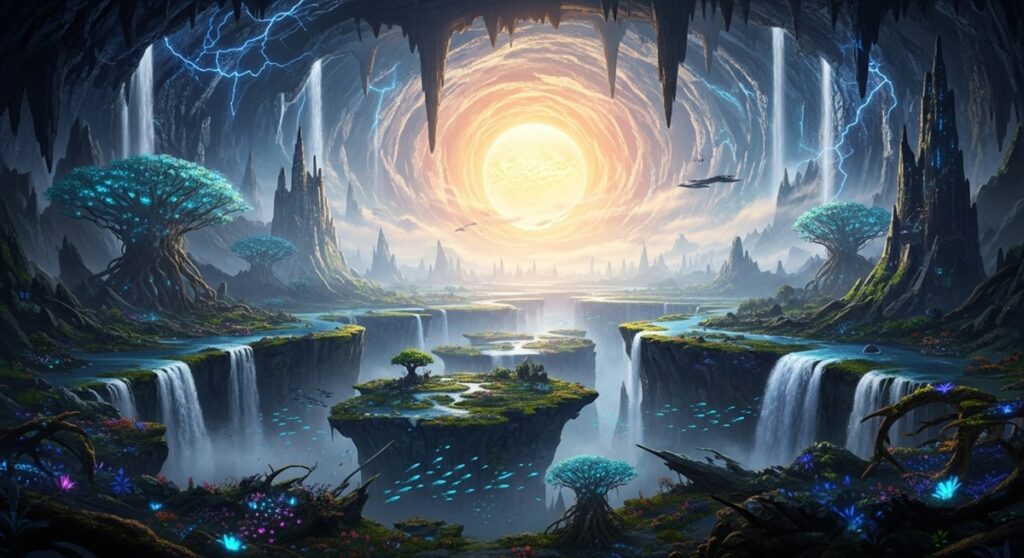
Science rejected the geography. Mythology kept the imagination. What survives isn’t a place, it’s a pattern, and it’s worth following that pattern through its actual sources rather than past them.
Nagas | From Serpent Gods to Secret Rulers
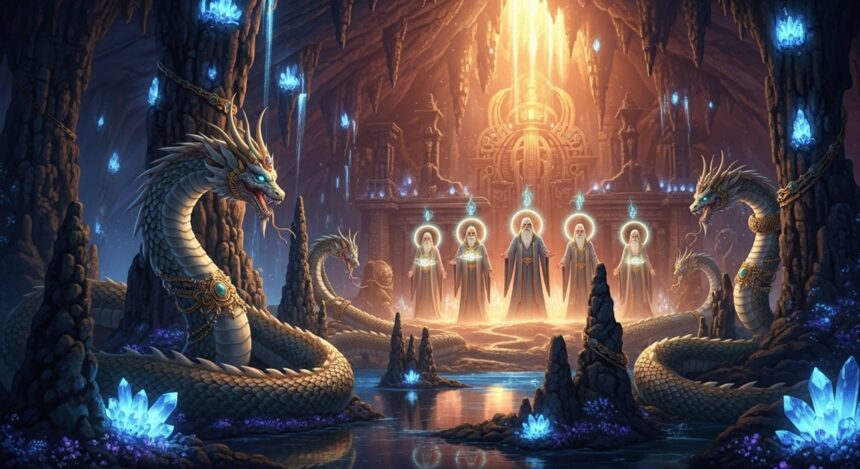
Few mythological beings have undergone a stranger transformation than the Nagas. For more than two thousand years they existed as serpentine deities within Hindu and Buddhist tradition, often depicted half-human and half-cobra, ruling vast kingdoms beneath the earth and, according to Cambodian legend, beneath the Pacific itself. They were credited with shapeshifting, illusion, and, in some accounts, monstrous hunger. Some later traditions echo similar motifs in composite creatures like the Chimera, though those emerged in distinct cultural contexts of their own. Today they’re more likely to surface in online forums as reptilian extraterrestrials secretly running human affairs.
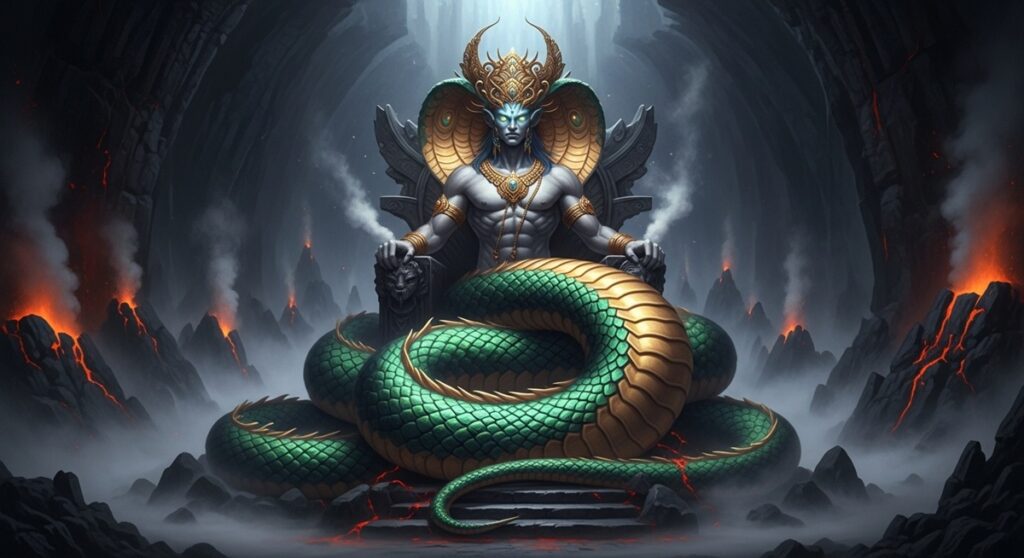
Those are not the same story. Nothing in the surviving Hindu or Buddhist texts describes the Nagas as biological aliens, and no scholar working from those original sources reads them that way. The transformation happened later, decades after the myths were already ancient, when a different genre of writing needed a villain and reached for whatever imagery was already lying around. Understanding how one became the other says more about the 20th century than it does about the Nagas.
Rakshasas | Scripture Turned Raw Material
The Rakshasas underwent the same treatment. In the Rig Veda they appear as werewolf-like predators, in the Atharvaveda, as monstrous, multi-headed humanoids, in the Mahabharata and Ramayana, as long-armed giants with fiery eyes, prowling by night. These are foundational figures in some of the oldest religious literature still read today, not incidental monsters invented to fill a page.
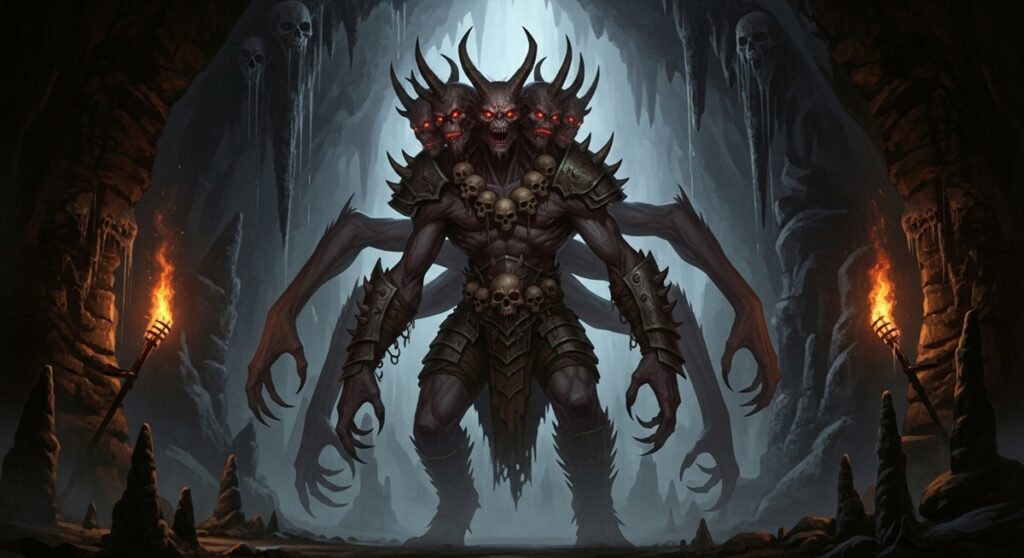
Somewhere along the way, a separate tradition began describing them as interdimensional entities slipping between worlds to manipulate humanity. That reading has no footing in the Vedic or epic sources themselves. It’s a case study in how quickly an ancient scripture can be stripped for parts once a modern audience wants a different kind of story.
Cerberus and the Sisters Who Guarded Hades
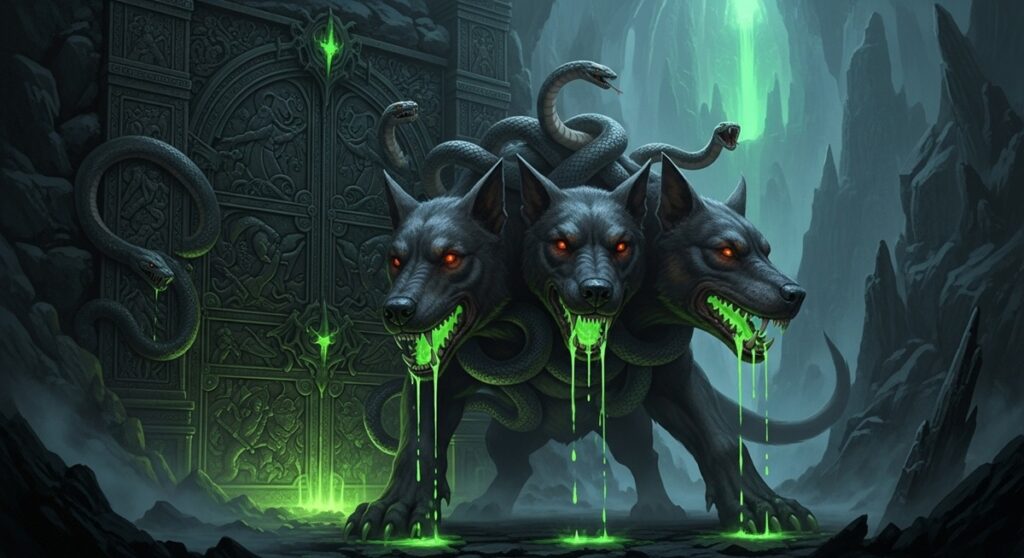
Cerberus needs no upgrade. The three-headed hound guarding the gates of Hades, born of the monstrous Typhon and Echidna, snakes writhing at his neck, is already one of Greek mythology’s most vivid inventions, described and depicted continuously from antiquity onward. A newer strand of speculation recasts him as a bioengineered creature, the product of an advanced civilization’s genetic tinkering. The ancient sources give no hint of engineering. They give a monster born of monsters, which was always the point.
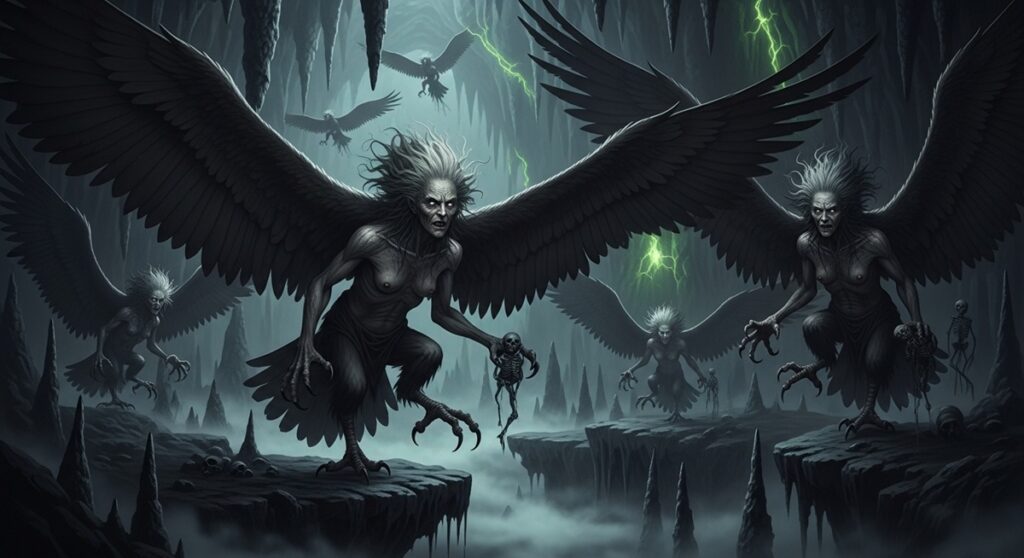
The Harpies belong to the same world. Virgil called them “no greater horrors, no plague more terrible,” bird-bodied and human-faced, daughters of Thaumas and Electra, swooping down from Hades to seize souls. Suggestions that they represent a surviving winged species, or garbled memories of aerial encounters, ask the myth to be something it never claimed to be: a report rather than a story.
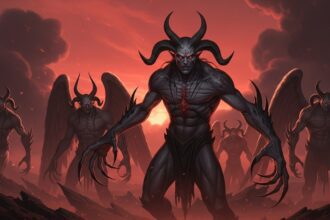
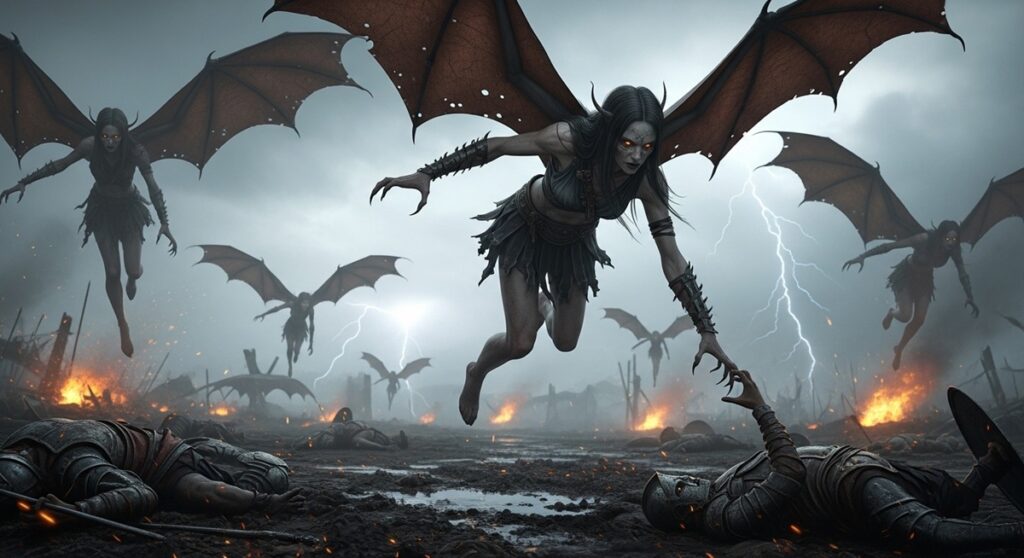
The Keres, daughters of Nyx, descended on battlefields to seize the wounded and drag the dead to Hades, crimson and winged, an embodiment of death’s brutality rather than a biological predator “feeding on suffering,” the framing a newer reading tries to impose on them.
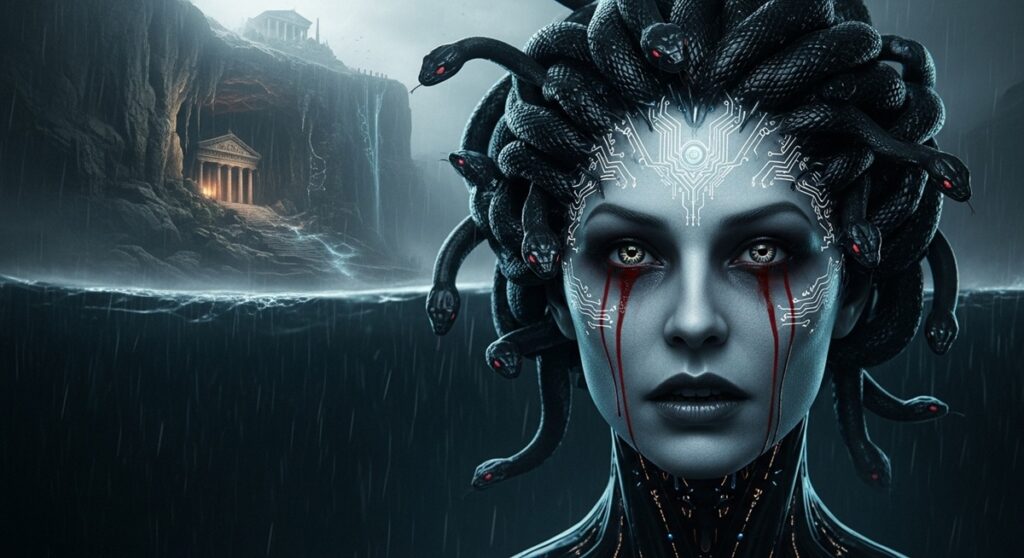
The Erinyes are worth lingering on, because the ancient sources already disagree with each other in genuinely interesting ways. Aeschylus placed their cave on the Athenian Acropolis, other writers put them in Hades outright. Pseudo-Heraclitus numbered them at thirty thousand, an organized force of vengeance pursuing wrongdoers to madness, snake-haired, weeping blood. That internal disagreement is a real feature of how Greek myth actually worked, layered and regional rather than fixed, and it disappears entirely once the Erinyes get flattened into “enforcers of an alien moral code.”
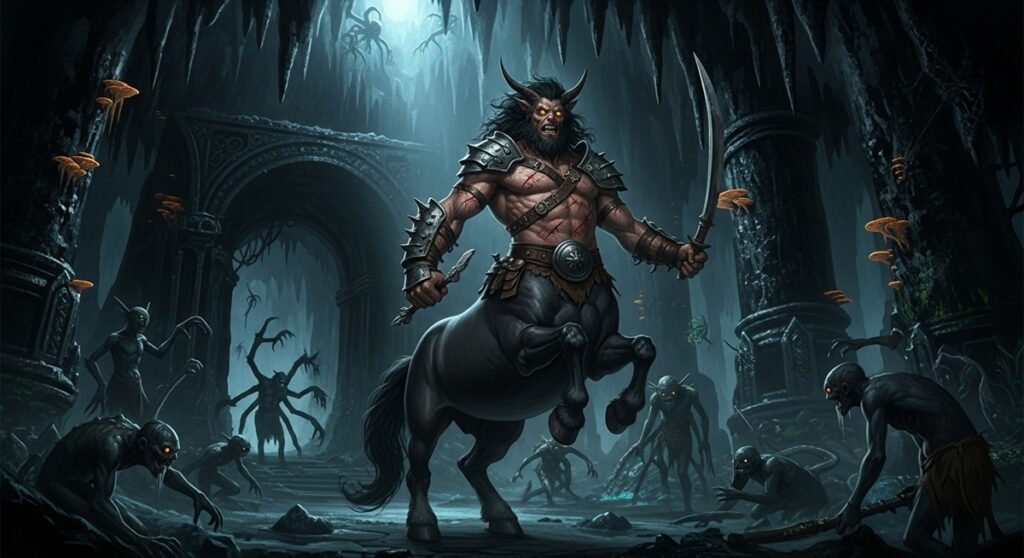
Centaurs close out the Greek roster: half-human, half-horse, bound to Dionysus, volatile and wine-loving, wandering mountains, forests, and occasionally the underworld itself. Later writers have proposed genetic engineering behind them too. Comparative mythologists reach a plainer conclusion: hybrid beings recur across unrelated traditions worldwide as a way of dramatizing the tension between civilization and wildness, a symbolic device, not a biological record.
The Great White Brotherhood | A Council That’s Genuinely Documented, Just Not Physically Located
Amid the monsters sits something built on entirely different foundations. The Great White Brotherhood comes not from antiquity but from the 19th century, coined within Theosophy and popularized by Helena Blavatsky, then carried forward through 20th-century New Age thought. Within that tradition, the Brotherhood is a council of thirty-two “Ascended Masters,” spiritually advanced beings said to have settled on Earth around 12,000 years ago, now guiding humanity’s development from a hidden realm called Agartha. Worth stating plainly, since the name invites the wrong association: “white” here means spiritual light in Theosophical usage, not race.
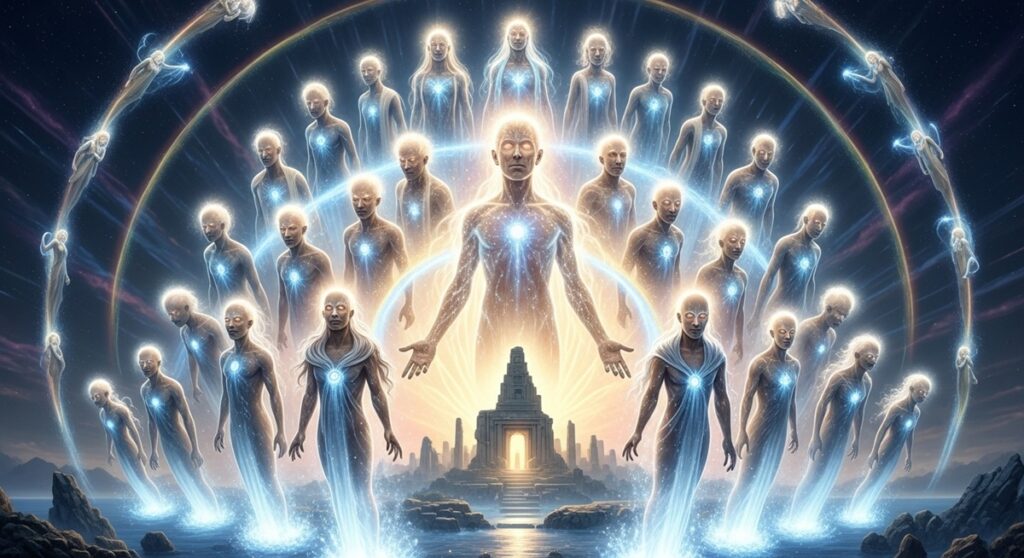
Agartha has cousins everywhere you look, once you know to look: Shambhala in Tibetan Buddhism, Valhalla in Norse tradition, Avalon in Arthurian legend, Amenti in ancient Egyptian belief, each an independently developed vision of a hidden, idealized realm. Blavatsky’s own writing locates Agartha’s entrances in the Gobi Desert, the Himalayas, the Andes, and the Amazon, specific enough to sound like geography, vague enough that none of it has ever been found. No excavation has located the doorways she described. What’s documented is the belief system itself, extensive and influential, not the physical place it describes.
A Parallel Search in India
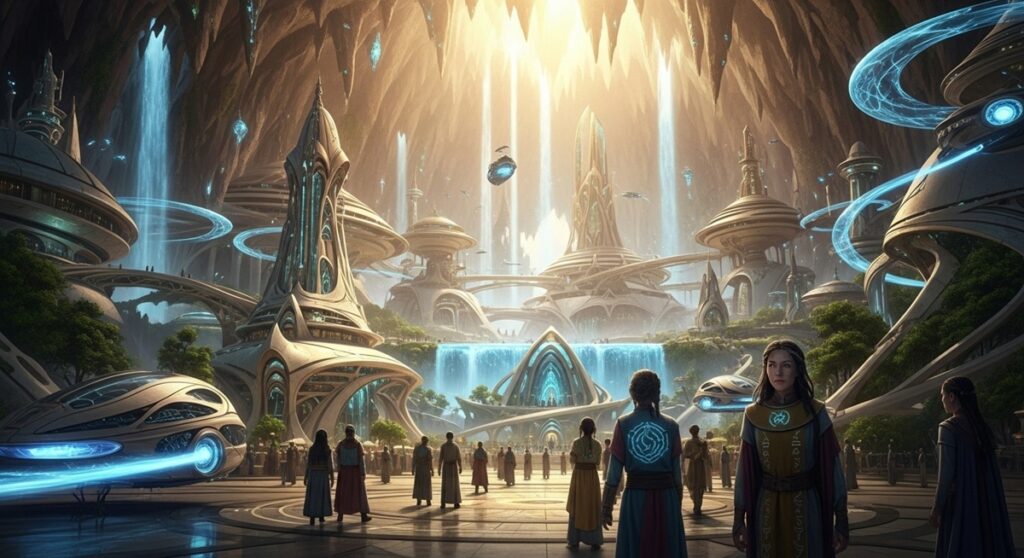
Some writers have tried to fold Shangri-La and a claimed Vedic “Cradle of Humanity” into the same Agartha lineage, leaning on 19th-century philologist Friedrich Max Müller for support. Müller was a serious, influential scholar of comparative religion, but his actual published work concerned the origins of language and mythology broadly, nothing in it endorses a literal race of beings mastering the elements from underground. It’s a case of borrowed authority, a respected name attached to a claim the name’s own work never made.
The Kings Who Were Never Found
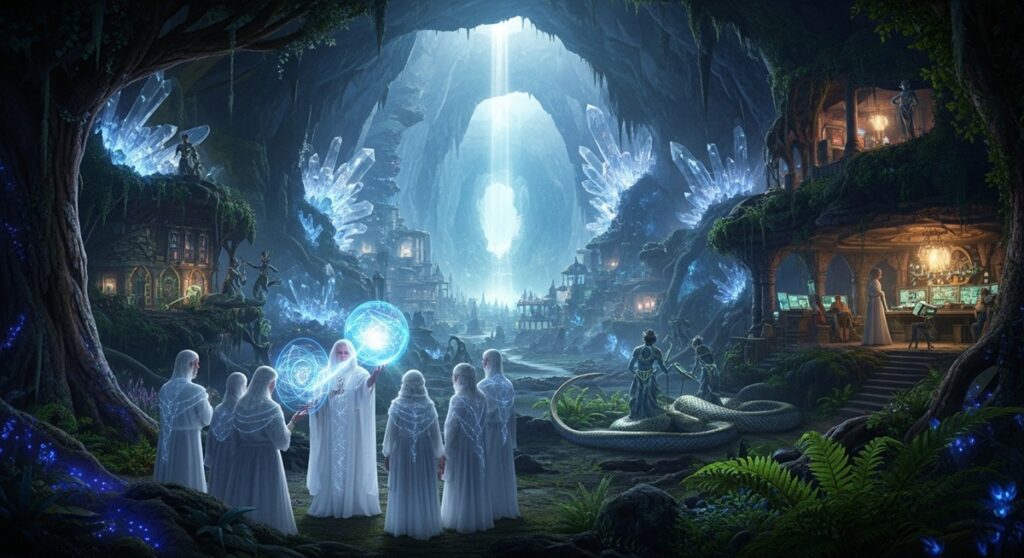
Legends of encounters with the Brotherhood span centuries. Prester John, the supposed Christian king of a lost realm, circulated through medieval European letters and travelogues for generations, a genuinely fascinating case of a legend that outlived any evidence for the man himself, historians treat him as exactly that: a legend, never pinned to a real location despite centuries of searching. Athanasius Kircher’s 1665 Mundus Subterraneus and Sabine Baring-Gould’s 1911 Cliff-Castles and Cave Dwellings in Europe both discuss subterranean kingdoms at length, valuable as records of what people believed at the time, not as confirmation that the beings they described were there. André Chaleil’s 1978 book on Agartha continues the same tradition: documentation of belief, not verification of place.
Where the Pattern Actually Comes From
Trace all of these figures back far enough and the same fork in the road appears every time: a genuine religious or literary tradition on one side, and a mid-20th-century reinterpretation on the other, one that swaps gods and demons for extraterrestrials without ever consulting the texts it claims to be building on. That reinterpretation traces to a specific genre of popular writing, not to archaeology, not to comparative religion, and not to classical scholarship. No specialist working in any of those actual fields reads Nagas, Rakshasas, Cerberus, the Furies, or the Brotherhood as literal alien contact, because the primary sources simply don’t say that.
Real underground cities do exist, Derinkuyu in Turkey, Chavín de Huántar in Peru, extensively excavated and studied, built by identifiable human societies for identifiable human reasons: defense, storage, ritual. They’re worth knowing on those terms too, evidence of what people actually built, not of who they were hiding from.
What the Pattern Actually Tells Us
The persistence of subterranean worlds across civilizations doesn’t demonstrate that Hollow Earth exists. It demonstrates that humans, separated by oceans and millennia, kept imagining knowledge, power, or judgment residing beneath the surface, long after science had already closed the door on where it could physically be. Geology settled the geography a century ago. The imagination never got the memo, and perhaps that’s the more interesting discovery.
This is one of eight recurring traditions this library has followed back to where each one actually began.