



Jean-Charles Duboc was at 10,000 meters when he saw it.
Air France Flight 3532, Nice to London, January 28, 1994. Duboc was the captain. His co-pilot saw it first, assumed it was a weather balloon, and pointed it out. Duboc looked. It was not a weather balloon.
The object was large, disc-shaped, and stationary. It sat in the sky to the left of the aircraft at what Duboc estimated as a significant distance, stationary in a way that weather balloons are not stationary, because weather balloons drift with the wind. This object was not drifting. It was stopped. The crew watched it for more than a minute before it gradually disappeared, not departed, disappeared, fading from visibility rather than moving away.
After landing in London, Duboc plotted the alleged location of the object on an aerial map. It placed the object in close proximity to the Taverny base, the headquarters of the French Strategic Air Command.
The Air Defense Control Center confirmed a radar detection. An independent sensor, ground-based, had tracked a point crossing the flight path in the same location at the same time.
The encounter was subsequently investigated by the COMETA study group, formally led by General Denis Letty, and in collaboration with GEPAN, the UAP investigation unit at the French space agency CNES. The investigation produced a formal record. That record produced no explanation.
Fourteen senior French military and intelligence officials signed the COMETA report when it was completed in 1999 and released publicly in France. Former heads of intelligence agencies. Military generals. Senior defense officials. The report’s conclusion about the Air France encounter and the five percent of cases it placed in the category of phenomena whose origin cannot be determined, was not the conclusion of enthusiasts. It was the conclusion of the French national security establishment applied to a formal multi-year investigation.
The object Duboc saw has not been explained.
What Plasma Actually Is
The source material’s claim that plasma constitutes approximately 99 percent of the observable universe by volume is accurate and appears in standard astrophysics texts. Stars are plasma. The gas clouds between stars are partially ionized plasma. The solar wind filling the interplanetary medium is plasma. The magnetosphere that the pieces in this library’s cosmological cluster describe as producing X-points and magnetic reconnection events is a plasma environment.
Plasma is the fourth state of matter, distinct from solid, liquid, and gas by the property that makes it electromagnetically active: a sufficient fraction of its atoms are ionized, meaning they have lost or gained electrons to produce a medium containing free electrons and ions rather than neutral atoms. This ionized medium responds strongly to electromagnetic fields, can carry electrical current, and forms structures through electromagnetic rather than gravitational or mechanical forces.
The plasma structures most relevant to the UAP discussion are plasmoids: self-organizing plasma configurations that form when plasma is confined by its own magnetic field in a roughly spherical or toroidal shape. Plasmoids are stable enough to persist for measurable periods, mobile in response to electromagnetic field gradients, and capable of containing and radiating electromagnetic energy at frequencies.
The atmospheric plasma phenomenon most extensively recorded at human-observable scales is ball lightning. It has been reported across cultures and centuries, producing luminous spherical objects that hover, drift, pass through solid objects such as glass windows and aircraft fuselages, and disappear suddenly or with an explosive report. The scientific community’s transition from treating ball lightning as folklore to treating it as a genuine physical phenomenon requiring explanation occurred in the twentieth century as the accumulation of credentialed witness accounts became too large to dismiss.
The papers describing ball lightning observations by scientists whose credentials made dismissal difficult include accounts in Nature and other peer-reviewed journals. The formation mechanism for ball lightning is still debated in the physics literature, with proposals including microwave-sustained plasma balls, fractal antennas in ionized air, and quantum coherence in plasma. The existence is not debated. The mechanism is.
Ball lightning’s relevance to the UAP discussion is the precedent it establishes: a naturally occurring plasma phenomenon can produce objects with behavioral characteristics, apparent autonomy of movement, ability to penetrate solid surfaces, sudden appearance and disappearance, that were previously considered incompatible with any known natural phenomenon. The classification of such reports as folklore or hallucination was not validated by physics. It was overturned by accumulating evidence.
The question the plasma UAP hypothesis asks is whether the same process of reclassification is required for a broader category of atmospheric plasma phenomena whose behavioral characteristics appear in pilot encounter accounts with the same consistency and multi-witness corroboration that ball lightning accounts showed before formal scientific acceptance.
The COMETA Report and Its Signatories
The COMETA study, formally titled UFOs and Defense: What Should We Prepare For?, is the most significant official European document on UAP prior to the American congressional hearings of 2022 and 2023.
Its institutional character distinguishes it from the enthusiast literature that dominates most public discussion of UAP. The fourteen signatories were not journalists, researchers, or hobbyists. They were:
General Bernard Norlain, former head of the French Air Force Tactical Command and former director of the Institut des Hautes Études de Défense Nationale. Admiral Marc Merlo, former assistant chief of staff for the French Navy. General Bruno Le Meur, former commander of air operations at French Air Defense. André Lebeau, former president of the French national space agency CNES. General Denis Letty, who led the study. Nine additional senior military and intelligence officials whose names are in the published report.
These individuals spent two years examining French military and civilian encounter reports, the Air France 3532 case among them, applying the analytical standards of the French national security establishment to the available evidence. Their published conclusion was specific: approximately five percent of investigated cases represented phenomena that could not be explained by known natural or human-made processes and whose characteristics were consistent with intelligently directed non-human activity.
The report recommended that France establish formal protocols for UAP investigation, that the phenomenon be taken seriously as a national security concern, and that international cooperation on UAP research be pursued. The recommendations were not immediately acted upon at the governmental level, but the report remained in the public domain as the most credible European official assessment of the UAP phenomenon available.
The Air France 3532 encounter appears in the COMETA analysis as one of the most thoroughly examined cases in the French civilian aviation record. Its features, the corroborating radar detection, the proximity to a strategic military facility, and the crew’s consistent account maintained across multiple separate interviews, placed it in the category of cases that the COMETA analysis took most seriously.
JAL 1628 and the Pattern of Institutional Response
The 1986 Japan Air Lines Flight 1628 encounter over Alaska is the most extensively recorded aviation UAP encounter in the American record and provides the clearest example of the institutional response to pilot reporting that the source material describes.
Captain Kenjyu Terauchi was commanding a Boeing 747 cargo flight from Paris to Tokyo on November 17, 1986. Over Alaska at approximately 35,000 feet, his aircraft was followed for approximately fifty minutes by objects whose characteristics he recorded in a formal report filed with the Japanese Civil Aviation Bureau and subsequently investigated by the FAA.
Terauchi’s description of the objects included two smaller craft that flew in formation ahead of the 747 and a much larger object behind it that he described as comparable to the size of two aircraft carriers. The FAA’s Anchorage Air Route Traffic Control Center confirmed radar returns at the relevant position and time. Terauchi’s account was corroborated by his co-pilot and flight engineer.
The FAA investigation produced a formal record that is in the public archive. The investigation’s findings, that the radar returns were confirmed, that the crew’s accounts were consistent, and that no conventional explanation for the radar signatures had been identified, were recorded and then classified at a level that restricted public access for a significant period.
Terauchi gave public interviews about the encounter and was subsequently removed from the 747 fleet and transferred to a desk assignment. JAL stated that the transfer was unrelated to the encounter. The timing of the transfer, and its effect on Terauchi’s capacity to give further public testimony, has been noted by researchers including the National Aviation Reporting Center on Anomalous Phenomena, NARCAP, whose founder Richard Haines recorded the case in detail.
The Terauchi case established the institutional pattern that the source describes as applicable to pilot reporting generally: a credentialed witness with corroborating evidence files a formal report, the report is investigated by the relevant authority, the investigation produces findings that are not publicly resolved, and the witness experiences professional consequences that deter other witnesses from making similar reports.
The pattern is recorded across multiple cases in NARCAP’s database, which Haines built over a twenty-year period specifically to document the institutional suppression of pilot UAP reporting and to provide a safe reporting channel for pilots who would not use official channels.
The Characteristics of Atmospheric Plasma Encounters
The behavioral characteristics that distinguish plasma-category UAP encounters from structured craft encounters are enough to constitute a distinct evidential category.
Structured craft encounters, recorded across the Nimitz, Tehran, and Malmstrom pieces in this library, show objects with defined edges, consistent geometry, apparent propulsion systems evidenced by directional acceleration, and electromagnetic interference effects on surrounding technology. The Nimitz Tic Tac showed defined form, maintained geometry under observation, and demonstrated propulsion through directed acceleration from stationary to hypersonic speeds.
Plasma category encounters show different characteristics: objects without defined edges, whose boundaries blur or shift under observation. Objects that appear to change shape gradually rather than maintaining consistent geometry. Objects that disappear through fading rather than through departure. Objects that show no directional acceleration but appear to move in response to field gradients rather than applied thrust. Objects that produce electromagnetic interference effects but are not themselves electromagnetically opaque, meaning radar sometimes returns a signature and sometimes does not.
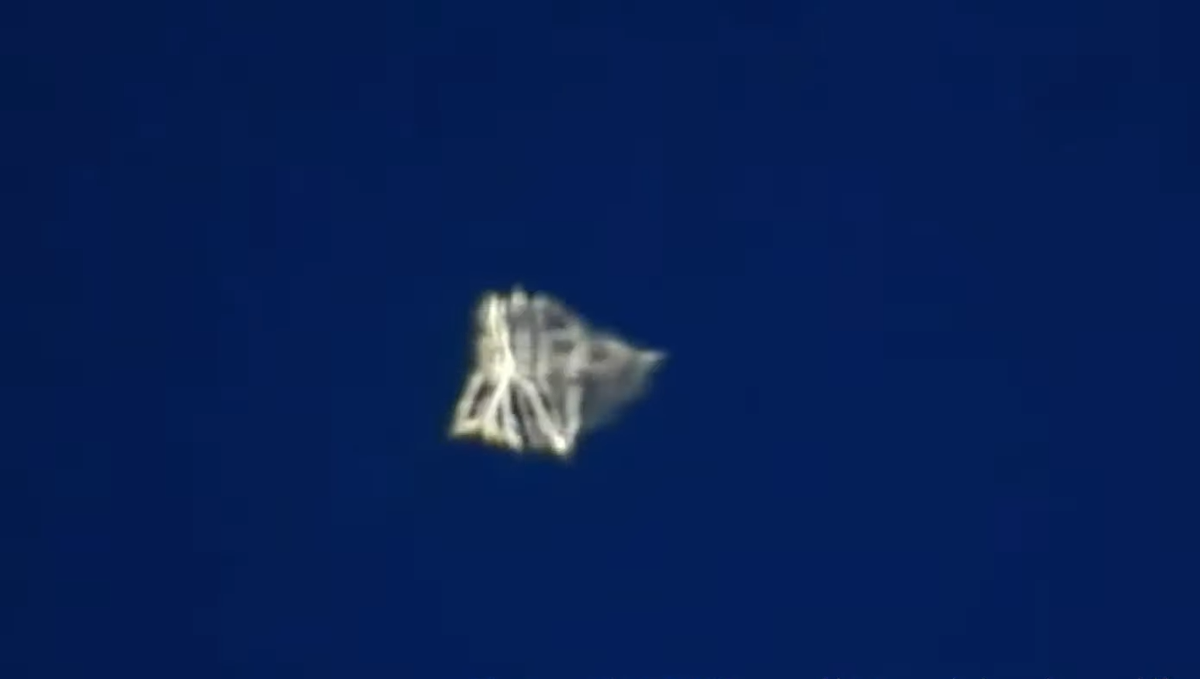
Duboc’s description of the Air France object is specifically in this category: large, disc-shaped at first observation, with gradual disappearance rather than departure. The radar confirmation at the Air Defense Control Center is intermittent in character, a point crossing the flight path rather than a solid return tracked continuously. The object appeared embedded in what Duboc described as a magnetic or gravitational field.
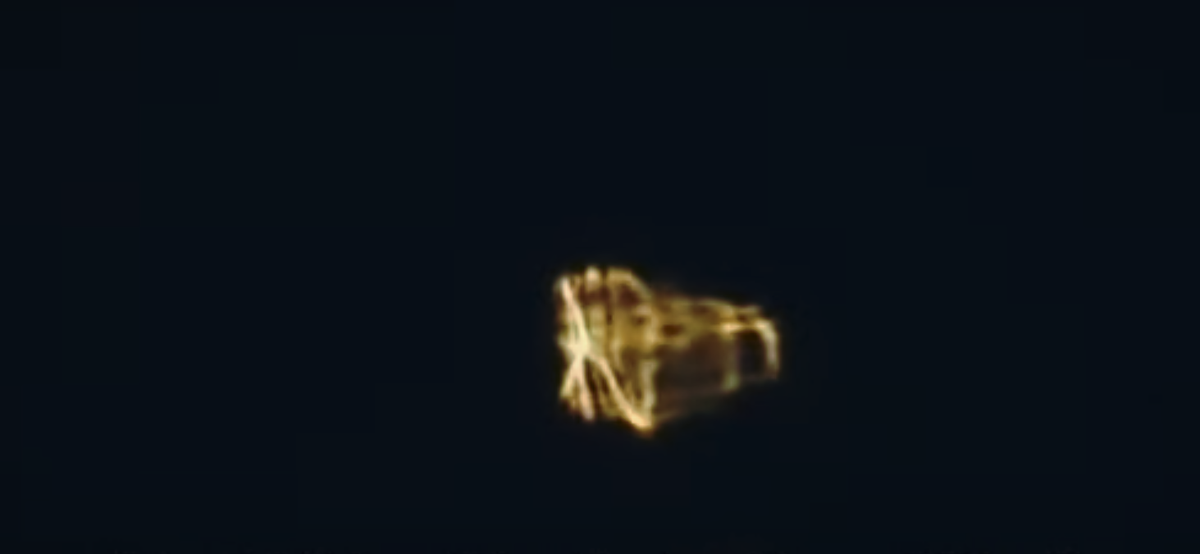
The ball lightning research provides the comparative framework: natural plasma phenomena show exactly these characteristics. Defined-edge instability, shape change, fading disappearance, and intermittent radar return are all consistent with a plasmoid whose electromagnetic boundary is not sharply defined.
The question the comparison raises is whether the objects in pilot encounters represent naturally occurring atmospheric plasma phenomena, technologically produced plasma phenomena whose creator has engineering control over plasmoid formation and behavior, or plasma phenomena generated by something else entirely whose physics the current framework has not characterized.
The COMETA study’s five percent category does not resolve this question. It identifies that the category exists and that its origin is unknown. The physics of the category, whether it falls within the known parameter space of natural plasma phenomena scaled up from ball lightning, or whether it requires a different physical framework, is the open research question that the existing pilot encounter record raises without answering.
The Institutional Barrier
NARCAP’s record of pilot reporting suppression across two decades of systematic data collection provides the most comprehensive picture of the institutional mechanism that keeps the plasma UAP evidence from accumulating in a form that the scientific community can formally engage with.
The career consequences recorded in NARCAP’s files include removal from flight status, assignment to non-flying duties, unofficial pressure from airline management and from regulatory authorities, and the informal professional culture in which a pilot who reports a UAP encounter is treated as either unreliable or insufficiently rational for command responsibilities.
The irony is that pilots are among the most qualified observers of atmospheric and airborne phenomena. They are trained in visual assessment of distances, altitudes, and velocities. They are trained to distinguish aircraft from other aerial objects. They operate systematic sensor systems that provide corroborating data. They file formal reports routinely as part of aviation safety culture. The professional standards they operate under are specifically designed to make them reliable witnesses.
The same professional standards that make pilots the most qualified observers of UAP encounters make them the most vulnerable to the institutional consequences that UAP reporting produces. An airline captain who files a UAP report faces the immediate professional risk that the report will be used to question their fitness for command, regardless of the report’s evidential quality.
James Courant’s extensive collection of pilot testimony, built over fifteen years of interviews with civilian and military pilots who reported encounters to him privately that they would not file officially, represents the shadow archive of pilot UAP encounters that the institutional barrier has kept from formal scientific examination. The accounts in his collection, including the 1980 Pacific Ocean encounter with an object twice the size of a Boeing 747, are consistent with the recorded public cases but exist only in Courant’s private records rather than in any verifiable official database.
The institutional barrier is not primarily a cover-up in the conventional conspiracy sense. It is a professional culture that produces rational individual decisions, do not report because reporting has career consequences, that collectively prevent the accumulation of evidence in a form the scientific community can engage with.
The COMETA study, conducted by people senior enough that the institutional barrier did not apply to them, produced the most complete European official assessment of the available evidence. Its conclusion, that five percent of cases represent phenomena requiring explanation that the current framework cannot provide, is the conclusion that the institutional barrier has prevented from becoming the starting point for formal scientific investigation of atmospheric plasma phenomena in the UAP context.

What the Plasma Framework Means
The plasma entity hypothesis the source introduces requires more careful development than the source provides to be evaluated honestly.
The claim that plasma consciousness constitutes a form of life that exists independently of biological substrate is a philosophical and physical claim that is not supported by the current scientific framework but is not obviously falsified by it either. The current scientific framework does not have a satisfactory account of how biological consciousness arises from electrochemical processes in neural tissue. A framework that cannot fully account for the consciousness it knows about is not in a strong position to rule out consciousness in substrates it has not investigated.
What can be said with confidence is that plasma physics produces self-organizing structures, that those structures exhibit behaviors that in biological contexts would be called purposive, and that the boundary between physical self-organization and biological behavior is not as clearly defined as the conventional taxonomy implies.
The plasma phenomena recorded in pilot encounters, their consistent behavioral characteristics across independent accounts, their electromagnetic signatures, their relationship to atmospheric and geological conditions, and their corroboration by independent sensors in the best-documented cases, constitute a physical evidence base that is richer than the public discussion of UAP typically acknowledges.
Whether the objects are natural plasma phenomena at the scale of atmospheric electricity, technologically produced plasma configurations, or something else whose physics the current framework has not characterized, the evidence that they exist is in the pilot encounter record.
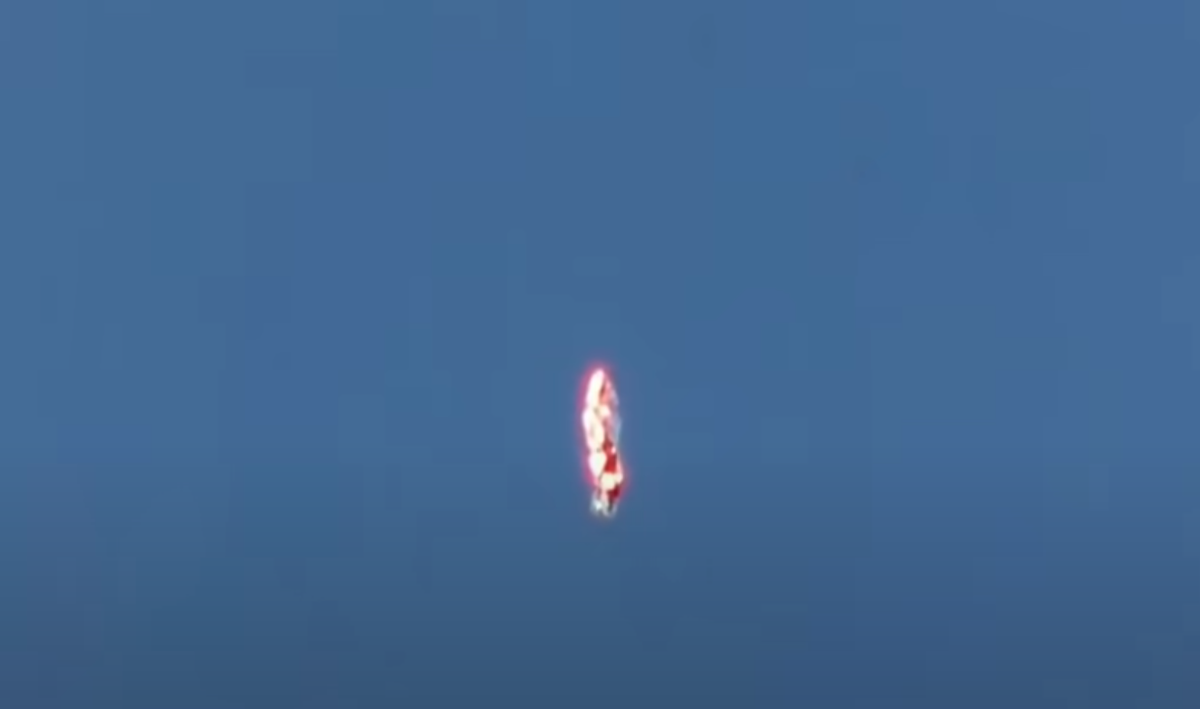
Duboc saw it for more than a minute. The radar confirmed it. The COMETA study examined it. Fourteen senior French military and intelligence officials signed the report that included it.
The object has not been explained. The atmosphere is full of plasma. What the plasma is doing in conditions and locations is the question that the institutional barrier has prevented from receiving the systematic scientific attention that the available evidence warrants.
The objects are there. The framework that would explain them is incomplete. The pilots who have seen them know what they saw.