



For decades, the leading explanations for Sumer’s rise pointed to trade networks, pastoralism, or the fertility of river silt. A study published in PLOS One in August 2025 proposes something the field hadn’t fully accounted for: the tides themselves.
Geologist Liviu Giosan of the Woods Hole Oceanographic Institution and archaeologist Reed Goodman of Clemson University argue that twice-daily tidal surges, reaching far up the Tigris and Euphrates, gave early Mesopotamian farmers a natural irrigation system before anyone had to dig a canal.
Sumer’s Legacy
Sumerian civilization emerged around 4500 BCE in the land between the Tigris and Euphrates rivers, in what’s now southern Iraq. Cities including Ur, Uruk, and Lagash grew from the surrounding marshland into genuine urban centers, with populations eventually reaching into the tens of thousands, organized around shared irrigation, temple economies, and early bureaucratic record-keeping.
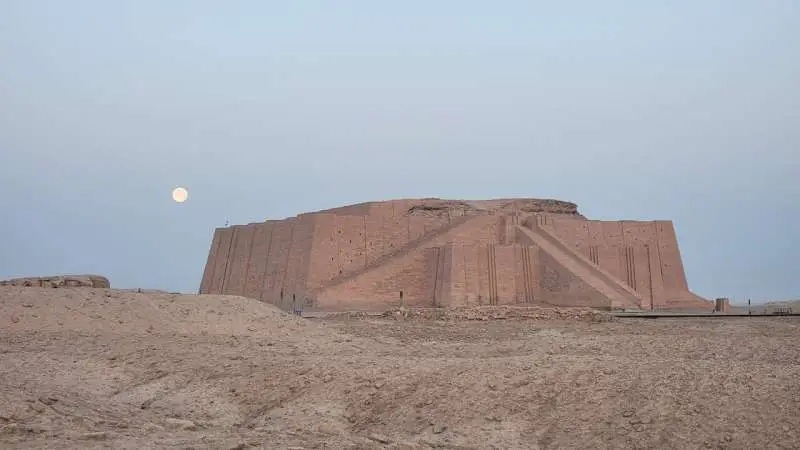
The list of Sumerian innovations is genuinely long. The earliest known wheels appear in the archaeological record around the fourth millennium BCE, with Mesopotamia among the earliest regions where wheeled vehicles are documented. Cuneiform writing developed from simple pictographic accounting tallies into a script capable of recording law, literature, and astronomical observation. The Code of Ur-Nammu predates the more famous Code of Hammurabi by centuries. Sumerian astronomers tracked the stars and predicted eclipses using a base-60 number system, the same one that still divides an hour into 60 minutes today. They also brewed beer as a dietary staple, formal enough about it to worship Ninkasi, a dedicated goddess of brewing.
What’s harder to explain is how a population in a hot, dry, flood-prone plain built all of this in the first place. That’s the specific question Giosan and Goodman’s research addresses.
What the Study Actually Found
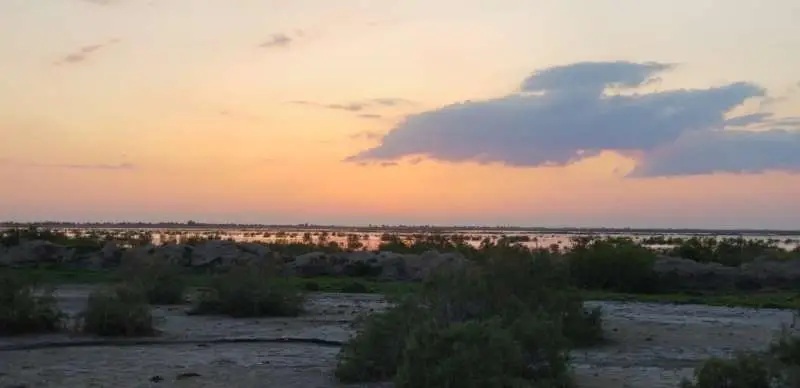
The paper, “Morphodynamic Foundations of Sumer,” published August 20, 2025 in PLOS One, draws on a 25-meter drill core the team recovered from Lagash, at the modern site of Tell al-Hiba, in 2022, combined with high-resolution satellite topography and paleoenvironmental proxy data. The core revealed alternating layers of marine and river sediment, evidence of a genuinely dynamic ancient coastline. Radiocarbon dating, along with chemical proxies including bromine and sulfur concentrations, indicated that roughly 7,000 years ago, the Persian Gulf extended much farther inland than it does today, with tides pushing up the rivers twice daily.
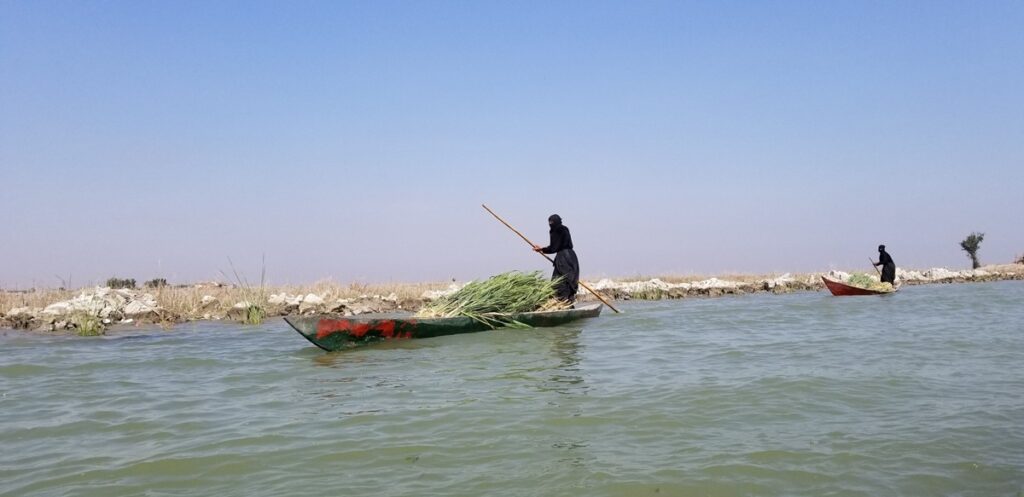
“Sumer was literally and culturally built on the rhythms of water,” Giosan told reporters following the study’s publication. “The cyclical patterns of tides together with delta morphodynamics were deeply woven into the myths, innovations, and daily lives of the Sumerians.” The team’s evidence isn’t limited to sediment layers and satellite imagery. Microfossils, including foraminifera and ostracods, species that only survive in brackish water where sea and river mix, turned up in the core at depths consistent with the tidal-estuary model the researchers propose.
The mechanism the paper describes is straightforward: incoming tides pushed silt-laden freshwater upstream twice a day, naturally flooding low-lying fields without requiring the large-scale canal networks later Sumerian irrigation would depend on. Reed Goodman, the study’s co-author, described the underlying landscape as inherently demanding: “The delta in Mesopotamia was restless and changeable. Its land required constant ingenuity and collective effort, leading to the first intensive farming methods and bold social experiments in history.”
When the Tides Retreated
The tidal advantage didn’t last. The Tigris and Euphrates carried enormous volumes of silt, and over centuries that sediment built the delta outward, pushing the coastline toward the Gulf and gradually cutting off the tidal reach that had sustained early agriculture. By roughly 6,000 to 5,000 years before present, natural channels had silted up, freshwater inflows had dwindled, and the easy, tide-driven irrigation system Sumerian communities had relied on stopped working.
The study frames this environmental shift as the actual catalyst behind the more centralized, hierarchical Sumerian society that eventually built the large-scale canal networks of the Early Dynastic period, roughly 4900 to 4350 years before present. Constructing and maintaining canals spanning hundreds of kilometers required coordinated labor at a scale no individual household could organize alone, and the paper argues this necessity helped drive the rise of the priest-and-king governing structures that came to define Sumerian city-states. Holly Pittman, director of the Penn Museum’s Lagash Archaeological Project, connected the finding directly to the site’s excavation record: “The radical conclusions of this study are clear in what we’re finding at Lagash. Rapid environmental change fostered inequality, political consolidation, and the ideologies of the world’s first urban society.”
Where the Flood Myth Connection Actually Stands
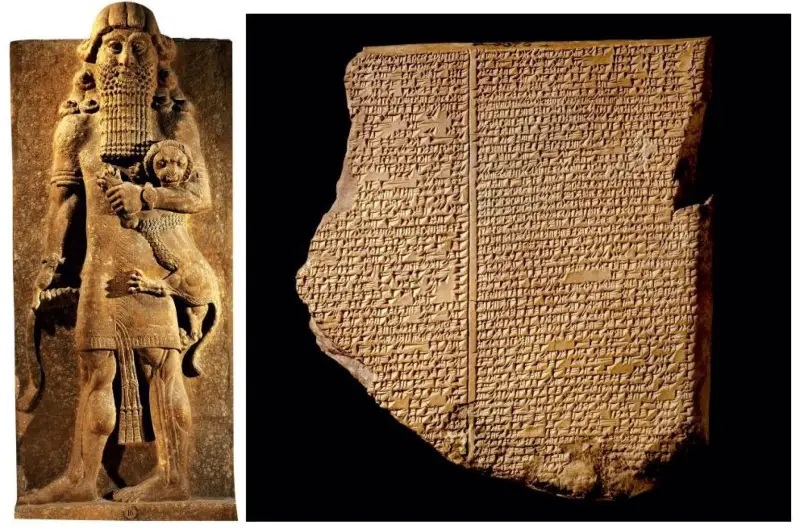
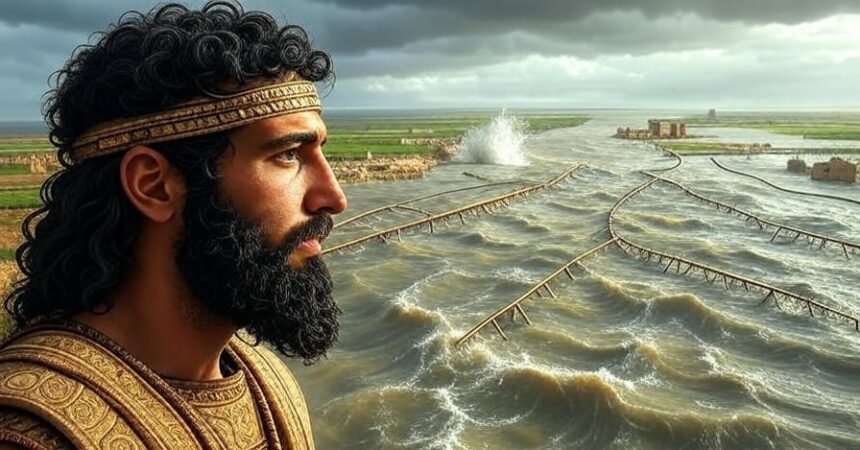
This is worth being precise about, since it’s easy to overstate what the study itself claims. The published paper’s central argument concerns tidal irrigation as a plausible mechanism behind early Sumerian agricultural surplus and urbanization, documented through sediment cores and satellite topography. It is not primarily a study of the Gilgamesh flood narrative, and its abstract doesn’t claim to have proven the flood myth historically accurate. The connection between tidal-driven storm surges and Mesopotamian flood mythology is a reasonable, genuinely interesting interpretive extension, environments prone to sudden tidal and storm-surge flooding plausibly could generate exactly the kind of catastrophic-flood folk memory later preserved in the Gilgamesh epic and its Genesis-era echoes, but that’s a plausible inference sitting alongside the research rather than the study’s own tested and published conclusion. The solid, peer-reviewed finding is about tides shaping agriculture and social organization. The flood-myth link is worth taking seriously as an idea. It isn’t the same category of established claim.
Water in Sumerian Religious Life
What the tidal model does help explain is why water occupies such a central place in Sumerian religious thought. Enki, god of water, wisdom, and creation, was said to rule the Abzu, a primordial freshwater ocean beneath the earth, imagery that maps naturally onto a world where the boundary between fresh river water and the tidal sea genuinely shaped daily survival. Giosan put it plainly: “The water element was not just a background, but the foundation of their culture.”
What This Means Beyond Sumer
The researchers suggest the same coastal morphodynamic lens could be worth applying elsewhere: the Indus Valley’s monsoon-fed deltas, Maya wetland adaptations in Mesoamerica, and the Nile’s own flood cycle in Egypt all involve early civilizations whose fortunes were tied closely to shifting water systems rather than static, unchanging landscapes. In a period of rising seas and changing river systems worldwide, Sumer’s history offers a specific, documented precedent: environmental crisis didn’t simply erase the civilization built around it. It reorganized it, for better and for worse, into something more centralized, more durable, and more hierarchical than what came before.