



The Zulu oral tradition is specific in a way that most creation mythology is not.
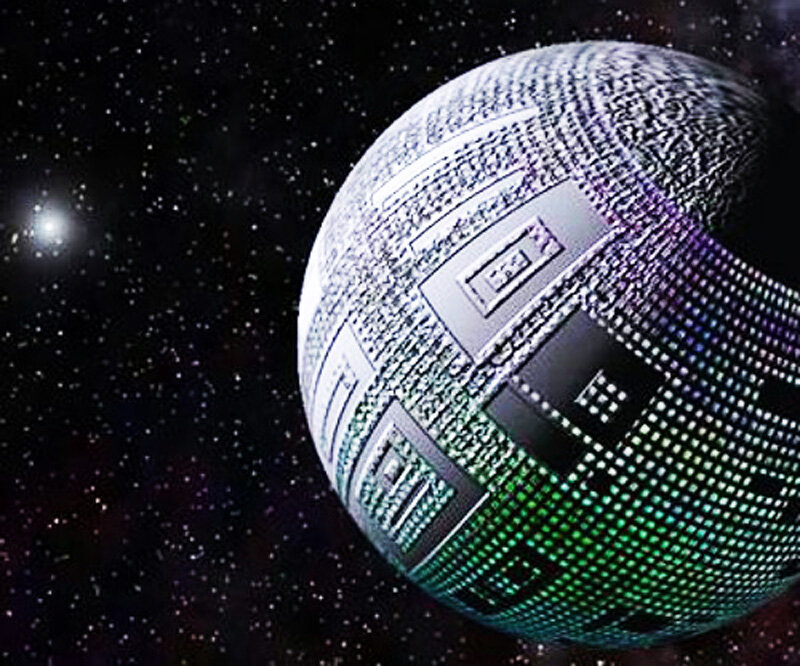
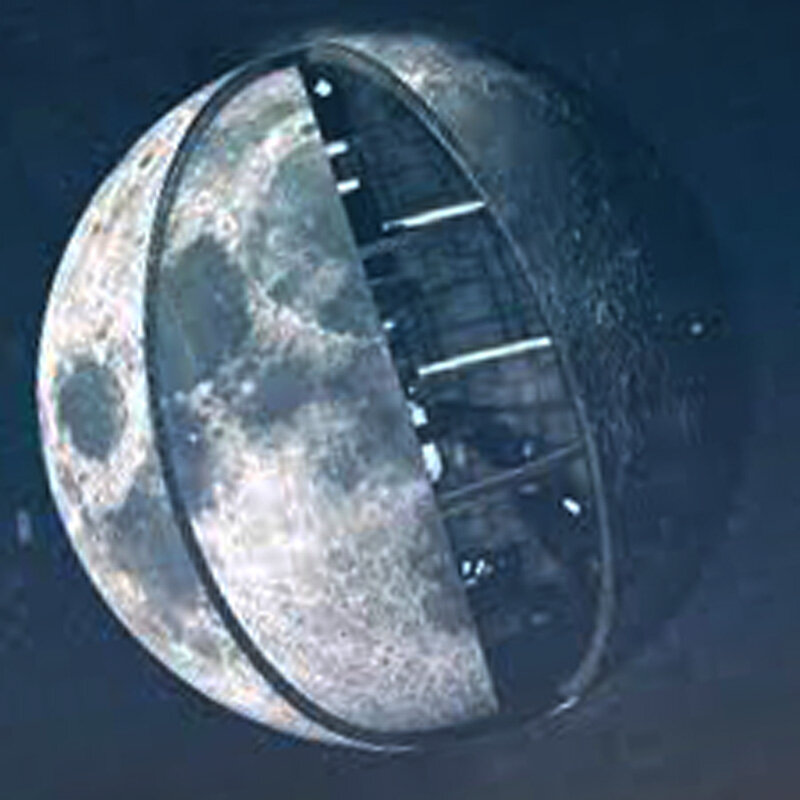
The Moon was not always here. Two beings called Wowane and Mpanku, described as brothers with scaly skin like fish, brought it. They stole it from a larger celestial body called the Great Fire Dragon. Before they moved it, the Moon was egg-shaped and full. They emptied it, rolling out its contents, until it became a hollow shell. Then they rolled the hollow shell through the heavens to Earth.
When it arrived, the Earth changed catastrophically. The rotation shifted. The tilt altered. The waters moved in ways they had never moved before. The golden age that had preceded the Moon’s arrival ended abruptly. This account attributes the Flood and the end of the pre-Flood civilization directly to the Moon’s arrival rather than to any Earth-internal catastrophe.
Wowane and Mpanku, in this account, used the Moon as a transport vessel and as a surveillance instrument. Their purpose was to monitor and control the human populations below. Their threat to humanity was specific: non-compliance would be met with the Moon being repositioned to destroy the Earth through the same catastrophic mechanisms its arrival had already demonstrated.
This account is most widely known through Credo Mutwa, a real and respected Zulu sangoma whose earlier work, particularly his 1964 book Indaba, My Children, is a genuine and valuable record of Zulu folklore and oral history. The specific Wowane and Mpanku Moon narrative, however, needs a more precise sourcing note than simply attributing it to Zulu belief broadly, because its most widely circulated version comes from a much later and more specific context. Beginning in the 1990s, Mutwa collaborated extensively and publicly with British conspiracy theorist David Icke, appearing in Icke’s videos and interviews describing an extraterrestrial reptilian race called the Chitauri controlling humanity, material that scholars who have studied Mutwa’s later public role, including religious studies researcher Christina Steyn, describe as a documented blending of genuine Zulu material with Western New Age and conspiracy content rather than a straightforward transmission of pre-contact cosmology. The Moon narrative discussed in this piece belongs to this later period of Mutwa’s public work rather than to an independently verifiable older Zulu source, and readers should weigh it accordingly: as a real and specific claim made by a real person, but one whose relationship to deep pre-contact Zulu belief, as opposed to Mutwa’s own later synthesis, is genuinely unclear.
The Hollow Moon piece and the pre-lunar Earth piece in this library cover the physical evidence and the broader multi-culture context for the claim this Zulu account makes. This piece examines the Zulu account in its detail and asks what the physical evidence says about each of its claims.
The Hollow Shell Claim
This account’s most striking claim, that the Moon’s contents were removed before it was brought to Earth’s orbit, is the claim whose correspondence to the physical evidence is most direct and most discussed.
The Apollo seismic experiments, recorded in the Hollow Moon piece in this library, produced findings whose most anomalous element is the Moon’s response to impact. When the Apollo 12 astronauts deliberately crashed the ascent stage of their lunar module onto the lunar surface on November 20, 1969, the seismic instruments they had deployed detected vibrations that lasted for approximately one hour. When NASA deliberately impacted the spent third stage of the Saturn V rocket, weighing approximately 13.6 metric tons, against the lunar surface during the Apollo 13 mission, the vibrations lasted for more than three hours, reaching a maximum amplitude at approximately eight minutes after impact and then slowly decreasing.
The character of these vibrations, described informally as the Moon ringing like a bell, is a real recorded phenomenon, but the library’s evidentiary standard requires reporting the mainstream explanation before presenting the hollow-shell interpretation as if it were the leading one. The dominant explanation among lunar scientists is that the Moon’s surface material, extremely dry, porous, and free of the water and internal fracturing that damp vibration on Earth, transmits and sustains seismic energy far longer than solid rock on Earth does. This is a property of the material’s dryness and structure, not evidence of internal emptiness, and it is the explanation most planetary seismologists favor. The Vasin-Shcherbakov hollow-shell interpretation exists and is worth naming, but it is a minority position, not the leading account of why the Moon rings the way it does.

Whether the Apollo seismic findings are best interpreted as indicating a truly hollow Moon or as reflecting a Moon with an unusually thick, rigid outer shell above a different interior composition is a question the seismic data alone cannot definitively resolve. The Soviet Academy of Sciences paper by Vasin and Shcherbakov, published in Sputnik magazine in 1970, proposed the hollow metallic shell interpretation. The mainstream geophysical interpretation attributes the anomalous seismic characteristics to the Moon’s extremely cold and rigid outer layers producing unusually efficient vibration propagation.
Both interpretations acknowledge the anomaly. Neither is definitively established by the available data.
This account describes a hollow shell specifically because the contents were removed before arrival. The Apollo seismic data records a body that vibrates in a way popularly described as hollow-shell-like, though the leading scientific explanation attributes that to surface material properties rather than genuine internal emptiness. The correspondence is suggestive rather than direct.
The Egg-Shaped Original
This account’s detail that the Moon was egg-shaped before its contents were removed and before it arrived in Earth’s orbit connects to a real anomaly in the Moon’s current shape.
The Moon is not a perfect sphere. Its center of mass is offset from its geometric center by approximately two kilometers in the direction of Earth, meaning the Moon’s mass is not symmetrically distributed around its center of volume. This offset produces the tidal locking that keeps the same face permanently toward Earth. A body whose mass center and volume center do not coincide is a body with asymmetric internal composition, which is consistent with either differential geological processes within a naturally formed body or with a modified structure whose internal arrangement was changed from an original configuration.

Whether the mass offset reflects the natural geological differentiation of a body formed through the Giant Impact process or reflects a modification of an original configuration is a question the available data does not definitively resolve. The Giant Impact hypothesis predicts patterns of mass distribution that have been partially confirmed by lunar gravity mapping missions including the Gravity Recovery and Interior Laboratory mission, GRAIL, which mapped the Moon’s gravitational field in unprecedented detail between 2011 and 2012.
The GRAIL mission found that the Moon’s crust is thinner on the near side than on the far side, with an average thickness of approximately 34 kilometers on the near side versus approximately 43 kilometers on the far side. The asymmetry is consistent with the Giant Impact model’s predictions about the differential distribution of impact debris, but the asymmetry’s character remains an active research question.
This account’s egg-shaped original is not directly testable against the current Moon’s physical parameters. What can be noted is that it specifically identifies a change in shape, from egg to hollow sphere, as part of the modification process. Whether the Moon’s current shape anomalies reflect a natural formation history or a modification from an original shape, this claim of modification is consistent with the physical evidence’s established anomalies.
The Great Fire Dragon
This account’s identification of the Moon’s original location as an object called the Great Fire Dragon is the most cosmologically striking element of it and the one that connects most directly to the broader solar system formation questions covered in this library’s Planet Nine and Enuma Elish pieces.
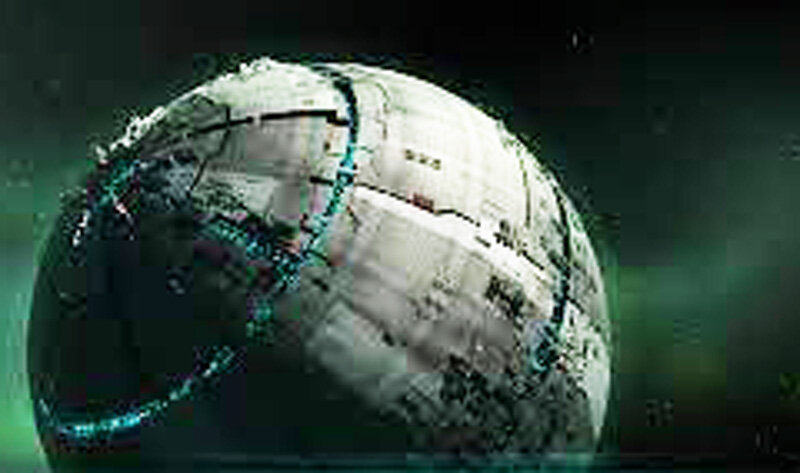
The Great Fire Dragon as a celestial body is not identified with any known object in the available accounts. The description suggests a large, luminous, energetic body that was the Moon’s original home before its contents were extracted and the shell was repurposed. The extraction of the Moon’s contents from this larger body and its subsequent transport to Earth’s orbit describes a process that requires the kind of cosmic engineering capability that the Anunnaki creation pieces in this library attribute to the beings who shaped the solar system for purposes.
The connection between this account’s Wowane and Mpanku and Anunnaki material has been noted by researchers including Credo Mutwa and by Zecharia Sitchin’s students. The description of Wowane and Mpanku as the Chitauri, which Mutwa translates as the children of the serpent or the people of the terrible one, connects to the broader reptilian intelligence material recorded in the Nephilim and Watchers pieces in this library and to the Naga underground civilization recorded in the Inner Earth piece.
Whether the Chitauri are the same beings as the Anunnaki, a subset of the same general class of non-human intelligences operating in the solar system, or independent entities described in convergent terms by independent cultures, is a question that the multi-culture convergence evidence this library has built cannot definitively resolve but that the correspondence of capabilities and descriptions makes genuinely interesting to examine.
The Catastrophe Sequence
This account’s claim that the Moon’s arrival caused the catastrophic end of the golden age, identified here with the global flood, connects directly to the pre-lunar Earth piece in this library’s coverage of multiple independent cultures describing the Moon’s arrival as a catastrophic event.

This account’s catalog of catastrophic consequences for an object of the Moon’s mass being placed in Earth’s orbit, floods caused by melting and sliding ice sheets, giant tidal tsunamis, storms, volcanic eruptions, and earthquakes, is physically accurate in its general character. The gravitational effect of a body with the Moon’s mass being introduced into Earth’s orbital system from outside would produce exactly these categories of consequence.
Whether the arrival produced these consequences at a scale matching this account depends on the dynamics of the introduction event and on what the Earth’s geological state was at the time. The Younger Dryas event, approximately 12,900 years ago, produced exactly this combination of consequences at a global scale and remains the most studied catastrophic civilizational disruption event in the geological record.
Whether the Younger Dryas event was caused by the Moon’s arrival, by a cosmic impact, by the volcanic forcing discussed in the 536 CE event piece, or by something else whose character the current evidence does not fully characterize, is not established. What the pre-lunar Earth piece covers is that multiple independent cultures place the Moon’s arrival in approximately the same general epoch as the Younger Dryas and the global flood stories. This account adds the mechanism, tidal and tectonic disruption from the introduction of a large body into Earth’s orbit, that the general physical analysis confirms would occur.
The Surveillance Function
This account’s claim that the Moon was brought to Earth as a surveillance and control instrument is the most extraordinary element of it and the one that connects most directly to the broader non-human intelligence framework this library has built.

This account’s description of Wowane and Mpanku using the Moon to monitor human civilization and threatening its destructive repositioning as a coercive instrument of control places the Moon specifically in the role that the Loosh piece in this library covers Monroe’s account attributing to the designers of the Earth system. Whether the Moon functions as a genuine surveillance and control instrument through physical mechanisms, electromagnetic effects on human consciousness recorded in the Mark Filippi reference in the source, or as a component of the energy harvesting system Monroe’s account describes, is a question that the physical evidence and this testimony raise without definitively resolving.
The recorded effects of the Moon on human physiology and behavior are more substantial than the popular dismissal of astrology and lunar effect research suggests. The correlation between the full moon and biological processes, including the recorded correlation between the lunar cycle and the menstrual cycle, the recorded effects of moonlight on melatonin production, and the statistical correlations in biological timing events, establish that the Moon has measurable effects on Earth’s biological systems.
Whether these measurable biological effects represent the mechanism of a surveillance and control function or simply the natural gravitational and electromagnetic influence of a large nearby body on a biosphere evolved in its presence, is a question whose answer depends on whether the Moon’s presence in Earth’s orbit is natural or directed.
The Titanium Question
The titanium anomaly recorded in the lunar rock analysis is the most physical evidence point in the source and deserves full development against the established scientific record.
The Apollo rock samples returned from the lunar surface contain titanium at concentrations that have no analog in any other known rocky body in the solar system. Harold Urey, whose Nobel Prize in chemistry was awarded for his discovery of deuterium and whose subsequent work on planetary formation made him one of the most authoritative voices on the geochemistry of solar system bodies, expressed recorded surprise at the titanium concentrations in lunar samples.

Geochemist Ross Taylor’s analysis, recorded in his published work on lunar geochemistry, identified areas of the lunar surface with extremely high titanium concentrations. The physical mechanism that would concentrate titanium at the lunar surface rather than allowing it to sink to the core during the differentiation process that all rocky bodies undergo as they cool from their initial molten state is not established by any consensus-accepted explanation.
During differentiation, dense elements including titanium migrate toward the core while lighter elements rise to the surface. The lunar surface’s anomalously high titanium content represents the opposite pattern: the dense element is at the surface and the core is depleted relative to the surface. This inversion of the normal differentiation pattern is physically anomalous and has not been explained by any planetary formation model that applies to naturally formed bodies.
Whether the titanium inversion reflects an unusual feature of the Giant Impact process that formed the Moon, a subsequent addition of titanium-rich material to the lunar surface by an external agent, or is evidence of a non-natural original composition, is a question the available geochemical evidence raises without resolving.
The Vasin-Shcherbakov hypothesis proposed that the titanium and other refractory metals at the lunar surface represent the outer shell of a constructed object, whose surface composition was chosen for its physical properties, hardness, heat resistance, and radiation resistance, rather than its natural geochemical origin.
Whether this hypothesis is correct, the titanium anomaly is real, its physical explanation within natural formation models is inadequate, and its correspondence to the properties that would be selected for in constructing a durable hollow shell is specific.
The Coincidence That Isn’t Random
The Moon’s precise angular size as seen from Earth, matching the Sun’s angular size with the accuracy required to produce the total solar eclipses that appear in the astronomical record, is the coincidence whose statistical improbability has been noted by multiple writers over the years, including Isaac Asimov, who called the eclipse-matching coincidence remarkable, though Asimov, a committed skeptic, was noting the coincidence itself rather than endorsing any artificial-placement explanation for it.

The Sun’s diameter is approximately 400 times larger than the Moon’s diameter. The Sun is approximately 400 times farther from Earth than the Moon. These two ratios, 400 and 400, produce the angular size match that makes total solar eclipses possible at Earth’s surface. The probability of this coincidence of ratios occurring in a randomly assembled planetary system is not zero, but it is low enough that multiple researchers have noted it as requiring either an extraordinarily unlikely coincidence or an explanation that invokes directed placement.
Whether the Sun-Moon angular size coincidence is a natural result of orbital dynamics, reflecting some constraint in planetary formation that is not yet fully understood, or is evidence of deliberate placement of the Moon at a distance from Earth, is a question the available evidence cannot definitively answer.
This account’s description of the Moon being rolled through the heavens to Earth by beings with the capability and the motivation to place it in orbit is one possible explanation for a coincidence that natural formation models do not predict.
This account was told before anyone had calculated the ratios. The mathematics that establish the coincidence came later. This account’s claim about directed placement is consistent with the later-discovered coincidence in a way that a randomly invented story would not typically produce.