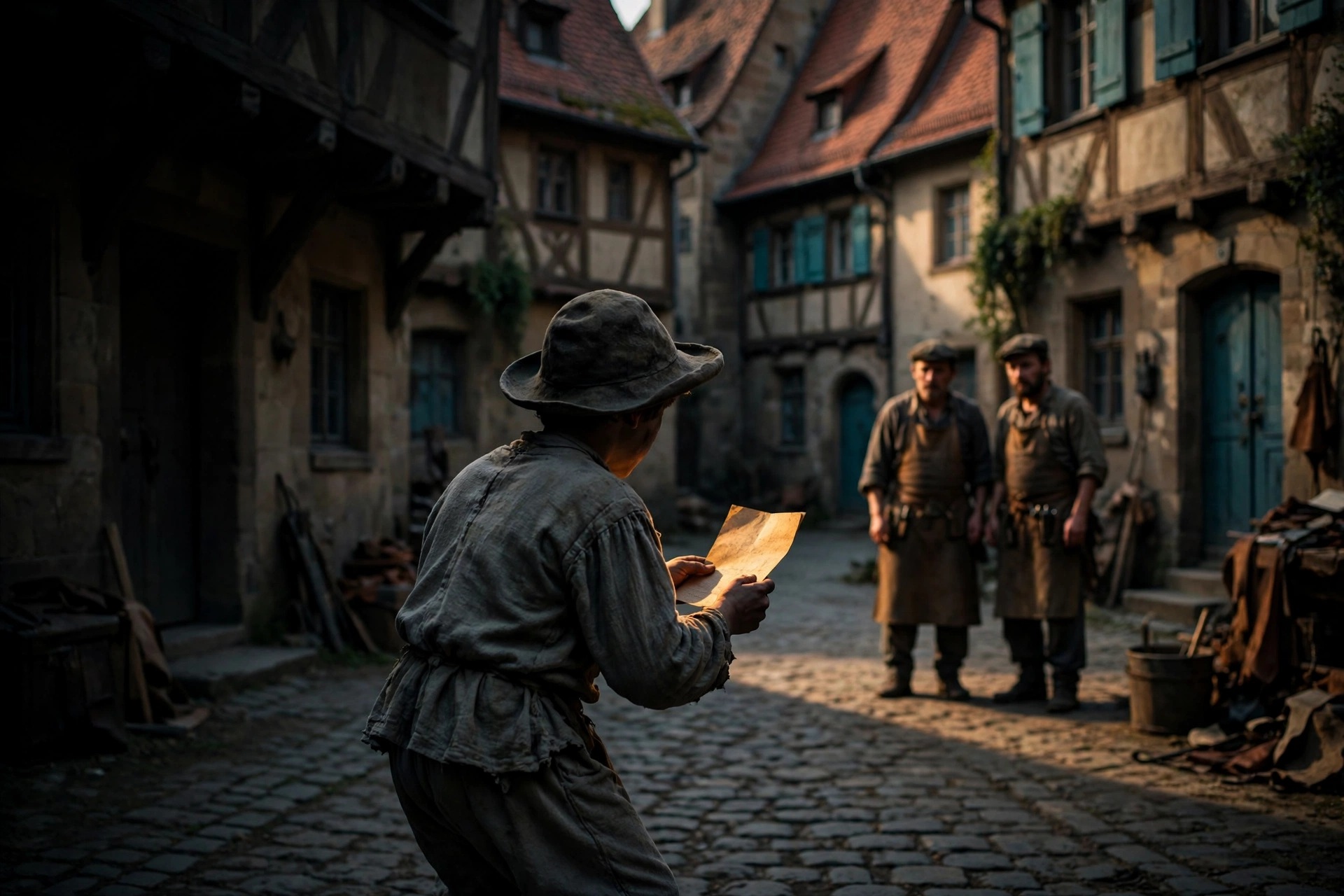
On the holiday afternoon of Whit Monday, 26 May 1828, in the Unschlittplatz, a small square in the old town of Nuremberg, two shoemakers named Weickmann and Beck noticed a boy standing as if he had forgotten how. He was perhaps sixteen, dressed in worn peasant clothes, his toes pushing through boots too small for him. He held out a letter addressed to a captain of the cavalry, and when they spoke to him, he could barely answer.
He would live in public for five and a half years. He would be studied by doctors, taught by philosophers, adopted by an English lord, written up by one of the greatest lawyers in Germany, and twice found bleeding from wounds that no one ever explained. When he died, his gravestone called him the riddle of his time.
- The Timeline | Five Years and Two Centuries
- A Boy on the Unschlittplatz
- Two Letters in One Hand
- The Dark Cell
- The Hooded Man
- An English Lord and a Strict Schoolmaster
- The Purse in the Court Garden
- The Lost Prince of Baden
- Three Tests, One Answer
- Fraud, Victim or Both
- The Riddle of His Time
- The Verdict | Debunked
- Quick Answers About Kaspar Hauser
For most of the two centuries since, the favourite answer to that riddle has been that he was a stolen prince. This file follows Kaspar Hauser from the square to the grave, and then into the laboratory, where the prince was finally put to the test.
The Timeline | Five Years and Two Centuries
A Boy on the Unschlittplatz
The shoemakers brought him to the house of the man named on the letter, Captain von Wessenig of the 4th squadron of the 6th cavalry regiment. The captain was out. Food was put in front of him. He could keep down nothing but bread and water. Asked who he was, he repeated a few phrases over and over, that he wanted to be a cavalryman as his father had been, and the word for horse. To almost everything else he said he did not know.
At the police station, someone put a pen in his hand. He wrote two words, Kaspar Hauser.
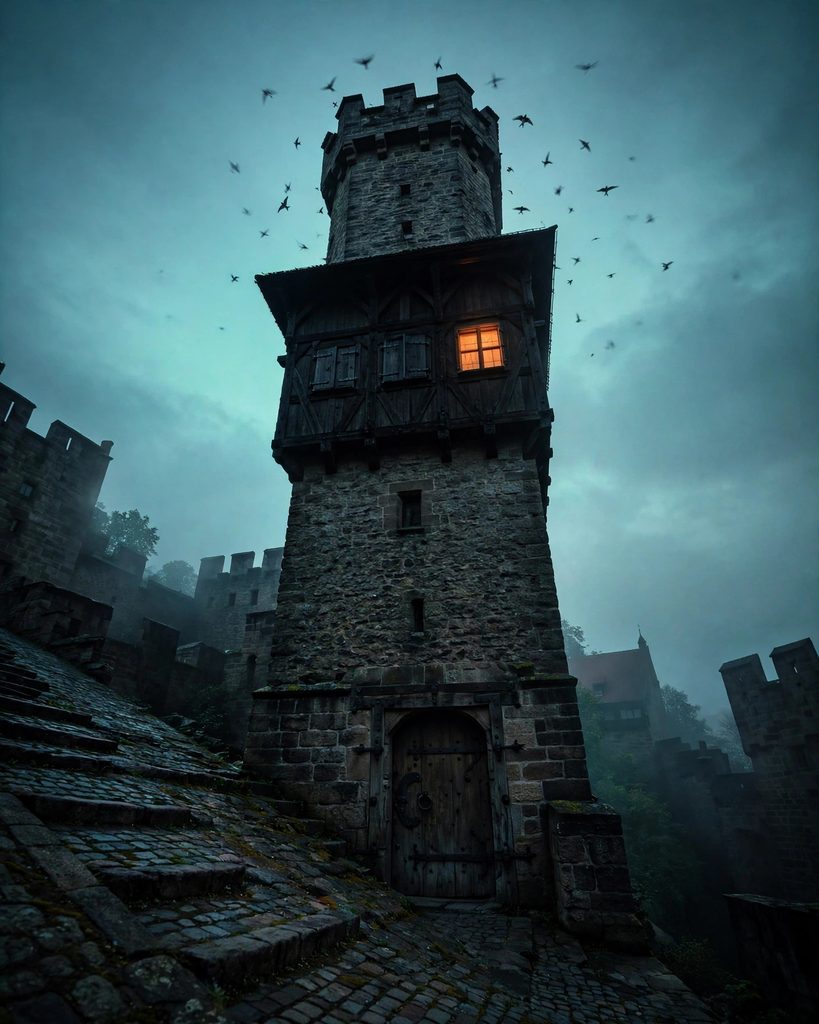
The police did not know what to make of him. He knew some coins, could say a few prayers and read a little, but he walked unsteadily and his vocabulary was tiny. They did what they did with vagrants and locked him up, in the Luginsland tower of Nuremberg Castle. His jailer, Andreas Hiltel, watched him for about two months. The boy climbed the ninety steps of the tower without trouble and would eat nothing but bread and water. Some visitors thought him simple. The mayor, Binder, thought he had a remarkable memory.
Two Letters in One Hand
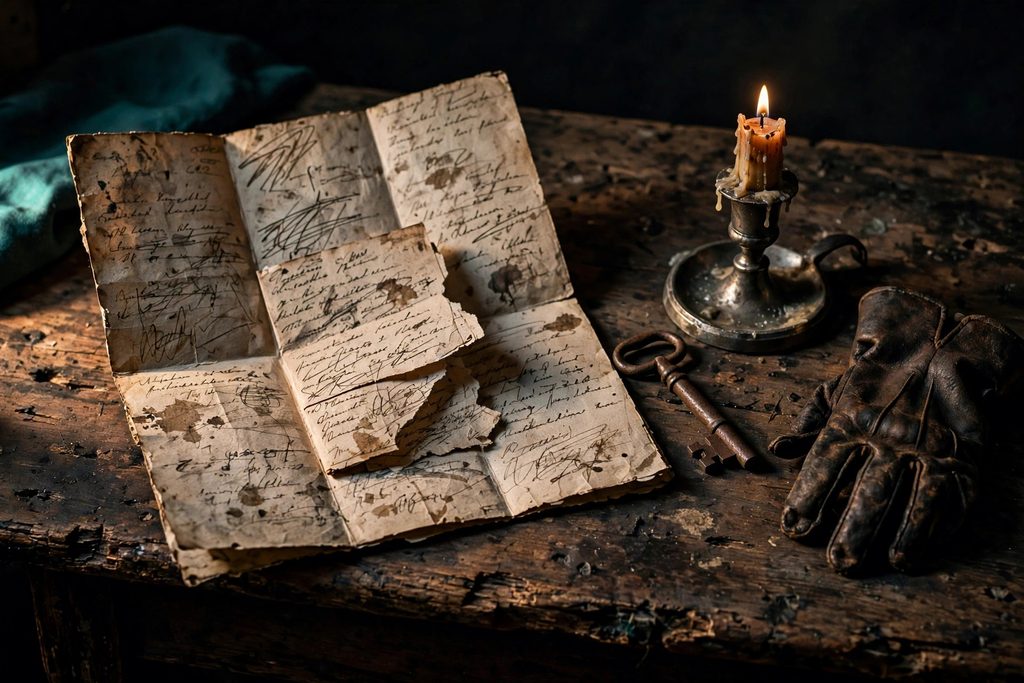
The letter he carried was headed with a place that was no place at all, from the Bavarian border, the place is unnamed, 1828. Its anonymous writer claimed to be a poor labourer with ten children of his own, who had been given the boy as a baby on 7 October 1812. He had taught him to read and write and the Christian faith, he said, and never let him take a single step out of the house. Now the boy wanted to be a cavalryman like his father. The captain could take him in, the letter suggested, or if not, hang him.
Folded inside was a second note, supposedly from the boy’s mother. It gave his name as Kaspar, his birthday as 30 April 1812, and said his father, a cavalryman of the 6th regiment, was dead.
Both notes were meant to look as if they came from different people at different times. Later examiners concluded that one hand had written them both. Whoever sent Kaspar Hauser to Nuremberg had gone to some trouble to make sure no one could follow him home.
The Dark Cell
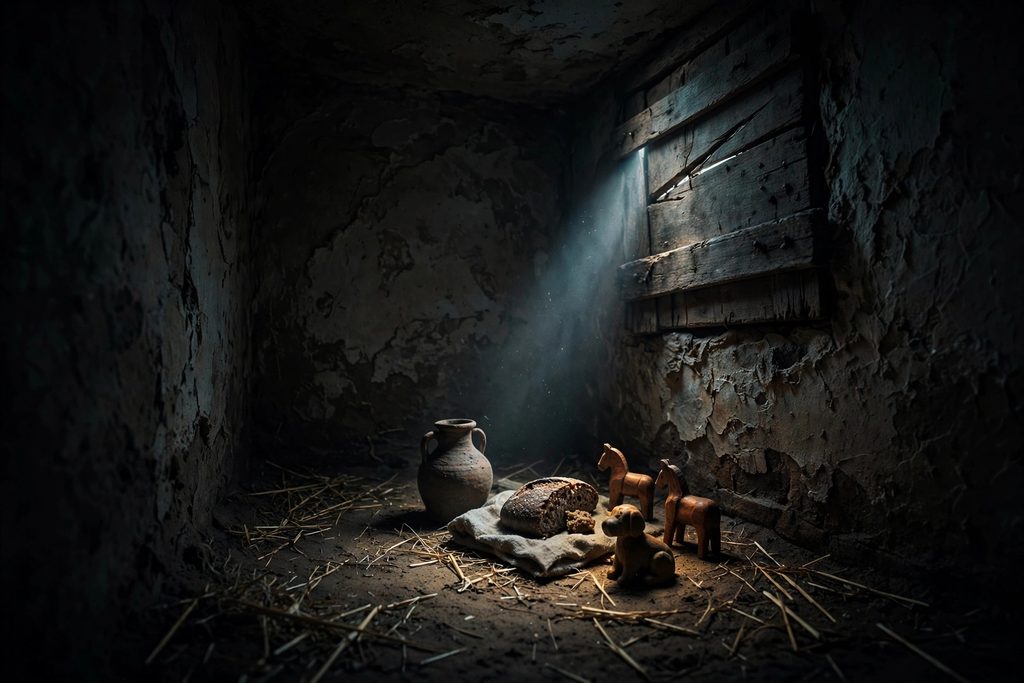
As his speech grew, Hauser told a story that made him famous across Europe. For as long as he could remember, he said, he had lived alone in a dark cell, too small to stand up or lie down in, sitting on straw. Every morning he woke to find bread and water beside him. Sometimes the water tasted bitter, and he fell into a deep sleep, and when he woke his clothes had been changed and his nails cut. His only companions were wooden toys, two horses and a dog.
He never saw the face of the man who kept him. Near the end, the man came into the cell, taught him to write his name, to stand and to walk, and to repeat the sentence about the cavalry. Then he carried him out into the world and left him on the edge of Nuremberg.
It was a story built for its age. The early nineteenth century was fascinated by the idea of a human being raised outside society, a natural man who might show what people are before the world shapes them. Kaspar Hauser seemed to be exactly that, and Nuremberg’s educated classes came in numbers to see him.
The Hooded Man
The town placed him with a young schoolmaster and philosopher, Georg Friedrich Daumer. Daumer taught him to read properly and found he had a gift for drawing. He also tried homeopathy and magnetism on him, convinced that the boy’s senses were unusually sharp.
On 17 October 1829, Hauser was found in Daumer’s cellar, bleeding from a cut on his forehead. He said that a man with a hooded face had attacked him in the outhouse and told him he must die before he left the city. Skeptics noticed that Daumer had accused Hauser of lying that same day, and suspected the wound was his own work, a way to win back sympathy.
He was moved, for his safety, to the house of a city official named Biberbach. On 3 April 1830 a shot rang out from his room. Hauser said he had been reaching for some books, grabbed a pistol hanging on the wall and set it off. The wound on his head was slight. Mrs Biberbach later complained of his lying and his vanity, and so, after he moved again, did the Baron von Tucher.
The boy from the dark cell had become a young man who drew crowds, and who seemed, every time the crowds thinned, to suffer another mysterious attack.
An English Lord and a Strict Schoolmaster
In 1831 a rich English aristocrat, Philip Henry Stanhope, the 4th Earl Stanhope, arrived in Nuremberg and took Kaspar Hauser under his wing. He paid for his keep and twice took him to Hungary, hoping the journey would stir his memory. Nothing came of either journey, and Stanhope began to doubt everything. He would later set out his reasons, one after another, for believing the whole story was invented.
In December 1831 Hauser was moved to Ansbach and lodged with a schoolmaster, Johann Georg Meyer, a strict man who did not take his excuses at face value. Stanhope saw him for the last time in January 1832 but went on paying his bills. By the end of 1832 Hauser was working as a copyist in a lawyer’s office.
His great champion in these years was Anselm von Feuerbach, president of the Bavarian court of appeal and one of the most respected legal minds in Europe. In 1832 Feuerbach published a book on the case, presenting Hauser as the victim of a crime against the soul itself, a person robbed of his childhood by being kept from all human contact. Feuerbach died of a stroke on 29 May 1833, after two earlier strokes. Rumour said he had been poisoned for knowing too much.

The Purse in the Court Garden
On 9 December 1833, Hauser and Meyer had a bitter argument. Meyer told him he did not know how he would explain his behaviour to Stanhope, who was expected for Christmas.
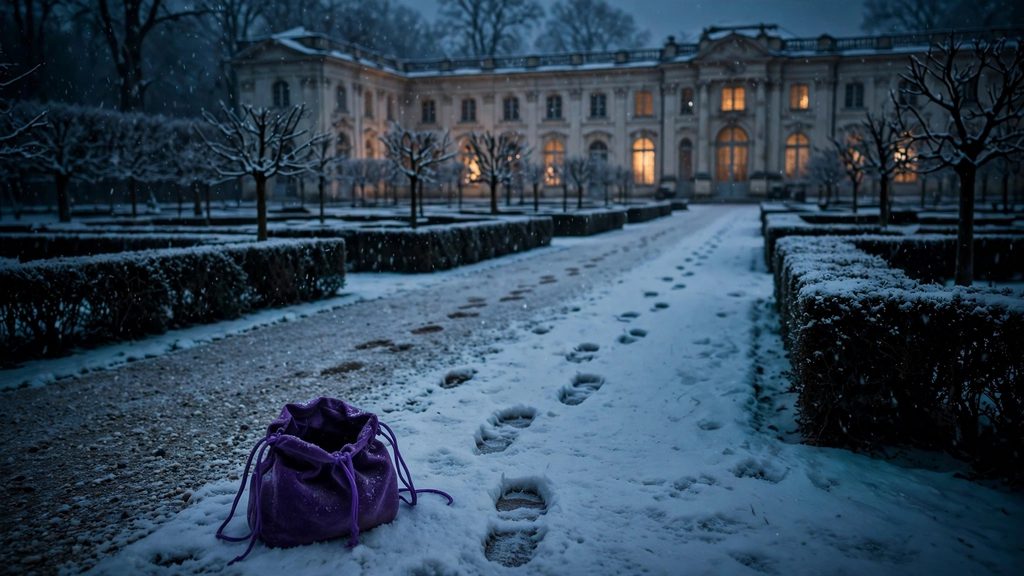
Five days later, on the afternoon of 14 December, Hauser stumbled into Meyer’s house with a deep stab wound in his chest. A stranger, he said, had lured him to the court garden of Ansbach, handed him a purse and stabbed him. He described the man’s whiskers as fair, and later as black. Stanhope would ask why a young man who hated walking had gone out to a park in the snow.
A policeman searched the garden and found a small violet purse. Inside was a note.
Hauser will be able to tell you quite precisely how I look and from where I am.
To save Hauser the effort, I want to tell you myself from where I come _ _ .
I come from from _ _ _ the Bavarian border _ _ On the river _ _ _ _ _
I will even tell you the name: M. L. Ö.
Hauser will be able to tell you quite precisely how I look and from where I am.
To save Hauser the effort, I want to tell you myself from where I come _ _ .
I come from from _ _ _ the Bavarian border _ _ On the river _ _ _ _ _
I will even tell you the name: M. L. Ö.
The court suspected that Hauser had written it himself. Mrs Meyer said it was folded the way he folded his own notes, and it carried mistakes in spelling and grammar that matched his. Hauser lingered for three days. Before he died on 17 December 1833, he murmured something about writing with pencil.
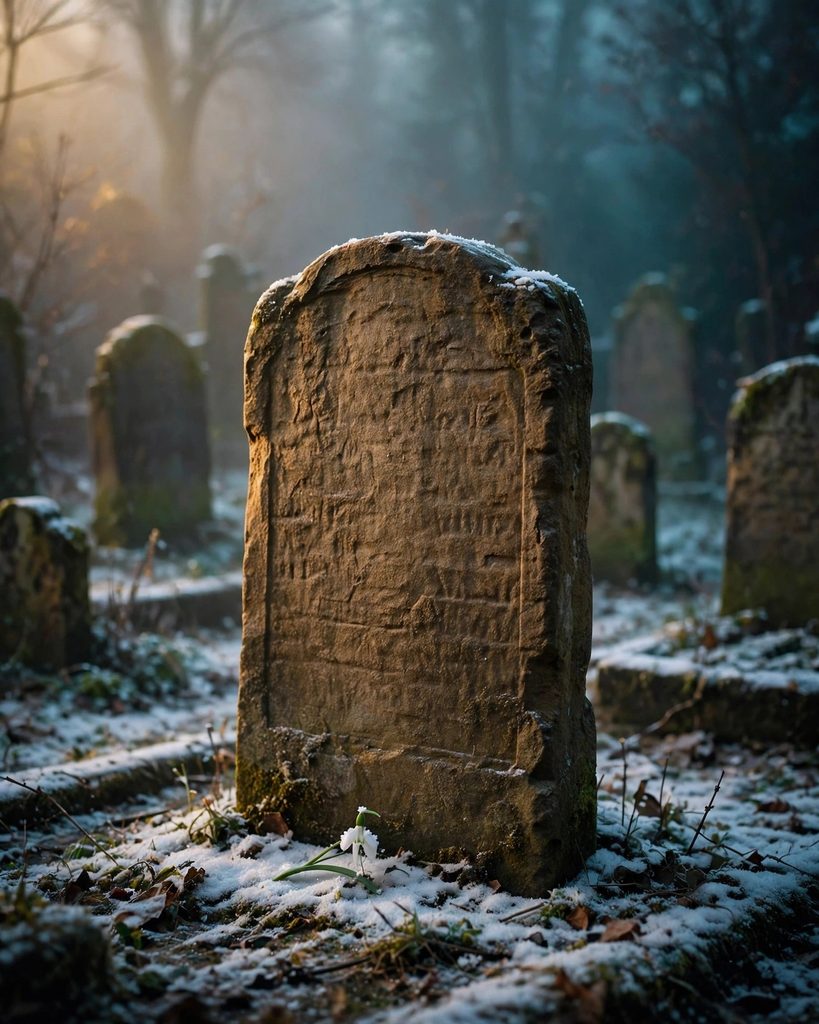
The doctors who examined the body could not agree whether the wound had been inflicted by another hand or his own. He was buried in Ansbach, and his gravestone reads, in Latin, Here lies Kaspar Hauser, riddle of his time, his birth unknown, his death mysterious. In the court garden a stone marks the spot with a line that has outlived every theory. Here a mysterious man was killed in a mysterious way.
The Lost Prince of Baden
Long before he died, people had decided who Kaspar Hauser must be.
On 29 September 1812, in Karlsruhe, Grand Duchess Stéphanie of Baden gave birth to a son. Stéphanie de Beauharnais was the adopted daughter of Napoleon, and her boy was heir to the grand duchy. He died on 16 October, eighteen days old. The couple had no other surviving son, and the throne eventually passed to the sons of the old grand duke’s second wife, Countess Louise Caroline von Hochberg. In 1830 one of them became Grand Duke Leopold.
The rumour that grew from these facts was irresistible. The dead baby, it said, had been a sickly substitute. The countess had stolen the true heir from his cradle, hidden him away for sixteen years and then released him in Nuremberg, where somebody, eventually, made sure he would never tell.
Feuerbach himself shows how the idea took hold. On 8 April 1830, reporting to the Bavarian justice ministry, he dismissed the prince story as a romantic legend with no legal basis. By early 1832 he had changed his mind, and wrote a secret memorandum to Queen Karoline of Baden arguing that Hauser was the lost heir, while admitting that the evidence would not carry weight in a court.
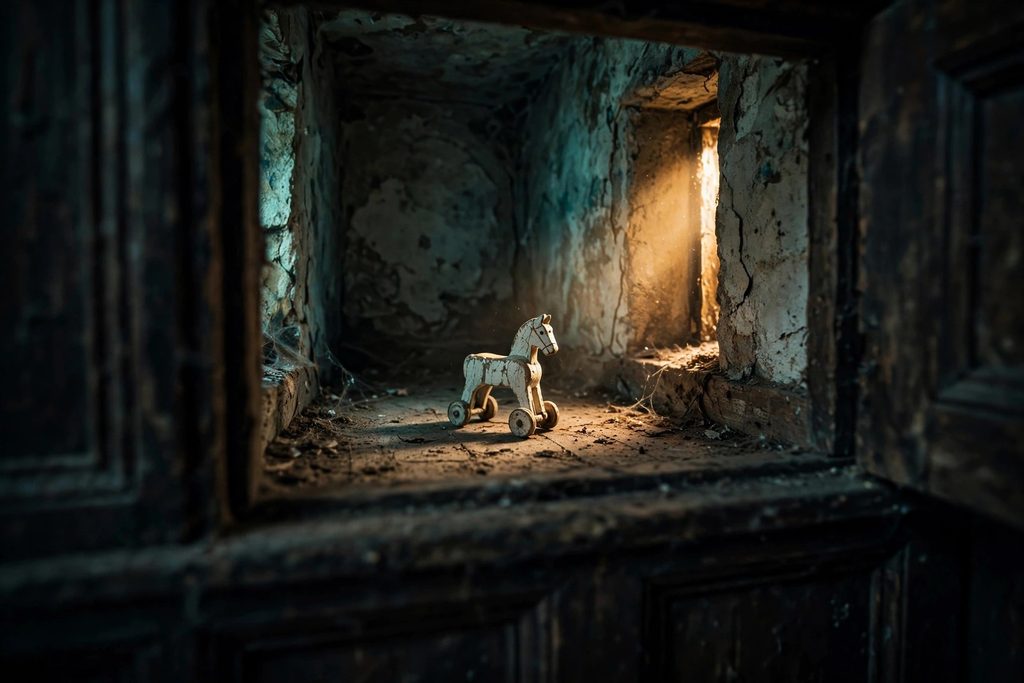
After his death the theory passed to others. Daumer, his first teacher, published defences of Hauser for decades. In 1883 Georg Friedrich Kolb argued that no mother could have been fooled by a substitute. In the twentieth century the writer Hermann Pies and a line of anthroposophists, following Rudolf Steiner, kept it alive. In 1924 the owner of Pilsach castle, near Neumarkt, announced that renovations had revealed a hidden room where Hauser might have been kept. In 1982 the castle’s later owners produced a small white wooden horse. No record places Hauser at Pilsach, and the horse has never been dated independently.

Three Tests, One Answer
The prince theory could only be tested once science could read the past in blood and hair. It took three attempts and twenty-eight years.
The first test, paid for by the magazine Der Spiegel in 1996, used blood on a pair of underclothes kept with his bloodstained clothing in the museum at Ansbach. Labs in Munich and Birmingham compared its mitochondrial DNA with living relatives of Stéphanie de Beauharnais. It did not match. Believers answered that no one could prove the blood was his.
The second test, in Münster in 2001 and 2002, used hair. Its result came close to the Baden relatives, and for twenty years the question seemed open again.
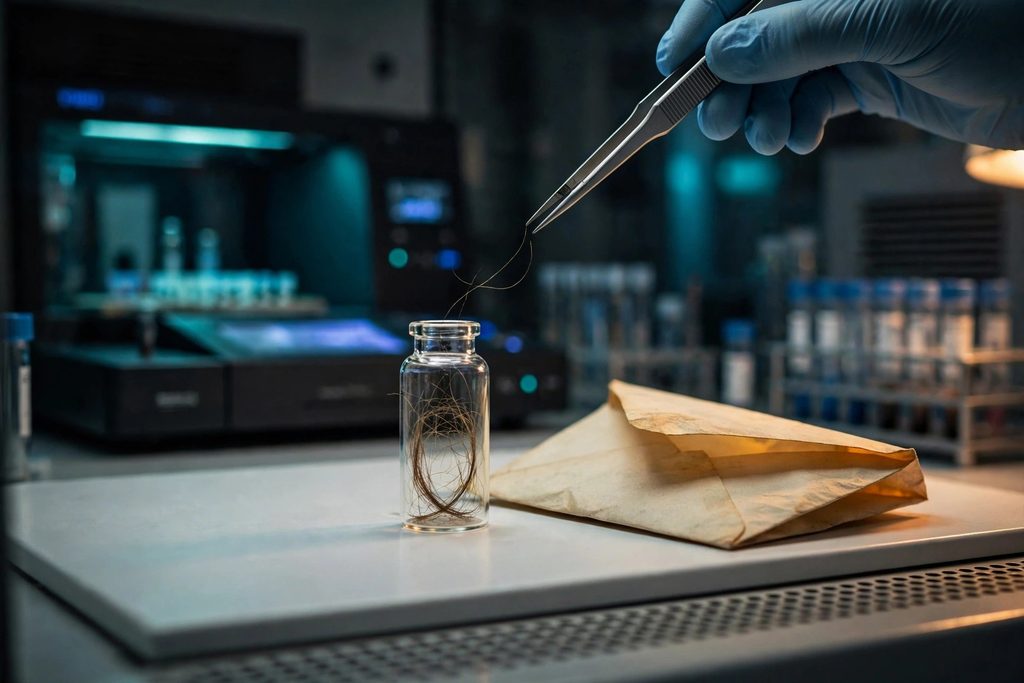
The third settled it. A team led by Walther Parson at the Institute of Legal Medicine in Innsbruck, working with Michael Hofreiter in Potsdam and Turi King of Leicester and Bath, sequenced hair from four separate locks, one of them the lock used in Münster. They used methods developed for ancient DNA, which can tell old fragments from modern contamination. The Potsdam lab worked blind. Every sample gave the same rare mitochondrial type, W, and it matched the 1996 blood exactly. The female line of Baden is type H1bs.
Their paper, published in iScience in 2024, concluded that a maternal relationship to the House of Baden is ruled out with a certainty of 99.9994 percent. The Münster result, they found, came from younger DNA contaminating fragments too old for the method of the time. Almost two hundred years after it began, the most famous answer to the riddle had been eliminated.
Fraud, Victim or Both
What the DNA cannot do is tell us who Kaspar Hauser was. Type W is carried by about one person in five hundred and is scattered across Europe. A claim published in 2018 that he came from the Tyrol, the Innsbruck team says, has no scientific basis. Only nuclear DNA, from blood or bone rather than hair, could narrow it further.
Nor does the result prove that he was a fraud. The authors of the 2024 study say so plainly. Their findings do not support the fraud theory, and Hauser could still have been the victim of a crime.
That leaves the two questions that have always mattered more than his ancestry. Was there ever a dark cell? And who held the knife in the court garden?
The case against him is long. His story changed in the telling. His wounds were never quite as dangerous as they should have been, and each one came when attention was fading or a quarrel had gone badly. The note in the purse was folded his way and spelled his way. Stanhope, Meyer and the families who housed him all came to believe that he lied easily and enjoyed being the centre of attention. The historian Walther Schreibmüller concluded that he stabbed himself to revive public interest. Others have called it a stunt that went wrong.
The case for him is shorter but stubborn. Someone wrote those two letters, in one hand, to hide where he came from. A boy of sixteen arrived barely able to walk or speak, and Feuerbach, a hard-headed jurist who questioned him closely, was convinced he had been robbed of his childhood. A forensic review in 2005 could rule out neither a self-inflicted wound nor murder. Both sides can be partly right. A child can be neglected and confined, and grow into a young man who learns that strange stories bring warmth and attention.
Nineteenth-century Europe produced other strangers who walked out of nowhere. Some, like the man from Laxaria, left no trace in any record at all. Kaspar Hauser left more paper than almost anyone of his time, and still no one knows where he was born.
The Riddle of His Time
Kaspar Hauser never left the stage. Paul Verlaine wrote a poem in his voice, Gaspard Hauser chante, about an orphan who comes to the great towns and finds no place in them. In 1974 Werner Herzog made him the hero of The Enigma of Kaspar Hauser, known in German as Every Man for Himself and God Against All, with the street musician Bruno S. in the title role. It won the Grand Prix of the jury at Cannes in 1975.
In Ansbach, where he died, two bronze figures put up in 1981 show him twice, once as the bewildered boy holding his letter and once as the well-dressed young man he became. The museum in the town keeps his clothes. In Nuremberg, a plaque marks the corner of the Unschlittplatz where two shoemakers stopped to look at a boy who could not stand properly, and the whole of Europe looked with them.
The Verdict | Debunked
Kaspar Hauser existed, and almost everything about his five years in public is on record, the letters, the tower, the wounds, the note in the purse. The claim that he was the stolen heir of Baden is something else. It began as gossip, was dismissed by Feuerbach in 1830, embraced by Feuerbach in secret in 1832, and repeated for two centuries. Three rounds of DNA testing have now traced every reliable sample of his blood and hair to a maternal line that is not Baden’s. The prince theory is stamped Debunked.
What the stamp does not touch is the mystery that made him famous. Where he was born, who kept him, whether there was ever a cell, and who stabbed him in the snow in Ansbach are as open now as they were in 1833. The file is closed on the prince. The riddle of his time is still a riddle.
- Claim tested
- Kaspar Hauser was the hereditary prince of Baden, swapped as a baby in 1812 and hidden away so that another line could inherit.
- Oldest record
- Rung 4 · Studied · 1830
Anselm von Feuerbach’s report of 8 April 1830 to the Bavarian justice ministry, which already calls the prince story a romantic legend. His private memorandum of 1832 to Queen Karoline of Baden backs it, while admitting it would not stand in court. - The record supports
- A boy of about sixteen with hidden origins, letters written to conceal where he came from, and a Baden prince who did die as an infant in October 1812.
- It does not support
- A maternal link to the House of Baden. Hauser’s mitochondrial DNA is type W in every sample tested since 1996. The Baden line is H1bs. The 2024 study excludes the relationship with a certainty of 99.9994 percent.
- Explanations weighed
- The Baden prince theory, a Hungarian or English origin, a fraud by a gifted and troubled young man, and a victim of an unknown crime, which the 2024 authors say their results still allow.
- What would change it
- Proof that the blood and all four locks of hair tested since 1996, from separate sources and labs, came from someone other than Kaspar Hauser.
Every stamp in the archive is gathered in the Verdict Index, and the rules behind it are in the Archive Standard. Nuremberg, Ansbach and Pilsach are pinned on the Atlas.
Quick Answers About Kaspar Hauser
Who was Kaspar Hauser? A teenage boy who appeared in Nuremberg on 26 May 1828, barely able to walk or speak, carrying a letter for a cavalry captain. He said he had been kept alone in a dark cell all his life. He died in Ansbach in 1833 of a stab wound.
Was Kaspar Hauser a prince? No. The theory that he was the hereditary prince of Baden, born in 1812, was ruled out by DNA. A 2024 study found that his mitochondrial DNA is type W in every sample, while the Baden line is H1bs, excluding the relationship with a certainty of 99.9994 percent.
What did the DNA tests show? A 1996 test on blood from his clothing found no match with Baden. A 2002 test on hair seemed to find one. In 2024 new sequencing of four locks of hair matched the 1996 blood and showed the 2002 result came from contamination.
How did Kaspar Hauser die? He came home on 14 December 1833 with a stab wound to the chest, saying a stranger had attacked him in the Ansbach court garden. He died three days later. Many at the time, and many historians since, believed he wounded himself, and the question has never been settled.
What did the note in the purse say? Written backwards in pencil, it claimed the attacker came from the Bavarian border, on a river left blank, and signed with the initials M. L. Ö., which have never been identified.
Was Kaspar Hauser kept in a dungeon? Nobody knows. His own account is the only evidence for the cell, and no place of confinement has ever been proven. A hidden room at Pilsach castle was suggested in 1924, but no record links him to it.
Where can I see Kaspar Hauser’s grave? In the town cemetery of Ansbach in Bavaria. The inscription calls him the riddle of his time, his birth unknown and his death mysterious.