



A work of speculative fiction. No hacker known as “Ralph Bastet,” no confirmed breach of Vatican archives, and no leaked document describing an antediluvian civilization has been verified by any credible source anywhere.
This is original fiction, built around mythological and archaeological touchstones this piece borrows from.
A Civilization Beyond Our Own
In this account, a hacker using the pseudonym Ralph Bastet claims to have breached the Vatican’s digital archives and briefly shared a chronicle describing a civilization thriving somewhere between 25,000 and 30,000 years ago, one whose technology exceeded our own by a wide margin: genetic engineering, climate manipulation, and weapons drawn from physics no modern lab has produced. The account vanishes within days, in the telling, but not before it’s mirrored and picked apart by online communities.
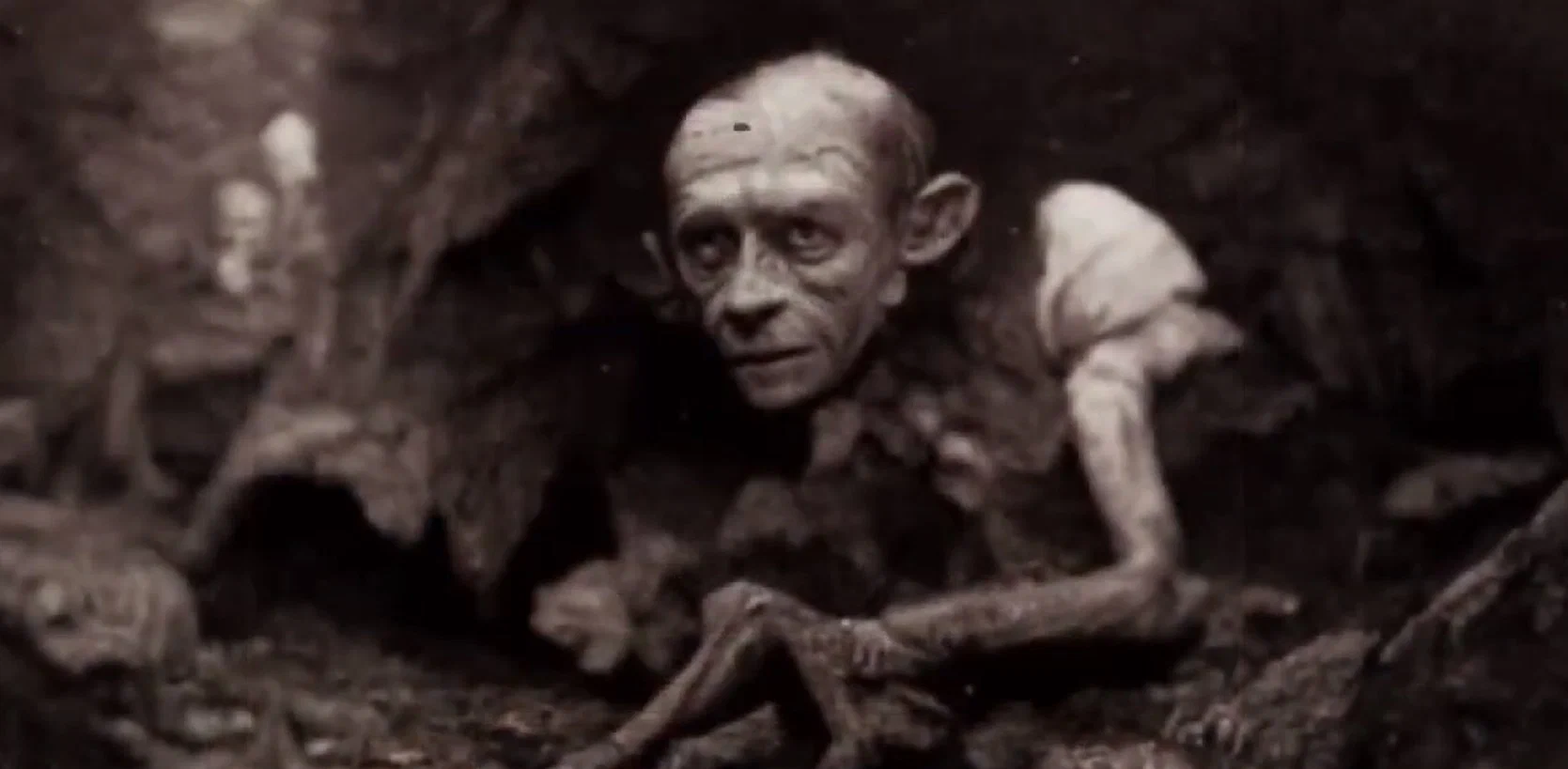
This fictional civilization falls to its own worst instincts, in this telling, human failings of greed, cruelty, and hubris rendered at civilizational scale. Its rulers engineer a laboring class bred for endurance and obedience, who eventually gain intelligence and autonomy, revolt, and are cast out, a narrative echo readers are invited to compare with the ancient biblical account of Eden.
A War That Erases History
None of what follows in this section describes a historical event. It’s presented purely as continuation of the original piece’s own internal narrative.
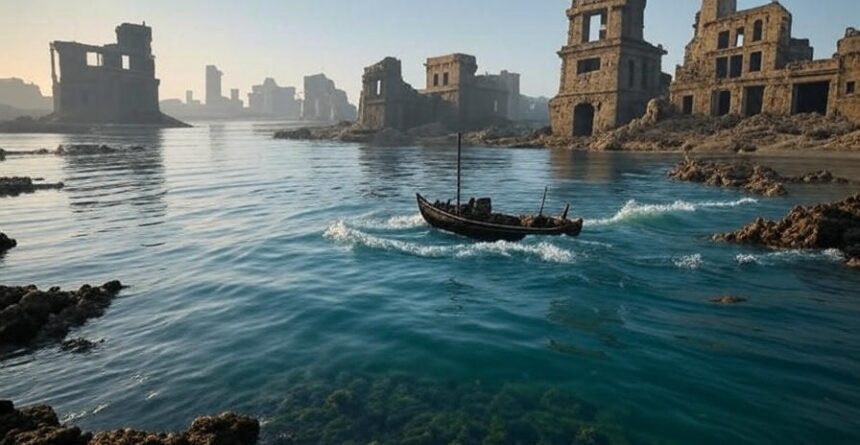
The narrative’s ruling class eventually fractures into warring factions, in this telling, unleashing weapons rendered in explicitly science-fictional terms, photon disruptors, weather-based annihilation, time-rift bombs, leaving behind only a small number of scattered survivors. From those ashes, this fiction imagines humanity’s well established mythological traditions of sky-descended teacher-gods being born, memories of catastrophe reframed by later generations as religious myth rather than history.
A second civilization rises in this telling roughly 12,000 to 15,000 years ago, eventually forgetting its own origins as the founding generation’s memory gradually fades into legend, then into myth, then, in this telling, into the deep background of organized religion itself.
Why This Fiction Reaches for Real Mythology
The rest of this invented timeline, the second rise of civilization, the slow forgetting, the eventual reduction of memory into religion, continues purely as fiction rather than describing anything drawn from the archaeological or historical record.
Why this kind of fiction borrows so heavily and so deliberately from mythological and religious traditions deserves naming directly, since the underlying technique is recognizable on its own terms. Ancient flood myths appear independently across dozens of recorded cultures worldwide, the Mesopotamian Epic of Gilgamesh, the biblical account of Noah, and flood traditions among many other distinct cultures, a well-studied pattern in comparative mythology, generally explained by folklorists and anthropologists as reflecting humanity’s shared, ordinary experience of catastrophic regional flooding across many independent societies, rather than a single shared historical event. Ancient Sumerian and Mesopotamian texts do describe divine or semi-divine beings, the Anunnaki, playing roles in early civilization and human origins, extensively studied ancient Mesopotamian religious literature worth exploring on its own terms. The non-canonical Book of Enoch does describe fallen celestial beings called the Watchers. These are established ancient texts and traditions, and this story’s fictional civilization borrows their resonance to lend its invented narrative a feeling of mythological weight it hasn’t independently earned.
The History of “Leaked Vatican Secrets” Claims
This piece fits within a recognizable genre pattern, since claims built around anonymous hackers leaking Vatican secrets recur reliably online, and recognizing the pattern helps evaluate the next one. The restricted access and enormous scale of the Vatican Apostolic Archive, an estimated 85 kilometers of shelving, makes almost any specific claim about hidden contents feel statistically plausible on first encounter, since no single person, including the archivists themselves, has read everything held there. A fictional leak claim borrows credibility from this institutional scale without needing to supply any actual, checkable evidence of its own. This is worth recognizing as a general, recurring pattern: an institution’s scale and its restricted access get borrowed to lend false plausibility to entirely invented claims about its specific contents, a borrowing that works precisely because the facts underneath it, unlike the invented claim itself, happen to be true.
What Archaeogenetics Shows About Ancient Humans
Grounding this piece’s fictional “genetically engineered laboring class” premise against what archaeogenetics has actually established about human populations 25,000 to 30,000 years ago matters, since the science paints a considerably different, though still fascinating, picture. Ancient DNA research, a rapidly advancing field of science, has recovered and sequenced genetic material from human remains dating to this period, consistently showing populations of anatomically modern Homo sapiens, genetically continuous with people alive today, living as hunter-gatherer societies without evidence of the kind of technological civilization, let alone genetic engineering capability, this fictional premise requires. Paleogeneticists including Svante Pääbo, awarded the 2022 Nobel Prize in Physiology or Medicine for his pioneering work sequencing ancient human and Neanderthal genomes, have built an increasingly detailed picture of human population history across this exact timeframe, based on physical, peer-reviewed evidence rather than any leaked account. This scientific picture, while it doesn’t include a lost hyper-advanced civilization, offers a remarkable, verifiable window into actual human prehistory in its own right.
Why Flood Myths Recur Independently Across Cultures
The explanation for why flood narratives appear so consistently across unconnected ancient cultures is worth expanding on, since it’s more interesting than requiring a single shared historical catastrophe. Comparative mythologists and folklorists generally attribute this cross-cultural pattern to a combination of factors: the universal vulnerability of early agricultural settlements to catastrophic regional flooding along the rivers and coastlines they depended on, the psychological weight major flooding events carry for communities that experience them, and the way oral storytelling traditions naturally develop dramatic, larger-than-life narrative frameworks around traumatic events over generations of retelling. Archaeological evidence, including a documented catastrophic Black Sea flooding event around 5600 BCE studied by marine geologists William Ryan and Walter Pitman, demonstrates that regionally significant flooding events did occur in the ancient world and plausibly seeded some of these mythological traditions, entirely independent of any single global cataclysm or lost civilization. This evidence-based explanation is worth knowing as the leading scientific account for why this story’s premise, and countless ancient flood myths, share such a recognizable narrative shape.
How Data Breaches Get Verified
What credible reporting on an institutional data breach typically looks like in practice is worth explaining in detail, since the contrast with this story’s premise is instructive. Confirmed cybersecurity breaches, including major incidents affecting government agencies and large institutions, are typically verified through multiple independent channels: cybersecurity firms conducting forensic analysis, statements or acknowledgments from the affected institution, and named security researchers cross-checking leaked data samples against known internal formatting or metadata. Investigative journalists covering data breaches, including reporters at established outlets who specialize in this beat, generally require this kind of independent, multi-source verification before publishing breach claims as confirmed fact, precisely because anonymous claims of leaked institutional secrets are common online and only a small fraction hold up under scrutiny. No comparable verification process has been applied to this premise by any cybersecurity researcher or journalist, which is itself the clearest, most direct evidence that it should be read as fiction rather than an unconfirmed but potentially real event.
The Real Piri Reis Map, Accurately Explained
The Piri Reis map, referenced in the story’s closing section, is an authentic 1513 Ottoman map compiled by admiral and cartographer Piri Reis. The claim that it depicts an accurately mapped, ice-free Antarctica centuries before European discovery is a widely circulated but thoroughly examined claim that cartographic historians have generally rejected, with the academic consensus holding that the map’s southern landmass most likely represents a distorted rendering of the South American coastline, consistent with 16th-century mapmaking knowledge and technique, rather than a lost record of a vanished advanced civilization.
The Real Vatican Apostolic Archive
The Vatican Apostolic Archive is a historical institution, established in 1612, holding extensively catalogued historical records including papal correspondence and administrative records spanning over a thousand years. Access to it is real and restricted, but not secret in the dramatic sense implied here: scholars have been able to apply for research access since Pope Leo XIII opened it in 1881, and it continues operating this way today through a published scholarly application process. No credible cybersecurity researcher, journalist, or historian has verified any breach of Vatican digital systems matching this story’s description, and no institution has confirmed the existence of any “Ralph Bastet.”
The Real Question of Civilizational Collapse
The closing question here, whether civilizations rise and fall in repeating cycles, touches on a field of historical and archaeological study. Historians and archaeologists have extensively studied and recorded societal collapses, including the well-documented Bronze Age collapse around 1200 BCE and the fall of the Western Roman Empire, events with complex, multi-causal explanations involving climate shifts, trade network disruption, and internal political failure, extensively studied through archaeological and textual evidence. This field of legitimate historical inquiry into why civilizations decline doesn’t require, or benefit from, an invented antediluvian precedent to remain interesting, and readers curious about civilizational collapse are well served by consulting archaeological and historical scholarship directly.
The Bronze Age Collapse, in Fuller Detail
Expanding on the Bronze Age collapse mentioned above is worth doing, since it’s a fascinating and thoroughly studied example of large-scale societal breakdown that needs no fictional embellishment. Around 1200 BCE, an interconnected network of Bronze Age civilizations across the Eastern Mediterranean, including the Mycenaean Greeks, the Hittite Empire, and various city-states along the Levantine coast, experienced a dramatic and largely simultaneous collapse within roughly a few decades. Archaeologists and historians have proposed a multi-causal explanation involving several evidence-supported factors occurring together: a documented period of prolonged drought identified through ancient pollen and sediment analysis, the disruptive activity of a seafaring raiding group ancient Egyptian records call the “Sea Peoples,” and cascading trade network failures as interdependent Bronze Age economies, reliant on long-distance tin and copper trade for bronze production, collapsed in sequence. This well-documented ancient collapse, studied through archaeological excavation, ancient texts, and modern climate science, offers a considerably richer and more evidence-grounded model of civilizational vulnerability than any invented antediluvian precedent could provide.
The lost age of Ralph Bastet’s leak never existed. But the mythological echoes, flood traditions, Mesopotamian religious literature, and the recorded rise and fall of actual ancient civilizations, are substantial enough on their own to make the underlying human questions raised here genuinely worth pursuing through the historical and archaeological record rather than an invented leak. Readers curious about how ancient societies actually rose, thrived, and eventually declined are far better served by the archaeological and genetic research summarized above than by any anonymous, unverifiable account of a hacked archive, however dramatic that account might read on first encounter.
The Ralph Bastet leak, in other words, is fiction dressed as disclosure.