




Robert Falcon Scott’s Terra Nova Expedition and its tragic 1912 ending are extensively recorded history, studied closely by generations of historians.
No suppressed photographs, hidden civilization, or warm ocean beyond an “ice wall” have been verified by any credible historical or scientific source.
The Legacy of Captain Scott
Captain Robert Falcon Scott led the Terra Nova Expedition from 1910 to 1913, reaching the South Pole on January 17, 1912, only to discover Roald Amundsen’s Norwegian team had arrived five weeks earlier. Scott and his four companions, Edward Wilson, Henry Bowers, Lawrence Oates, and Edgar Evans, perished on the brutal return journey, their final camp found by a search party eight months later. This is thoroughly established history, supported by Scott’s own recovered diary, one of the most extensively studied and frequently cited primary sources in the entire history of polar exploration.

No Photograph Has Ever Been Authenticated
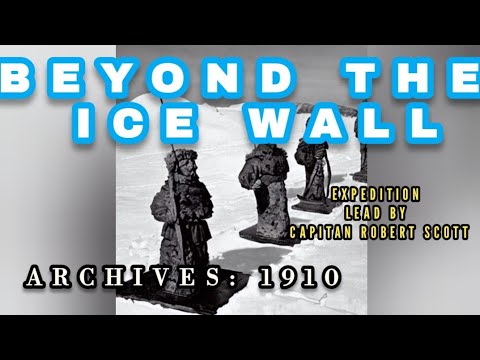
No credible archive, museum, professional historian, or historical institution anywhere has verified any photographs from the Terra Nova Expedition showing tropical coastlines, forests, stone ruins, or humanoid statues. The extensive photographic record of Scott’s expedition, taken primarily by expedition photographer Herbert Ponting, is well preserved in institutional collections, including the Scott Polar Research Institute at Cambridge University, and consistently shows exactly the icy, barren Antarctic landscape scientific instruments and satellite imagery confirm exists today. Images circulating on platforms like BitChute claiming to show a “warm ocean” beyond an Antarctic ice wall haven’t been authenticated by any historian or photographic archive, and their origin and authenticity couldn’t be verified.
The “Hollow Earth Gateway” and the Piri Reis Map
The Piri Reis map is a genuine 1513 Ottoman map, but the claim that it depicts an “ice-free Antarctica” centuries before its official discovery is a widely circulated but thoroughly examined and rejected claim among cartographic historians. The academic consensus is that the map’s southern landmass most likely represents a somewhat distorted rendering of the South American coastline, consistent with the mapmaking conventions and geographic knowledge available in the early 16th century, not an accurate depiction of an ice-free Antarctic continent that European explorers wouldn’t confirm the existence of for another three centuries.
The “Hans-Ulrich von Krantz” Novels Are Openly Marketed Fiction
“Hans-Ulrich von Krantz” is a pen name used for a series of commercially published pulp fiction novels from the 1990s and 2000s centered on Nazi Antarctic bases and secret societies. These are openly marketed and sold as fiction, shelved and reviewed as genre thriller novels, not apocryphal texts encoding suppressed nonfiction. Treating deliberately fictional genre novels as coded historical revelation is a recognizable pattern across this kind of content, worth naming directly rather than treated as a genuine open question.
What Killed Scott’s Team
Polar historians and scientists, drawing on Scott’s own recovered diary entries, expedition records, and modern climatological analysis, attribute the team’s deaths to a well-established combination of factors: exceptionally severe and unseasonably cold temperatures that climate researchers have confirmed through historical Antarctic weather reconstruction, scurvy from prolonged vitamin C deficiency, inadequate caloric rations for the physical demands of man-hauling heavy sledges, and the cumulative physical toll of the 1,600-mile round trip. No credible historical evidence supports depot looting or deliberate sabotage. This reflects a thoroughly established tragedy resulting from underestimation of Antarctic conditions, not foul play.
The Scientific Legacy Scott’s Expedition Accomplished
Scott’s expedition accomplished substantial scientific work, largely overshadowed in most retellings by the tragic ending. The Terra Nova Expedition included scientists who conducted geological, meteorological, and biological research across Antarctica, including the collection of Emperor penguin eggs during a brutal midwinter journey, undertaken specifically to study embryonic development for then-current evolutionary theory questions. The expedition’s scientific team, including geologist Griffith Taylor and biologist Edward Wilson, produced published findings that meaningfully advanced understanding of Antarctic geology and glaciology, work polar scientists continue citing and building upon today.
What Modern Climate Science Has Established
Modern climate science directly supports the accurate explanation for the team’s deaths. Climatological studies, including a widely cited 2001 analysis published in peer-reviewed literature, examined historical temperature records and found that Scott’s return journey coincided with an unusually severe cold snap, with temperatures considerably lower than the seasonal averages the expedition had planned around based on prior Antarctic exploration data. This research explains why an experienced, well-prepared expedition team still perished, unpredictable extreme weather compounding the already extraordinary physical demands of the journey, rather than requiring any sabotage or suppressed discovery to explain the tragedy.
Admiral Byrd’s Real 1947 Interview, Accurately Translated
Operation Highjump is real: a large 1946-1947 US Navy Antarctic expedition led by Admiral Richard E. Byrd, involving approximately 4,700 personnel, 13 ships, and 33 aircraft, publicly described as training for cold-weather military operations and mapping, producing over 70,000 aerial photographs and establishing the Little America IV base.
Byrd’s famous quote needs a direct correction. His March 1947 interview with journalist Lee Van Atta, published in the Chilean newspaper El Mercurio, has been compared against the original Spanish text by researchers, and the widely circulated English version claiming Byrd described enemy aircraft that could “fly from pole to pole at incredible speeds” is a confirmed mistranslation. Byrd’s actual statement warned of a mundane Cold War strategic concern: that long-range aircraft could someday cross polar routes to threaten the continental United States, an ordinary geopolitical concern of the era, not a reference to encountered enemy technology or extraterrestrial craft.

The widely circulated “Secret Diary” attributed to Byrd, describing a journey into a hollow inner Earth and meetings with advanced inner-Earth beings, is an established later fabrication, first published in 1979 by Raymond Bernard, a known promoter of Hollow Earth theory, surfacing over two decades after Byrd’s actual 1957 death with no verified connection to Byrd himself or his official expedition records.
Herbert Ponting’s Photographic Legacy
The expedition photographer’s actual work provides the verifiable visual record of the Terra Nova Expedition. Herbert Ponting was a professionally trained photographer and cinematographer who joined Scott’s expedition specifically to document it, producing groundbreaking work for the era, including some of the earliest motion picture footage ever captured in Antarctica. His surviving photographs and film, preserved today in institutional collections including the Scott Polar Research Institute and the British Library, consistently depict the icy, barren Antarctic landscape, glaciers, sea ice, and the expedition’s actual base camp and equipment, exactly consistent with modern satellite and scientific documentation of the same locations. This extensively preserved, professionally produced photographic record shows nothing resembling the fabricated tropical landscapes or ruins that circulate in unverified online claims.
Why Antarctica Attracts This Kind of Story
A specific combination of ingredients makes this genre of Antarctic story so durable: a tragic, historical event with emotional weight, a legitimately massive military operation whose true scale invites speculation, and a striking natural environment few people will ever personally visit to verify claims against. None of those elements, individually, requires anything beyond an accurate, honest telling to remain compelling on its own terms.
Antarctica’s remoteness, restricted access due to extreme conditions rather than secrecy, and the large scale of legitimate military logistics operations like Operation Highjump, conducted at the dawn of the Cold War alongside the emerging UFO phenomenon of the era, together create fertile ground for exactly this kind of speculation. NASA’s Mars imagery is comparatively easier to distribute because Mars poses no genuine physical access barrier requiring the kind of specialized cold-weather logistics, international treaty coordination, and safety infrastructure Antarctica’s extreme environment actually demands, a mundane explanation for restricted access rather than evidence of concealment.

What Modern Antarctic Research Looks Like
Current Antarctic research is genuinely remarkable and transparent on its own terms. Ongoing scientific research in Antarctica is conducted under the international Antarctic Treaty System, established in 1959 and now including 56 signatory nations, which explicitly designates the continent for peaceful scientific purposes and includes binding inspection provisions allowing any member nation to visit and inspect any other nation’s research stations. Research stations, including the United States’ McMurdo Station and the Amundsen-Scott South Pole Station, publish their findings through standard, open, peer-reviewed scientific channels, and researchers from dozens of countries collaborate on ongoing projects studying everything from ice core climate records to astrophysics conducted through Antarctica’s uniquely clear atmospheric conditions. This internationally transparent scientific framework, considerably more open than the secretive picture this genre of story typically paints, is the actual, current reality of how Antarctic research operates today.
Amundsen’s Success, an Instructive Comparison
An instructive point of comparison further supports the mundane, tragic explanation for Scott’s death over any sabotage theory. Roald Amundsen’s Norwegian expedition reached the South Pole roughly five weeks before Scott’s team and returned safely, and polar historians studying both expeditions side by side have identified documented differences in preparation that account for the differing outcomes: Amundsen’s team relied primarily on dog sledges rather than the man-hauling and pony transport Scott’s team depended on for much of the journey, dogs providing considerably greater speed and requiring less caloric expenditure from the human team members. Amundsen also carried more generous fat and caloric rations suited to the extreme energy demands of polar travel. This comparative historical analysis, examining two contemporaneous expeditions facing the same Antarctic conditions with different logistical choices and different outcomes, provides a far more evidence-grounded explanation for Scott’s tragedy than any theory involving suppressed discoveries or sabotage.
The Story Is Tragic Enough
Scott’s recorded death, alongside his four companions, from a combination of extreme cold, malnutrition, and physical exhaustion, remains one of the more genuinely moving accounts in the history of exploration, preserved in his own final diary entries, including his widely quoted final message urging his countrymen to care for the families of those who died alongside him. It doesn’t require an invented hidden civilization or sabotage theory to remain worth telling, and the extensive historical and scientific record surrounding it deserves to be reported accurately rather than displaced by unverified claims with no credible source behind them.