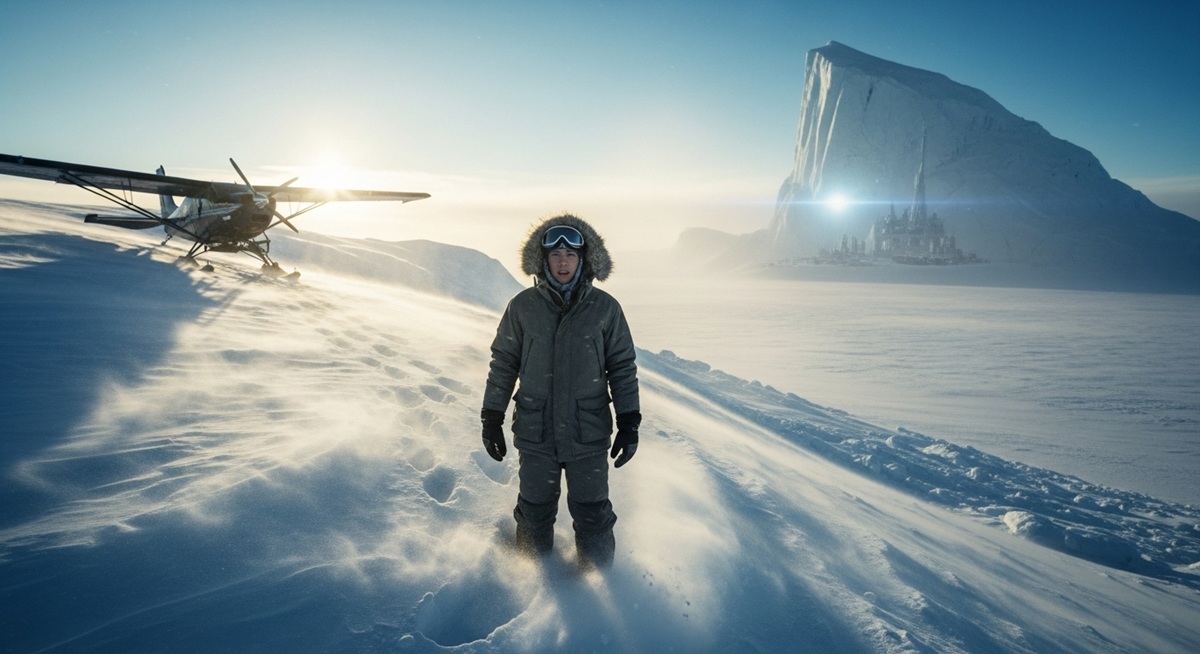
In the vast, frozen expanse of Antarctica, where temperatures plummet and isolation reigns supreme, stories of mystery and intrigue have long captured the public’s imagination. But the case of Ethan Guo, the young pilot and travel influencer whose unauthorized landing in Antarctica led to detention and months stranded, has a well-documented explanation.
No verified evidence supports the “hidden city” claims that circulated online alongside it.
Who Is Ethan Guo? A Profile of the Ambitious Young Aviator
Ethan Guo isn’t your typical teenager. Born in 2005 and originally from Tennessee, he built a substantial online following as a pilot-influencer, documenting his flights around the world. His goal was to become the youngest person to fly solo to all seven continents while raising $1 million for St. Jude Children’s Research Hospital, inspired by his cousin’s 2021 cancer diagnosis.
Guo’s background is real and genuinely impressive. He earned his pilot’s license young and flew a Cessna 182Q, a single-engine aircraft, across oceans and continents. Before Antarctica, he had already completed North America, South America, Europe, Asia, Africa, and Australia. Antarctica was the final leg of his journey.
The Fateful Flight, Correcting the Specific Date and Destination
On June 28, 2025, not June 29, Guo departed Punta Arenas, Chile, with a filed flight plan bound for Ushuaia, Argentina, not a “routine loop over the city” as sometimes reported. He instead flew south to Teniente Rodolfo Marsh Martín Airport on King George Island, the northernmost airport in Antarctica.
What happened next is fairly disputed, and both accounts deserve to be reported. Chilean prosecutors, including prosecutor Cristián Cristoso, stated Guo provided false flight plan data and deliberately diverted south, violating multiple national and international rules governing Antarctic access. Guo’s own consistent account, given to CBS News, ABC News, and other outlets, maintains he experienced an in-air emergency, including lost radio transmission and engine trouble, and that he received explicit direct permission from Chilean authorities to land at the base. This is an unresolved factual dispute between Guo and Chilean officials, not a settled question, and it should be reported as such.
The Role of Social Media in the Journey
Throughout his continent-hopping trip, Guo live-streamed segments of his flights. His last Instagram post before the incident, dated June 23, showed him flying from Davao City in the Philippines to Manila.
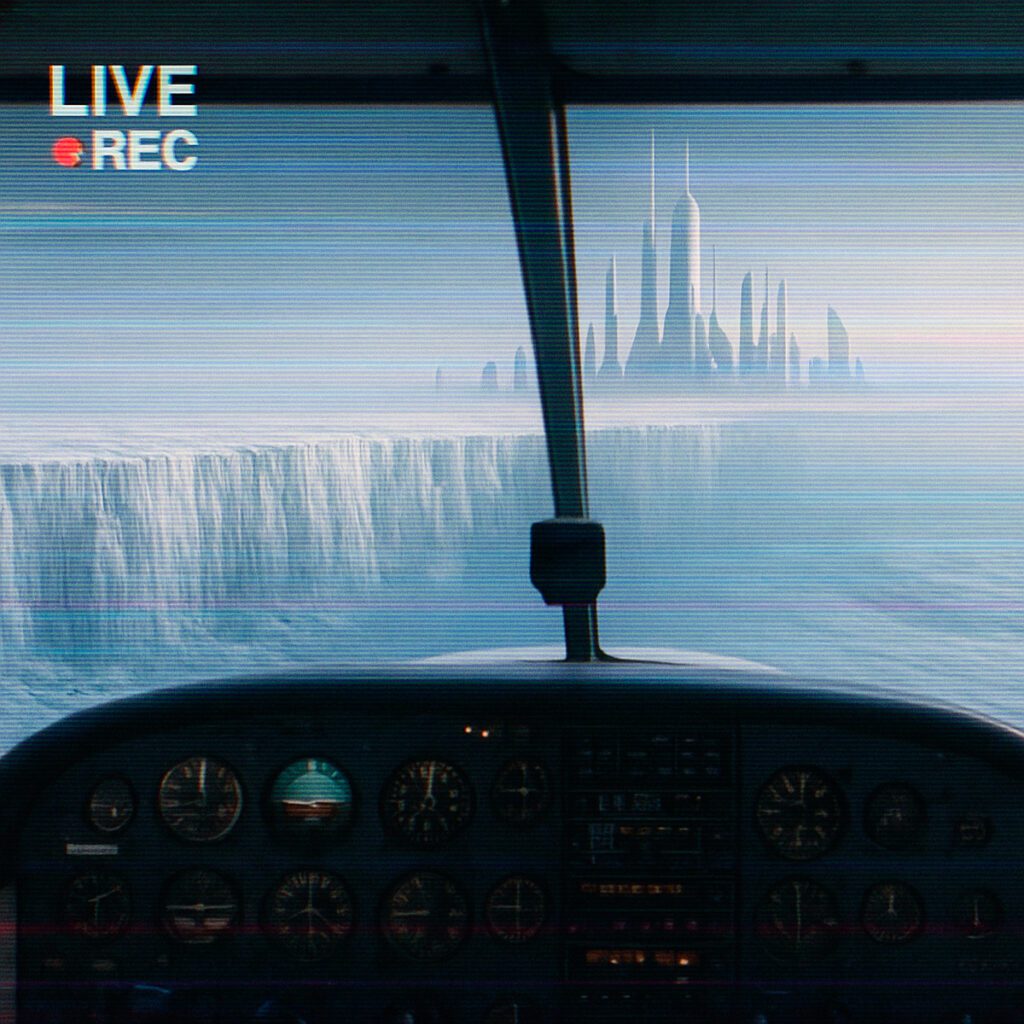
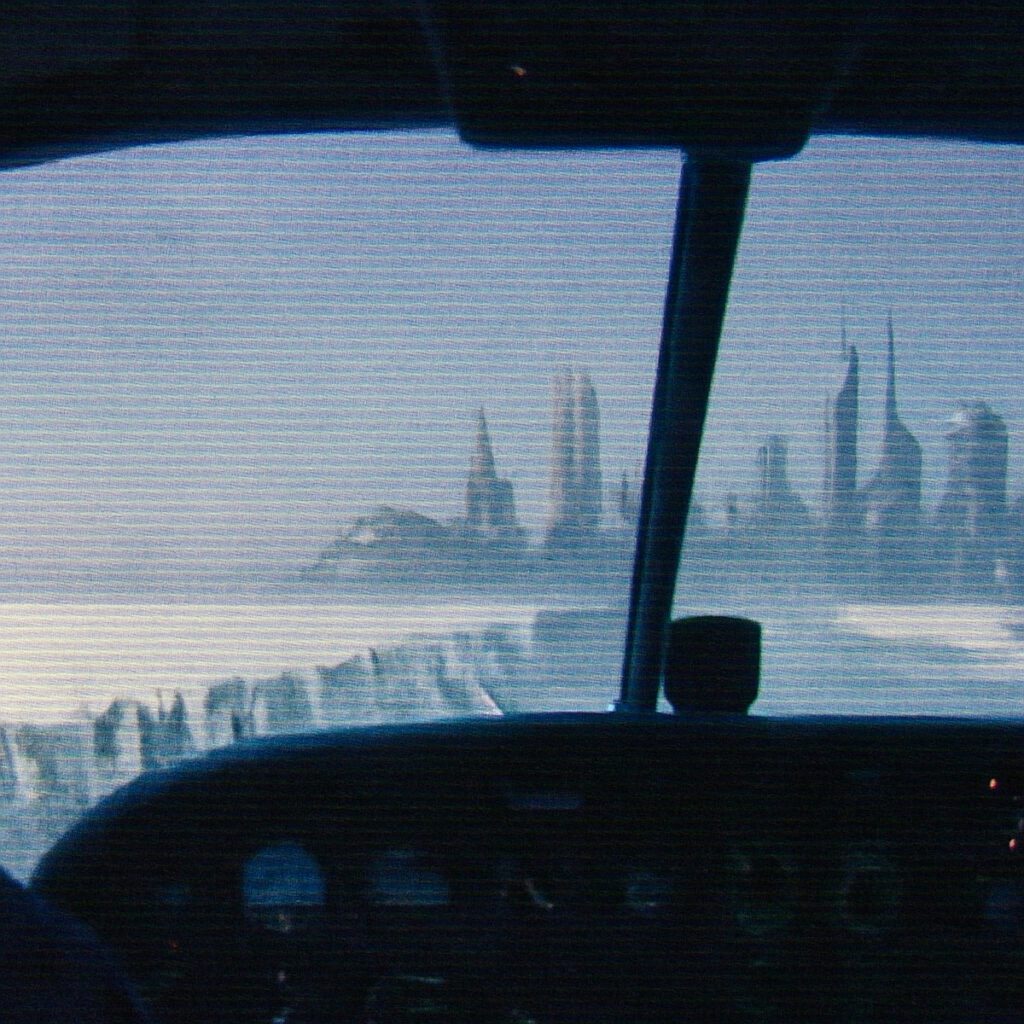
Some online accounts claim Guo’s stream captured a massive ice wall and hidden complex resembling a city, echoing flat-Earth theories that portray Antarctica as an encircling ice barrier hiding secrets. No verified footage from Guo’s stream has ever surfaced showing such anomalies, and no credible outlet reporting on the case, CBS News, ABC News, or Flightradar24’s detailed aviation-data investigation, found any evidence supporting this claim. Mainstream, verified reporting focuses entirely on the aviation and legal case.
The Detention | What Actually Happened
Upon landing, Guo was detained for providing false flight information and unauthorized entry into Chilean territory. He was held at the military base on King George Island for over two full months, from late June through early September 2025, facing charges that could have led to serious penalties.
When Was He Actually Released?
The timeline here is more complicated, and considerably more frustrating for Guo, than a single release date suggests. In early August 2025, a Chilean court suspended the case against Guo, ordering him to donate $30,000 to a named children’s cancer charity, Fundación Nuestros Hijos, and barring him from Chilean territory for three years. But the legal resolution did not mean immediate freedom. Chilean officials did not allow Guo to fly his own aircraft off the base for weeks afterward, citing shifting reasons Guo publicly called “objectively false.” He described himself as feeling like a “prisoner” despite the charges being dropped. Guo was not actually able to leave King George Island, aboard a Chilean Navy ship, until September 6, 2025, more than three weeks after his case was resolved.
Official Explanations vs. Eyewitness Claims
Authorities attributed the detention to straightforward violations: endangering air traffic and breaching Antarctic access protocols. Prosecutor Cristián Cristoso stated Guo’s actions seriously endangered air traffic safety to Antarctica and the Magallanes region.
Online forums, meanwhile, circulated alternative narratives claiming viewers of a purported live stream saw towers and skyscraper-like forms behind an ice wall. Atmospheric scientists note that Antarctic conditions can produce fata morgana mirages and superior mirages, well-documented optical phenomena where distant objects appear elevated or distorted, entirely explicable through ordinary atmospheric physics rather than hidden structures.
No full recording of any live broadcast from the flight survives publicly, and no fragment that has circulated in closed chats has been independently authenticated. Guo himself has never publicly commented on seeing anything unusual, focusing his public statements instead on the legal case and his eventual release.

Why the Conspiracy Theories Took Hold
The Ethan Guo case did fuel a wave of online theories, blending events with long-standing Antarctic folklore. Antarctica’s remoteness has longstanding cultural resonance with conspiracy narratives involving hidden bases and secret installations, a pattern worth understanding rather than dismissing outright.
The Conspiracy Angle | Hidden Cities and Cover-Ups
A viral video titled “What Did Ethan Guo See in Antarctica Before He Was Detained?” amplified claims of a massive hidden complex. A widely circulated quote attributed to Guo, describing being silenced “for showing the truth,” has no verified source in any of Guo’s documented social media posts or on-record statements to CBS, ABC, or other outlets covering the case directly, and should be treated as unverified.
This narrative draws on longstanding flat-Earth lore, in which Antarctica is portrayed as an ice rim guarding the planet’s edge. The historical Operation Highjump, a genuine 1946-47 U.S. Navy Antarctic expedition, is often cited in these narratives, though declassified historical records describe it as a legitimate training and mapping exercise, not a search for hidden bases.
Scientific and Rational Explanations
Meteorologists note that Antarctic conditions can create mirages that distort horizons into tower-like shapes, particularly over the Drake Passage, known for turbulent weather that can amplify these visual effects.
Aviation analysts stress the actual issue at hand: unauthorized flights into Antarctic airspace risk collisions with research aircraft and can disrupt ongoing scientific operations. This mundane safety concern, not a cover-up, is what governs Antarctica’s strict access rules.
Aftermath and Current Status
Guo is back in the United States, and has publicly stated he hopes to resume his around-the-world flight attempt. He called the legal process “deeply unfair,” noting his phone and documents were taken and he wasn’t given a translator during initial proceedings, on-record complaints reported by ABC News.
The complete absence of verified evidence for any “hidden city” sighting, across extensive coverage from CBS News, ABC News, and detailed aviation-data reporting from Flightradar24, strongly indicates nothing extraordinary occurred beyond a genuine legal and diplomatic dispute over an unauthorized Antarctic landing.
The Regulatory Framework Behind Antarctic Access
The legal framework this case actually involved is interesting on its own terms. The Antarctic Treaty System, signed in 1959 and now including over 50 signatory nations, governs the entire continent, prioritizing scientific research and environmental protection over commercial or private activity. Research stations, over 70 of them operated by roughly 30 nations, coordinate closely to avoid exactly the kind of unplanned, unauthorized landing Guo’s flight represented, a safety concern given Antarctica’s extreme isolation and limited rescue infrastructure. Antarctic tourism has also grown substantially, with over 100,000 visitors now arriving annually via authorized cruise and flight operators, a regulated industry that depends on exactly the kind of predictable, permitted air traffic Guo’s unauthorized flight bypassed.
Comparable Cases of Unauthorized Antarctic Landings
Guo’s case sits within a broader history of Antarctic aviation incidents, far from the first of its kind. Aviation authorities have recorded several comparable cases over the decades, including smaller-scale tourist and private aircraft incidents involving unauthorized approaches to restricted Antarctic airspace, generally resolved through fines and administrative penalties rather than extended detention. Antarctic Treaty signatory nations, including Chile, Argentina, and the United States, maintain coordinated protocols specifically because private and adventure aviation into the region has increased in recent years, driven partly by growing interest in extreme adventure tourism and record-setting flight attempts like Guo’s own. This broader regulatory context helps explain why Chilean authorities responded to Guo’s flight with such formal seriousness, not because of anything extraordinary he might have seen, but because unauthorized Antarctic access represents a recurring safety and sovereignty concern that predates this particular case by decades.
Fata Morgana Mirages, Explained
The physics behind the atmospheric phenomenon most likely responsible for any unusual visual reports from the flight is worth explaining. A fata morgana is a complex form of superior mirage, occurring when a temperature inversion, warmer air sitting above a layer of colder air near the surface, bends light in ways that can stretch, distort, and stack distant objects into tower-like or wall-like shapes on the horizon. Atmospheric scientists note these effects are especially common over polar ice and cold ocean water, exactly the conditions present during Guo’s flight path near the Drake Passage and the Antarctic coastline. Photographs and video of fata morgana mirages, extensively captured by polar researchers and meteorologists over many decades, show striking, castle-like or city-like formations that form entirely from ordinary light refraction, no hidden structures required, offering a well-established scientific explanation for exactly the kind of “tower” and “wall” descriptions that circulated online after Guo’s flight.
The Fundraising Effort Behind the Flight
The charitable purpose that motivated this entire journey deserves more attention than the conspiracy theories that overshadowed it. St. Jude Children’s Research Hospital, the intended beneficiary of Guo’s fundraising effort, is a credentialed pediatric research and treatment institution that provides free medical care to children with cancer and other serious illnesses, funded primarily through public donations. Guo’s publicly documented fundraising progress fell short of his ambitious $1 million target by the time of his detention, though reporting confirms he had raised a substantial sum before the Antarctic leg of his journey, funds verifiably directed toward the hospital’s actual mission. Nonprofit fundraising experts note that high-profile adventure fundraising campaigns like Guo’s do drive donation spikes tied to media coverage, meaning the public attention his detention generated, however driven by unfounded speculation, may well have brought additional support to his underlying charitable cause.
What the Case Actually Tells Us
Ethan Guo’s Antarctic ordeal is dramatic on its own terms: a young pilot pursuing an ambitious, charitable goal, a disputed emergency landing, a two-month detention, and a legal resolution that still left him stranded for weeks afterward. It’s a human story about the tension between adventurous ambition and Antarctica’s strict, safety-driven regulatory system, and about how quickly an unverified rumor can attach itself to a news event once it starts circulating online. The “hidden city” narrative added nothing but noise to a story that was, on its own, already compelling, and considerably more interesting for being true.