




A forensic note before the story: no document, FOIA record, journalist investigation, or named historian’s account traces “Evans Charlington,” “Project Shadow,” or an entity called “The Voice” or “Eil” to any verifiable source. What is genuinely fascinating is the broader institutional history this story sits inside: the CIA’s actual, declassified parapsychology research program, which formally studied reincarnation, mediumship, and apparitions as legitimate categories of inquiry. That context, and exactly where this story departs from it, is laid out below.
At the height of the Cold War, when the American intelligence community was pursuing every conceivable advantage, the CIA did fund research into the paranormal. This story claims the Agency initiated a project in 1967 built entirely around a single medium and a spirit entity to weaponize reincarnation itself. That particular claim can’t be verified. The program it echoes can be.
The Declassified Program This Story Draws On
The CIA has publicly confirmed a declassified parapsychology research program, later publicly known as Stargate and its predecessor projects, acknowledged directly by the Agency’s own public communications and summarized in a declassified Studies in Intelligence article by former CIA officer Kenneth Kress, titled “Parapsychology in Intelligence.” A declassified 1982 workshop report on experimental parapsychology, held in the CIA’s own FOIA reading room, explicitly lists reincarnation, apparitions, and mediumship among the formal categories the field covered. This institutional interest is documented, and it is exactly the kind of verified precedent that makes a story like this one plausible enough to circulate.
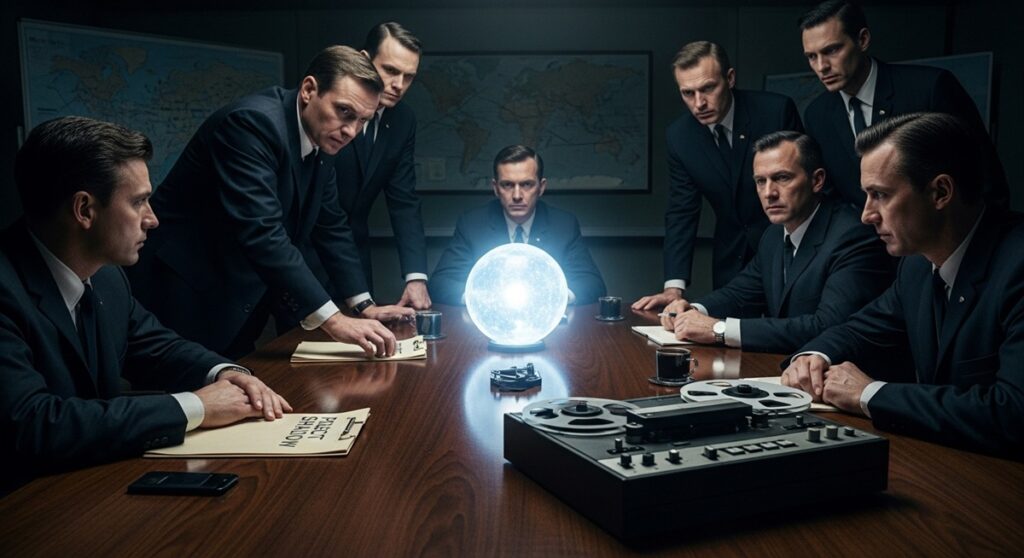
What the record does not contain, in any search of the CIA’s own FOIA reading room or any independent journalistic investigation, is any named individual matching “Evans Charlington,” any project matching “Project Shadow,” or any confirmed entity named “The Voice” or “Eil.” That is the precise evidentiary gap: an institutional pattern of interest, with no traceable primary source for this specific story built on top of it.
The Story as Told
According to the story, a medium named Evans Charlington, whose abilities were said to have emerged after a clinical death, became the CIA’s channel to an entity called “The Voice” or “Eil.” The Agency’s stated goal, as the story frames it, was pragmatic rather than spiritual: could the mechanics of reincarnation be reverse-engineered to transfer consciousness from an aging body into a younger one, achieving physical immortality for a select few?

The entity’s reported answer was a flat refusal. Manipulating these forces, it said, was “destructive and catastrophic to the harmonious structure of the cosmos,” beyond what material beings could safely wield. What followed, according to the story, was a systematic cosmology: humans as “energy organisms” gathering experiential data, “curators” who process an “energy ball” after death, rebirths assigned by a cold, non-moral calculus, and a stated ultimate goal of the ego dissolving into a “subtle material world,” “turning into infinitely small to become infinitely large.”
“Life is a concept of the biological body, energy is infinite.” When the biological body dies, the energy persists, everything lives an unlimited number of times, but this is not “life” as we feel it. It is “existence in the understanding of the energetic essence.”
The story holds this cosmology together with specific, checkable details: more than 30 séances across 1967 to 1969, a project closed for lacking “actionable technological insight,” and Charlington’s death in 1973 before he could publish a manuscript compiling what he’d learned. None of these specific details, the name, the dates, the séance count, the death, appear in any record this investigation could locate.
Where the Actual Record Points
The verifiable CIA parapsychology interest of this era centered on different, verifiable figures and programs entirely: Cold War-era research into Soviet parapsychology work, including scientist Genady Sergeyev’s studies of psychic Nina Kulagina, interest from Apollo 14 astronaut Edgar Mitchell after his spaceflight, and the much later 1983 “Gateway Process” report evaluating the Monroe Institute’s consciousness program for Army Intelligence. None of these established threads involve a medium named Charlington or an entity named Eil.
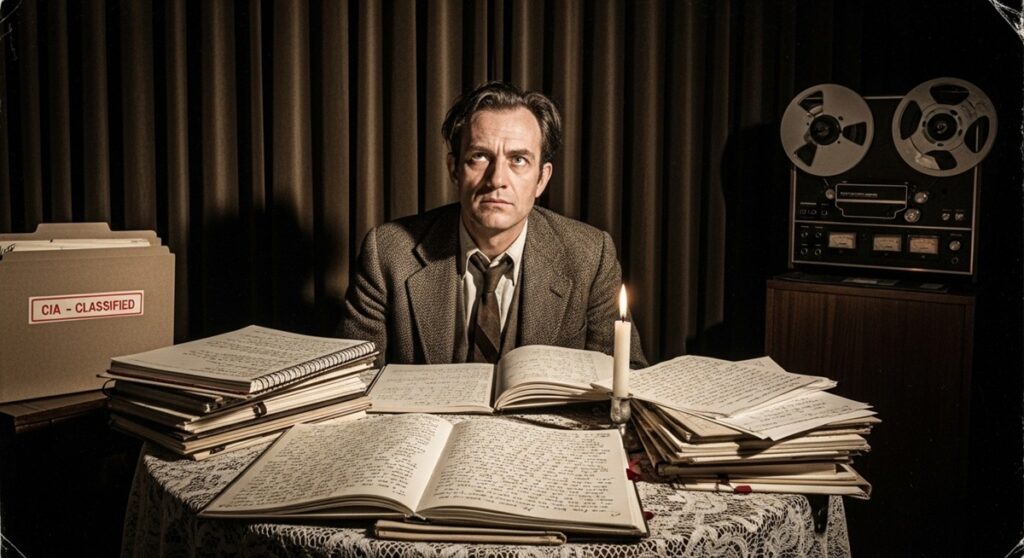
This doesn’t mean no classified session anything like the one described ever happened. Government parapsychology research of this era genuinely was extensive, and not every session was fully declassified or publicly indexed. It means this account, as told, currently rests on no verifiable primary source, only the broader institutional pattern that makes it a plausible-sounding story to tell.
How to Actually Check a Claim Like This
The CIA FOIA Electronic Reading Room is public and searchable by anyone. A verifiable declassified document of this kind would carry a document control number, the same format visible on the parapsychology records this investigation did locate, records like CIA-RDP96-00791R000200190055-7 or CIA-RDP96-00792R000100130001-2. A credentialed named source, a working paper, a Studies in Intelligence article, a named officer’s account, would also be independently citable outside of the story itself. Neither exists here. This is the practical test for separating institutional history that happens to be genuine from a story that borrows genuine institutional history as a backdrop. Applying it isn’t cynicism. It’s the same method that confirmed the parapsychology program in the first place.
Why the Actual Program Took Reincarnation Seriously as a Category
Why the declassified program included reincarnation research at all deserves explanation, since it wasn’t idle curiosity. Cold War intelligence planners were driven by a concrete fear: that the Soviet Union was ahead in parapsychology research and might gain an intelligence advantage from it. Declassified documents show the CIA specifically tracked Soviet researchers like Genady Sergeyev and psychic subjects like Nina Kulagina, treating the entire field, including reincarnation and mediumship, as worth cataloguing precisely because an adversary might already be exploiting it. This Cold War threat-assessment logic explains why an institution with no particular spiritual interest of its own would nonetheless fund and formally categorize this kind of research, a motive considerably more mundane, and more verifiable, than the pursuit of engineered immortality this story describes.
Verifiable Figures From This Era Worth Knowing
These names offer a useful benchmark for what a genuinely verifiable figure from this history actually looks like, and a direct point of comparison to the story’s invented cast. Physicist Russell Targ and physicist Harold Puthoff conducted published remote-viewing research at Stanford Research Institute beginning in 1972, work that was eventually declassified and became the public foundation for what the CIA has since acknowledged about its parapsychology program. Astronaut Edgar Mitchell, after his 1971 Apollo 14 mission, publicly became a serious advocate for consciousness research, founding the Institute of Noetic Sciences. These are named, credentialed people whose involvement in this field can be independently verified through publications, institutional records, and on-record interviews, exactly the kind of verifiable trail entirely absent for Evans Charlington and Project Shadow.
How the Actual Program Ended
The actual, publicly confirmed ending looks considerably less cinematic than the one this story describes, and offers a useful contrast to its more dramatic framing. Reviews commissioned by the CIA in the 1990s, including an evaluation led by physicist Ray Hyman and statistician Jessica Utts, examined the accumulated research and reached mixed but largely skeptical conclusions about practical intelligence value, leading the government to publicly acknowledge and close the program in 1995. Declassified summaries describe the program’s actual end as a bureaucratic, evidence-based decision after roughly two decades of intermittent research, not a single dramatic 1969 closure following a two-year séance series. This considerably longer and more gradual institutional history, ending in a published cost-benefit evaluation rather than a sealed file after a spirit’s refusal, is what the actual declassified record shows.
A General Method, Not Just This One Case
This same standard applies whether the underlying institution is the CIA, the military, or any other historically documented body. When a claim sits on top of a documented institutional pattern, whether that’s Cold War parapsychology, MKUltra-era behavioral research, or any other declassified government program, the presence of that backdrop does not by itself confirm any specific narrative built onto it. The useful, non-dismissive question is always the same: does this particular claim have its own independent, checkable source, separate from the institutional pattern it’s borrowing credibility from? MKUltra, for instance, is well documented through congressional testimony, declassified financial records, and named victims and researchers, an evidentiary trail this story’s central claims entirely lack. Holding every claim to that same standard, institutional history included, is what keeps investigation honest in either direction, neither reflexively dismissing the plausible nor accepting the unverified simply because something adjacent to it turned out to be true.
The Logical Leap, Named Precisely
The leap in this story happens at one exact point: from “the CIA researched parapsychology, including reincarnation, as a category” to “the CIA ran this project with this named medium and entity.” The first claim is documented and declassified. The second claim needs its own independent source, a primary record, a named investigator, a FOIA release, and none has surfaced. A reader encountering this story is right to find the premise plausible, given the history, and right to want the primary record before treating the narrative itself as established. That’s not a verdict against the story. It’s an accurate description of exactly what is currently known and what isn’t, and it leaves the door open for a document to eventually surface and settle the question one way or the other.