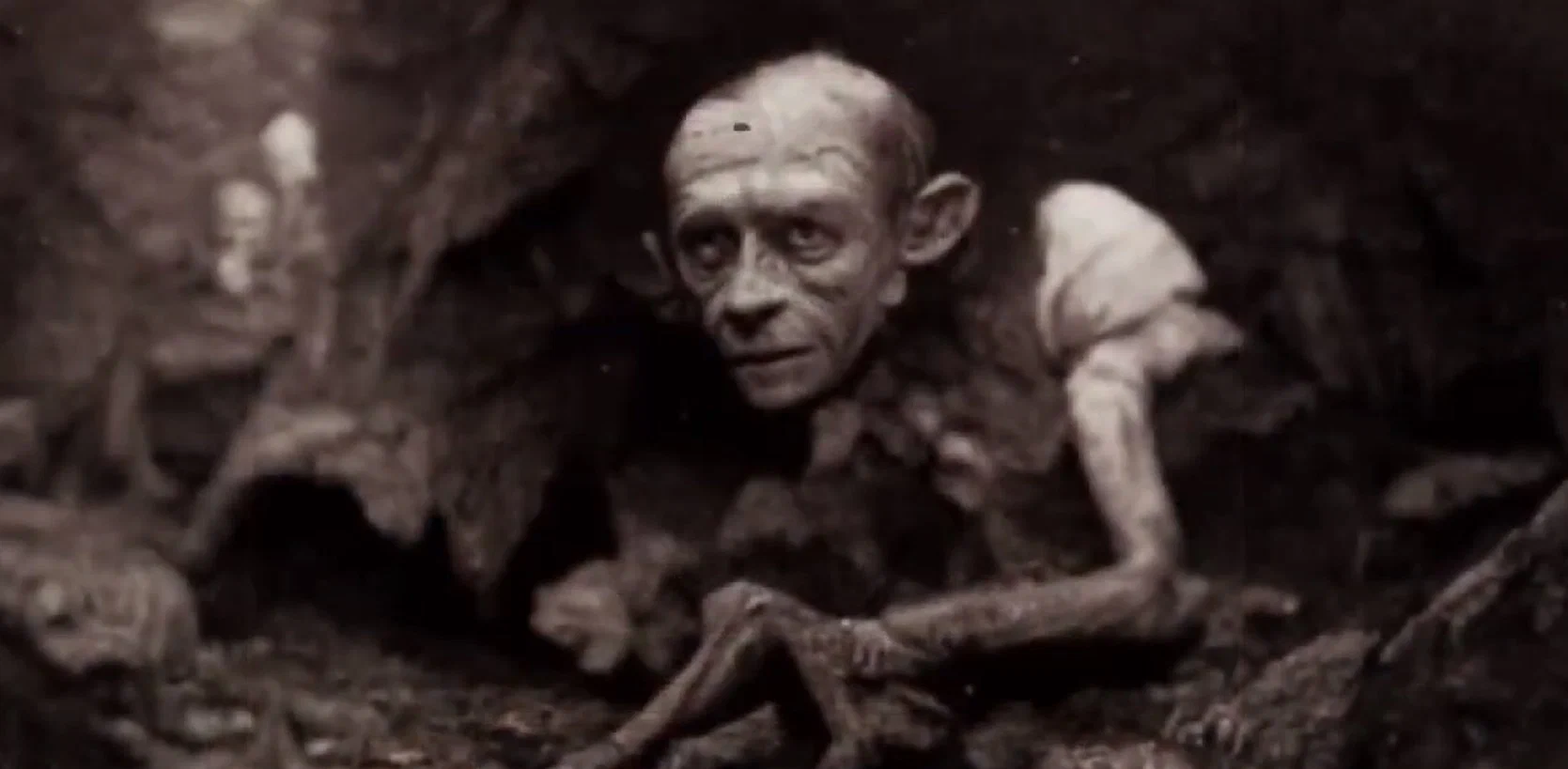




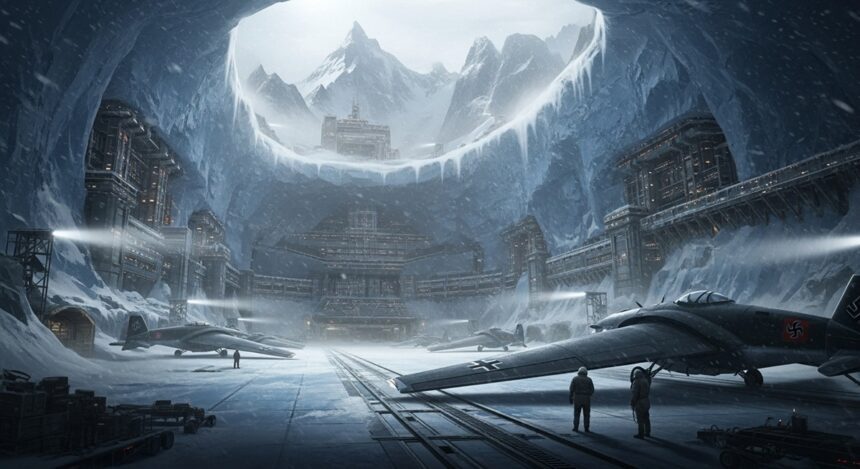
Few conspiracy theories have proven as durable as the legend of New Swabia, the belief that senior Nazis escaped to Antarctica at the end of the Second World War and established a hidden technological civilization beneath the ice. The story has inspired books, documentaries, video games, and decades of internet speculation. It also has a remarkably traceable history, built from a handful of genuine historical events that gradually accumulated entirely fictional layers over the course of eighty years.
This is folklore. It isn’t history, and tracing exactly where the line between the two actually sits is a considerably more interesting project than either repeating the myth or simply dismissing it.
The Expedition That Actually Happened
The actual story starts with margarine. By the mid-1930s, Germany was the world’s second-largest buyer of Norwegian whale oil, importing roughly 200,000 metric tons a year to supply its margarine and soap industries, a level of dependency the regime found strategically uncomfortable as it prepared for war. Rather than keep spending foreign currency reserves on Norwegian imports, Hermann Göring, acting as Commissioner for the Four Year Plan, authorized a reconnaissance mission to scout Antarctic whaling grounds and a potential base for Germany’s own fleet.
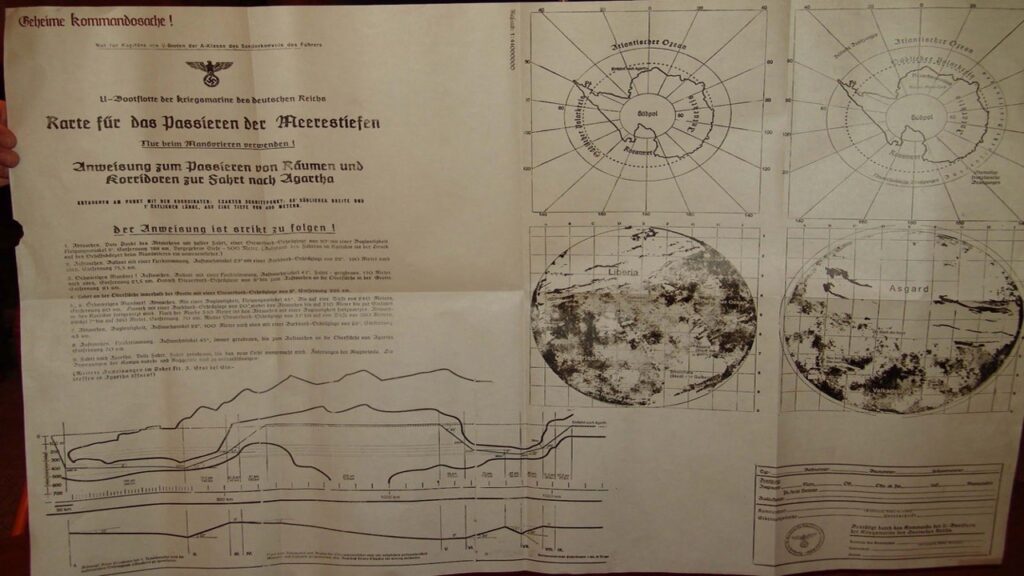
The Third German Antarctic Expedition, led by Kriegsmarine captain Alfred Ritscher, departed Hamburg on December 17, 1938, aboard the retrofitted freighter Schwabenland. Over the following weeks, two ten-ton Dornier seaplanes launched from catapults aboard the ship and photographed roughly 250,000 square kilometers of the Antarctic coast, dropping aluminum darts stamped with swastikas at intervals to stake a territorial claim the expedition intended to call Neuschwabenland, New Swabia. The claim never actually took effect: Norway formally annexed the same territory as Queen Maud Land on January 14, 1939, before the German ships had even reached the coast, rendering the whole exercise diplomatically moot. Germany invaded Poland that September, and no further German polar research happened until the 1950s. That’s the entire verified extent of Nazi Germany’s Antarctic activity: one economically motivated survey expedition, six weeks long, that never resulted in a base, a landing, or a functioning claim of any kind.
Where the Escape Myth Actually Began
The escape mythology has a different, later, and equally traceable origin, and it starts with two U-boats that really did behave strangely. In July and August 1945, months after Germany’s surrender, U-530 and U-977 turned up separately at Mar del Plata, Argentina, and surrendered to Argentine authorities instead of the Allied ports Admiral Karl Dönitz had ordered all U-boats to report to. Both submarines arrived far later than their fuel and provisions should have allowed. U-530’s commander never explained why the voyage took over three months, why the boat’s deck gun had been jettisoned at sea, or why its logbook had gone missing. Neither crew carried identification papers. Interrogations produced almost nothing.
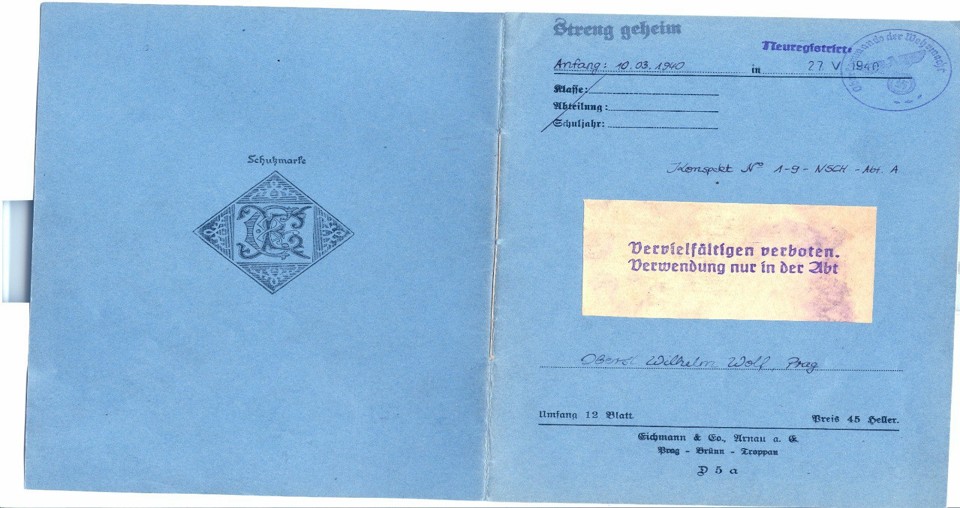
Those genuine, still not fully explained gaps in the record, actual submarines, a documented unaccounted-for three-month gap, missing documentation, were exactly the kind of ambiguity that speculation fills naturally, and it did immediately. Rumors that the boats had ferried Hitler, Nazi gold, or both to a secret destination began circulating within weeks. Separately, the U.S. Navy’s Operation Highjump, a large 1946-47 Antarctic expedition led by Admiral Richard Byrd involving over 4,700 personnel, was framed by later writers as a full-scale military assault against a hidden Nazi base, when its actual, declassified objectives were training personnel in polar operations, testing equipment in extreme cold, and asserting American territorial interest in Antarctica during the opening years of the Cold War. Neither the U-boat mystery nor Operation Highjump involved anything resembling a documented Antarctic Nazi settlement. Both provided genuinely ambiguous raw material that later writers, working with almost no interest in resolving the ambiguity accurately, built into something far larger.
How Occult Writers Built the Modern Myth
The New Swabia most people recognize today, complete with flying saucers, hollow-earth tunnels, and a surviving Reich awaiting resurgence, was assembled decades after the war by a specific, identifiable circle of writers, not by any wartime document. Wilhelm Landig, a former SS member, began gathering a group of like-minded occultists in Vienna around 1950, later known as the Landig Group. Between 1971 and 1991, Landig published a trilogy of novels, explicitly marketed as fiction “based on realities,” that invented a secret Nazi base in the polar regions stocked with advanced aircraft and staffed by SS survivors continuing a hidden ideological struggle. A member of Landig’s circle, Erich Halik, introduced the “Black Sun” as a mystical energy source tied to this mythology, a symbol that didn’t exist in any wartime Nazi iconography and was invented from scratch in the postwar occult scene.
Chilean diplomat and self-described “esoteric Hitlerist” Miguel Serrano took the mythology further still, and more sincerely. Serrano claimed to have personally traveled to Antarctica in the early 1950s to make contact with Hitler, whom he believed had survived and was dwelling in a hidden realm called Shambhala beneath the ice, in communion with ancient godlike beings he called Hyperboreans. In Serrano’s writing, Hitler would one day emerge from this refuge at the head of a UFO fleet to lead a final battle against the forces of darkness, inaugurating what he explicitly called a Fourth Reich. Historian Nicholas Goodrick-Clarke, whose academic work remains the standard scholarly reference on this material, has documented in detail how this specific fusion, Nazi survival, hollow earth cosmology, UFO mythology, and the promise of ideological rebirth, moved from a small circle of postwar occultists into the wider neo-Nazi and conspiracy subculture that still circulates it today.
Why the Myth Solved a Psychological Problem
The myth’s staying power isn’t really about Antarctica at all. It’s about what the story does for people who need Nazism’s defeat to not be final. A regime that lost unconditionally, was tried at Nuremberg, and left its ideology globally discredited is a closed story. A regime that withdrew to a hidden sanctuary to regroup and return is an open one, and that structural shift, defeat reframed as strategic retreat, is a genuinely ancient storytelling pattern that long predates Nazism. King Arthur sleeping beneath Avalon, awaiting Britain’s hour of greatest need. Frederick Barbarossa slumbering in a mountain, his beard grown through the table before him, waiting to restore the empire. The hidden Imam, concealed and destined to return. El Dorado, always one valley further. New Swabia slots neatly into this same “hidden kingdom” motif, borrowing its emotional logic to make a permanently defeated ideology feel, to its remaining adherents, merely dormant.
The Fake Evidence, and Where Each Piece Actually Came From
The specific artifacts cited as proof each have their own separate, checkable origin, and none of them originate from the wartime record they claim to illuminate. The “Hitler’s skull” story is the clearest case of a genuine event getting misread. In 2009, University of Connecticut archaeologist Nick Bellantoni and geneticist Linda Strausbaugh genuinely tested DNA from a skull fragment Soviet intelligence had displayed since 2000 as proof of Hitler’s suicide, and genuinely found it belonged to a woman under 40. That result is accurate and was reported straightforwardly at the time. What doesn’t follow from it is the conclusion New Swabia mythology draws: historian Christopher Browning, responding directly to the History Channel special built around the finding, pointed out that Hitler’s death was never established by that skull fragment alone in the first place, resting instead on independent wartime investigations, including a separate British intelligence inquiry that gathered corroborating witness testimony well before the Soviet skull was ever put on display. A single misidentified bone fragment doesn’t undo a historical conclusion that was never resting on it.
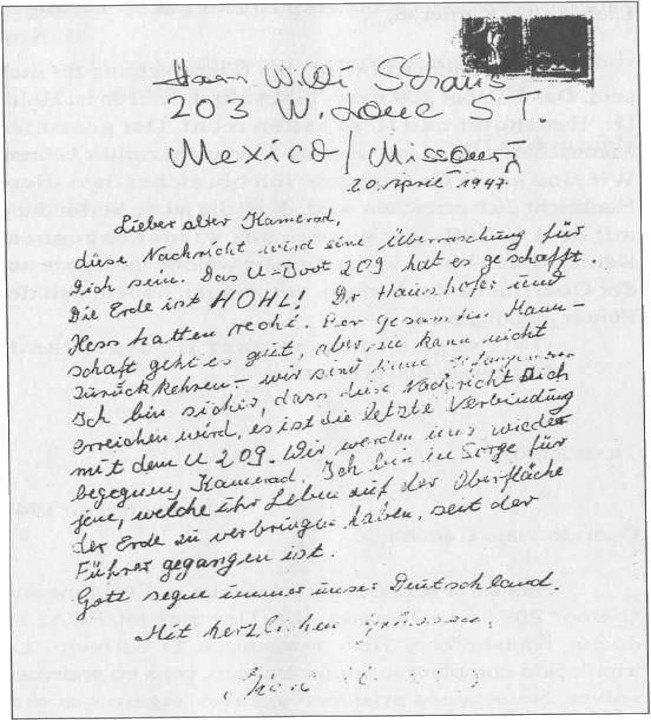
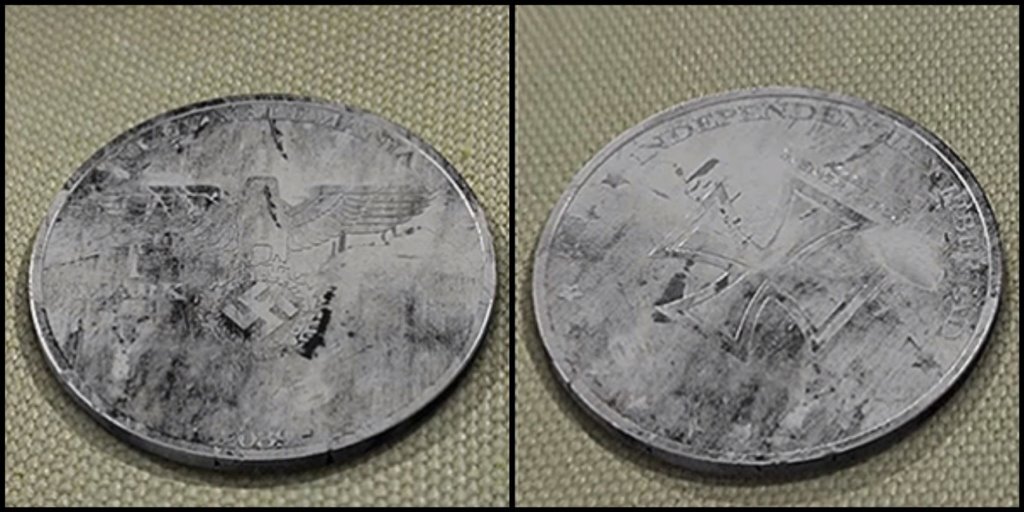
The “38 secret U-boat maps,” Colonel Warlf’s Antarctic personnel workbook, and the SMERSH body-double report don’t trace to any verifiable Soviet or Allied archival record. No historian citing original wartime intelligence files has produced or located them. The 2039 “New Germany” coin and the U-209 hollow-earth letter follow an even more recent and recognizable pattern: internet-era creepypasta, dramatic found-object stories with no verifiable chain of custody, no institution holding the physical object for examination, and no appearance in any record predating their circulation online. They function as modern additions to the mythology, not evidence recovered from history.
Why the Myth Keeps Spreading
Each generation of media has given the story a new engine. The History Channel’s “Hitler’s Escape” and similar programming gave it a documentary sheen in the 2000s. Online forums and, more recently, platforms like YouTube and Telegram have let the individual fragments, the skull, the coin, the U-boat mystery, circulate and recombine independently of any single source, making the myth feel corroborated by sheer repetition rather than by evidence. Popular culture has absorbed and detached it further from its ideological origins entirely: the 2012 Finnish film “Iron Sky” plays the concept for satire, and the “Wolfenstein” video game franchise has built an entire alternate-history universe on top of it. For most people encountering New Swabia today, through a game, a meme, or a late-night documentary, the story arrives with no trace of Wilhelm Landig or Miguel Serrano attached at all. It just feels old, mysterious, and vaguely substantiated, which is exactly the effect eighty years of accumulated retelling was always going to produce.
How the Myth Actually Formed
Antarctica doesn’t need a hidden Nazi civilization to be worth understanding clearly. What it actually contains is one of the clearest documented examples of how modern political mythology evolves: a real six-week whaling expedition, a real defeated regime, genuine and still slightly mysterious Cold War-era loose ends, a specific, named circle of postwar occult writers who built an entire cosmology out of those loose ends over four decades, and a further four decades of internet repetition that stripped away the writers’ names while keeping their invented mythology intact. Tracing that chain, expedition to rumor to occult fiction to modern meme, is a considerably more useful way to understand New Swabia than debating whether it’s true. It was never a historical claim in the first place. It’s a story about why a defeated ideology’s believers needed one.