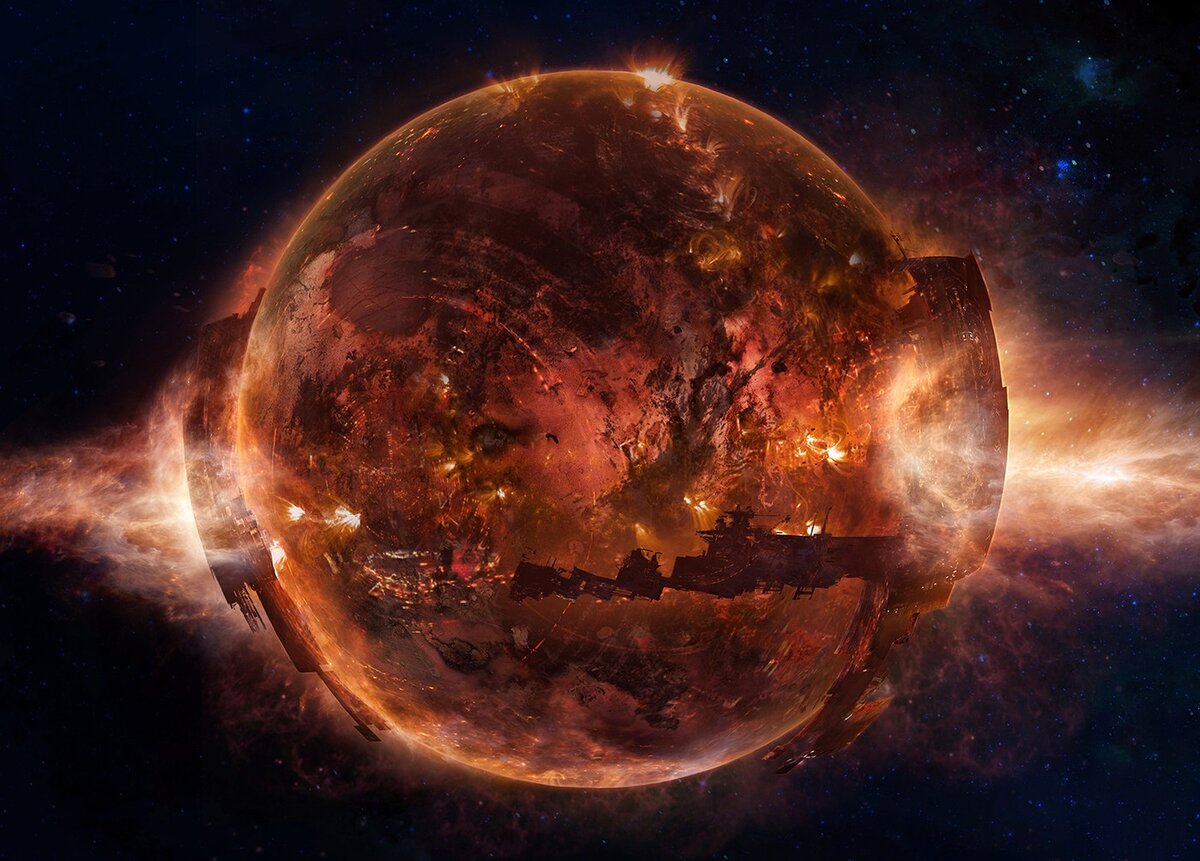





The 2021 ANU discovery that revealed a previously unrecognized “fifth layer” inside Earth is real, peer-reviewed science. But the finding is almost the exact opposite of what hollow-Earth stories sometimes imply: researchers found evidence for a distinct, solid innermost inner core roughly 650 kilometers in radius at the center of the planet.
That distinction matters. The Australian National University study did not discover a gigantic cavity, an underground civilization, or an empty center waiting behind a hidden entrance. It found evidence that the already-known inner core has another structurally distinct region inside it, inferred from the way earthquake-generated seismic waves travel through the planet. A later 2023 study using waves that reverberated through Earth’s center strengthened the case for an approximately 650-kilometer-thick innermost region with distinctive seismic properties. The irony is therefore unusually clean: one of the most frequently recycled pieces of modern “evidence” in hollow-Earth discussions is a genuine scientific discovery, but what the science actually revealed was more structure at Earth’s center, not less.

The Hollow Earth Story Has a Real History, But It Is Not a Scientific History
Hollow-Earth ideas did not begin on the internet, and dismissing their history as nothing more than modern nonsense misses something genuinely interesting. In 1692, astronomer Edmond Halley proposed a radically different model of Earth’s interior in an attempt to explain the planet’s magnetic behavior. His Earth contained concentric shells and an interior arrangement that bears little resemblance to modern geophysics but reflects the scientific questions of his own period, when nobody possessed the global network of seismometers, modern mineral physics, or geophysical imaging techniques available today. The idea was speculative, but it came from an identifiable attempt to solve a real problem.
Leonhard Euler is often added to the story as the great mathematician who supposedly proposed a completely hollow Earth containing a small central sun. That claim, however, deserves more caution than it usually receives. Historian of mathematics C. Edward Sandifer investigated the attribution and found no evidence in Euler’s writings that he actually endorsed the famous hollow-Earth model. Euler did discuss a thought experiment involving an object falling through a hole drilled through Earth, which later writers appear to have confused with a subterranean-world hypothesis. So even one of the theory’s most famous “scientific ancestors” turns out to be a case where the legend is considerably cleaner than the historical record.

Agartha and the Nagas Belong to Different Traditions
The mythology surrounding underground worlds is older and more complicated than the modern hollow-Earth narrative suggests. Nagas are genuine figures in Hindu and Buddhist traditions, often represented as serpent-like beings associated with water, subterranean realms, guardianship and supernatural power. But Agartha, in the form most familiar to modern hollow-Earth literature, should not simply be described as an ancient Tibetan Buddhist civilization hidden beneath the Himalayas. The famous Western account of Agarttha emerged in nineteenth-century esoteric literature, particularly through Alexandre Saint-Yves d’Alveydre’s 1886 Mission de l’Inde, which described an elaborate subterranean kingdom and helped establish the version of the legend later absorbed into occult and hollow-Earth literature.
That distinction is important because genuine mythology does not become geological evidence merely because later writers connect it to a physical theory. A civilization appearing in a religious text, an esoteric book or a piece of folklore can tell us a great deal about the people who imagined it. It cannot, by itself, establish that a corresponding civilization exists thousands of kilometers beneath the surface. The same rule applies whether the alleged inhabitants are Nagas, Agarthans, “Elder Races,” extraterrestrials or any other beings assigned to the subterranean world.
The Piri Reis Map Is Real. The Antarctic Interpretation Is the Problem.
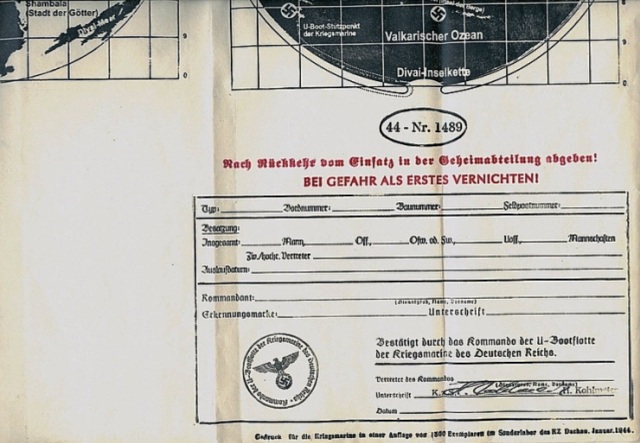
The 1513 Piri Reis map is a genuine and extraordinarily important historical document. What is not established is the popular claim that its southern coastline represents Antarctica accurately mapped before the continent’s modern discovery. Detailed scholarship on the map has traced its construction to a compilation of earlier charts and geographical sources, while the famous Antarctic interpretation has been criticized as a modern reconstruction imposed on a sixteenth-century chart whose southern landforms have other historical explanations.
The distinction is the same one that appears throughout the hollow-Earth story: the artifact is real, but the conclusion attached to it may not be. A sixteenth-century map can be mysterious, incomplete and surprisingly sophisticated without being a photograph from an unknown prehistoric civilization. In fact, the map itself contains information about the sources and geographical knowledge available to Piri Reis, making the historical record considerably more interesting than the claim that somebody simply possessed a secret modern map of Antarctica.
The Famous Polar “Hole” Was a Photograph, Not a Window Into Earth
The same problem appears in the famous 1968 ESSA-7 polar photograph that has circulated for decades as an alleged image of a giant opening at the North Pole. The photograph itself is genuine: it came from the ESSA-7 weather satellite and was reproduced in hollow-Earth literature as supposed visual evidence of a polar entrance. But what a satellite image actually records depends on the instrument, geometry, illumination, cloud cover and the way the data are presented. The existence of a dark or visually unusual region in a polar image is therefore not evidence that the planet contains a physical aperture leading into its interior.
Indeed, the historical record surrounding the image is revealing. The famous “North Pole hole” interpretation was promoted in the late 1960s and 1970s by hollow-Earth advocates, while the corresponding imagery was meteorological satellite photography rather than an underground survey. A cloud-free or unusual-looking polar region can become extraordinary once somebody labels it “the entrance to the inner Earth.” The photograph is real. The interpretation is the part that requires evidence.

Antarctica’s Secret-Expedition Story Also Mixes Fact With Fiction
Nazi Germany really did send an expedition to Antarctica in 1938-39, and the expedition is part of the historical record. German researchers surveyed and photographed large areas of Queen Maud Land, and the expedition has subsequently been surrounded by an enormous mythology involving secret bases, occult societies, UFOs and entrances into the Earth. The historical expedition, however, should not be confused with the later stories built around it. The same caution applies to German interest in Tibet: real expeditions and genuine ideological interests existed, but the existence of an expedition does not establish the extraordinary purposes later conspiracy literature assigns to it.
And some of the more dramatic quotations attributed to Soviet leaders or other historical figures are even weaker. Claims that Lenin secretly acknowledged underground civilizations, for example, require a traceable primary source before they can be treated as historical evidence. A quotation circulating without a speech, letter, transcript, publication history or archival reference is not strengthened by being repeatedly copied. Repetition creates familiarity, it does not create provenance.
Operation Highjump Happened. Byrd Did Not Discover an Inner World.
Operation Highjump was real. The U.S. Navy’s 1946-47 Antarctic expedition was one of the largest Antarctic operations of its era, involving ships, aircraft, personnel, aerial photography, mapping and scientific work. Official Navy histories describe its objectives in practical terms: testing equipment and personnel in extreme polar conditions, mapping and exploring Antarctic territory, and collecting scientific information. Richard E. Byrd was genuinely involved, and the expedition generated an enormous documentary record.
What does not follow is that the expedition discovered a gateway into a hollow Earth. The famous “Admiral Byrd diary” describing an extraordinary journey into an inner world is not part of the authenticated documentary record of Operation Highjump. The supposed diary belongs to the later literature of hollow-Earth promoters, not to the official expedition documentation that survives from Byrd’s career. This is precisely why provenance matters: a real expedition cannot authenticate a document merely because somebody later attached the expedition commander’s name to it.
The 2021 “Fifth Layer” Is Where the Story Completely Reverses
This is the point where the modern evidence becomes almost comically hostile to the hollow-Earth interpretation. In 2021, Joanne Stephenson, Hrvoje Tkalčić and Malcolm Sambridge of the Australian National University published a peer-reviewed study in the Journal of Geophysical Research: Solid Earth titled “Evidence for the Innermost Inner Core.” Their analysis identified a change in the seismic anisotropy of the inner core at roughly a 650-kilometer radius, providing evidence that Earth’s already-known inner core contains a distinct innermost region. The study did not reveal an empty cavity. It revealed another layer of solid planetary material whose seismic behavior differs from the surrounding inner core.
The word “metal” also needs to be used carefully. The Earth’s inner core is understood to be predominantly iron-rich and metallic, but the 2021 study did not physically drill down and photograph a metal sphere. Scientists infer the structure from seismic behavior and from what physics tells us about matter under the immense pressures and temperatures at Earth’s center. The scientifically defensible statement is therefore that the study found evidence for a distinct innermost inner core within the solid inner core, approximately 650 kilometers in radius, not that researchers directly discovered a visible metallic ball.
And the story did not stop in 2021. In 2023, Thanh-Son Phạm and Hrvoje Tkalčić published an independent analysis in Nature Communications using seismic waves that reverberated through Earth’s center as many as five times. Their results strengthened the evidence for an approximately 650-kilometer-thick innermost region with distinct seismic properties. The significance is profound: Earth is not becoming simpler as instruments improve. It is becoming more structurally resolved. But every improvement is revealing material, interfaces, anisotropy and wave paths where the hollow-Earth story requires absence.

A “Fifth Layer” Does Not Mean Scientists Discovered Something Hollow
There is an important linguistic trap here. Saying Earth has a “fifth layer” can make it sound as though geologists have suddenly discovered a brand-new object sitting inside an otherwise empty planet. They have not. The traditional four-layer description, crust, mantle, outer core and inner core, is a simplified teaching model. The boundary detected by the ANU work is a finer subdivision inside the inner core, analogous to discovering additional structure within a region already known to exist.
That is actually the more exciting discovery. The inner core is not a featureless ball. Its crystals, anisotropy, growth history and internal structure contain clues about how Earth cooled and evolved. The ANU researchers suggested that the change in structure could preserve evidence of major events in Earth’s history. The 2023 reverberating-wave study likewise found evidence for distinctive anisotropy in the innermost region. The unknown is therefore not whether something occupies Earth’s center, the scientific question is exactly what kind of solid material is there, how is it organized, and what does that structure reveal about the planet’s past?
The 1995 “NASA Signal” Leads Somewhere Much Less Exciting
The supposed 1995 NASA detection of intelligent radio signals coming from inside Earth provides a useful contrast. The story was published by Weekly World News, the sensational American tabloid famous for fictional and satirical stories, and was subsequently recycled in hollow-Earth literature as though it were a suppressed NASA report. There is no corresponding NASA scientific publication, technical report or official statement establishing that NASA detected an intelligent signal originating from an underground civilization.
This is a recurring pattern in conspiracy research: an institution is named, an impressive technical claim is attached to it, and the lack of an accessible primary record is then treated as proof of suppression. But the evidentiary burden runs in the opposite direction. If NASA really detected a complex radio signal from inside the planet, the extraordinary claim would require the signal data, instrumentation, analysis, publication trail and independent confirmation. Without those things, the newspaper headline remains a newspaper headline.

Olaf Jansen and the “Elder Race” Belong to the Literature of the Inner Earth
Olaf Jansen’s alleged journey into Agartha and Richard Shaver’s stories about an underground “Elder Race” occupy another important layer of the mythology: fiction and speculative literature. Shaver’s 1945 stories in Amazing Stories became enormously influential in later claims about subterranean civilizations, telepathy, ancient machines and hidden races. Whatever one thinks of the cultural phenomenon surrounding those stories, they cannot be promoted from pulp literature into physical evidence merely by removing the word “fiction” from the discussion decades later.
That does not make the stories worthless. Quite the opposite. They help explain how the modern inner-Earth mythology evolved: ancient religious motifs were mixed with nineteenth-century esotericism, polar exploration, science fiction, UFO folklore and genuine scientific discoveries. The result is a remarkably durable narrative in which every new unknown can be inserted into an already existing subterranean world.
There Is No Evidence That the CFR or Bilderberg Group Is Hiding a Hollow Earth
The Council on Foreign Relations and the Bilderberg Group are real organizations, but attaching real institutions to an extraordinary claim does not make the claim stronger. There is no credible evidence establishing that either organization is suppressing information about a hollow Earth, subterranean civilizations or polar entrances. The same evidentiary problem applies to supposed “2017 NASA images of Antarctic ruins” and alleged programs such as “Operation Klammer”: without a traceable primary document, catalogued imagery, identifiable personnel, archival provenance or independent confirmation, these claims remain part of the mythology rather than demonstrated history.

Seismology Is the Problem the Hollow Earth Theory Cannot Escape
The decisive evidence is not one photograph, one expedition or one laboratory result. It is the accumulated behavior of seismic waves traveling through the entire planet. Earthquakes send compressional and shear waves through Earth’s interior, and those waves change speed, direction and character according to the materials and structures they encounter. Seismologists have spent more than a century recording these signals at stations distributed around the globe, building increasingly detailed models of the mantle, liquid outer core and solid inner core.
A giant hollow cavity at Earth’s center would not be a subtle anomaly. It would fundamentally alter the paths, travel times and reflections of seismic waves passing through the planet. Instead, observations reveal a layered interior with a solid inner core surrounded by a liquid outer core, and the detailed behavior of waves crossing the inner core is precisely what allowed researchers to infer additional structure within it. The 2021 ANU study exploited these differences in seismic anisotropy, the 2023 work went further by identifying repeated reverberations through Earth’s center. The very technique used to discover the “fifth layer” is therefore the same technique that makes a planet-scale empty cavity extraordinarily difficult to reconcile with observation.
There is another independent constraint. Earth is not merely a rock shell surrounding an enormous empty volume. Its mass, gravitational field, rotation and moment of inertia all constrain how matter is distributed inside the planet. Earth’s average density is far higher than that of the rocks exposed at its surface, requiring a substantially denser interior. Geophysics does not infer Earth’s interior from one convenient assumption. Seismic observations, gravity, rotation, mineral physics and the planet’s magnetic behavior converge on a dense differentiated Earth.
The Magnetic Field Makes the Real Interior More Interesting, Not Hollow
One correction to the popular version of this story is particularly important: Earth’s magnetic field should not be described as something directly generated by the solid inner core. The main geodynamo operates in the electrically conducting liquid outer core, where convection and Earth’s rotation organize moving molten metal into a global magnetic field. The solid inner core matters because its growth, heat flow and interaction with the outer core influence the planet’s long-term thermal and magnetic evolution. That distinction may sound technical, but it is exactly the kind of technical detail that separates genuine geophysics from a dramatic story built around it.
What the Evidence Actually Leaves Us With
The strongest version of the hollow-Earth story therefore collapses under the weight of its own supposed evidence. Halley really proposed an unusual internal Earth model, but his hypothesis predated modern seismology. Euler is frequently misrepresented as a hollow-Earth advocate even though the historical evidence for that attribution is weak. Agartha exists in the history of esoteric literature, while Nagas belong to much older religious traditions, but neither establishes a geological cavity. The Piri Reis map is real, but its supposed depiction of accurately surveyed Antarctica is not accepted as evidence of a lost global civilization. The ESSA-7 photograph is real, but a strange polar image is not a hole into the planet. Operation Highjump was real, while the extraordinary Byrd diary is not part of the authenticated expedition record. And the alleged NASA signal traces not to a scientific discovery but to sensational tabloid literature.
Then there is the discovery that should have ended the argument in the opposite direction: the 2021 ANU study found evidence for a distinct innermost inner core approximately 650 kilometers in radius, and subsequent research strengthened the seismic case for that structure. It did not expose a secret cavity. It gave scientists another piece of evidence that the deepest part of Earth contains structure, material and a history that can be reconstructed from the waves earthquakes send through the planet.
That leaves a much better mystery than the hollow-Earth story. We still cannot physically visit Earth’s center. We cannot take a rock sample from it. We cannot photograph its interior the way a spacecraft photographs another planet. Almost everything we know comes from indirect evidence, seismic waves, gravitational measurements, magnetic observations, laboratory experiments and mathematical models. And those methods continue to reveal things nobody could see directly.
The real Earth is not an empty shell hiding a civilization beneath our feet. It is a planet whose inaccessible center is dense enough, hot enough and complicated enough to preserve a record of its own formation in the behavior of earthquakes thousands of kilometers away.
The strange part is not that scientists discovered a hollow world. The strange part is that, without ever drilling anywhere near the center, they can already tell us that something solid is there, and can now distinguish one hidden region of that solid center from another.