




Alex Collier has been describing contact with beings he identifies as Andromedans since at least 1993. He has described civilizations living for centuries, enormous spacecraft containing forests and lakes, a hierarchy of non-human intelligences, and perhaps most controversially, a human genome assembled from genetic contributions associated with twenty-two extraterrestrial civilizations. None of those central claims has been independently verified. That fact has to come first. The interesting question is therefore not whether Collier’s testimony sounds extraordinary. It plainly does. The question is what, if anything, survives when the testimony is separated from the corroboration claims that have accumulated around it.
Collier’s material occupies an unusual place in the history of modern contact literature. He did not present a single isolated encounter and then disappear. Beginning in the early 1990s, he developed an elaborate cosmology through lectures, interviews, books, and recorded appearances, returning repeatedly to the same basic account of who his contacts were, where they came from, how they understood humanity, and what they believed was happening to Earth.
That continuity is real. So is the absence of independent verification.
The Man Behind the Andromedan Story
Alex Collier, born in 1959, began publicly presenting his Andromedan contact material by at least 1993. His principal publications include Defending Sacred Ground, which circulated as an interview collection, and Letters from Andromeda. His testimony describes contact experiences beginning in childhood and continuing into adulthood, including communication with two beings he identifies as Moraney and Vasais.

Collier does not possess the kind of institutional background that would independently authenticate his claims. He is not presenting himself as a government official releasing classified documents, a geneticist publishing laboratory results, or an astronomer reporting observations through a professional research program. He is a private individual describing extraordinary experiences.
That distinction cuts both ways. The absence of credentials does not prove that a witness is wrong. But it does remove an important potential source of external verification. Collier’s testimony therefore has to stand or fall according to its content, its documentation, and whatever portions of it can actually be checked against evidence outside his own account.
The Problem With “Corroboration”
This is where the Collier story becomes especially easy to overstate.
His claims have often been compared with the testimony of other contactees, channelers, and alleged insiders. Dan Burisch’s accounts are sometimes brought into the comparison. So is the Council of Nine material that emerged from channeling sessions associated with Andrija Puharich. Other comparisons reach backward into Sumerian creation traditions, the Watchers and Nephilim narratives, or modern claims about anomalous human remains.
Similarities between these sources can certainly be interesting. But similarity is not automatically corroboration.
If two independently tested instruments record the same physical phenomenon, the agreement can be powerful evidence. If two people within the same cultural ecosystem describe similar extraterrestrial hierarchies, genetic interventions, dimensional beings, or approaching planetary transformations, the evidentiary situation is different. The accounts may reflect a genuine phenomenon. They may also reflect shared literature, common assumptions, cross-reading, cultural diffusion, or the tendency of people working within the same genre to reach for the same narrative vocabulary.
The Council of Nine material illustrates the problem particularly well. Its history is itself complicated, originating in 1952 channeling sessions organized around Puharich, with later accounts raising questions about the authenticity and presentation of portions of the material. Whatever one ultimately believes about the phenomenon, it cannot responsibly be treated as an independent scientific confirmation of Collier. One unverified testimony cannot become verified merely by agreeing with another.
The Twenty-Two Civilizations
The most consequential claim in Collier’s entire body of testimony may be the simplest to state.
He has said that humanity’s genetic inheritance contains contributions from twenty-two extraterrestrial civilizations, and that this inheritance carries something more profound than ordinary biological information. In Collier’s framework, human beings possess a kind of accumulated inheritance extending across multiple civilizations and evolutionary histories.
This is an enormous claim. It is also a remarkably specific one.
Other traditions examined throughout this library contain related stories about humanity’s origins being shaped by non-human intervention. The Sumerian material describes the creation of humans through the combination of divine and terrestrial biological elements. The Watchers tradition describes unions between non-human beings and human women and the extraordinary offspring attributed to them. Modern ancient-astronaut narratives have repeatedly recast these older stories as possible accounts of genetic engineering.
But none of those traditions produces Collier’s number twenty-two.
That number belongs to Collier’s testimony. It cannot be elevated into independent evidence merely because other traditions also contain stories about non-human involvement in human origins. The resemblance establishes a shared narrative structure. It does not establish the truth of any particular version of it.
The Paracas Problem
One of the claims sometimes recruited to support this broader genetic-hybridization narrative is the story of the elongated Paracas skulls.
Here the evidentiary record is considerably clearer than the mythology surrounding it.
Claims that Paracas remains possess DNA fundamentally incompatible with known human populations have circulated widely, particularly through material associated with researcher Brien Foerster and testing that was not published as peer-reviewed genetic research. Those claims have not been established as scientific fact. Published genetic analysis of Paracas remains has identified human mitochondrial DNA consistent with South American populations, while the distinctive elongation of the skulls is consistent with artificial cranial modification, a documented cultural practice in ancient societies.
That matters because this is exactly the kind of claim that should not be allowed to survive simply because it fits a preferred theory. If evidence does not withstand replication and peer review, it cannot be treated as a confirmed anomaly merely because it would be convenient for the argument.
The Paracas material therefore should not be presented as independent support for Collier’s twenty-two-civilization claim.
The Andromedan Civilization
Collier’s descriptions of the Andromedans themselves are where his testimony becomes unusually detailed.
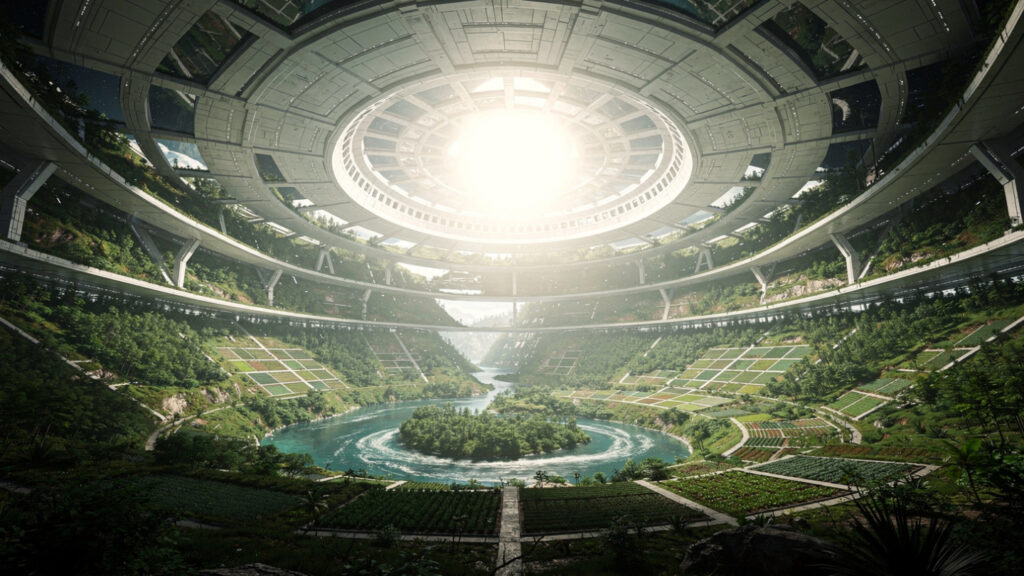
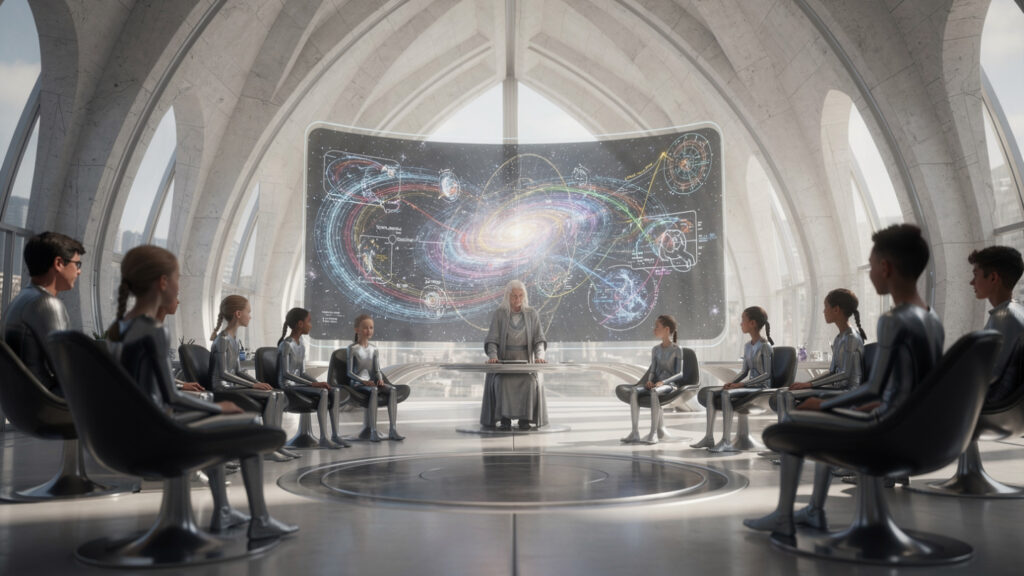
He has described an enormous spacecraft, roughly 800 kilometers in length, containing lakes, rivers, forests, and agricultural areas. He has described beings with extraordinarily long lifespans, children undergoing approximately 150 years of education, and a society in which reproduction is governed by considerations extending beyond physical compatibility.
He has also described their diet in strikingly specific terms, including a fruit whose flavor he compared to a combination of apple, pear, and banana, and a biological system he says produces essentially no waste.
These details are memorable precisely because they are concrete. They transform an abstract claim of extraterrestrial contact into a world that appears to have geography, biology, education, engineering, and social institutions.
But there is an important distinction between specificity and verification.
A story can be highly specific and completely false. In fact, specificity is one of the ordinary characteristics of successful storytelling. Once a storyteller establishes a few premises, an enormous amount of coherent detail can be generated from them. A civilization of thousand-year-old beings naturally invites questions about education. A civilization living in an enclosed environment invites questions about food, reproduction, waste, and population control. A gigantic spacecraft invites questions about agriculture and internal ecosystems.
Collier’s account is internally elaborate. That makes it more interesting to examine. It does not make it true.
The Physics of an 800-Kilometer Mothership
There is nevertheless an interesting distinction to make here. Some of Collier’s descriptions are not inherently contradictory from an engineering standpoint.
A sufficiently large artificial habitat could, in principle, contain enormous enclosed ecosystems. Human engineering has already demonstrated the basic concept of closed ecological environments, even though nothing remotely approaches the scale Collier describes. Concepts for orbital habitats have long included agricultural areas, artificial environments, rotating structures, and closed-loop resource systems.
That means the claim cannot simply be dismissed by saying, “That sounds impossible.” But the reverse mistake is equally important. A claim’s compatibility with known physical principles does not constitute evidence that the claimed object exists.
Possible is not the same as probable. And probable is not the same as demonstrated.
The Dimensional Hierarchy
Collier’s Andromedan cosmology also includes higher-dimensional intelligences and beings he describes as operating beyond the level of his direct contacts. His PaTaal, whom he describes as “Founders,” occupy an especially elevated position in this hierarchy.
That structure resembles other contact and channeling systems in which the beings directly encountered by humans are not regarded as the highest level of intelligence. Above them are teachers, councils, founders, or non-embodied consciousnesses operating in progressively more abstract dimensions.
The resemblance is genuine. What it means is less certain.
A hierarchy of invisible intelligences is not unique to modern contact literature. Religious cosmologies, mystical traditions, occult systems, science-fiction narratives, and channeling movements have all produced versions of the same basic architecture. Once a culture accepts the premise of non-human intelligence, a hierarchy naturally follows: who governs whom, who knows more, who created whom, and what exists beyond the beings we can directly perceive?
The recurrence of the pattern is therefore historically interesting without being independently probative.
The Timeline Claims
Collier has also made warnings about the future, including concerns about centralized global governance, technologies of population control, and major changes approaching humanity during the early twenty-first century.
Predictions are potentially more useful than cosmological descriptions because they can, at least in principle, be tested.
But a prediction is only genuinely testable when it is specific enough to risk being wrong.
No systematic, methodologically rigorous study establishing Collier’s predictive accuracy has been published by a credentialed researcher. What exists instead is informal retrospective comparison by supporters and critics within the UFO and contactee communities. That distinction is crucial. Broad predictions about political consolidation, technological transformation, environmental instability, or social upheaval can be made to resemble many subsequent events after the fact.
Without pre-registered criteria, precise dates, clearly defined outcomes, and a complete accounting of failures as well as apparent successes, “he predicted this” is too weak a standard to establish unusual predictive ability.
The honest conclusion is therefore not that Collier’s predictions have been proven false, nor that they have been proven accurate. It is that they have not been subjected to the kind of systematic testing required to make either conclusion responsibly.

What the Other Sources Actually Add
The strongest version of the Collier argument says that his account becomes more credible because other sources describe similar realities.
The weaker, and more defensible, version is that these similarities show how persistent certain ideas have become across the modern contact literature.
Collier describes higher-dimensional teachers. Other channeling traditions describe higher-dimensional intelligences. He describes extraterrestrial intervention in human genetics. Ancient astronaut writers and some ancient religious traditions contain their own versions of non-human involvement in human origins. He describes humanity approaching a major developmental threshold. That same theme appears throughout New Age, esoteric, religious, and contact literature.
There is something genuinely worth investigating in that repetition. But “many sources say something similar” is not the same proposition as “many independent sources have independently verified the same thing.”
The first statement is demonstrably true. The second has not been established.
Why the Story Has Endured
There is a deeper reason Collier’s material remains compelling even after the evidentiary claims are stripped down.
His story is not really about spaceships.
It is about inheritance.
The idea that humanity is not what it thinks it is, that the human story extends beyond the familiar historical record, that something forgotten is encoded inside us, and that the present moment represents a choice about what humanity becomes next, is powerful whether one interprets it literally, psychologically, mythologically, or spiritually.
Collier gives that idea an extraterrestrial vocabulary. Other traditions give it religious, mystical, philosophical, or evolutionary vocabularies. The language changes. The underlying question remains remarkably stable.
Who are we, where did we come from, and what are we capable of becoming?
That question does not require an Andromedan civilization to be real before it becomes worth asking.
Testimony, Not Evidence
Several things can be said about Alex Collier with considerably more confidence than the larger claims made on his behalf.
He has maintained a remarkably consistent body of contact testimony across decades. He has supplied unusually specific details about the civilization he says he encountered. His claims overlap in interesting ways with themes found in other contact, channeling, religious, and esoteric traditions. Those are real features of the historical record of his testimony.
What has not been established is that those similarities constitute independent corroboration. The Council of Nine material has its own credibility problems. Burisch’s claims remain unverified. The Paracas DNA story does not provide the genetic evidence sometimes claimed for it. Collier’s twenty-two-civilization model remains dependent on Collier’s own testimony. And no rigorous predictive analysis has demonstrated that his forecasts outperform chance or broad retrospective interpretation.
None of that proves that Collier is lying. It doesn’t prove that he is mistaken, either. And it certainly doesn’t prove that he is telling the truth.
What it does is establish the proper evidentiary category for the material: testimony.
That category is not an insult. Testimony can contain truths. It can preserve observations that later become independently testable. It can also contain sincere mistakes, interpretations layered onto experiences, memories reshaped over time, cultural expectations, or elaborate constructions whose internal coherence tells us nothing about their external reality.
The discipline is to leave those possibilities open until evidence closes them.
And that may be the most interesting thing about Collier’s story. Not that it gives us an answer, but that it gives us an unusually detailed hypothesis about humanity’s place in the universe, one that can be separated into claims and tested one by one.
The mothership is a claim. The twenty-two civilizations are a claim. The dimensional hierarchy is a claim. The predictions are claims. The fruit that supposedly tastes like apple, pear, and banana at once is a detail. The 150 years of schooling is a detail. The enormous spacecraft, the forests, the lakes, the strange biology, the twenty-two ancestral civilizations: these are precisely the kinds of details that make testimony memorable.
But memorable is not the same as verified.
And if Collier’s story ever moves from testimony into evidence, it won’t happen because another contactee tells a similar story. It will happen because something outside the story itself becomes independently measurable.
Until then, the most defensible position is also the most interesting one: take the testimony seriously enough to examine it, but not so seriously that examination is replaced by belief.
Robert Monroe’s separately documented contact material raises a closely related question: what happens when extraordinary experiences are compelling, internally coherent, and deeply consequential, but the evidence for their external reality remains unresolved?