

For a few hours on February 20, 1954, President Dwight D. Eisenhower disappeared from public view in Palm Springs. That part is real. The White House press corps was confused, the Associated Press briefly transmitted a false report that the president had suffered a fatal heart attack, and Eisenhower later appeared at church with a repaired tooth. What came afterward was something very different: a story that transformed a documented presidential dental emergency into a secret flight to Muroc, extraterrestrial delegations, a treaty with alien beings, and eventually an alleged agreement permitting human abductions in exchange for technology.
The distinction matters because the Eisenhower story is often presented backward. The existence of a strange night is treated as evidence for the alien meeting, and every later UFO document is then recruited to fill in the missing details. But the historical trail runs in the opposite direction. The strongest contemporary evidence records a tooth problem and a dentist in Palm Springs. The first surviving document explicitly connecting Eisenhower to extraterrestrials appeared almost two months later in an occultist publication. The elaborate treaty narrative came later still. Once the chronology is restored, the story becomes less like a suppressed presidential file and more like a case study in how a small historical ambiguity can accumulate layers of mythology.
The Night Eisenhower Actually Went Missing
The episode began during Eisenhower’s February 1954 stay in Palm Springs, California. The president had spent the day playing golf and returned to Smoke Tree Ranch in the afternoon. The Eisenhower Presidential Library’s surviving appointment book for Saturday, February 20 records the day’s movements in unusually ordinary detail: Eisenhower was in his office in the morning, played golf, had lunch, returned to the ranch at 2:45 p.m., and then, sometime between 8 and 10 p.m., “broke cap off of a front tooth” and went to a dentist in Palm Springs to have it repaired. This is not a retrospective UFO account. It is the presidential appointment record itself.
The confusion surrounding the episode was nevertheless real. Reporters suddenly could not locate the president, and the Associated Press briefly transmitted a report saying Eisenhower had died of a heart attack before the bulletin was withdrawn. The following day he appeared at church in good health, his dental cap repaired. Contemporary Time coverage described the incident as a straightforward dental emergency after Eisenhower dislodged the cap while eating a chicken leg, while later dental histories documented that the same troublesome crown had a history of repairs before and after the February incident.
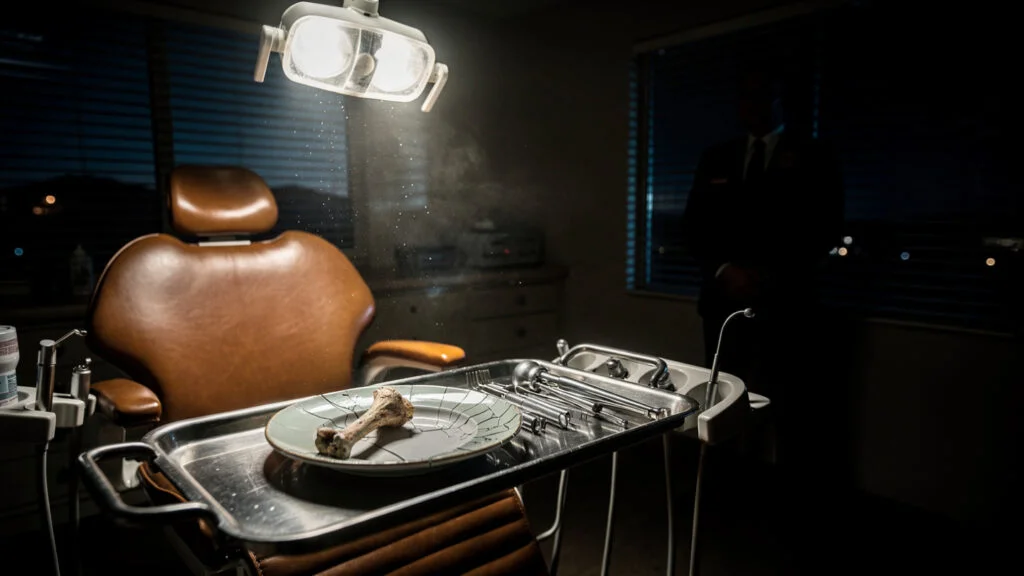
There is a genuine wrinkle here, and it should not be hidden merely because it complicates the skeptical conclusion. The treating dentist, Francis A. Purcell, later died, and the surviving dental-office documentation of the specific visit is not as complete as anyone would like. Later researchers also noted that Purcell’s widow could not recall details of the presidential treatment when interviewed decades afterward. That absence of a surviving office record became one of the principal pieces of circumstantial material used by UFO researchers to argue that the dental explanation was fabricated. But an incomplete private medical record is not the same thing as evidence of an extraterrestrial meeting, especially when the presidential appointment book independently records the dental emergency and contemporary reporting describes the same event.
The Alien Story Did Not Begin With a Government File
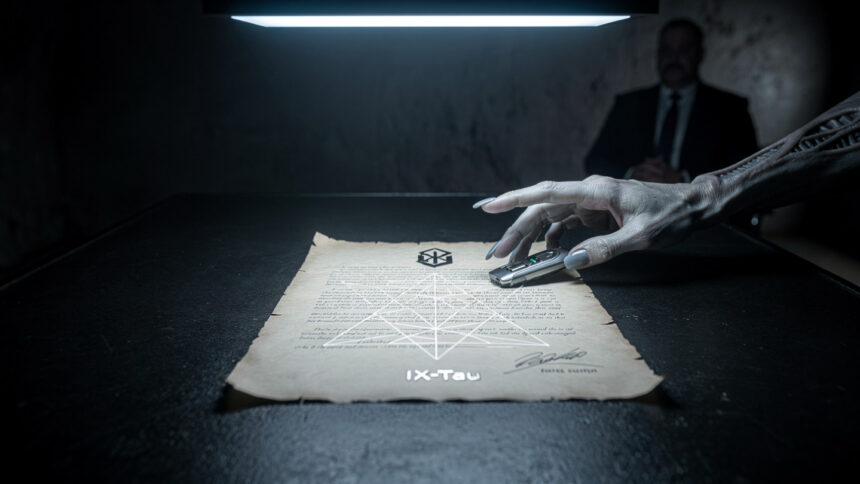
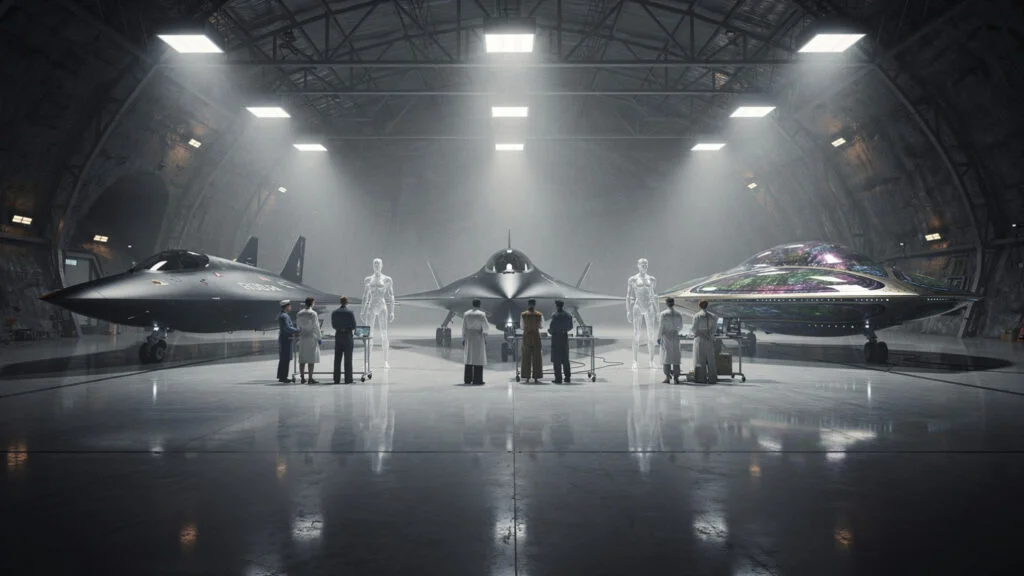
The most important fact about the extraterrestrial version is how quickly its documentary trail actually appears. On April 16, 1954, less than two months after the Palm Springs incident, Gerald Light wrote to Meade Layne of Borderland Sciences Research Associates describing what he claimed was a two-day visit to Muroc. Light said he had seen five different types of aircraft being studied by Air Force personnel with the assistance of beings he called “Etherians.” He then added the crucial sentence: President Eisenhower, he said, had been “spirited over to Muroc” one night during his Palm Springs visit.
The letter is real in the narrow historical sense that a surviving document exists and can be read. Borderland Sciences preserves the correspondence in its archive, including the April 1954 Muroc letter. But the existence of the letter does not authenticate its contents. Light was already participating in an explicitly occult and “Etherian” belief system in the same publication, whose surrounding material described etheric beings, astral realms, and communications from non-human entities. The document therefore establishes something important about the history of the claim: by April 1954, a contemporary contactee was already telling readers that Eisenhower had secretly visited Muroc. It does not independently establish that Eisenhower actually did so.
That distinction is one of the most important in the entire case. A document can be authentic while the event described inside it remains unverified. The Gerald Light letter is evidence that the story existed in 1954. It is not evidence, by itself, that the story was true.
The 1952 Washington UFOs Were Real Reports. They Do Not Put Eisenhower at Muroc.
The Eisenhower legend is often strengthened by attaching it to another genuinely documented episode: the extraordinary wave of UFO reports over Washington, D.C., in July 1952. On the nights of July 19–20 and July 26–27, multiple observers reported unidentified objects, radar operators tracked anomalous returns, and military aircraft were scrambled. The National Archives preserves the Project Blue Book records, including the administrative and case files generated by the Air Force response, part of a longer program examined in detail in Project Sigma and how humanity supposedly made first contact before Eisenhower sat down with anyone. These were not inventions created decades later by UFO authors. They were genuine Cold War-era incidents that generated an unusually large official paper trail.
But an unidentified object is not automatically an extraterrestrial spacecraft, and a genuine military investigation is not evidence of a secret presidential treaty two years later. The Air Force investigated thousands of UFO reports during the Project Sign, Project Grudge, and Project Blue Book era, and the National Archives still holds those records. Some cases remained unidentified, others received conventional explanations. The Washington sightings belong to the history of the U.S. government’s attempt to understand unexplained aerial reports. They do not provide a documentary bridge to Eisenhower’s Palm Springs itinerary.
Where the Two Alien Delegations Came From
The most elaborate version of the story eventually became much more specific than anything contained in the 1954 Light letter. According to later UFO literature, Eisenhower supposedly encountered different extraterrestrial groups. One, usually described as human-looking “Nordics,” allegedly offered advanced knowledge if the United States abandoned nuclear weapons, a figure examined separately in Alex Collier’s account of the Andromeda race and their message to humanity. Another, usually described as “Greys,” supposedly offered technological assistance in return for permission to conduct biological experiments or abductions involving humans. The story eventually acquired the name “Greada Treaty,” along with increasingly elaborate claims about secret projects, diplomatic exchanges, and continuing extraterrestrial access to American facilities.
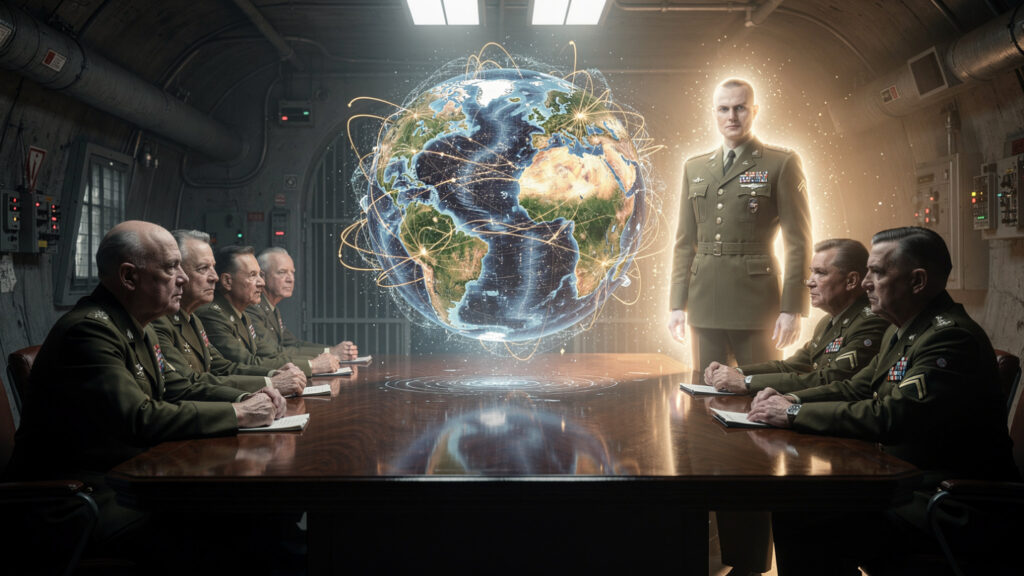
The crucial problem is chronology. These treaty details are not contained in the contemporary Eisenhower appointment record, not contained in the April 1954 Light letter, and not supported by a contemporaneous government document. They belong to a later layer of UFO mythology. William Cooper’s 1991 Behold a Pale Horse became particularly influential in spreading the idea of a government-alien agreement involving human abductions and technological exchange. Later writers, including Michael Salla and others, rearranged and expanded the material into competing versions of the supposed negotiations. Even within the UFO literature, the location, sequence, extraterrestrial groups, treaty name, and terms have varied substantially.
That instability is revealing. A genuine treaty normally becomes more precise as additional archival evidence appears. This story has largely done the opposite: its details multiply as the documentary distance from 1954 increases. The further the narrative moves from contemporary records, the more elaborate the alleged agreement becomes.
The Corso Story Is Another Layer, Not Independent Confirmation
Philip J. Corso’s The Day After Roswell, published in 1997, is sometimes recruited as additional support because Corso was a genuine Army officer with a real military career. That credential is real. So is the book. Its extraordinary claim, that Corso personally handled recovered extraterrestrial technology and helped distribute it to American contractors, does not follow from either fact.
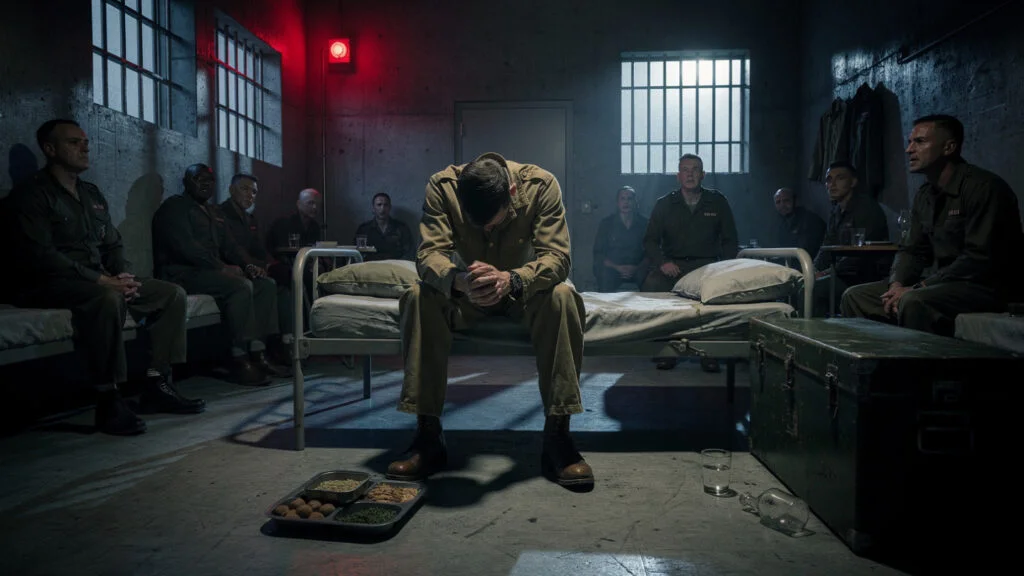
Corso’s account has been challenged on both documentary and technological grounds. Critics identified numerous factual errors in his memoir, including mistakes concerning military organizations, dates, and weapons systems. More importantly, the technologies he associated with extraterrestrial debris have well-documented development histories independent of Roswell. The transistor was demonstrated at Bell Labs in 1947, the first working laser was demonstrated by Theodore Maiman in 1960, low-loss optical fiber was developed through documented research culminating in the early 1970s, and Stephanie Kwolek’s work that produced Kevlar began in the 1960s. Whatever one thinks about Roswell itself, those histories do not provide a clean evidentiary path from a crashed craft to American industry.
Corso therefore cannot serve as independent confirmation of the Eisenhower story. His account was published more than four decades after the alleged Muroc meeting and concerns a different set of claims about Roswell and technology transfer. Connecting the two simply because both belong to the same UFO mythology creates an appearance of corroboration without actually producing independent evidence.
MJ-12 Does Not Repair the Missing Evidence
The same problem appears with the alleged MJ-12 documents. These papers surfaced in the 1980s and purported to describe a secret committee created to manage the extraterrestrial problem. They are sometimes presented as the bureaucratic backbone of the Eisenhower-era contact story. But the National Archives conducted extensive searches for references to MJ-12 in Air Force, Joint Chiefs, National Security Council, Truman Library, and Eisenhower Library holdings and found no supporting record. The Archives also identified specific problems with one purported MJ-12 memorandum, including filing anomalies and the appearance of a security marking that did not come into use at the National Security Council until the Nixon administration.
There is an even more specific forensic problem. Philip J. Klass and questioned-document examiner Peter Tytell argued that the signature attributed to President Harry Truman on one of the supposed MJ-12 documents had been copied from an authentic Truman document, with the same distinctive accidental mark appearing in both signatures. Whether one accepts every detail of the forensic history or not, the broader archival problem is already severe: the National Archives found no independent documentary trail establishing MJ-12 as the government organization the papers claim it was.
The Muroc Base Was Real. That Doesn’t Put Eisenhower There.
One of the easiest ways for the legend to become persuasive is through the substitution of proximity for evidence. Muroc Army Air Field was real. It was a major American test facility, later renamed Edwards Air Force Base. The U.S. military really was testing highly classified aircraft and weapons in the California desert. Eisenhower really was president during an era of intense secrecy, nuclear competition, and rapidly advancing aviation technology. Those facts make the setting plausible for a secret meeting in the abstract. They do not establish that this particular meeting occurred.
The same caution applies to claims that the base was closed or restricted around the dates in question. A highly secure military test facility operating under Cold War conditions would hardly be expected to function as an open public airport, and restrictions on access are not evidence that extraterrestrial visitors had arrived. To turn a security measure into evidence of alien diplomacy requires an additional assumption that the record itself does not supply.
What the Evidence Actually Lets Us Say
Several different propositions are often compressed into the single sentence “Eisenhower met the aliens.” They should be separated. We can establish that Eisenhower was in Palm Springs in February 1954. We can establish that he disappeared from public view for a period on the evening of February 20 and that the press became sufficiently alarmed for a false death report to circulate. We can establish from the presidential appointment book that the White House record attributed the absence to a broken dental cap and a visit to a Palm Springs dentist. We can establish that contemporary Time reporting described the dental incident. And we can establish that, by April 1954, Gerald Light was circulating a claim that Eisenhower had secretly gone to Muroc and encountered non-human beings.
What we cannot establish from the available evidence is that Eisenhower actually traveled to Muroc that night. We cannot establish that he met an extraterrestrial delegation. We cannot establish that two competing alien groups offered different treaties. We cannot establish that Eisenhower signed a Greada Treaty. We cannot establish that the United States granted extraterrestrial beings permission to abduct humans. And we cannot use the later Corso, Cooper, Lear, Burisch, or MJ-12 narratives as independent confirmation simply because they repeat elements of the same story.
A Smaller Mystery, and a More Interesting One
The most interesting part of the Eisenhower story is not that the president supposedly met aliens. It is that an ordinary historical event contained just enough confusion to become an ideal vessel for a much larger myth. A president briefly vanished from public view. Reporters panicked. A false death report escaped onto the wires. A damaged tooth really did require attention. The treating dentist later died, leaving no surviving office record that could satisfy every skeptic. Then, within weeks, an occultist published a letter claiming the president had secretly visited a military base and encountered non-human beings. Decades later, other writers added treaties, alien factions, secret committees, abductions, technology transfers, and reverse-engineering programs.
That is how historical mythology grows. The first layer does not have to be invented. It only has to be unusual enough to leave a question behind.
Eisenhower really disappeared from public view that night. The appointment book really records the broken tooth. The press really did lose track of the president. The Gerald Light letter really was written. The UFO literature really did build an extraordinary story around those facts.
But those are not four pieces of one puzzle. They are four different levels of evidence.
The historical record gives us a president, a damaged tooth, a confused press corps, and a contemporary record of a dental visit. The UFO record gives us a later claim that something else happened. The treaty literature gives us a still later mythology constructed around that claim. And the missing piece, the one thing that would transform the story from folklore into history, is exactly what has never appeared: an independent contemporary record showing that Eisenhower actually went to Muroc and met anyone who was not human.
Until that record exists, the honest conclusion is not that extraterrestrial contact has been disproved. It is narrower, and much harder to sensationalize: Eisenhower’s strange night is documented. The alien meeting is not.