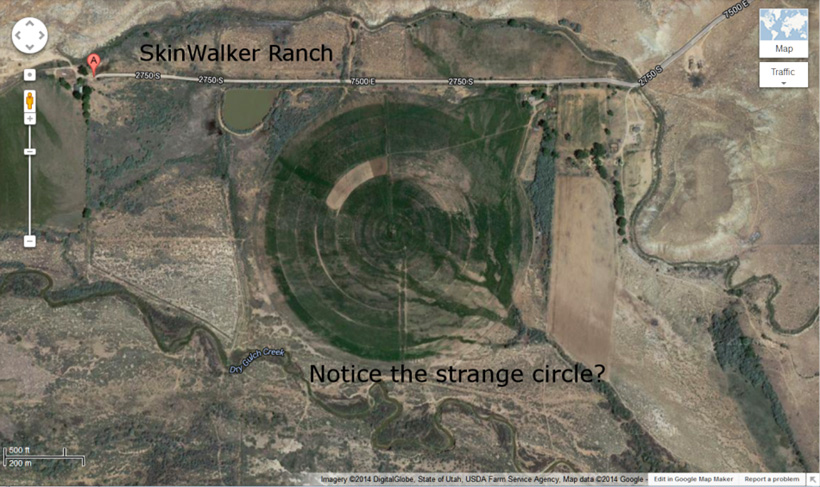
Skinwalker Ranch has accumulated nearly three decades of folklore, television mythology, government rumors, and internet embellishment. The ownership history, however, is unusually easy to verify, traceable by name: the Sherman family from 1994 to 1996, aerospace billionaire Robert Bigelow from 1996 to 2016, and Utah real estate developer Brandon Fugal since 2016, first through an anonymous shell company, revealed publicly only in 2020.
That’s where the story is strongest, not because it explains the mystery, but because it’s one of the few parts everyone can independently check.
The Sherman Testimony Has a Named, Verifiable Source
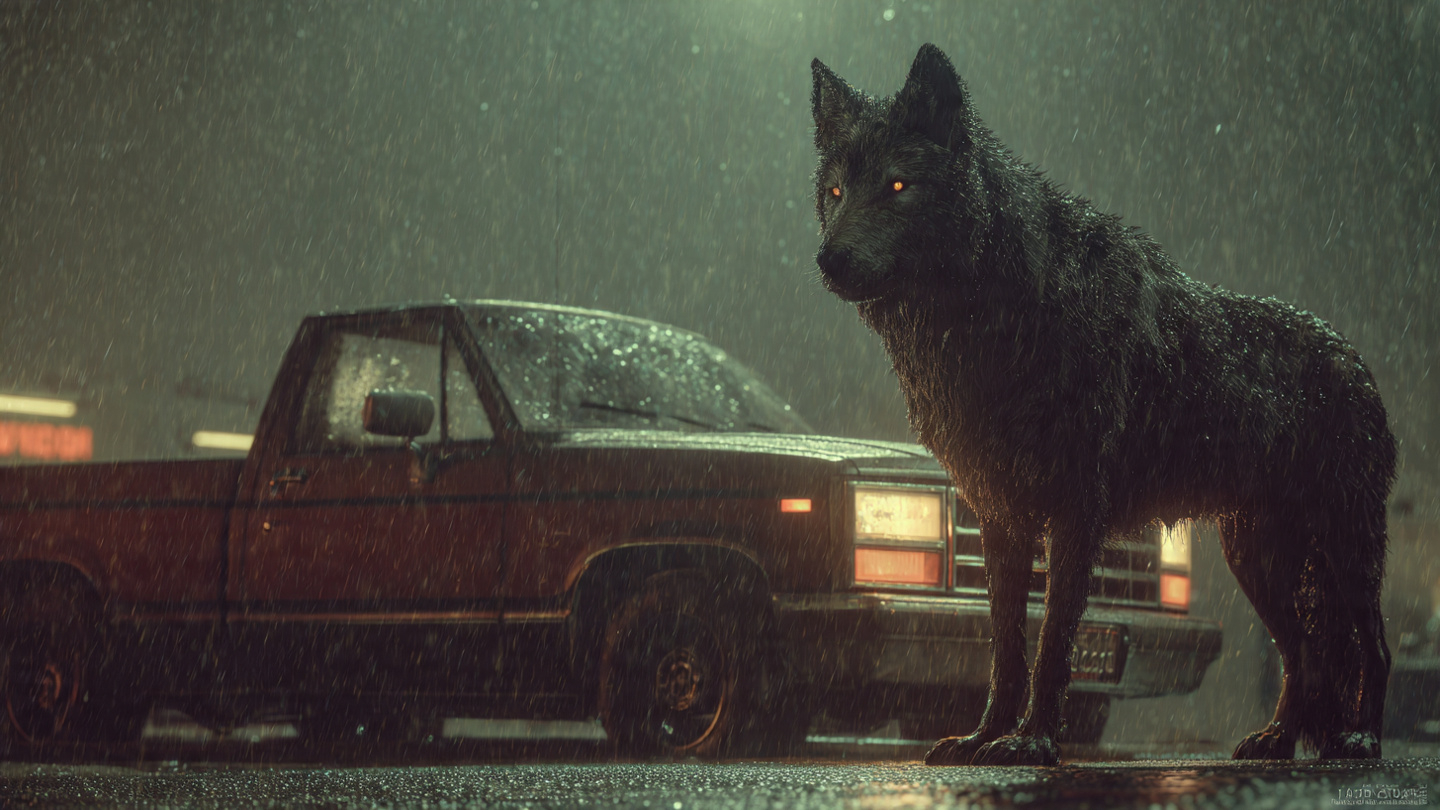
Terry and Gwen Sherman genuinely purchased the roughly 512-acre property in 1994 hoping to run cattle, and genuinely sold it to Bigelow just two years later at what by most accounts was a low point of exhaustion. Their specific reported encounters, including the wolf that reportedly shrugged off multiple gunshots before its tracks vanished in open mud, and the cattle mutilations with unusually clean, bloodless incisions, aren’t invented for this retelling. They’re the Shermans’ own account, first documented in detail in the 2005 book Hunt for the Skinwalker, co-written by Colm Kelleher, a biochemist with a genuine PhD who spent hundreds of nights investigating the property, and George Knapp, a working investigative journalist who was the only outside press granted access to the subsequent research team’s fieldwork. The book itself is notably careful to present the investigators’ own uncertainty rather than firm conclusions, testimony worth taking seriously as testimony, sourced to named people willing to put their names on it, while remaining exactly that: reported experience rather than independently verified fact. Every extraordinary claim in the book ultimately traces back to eyewitness testimony rather than independently preserved physical evidence, an important distinction that neither dismisses nor proves what the Shermans believed they experienced.
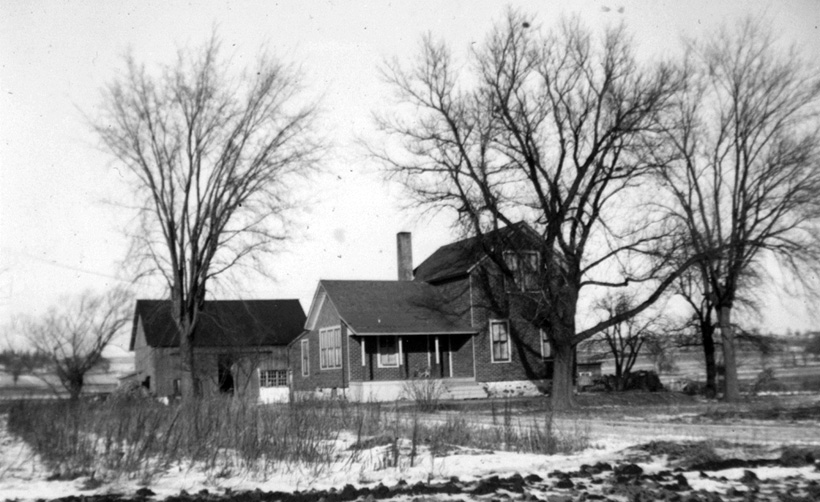
The full range of what the Shermans reported goes well beyond the wolf and the mutilations, and the completeness of the list matters for understanding what kind of testimony this actually is. Across their two years on the property, the family described orange and blue orbs of light moving with what they called impossible maneuverability, cattle that vanished entirely rather than turning up dead, disembodied voices, poltergeist-style disturbances inside the house itself, and repeated equipment failures, cameras and electronics malfunctioning at moments the family considered significant. Kelleher and Knapp’s book catalogs close to 100 separate incidents across the family’s tenure. Worth noting directly: “Sherman” is a pseudonym the book’s authors used to protect the family’s privacy, not their actual surname. Independent of the book, physiologist Frank Salisbury, who conducted his own lengthy phone interviews with the real rancher for a chapter in his 2010 book The Utah UFO Display, reported that the man told him directly that parts of Hunt for the Skinwalker only “resembled” his actual experiences rather than reproducing them precisely. That’s a rare instance of the primary source himself, on record with an independent researcher, qualifying the popular retelling of his own story, worth weighing alongside the testimony itself rather than treating the book as a verbatim transcript.

Why Bigelow Founded NIDS, and Why It Went Quiet
Bigelow, who built his fortune through the Budget Suites of America hotel chain before founding Bigelow Aerospace, purchased the ranch for roughly $200,000 in 1996 specifically after hearing the Shermans’ account, and founded the National Institute for Discovery Science that same year, staffing it with four PhD scientists and a seventeen-member Science Advisory Board drawn from academia, industry, the Department of Energy, Navy nuclear engineering, and former Apollo astronauts. Two names on that board carry real weight in the field: astronomer Jacques Vallée and physicist Hal Puthoff, both established researchers with independent, decades-long careers studying anomalous phenomena before NIDS existed. Deputy Administrator Colm Kelleher, who led the ranch investigation directly, was explicit about the institute’s scope: “We don’t study aliens, we study anomalies. They’re the same thing in a lot of people’s minds, but not in our minds.” NIDS deployed cameras, night-vision equipment, and sensors at the property for years, but published almost nothing of what it recorded, a deliberate choice, according to researchers connected to the organization, meant to avoid premature media sensationalism before findings could be verified. That secrecy became its own source of controversy, feeding suspicion in both directions: skeptics read the silence as evidence there was nothing worth publishing, while believers read it as evidence of a cover-up. Bigelow closed NIDS on October 20, 2004, stating the organization hadn’t needed to conduct major investigative work for over two and a half years and had reduced its staff accordingly, a mundane administrative explanation for what many retellings frame as an abrupt, mysterious end.
How Skinwalker Ranch Actually Reached the Pentagon
The path from a Utah cattle ranch to a Defense Intelligence Agency contract is genuinely documented, and it runs directly through Bigelow’s personal relationship with Nevada Senator Harry Reid. Reid attended a NIDS board meeting in August 1996, where Jacques Vallée gave a presentation. By his own later account, Reid became genuinely fascinated by the subject that day, more than a decade before AAWSAP existed. In 2007, Bigelow connected a senior DIA official, later identified as James Lacatski, with Reid, and the following year Reid worked with Senators Ted Stevens and Daniel Inouye to insert $22 million into a supplemental appropriations bill for what became the Advanced Aerospace Weapon System Applications Program, AAWSAP, not the more commonly cited Advanced Aerospace Threat Identification Program, AATIP, a related but separate, later Pentagon effort that Luis Elizondo ran on a smaller scale after AAWSAP wound down. The August 2008 solicitation deliberately avoided the words “flying saucer” or “UFO,” framing the work instead as research into breakthrough aerospace technology, and Bigelow’s company was the sole bidder, winning an initial $10 million contract that required him to provide a facility cleared for top-secret work. Reid has stated flatly that he didn’t influence the selection process, though Steven Aftergood of the Federation of American Scientists has separately described the entire contracting process as “irregular from start to finish.” AAWSAP was never solely about UFOs: declassified titles from its 38 funded research reports, released via a 2019 FOIA request, cover subjects ranging from wormhole physics to invisibility cloaking to advanced propulsion concepts, alongside the reports specifically addressing the ranch. Funding continued through fiscal year 2012, ending after an internal review found the reports “of limited value” to the agency.
James Lacatski, the DIA program manager who first connected with Bigelow, later co-authored the 2021 book Skinwalkers at the Pentagon with George Knapp and Colm Kelleher, laying out an insider’s account of how reports from the ranch specifically helped motivate the government’s broader interest in the subject. Bigelow himself, asked directly whether any conclusions ever emerged from decades of investigation, said plainly: “The main mysteries at Skinwalker were never solved.”
The Actual Cultural Tradition Behind the Name
This deserves more precision than the name usually gets. In Diné (Navajo) tradition, the figure English-speakers call a skinwalker is properly yee naaldlooshii, meaning roughly “with it, he goes on all fours,” and it describes a specific kind of human witch, someone who has deliberately broken sacred taboo, sometimes described as harming a close relative, to gain the ability to take animal form. It isn’t a species of monster in the way popular horror treatments suggest. It’s a human being who has crossed a serious spiritual line. The subject carries a genuine, documented taboo within Diné communities, many people avoid discussing it openly, including with each other, based on a belief that naming or speaking of it can draw its attention. That reticence is precisely why detailed outside accounts remain sparse and why much of what circulates online drifts from the actual tradition into generic horror imagery.

A detail regularly left out matters here: the ranch itself sits near, not on, Navajo land. It borders the Uintah and Ouray Reservation, which is Ute territory, and mainstream historical coverage has specifically noted that skinwalkers, as a belief, don’t feature in Ute religious tradition in the same way they do in Diné culture. The name was applied to the property by outsiders drawing on a neighboring nation’s specific, sacred tradition rather than reflecting an established local name already attached to that particular ground. That’s worth sitting with honestly: the label itself is a piece of cultural borrowing layered onto the ranch’s modern reputation, not evidence of a deep, site-specific indigenous designation stretching back through unbroken tradition.
Why the Ranch Became Famous in the First Place

This matters for reading everything that follows. Before George Knapp’s reporting and Hunt for the Skinwalker’s 2005 publication, the property was largely unknown outside northeastern Utah, an obscure cattle ranch with a local reputation and little more. The book transformed it into one of the world’s most recognizable paranormal locations, later amplified enormously by television coverage and, eventually, a dedicated History Channel series. That history matters because every investigation conducted after 2005 now occurs on a property whose reputation precedes it, making expectation, folklore, tourism, and genuine observation increasingly difficult to disentangle from each other. Evidence gathered before the ranch became famous and evidence gathered after are not, in an important sense, gathered under the same conditions.
The Current Owner Isn’t Anonymous Anymore

Bigelow sold the property in 2016 to a buyer who deliberately stayed anonymous for four years, purchasing through a Delaware-registered shell company called Adamantium Real Estate LLC. That owner is Brandon Fugal, chairman of Colliers International’s Utah operations and a prominent Intermountain West real estate figure, who confirmed his identity publicly in 2020 and subsequently partnered with the History Channel on The Secret of Skinwalker Ranch, bringing far more public visibility to the property’s ongoing investigation than Bigelow’s deliberately closed-door era ever had. Multiple investigators across different ownership periods have reported equipment failures or missed recordings during claimed anomalous events. Whether those failures reflect coincidence, technical limitations, observer bias, or something genuinely unusual remains unresolved.
The Ute and Navajo Tradition Behind the Name

The skin-walker itself comes from documented Navajo tradition, a malevolent figure in Diné belief capable of transforming into animal form, a serious subject within that tradition rather than a casual folklore label. The ranch sits adjacent to the Uintah and Ouray Indian Reservation, and its name reflects genuine, longstanding regional association with the concept, not an invented marketing hook. That’s worth stating plainly and with the appropriate respect, distinct from the specific, unverifiable claim that any particular tribe formally avoided the exact parcel of land for a precise number of generations, a detail that circulates widely but doesn’t trace to any documented ethnographic source.
The Skeptical Case Is Also Real
Serious critics have engaged with this material directly, by name, and their objections deserve the same weight as the testimony itself. Robert Sheaffer, a longtime UFO skeptic and writer, has argued plainly that “the ‘phenomenon’ at Skinwalker is almost certainly illusory,” noting that despite decades of investigation and millions of dollars spent, “very little seems to have happened” in terms of verifiable results. Magician and professional skeptic James Randi once gave Bigelow’s ranch research a tongue-in-cheek Pigasus Award for what he characterized as an especially unproductive paranormal study. Ufologist Barry Greenwood, writing in the Journal of Scientific Exploration in 2023, was more blunt still, finding no documentary evidence of anything paranormal across decades of investigation and describing the ranch’s history as one of an operation “always in the business of selling belief and hope.”

The specific critique of Hunt for the Skinwalker deserves its own weight, separate from general skepticism about the ranch. Critics point to a structural problem running through the entire book: every dramatic incident is recorded after the fact, filtered through witness memory and family recollection, with no physical specimen, recording, or independently chain-of-custody evidence surviving from any single event. That absence matters specifically because physical evidence is the one thing that would let independent researchers evaluate a claim without relying on the same witnesses each time. None of this means the Shermans, or the researchers who followed them, invented their experiences. It means the record consists entirely of anecdote, however sincere, and anecdote carries a different evidentiary weight than a preserved sample or an unedited recording would. There’s also a documented psychological dimension worth taking seriously on its own terms: once a location acquires a reputation for anomalous activity, particularly one tied to a genuinely feared cultural figure like the skinwalker, subsequent witnesses arrive already primed to interpret ordinary sounds, lights, and animal behavior through that lens, a well-studied effect in the psychology of expectation that doesn’t require anyone to be lying.
Worth noting too: the “skinwalker” name itself wasn’t an ancient designation for this specific parcel of land. By several accounts, Bigelow applied it to the property himself in 1996, after purchasing it, drawing on the broader regional tradition rather than an established local name already attached to that ground. Taken together, these critics aren’t arguing that the Shermans fabricated their experiences so much as that extraordinary interpretations have consistently outrun the available evidence. That’s a different criticism, and an important one.
What’s Actually Documented Here
None of the genuine documentation requires embellishment to remain remarkable. The Shermans are named people whose specific reported testimony was recorded carefully by a credentialed researcher and a working journalist. Bigelow’s ownership, his institute, and his own on-record admission that nothing was ever conclusively solved are all matters of public record. The government’s actual interest, correctly named as AAWSAP rather than conflated with AATIP, produced a former official’s book-length account. Fugal’s ownership stopped being a mystery in 2020 and is now a matter of public television. What remains genuinely unresolved isn’t the paper trail, it’s whatever the Shermans, the NIDS researchers, and the DIA-funded investigators were actually documenting on the ground, a genuinely still-open question that the property’s well-verified ownership history doesn’t answer either way.
What Survives the Strip-Down

Strip away the folklore, the television mythology, and the internet embellishment, and Skinwalker Ranch still leaves an unusual residue: ownership by named people willing to discuss extraordinary experiences on the record, years of privately funded investigation by a credentialed biochemist and a working journalist, genuine Defense Intelligence Agency interest, correctly named AAWSAP, backed by $22 million in confirmed federal funding, and named witnesses who have maintained broadly consistent accounts across three decades.
None of those facts establish portals, extraterrestrials, or interdimensional entities. They do establish something rarer than many internet legends ever achieve: a well-documented history of intelligent, serious people repeatedly concluding that something on this property deserved investigation, even when they couldn’t agree on what it was.