



On January 29, 1934, the Los Angeles Times published a story that most of its readers treated as entertainment.
The story described a mining engineer named W. Warren Shufelt who had obtained permission from the Los Angeles City Council to dig a 350-foot shaft through the bedrock beneath downtown Los Angeles in search of an ancient underground city whose existence had been communicated to him by a Hopi chief named Little Green Leaf. Shufelt claimed to have mapped the underground city using a device he called a radio x-ray, a modified dowsing rod that he said could detect gold and map subterranean structures through solid rock. He claimed the city was shaped like a giant lizard, with its head near what is now Dodger Stadium and its tail extending below the Central Library.
The Times ran the story on page one.
The City Council had authorized the excavation more than a year earlier. The shaft at 518 North Hill Street in the northern edge of the financial district had been dug. Whatever combination of civic curiosity, personal credulity, and genuine institutional interest motivated the city council’s authorization, an actual hole had been put in the actual ground of downtown Los Angeles on the basis of a Hopi legend transmitted through an amateur geologist’s dowsing instrument.
Shortly after the Times story appeared, the project was abandoned without explanation. Shufelt and his associates disappeared from the available historical record. The shaft was presumably filled. No gold tablets, no underground chambers, no evidence of the lizard people civilization was reported.
This is the historical record of the Shufelt excavation as far as it goes. It ends without resolution, which is neither confirmation nor refutation of the story he was following.
What was actually told to Shufelt is the element of the story that deserves development beyond the 1934 newspaper context.
The Hopi Lizard People Story
The Hopi people of northeastern Arizona are one of the most extensively recorded Native American nations in terms of the preservation and study of what has been passed down orally. Their cosmological framework, including the kiva as the architectural representation of the underground world from which humanity emerged, the sipapu as the point of emergence, and the complex ceremonial calendar organized around the emergence narrative, appears in the ethnographic record through the fieldwork of researchers including Alexander Stephen, whose 1930s Hopi journals are the most detailed contemporary record of Hopi ceremonial life, and Mischa Titiev, whose 1944 study of Old Oraibi remains a standard reference.
What was told to Shufelt about the lizard people, passed to him through Little Green Leaf and subsequently described in the Times article, incorporates elements that connect to the broader library framework of ancient catastrophe accounts and underground civilization stories.
The catastrophic meteor shower dated to approximately 3,000 BCE in this account’s chronology is specific: the American Southwest was struck by a major meteoritic event whose most visible remaining physical evidence is Barringer Crater near Winslow, Arizona, approximately 50,000 years old in the geological record rather than this account’s 5,000 year timeframe. Whether what was passed down preserves memory of the Barringer impact event with a significantly compressed chronology, or whether it references a different, less physically dramatic but more recent meteoritic event in the region, is a question this chronological claim raises.
The response attributed to the lizard people, building thirteen underground settlements along the Pacific coast to shelter from future celestial catastrophes, is the element that connects this account most directly to the Four Independent Ancient Traditions piece in this library, which covers the cross-cultural pattern of underground civilizations recorded across Hopi, Cherokee, Lakota, and other indigenous sources, and to the Inner Earth cluster’s broader framework.
Whether the thirteen Pacific coast settlements represent geographic locations preserved with accuracy, or represent a cosmological number whose significance in Hopi numerology is separate from any literal geographic claim, is a question that the surrounding context does not clearly resolve. Thirteen is not a standard cosmological number within recorded Hopi ceremonial practice, which more typically uses four, six, and nine as its significant numbers corresponding to the four directions, six directions including above and below, and the nine worlds of the Hopi cosmological hierarchy.
The golden tablets containing the history of the tribe, the origin of humanity, and the history of the world since creation are the element that connects this story most directly to the broader ancient knowledge preservation framework. Sacred tablets held by the Hopi are independently recorded in the ethnographic record: the Hopi are known to possess sacred tablets called tiihu or other terms depending on the ceremonial context, whose contents are restricted to initiated clan members and whose existence is acknowledged but whose content is not publicly disclosed.
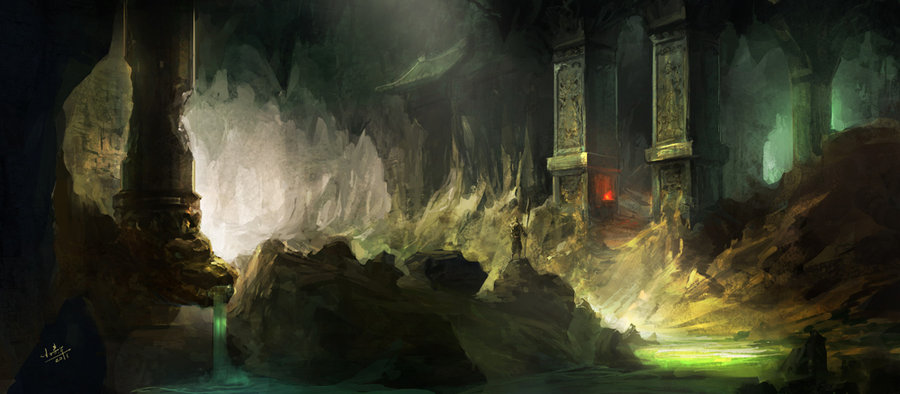
Whether the underground golden tablets associated with the lizard people’s buried city are connected to the sacred tablets the Hopi are known to hold today, or represent a separate legendary element, is not established in the available ethnographic literature.
The Chemical Solution Technology
The technological detail in what Shufelt reported is the most interesting single element for the alternative archaeology framework: the lizard people used a chemical solution that melted solid bedrock to drill their tunnels.
This technological description, a chemical boring agent capable of dissolving rock without mechanical cutting, is not a technology available in conventional Hopi material culture. The Hopi are not known to have had chemical processes capable of dissolving basalt or limestone. Whether this detail represents a genuine technological memory preserved by word of mouth, a mythological elaboration of the underground excavation process using conventional hand tools that would be dramatically different from contemporary hard-rock mining, or an element introduced somewhere in the chain that connected this story to Shufelt, is a question the available record does not resolve.
Chemical boring of rock is, however, a genuine technology: acid-based chemical processes can dissolve limestone and other sedimentary rock, which is the dominant geology of the Los Angeles basin. Whether a pre-Columbian population in the American Southwest possessed acid-based boring capability is not established in the archaeological record, but the technological description in this account is worth noting as a detail that goes beyond the mythological elaboration of conventional excavation.
The ventilation tunnel detail is the second technological claim that deserves examination: what was reported to Shufelt describes tunnels extending westward to open into the Pacific Ocean. Whether this represents a functional ventilation design for an underground settlement, a mythological connection between the underground world and the sea that has cosmological rather than engineering significance, or an accurate physical description of tunnel infrastructure that the geology of the Los Angeles basin might accommodate, is not established.
The Pacific Ocean is approximately 30 kilometers from downtown Los Angeles in a straight line. Whether natural karst cave systems, dissolved cavities in the sedimentary geology of the basin, or artificial tunnels could connect the downtown area to the ocean at the depths described is a question that the geology of the Los Angeles basin would allow to be evaluated. The basin’s sedimentary geology, primarily marine and non-marine sediments deposited over the past 25 million years, does not naturally produce the karst cave systems that limestone geology would, but the tectonic and sedimentary history of the basin has produced known underground water systems and oil-bearing formations whose extent has been commercially mapped.
The Tunnels That Were Found
The piece’s brief mention that unexplained tunnels have been discovered in downtown Los Angeles, subsequently attributed to 19th-century smuggling operations concealing Chinese immigrants, is the physical evidence that provides the most interesting context for these claims.
Downtown Los Angeles’s known underground infrastructure includes not only the modern utility tunnels and subway systems but a complex of 19th-century tunnels whose origin and extent has been studied by local historians. The Garnier Building tunnels, the tunnels beneath the former Chinatown district, and various other recorded underground passages date to the period when Chinese immigrant workers were subject to the Chinese Exclusion Act of 1882 and underground movement through the city provided a degree of security from Immigration Bureau raids.
Whether these tunnels represent the entire known underground infrastructure of downtown Los Angeles, or whether older and less thoroughly recorded tunnels exist whose origin predates the 19th-century Chinese smuggling attribution, is a question that the limited systematic archaeological survey of the downtown subsurface geology has not fully addressed.
The Los Angeles basin geology, with its known oil-bearing formations, its known underground water systems, and its complex Quaternary sedimentary record, has been extensively mapped for commercial purposes but not systematically surveyed for archaeological purposes at the depths Shufelt described.
Edith Robinson and the Independent Confirmation
The piece’s most interesting overlooked detail is the one it buries in the final paragraphs: Edith Elden Robinson’s December 22, 1933 vision, published in the Journal of the American Society for Psychic Research, described a great city in gigantic tunnels stretching as far as the seashore built by a missing race to protect themselves from danger.
The chronological relationship to the Shufelt excavation is significant: Robinson’s published vision appeared five weeks before Shufelt’s story was published in the Times. Whether Robinson was aware of Shufelt’s project and what he had been told before her vision, or whether her independently published description matches those elements coincidentally, is a question whose answer would require access to the circumstances of her vision’s publication in the ASPR journal.
The ASPR journal is a recorded publication of a serious research organization whose membership in 1933 included William James and other respected academic figures. The publication of Robinson’s vision in this journal rather than in popular media represents an evidentiary context whose credibility is at a different level from the Los Angeles Times story.
Whether the independent correspondence between Robinson’s clairvoyant description and what Shufelt had been told represents: a genuine non-local consciousness access to the same underlying information about a real ancient underground city, a cultural transmission of the same story through channels not recorded in the available record, or a coincidental match between generic underground city imagery and what had been passed down by word of mouth, is the question that the independent publication in a serious research journal makes worth examining rather than dismissing.
The Broader Context
The Hopi lizard people underground city story exists within the broader framework of indigenous American underground civilization accounts that this library has developed across multiple dedicated pieces. The Inner Earth piece covers four independent ancient accounts describing civilizations below the Earth. The Paiute Shin-Au-Av account describes serpent people who created an underground road network beneath the American West. The Mount Shasta piece covers the Lemurian underground belief associated with the same mountain that Hopi cosmology associates with the emergence point of humanity.
Whether these independent accounts reflect convergent mythological elaboration of the universal human theme of subterranean refuge, genuine historical memory of underground civilizations preserved across thousands of years of oral transmission, or something between these frameworks, is the question that their internal consistency and their geographic concentration in the American West makes genuinely interesting.
The detail of a catastrophic meteor shower triggering the construction of underground settlements connects to the broader catastrophe accounts recorded in the Prophecy and Cyclical Time cluster. The date of approximately 3,000 BCE given here corresponds to a period of significant archaeological and paleoclimatological change across multiple regions recorded in the conventional record.
Shufelt found nothing below downtown Los Angeles. The shaft was filled and forgotten. The City Council’s authorization expired without explanation and without discovery.
But what sent him digging existed before the 1934 Los Angeles Times story and exists independently of Shufelt’s failed excavation. Little Green Leaf communicated an account of locations, technology, and knowledge preserved underground. Whether that account preserves genuine historical memory or is mythological elaboration is not answered by the failure of a 1934 amateur excavation.
The lizard people are still in the story. The story is still in the ethnographic record. The tunnels under downtown Los Angeles are still there.
Whatever Shufelt was looking for, what directed his search did not disappear when his shaft hit bedrock and found nothing.