



The lights were bright enough to read under.
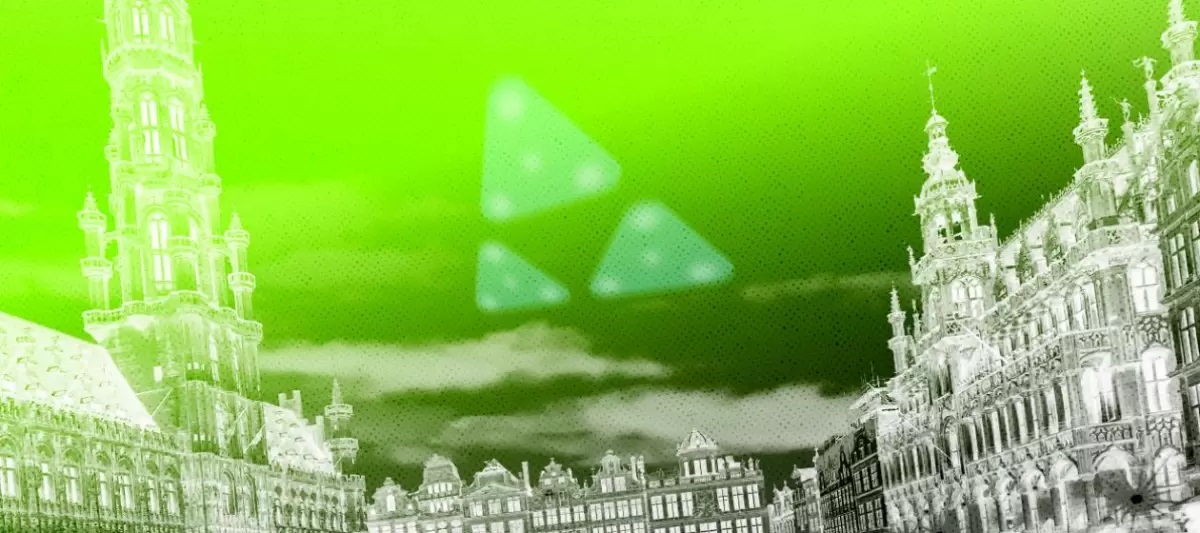
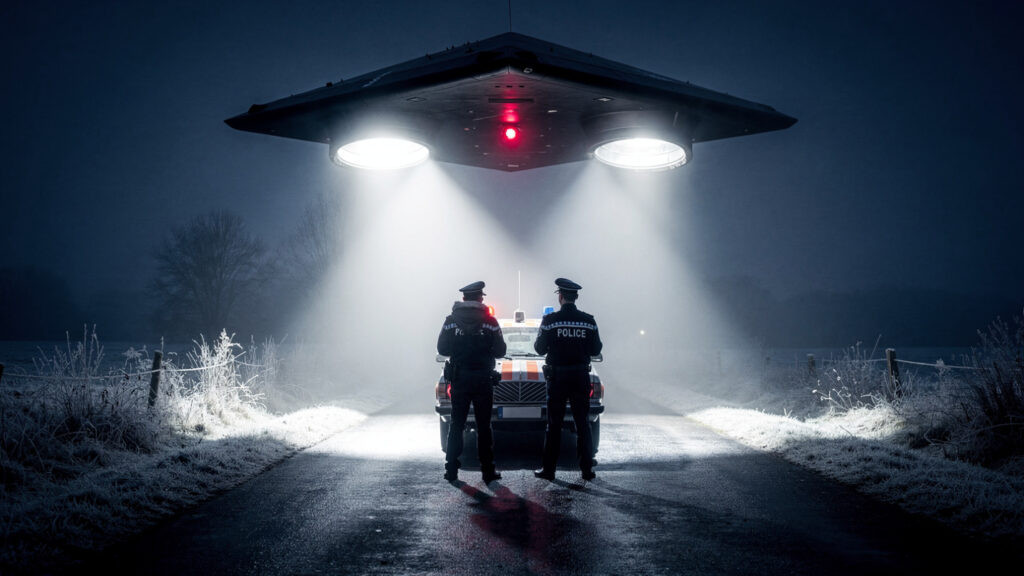
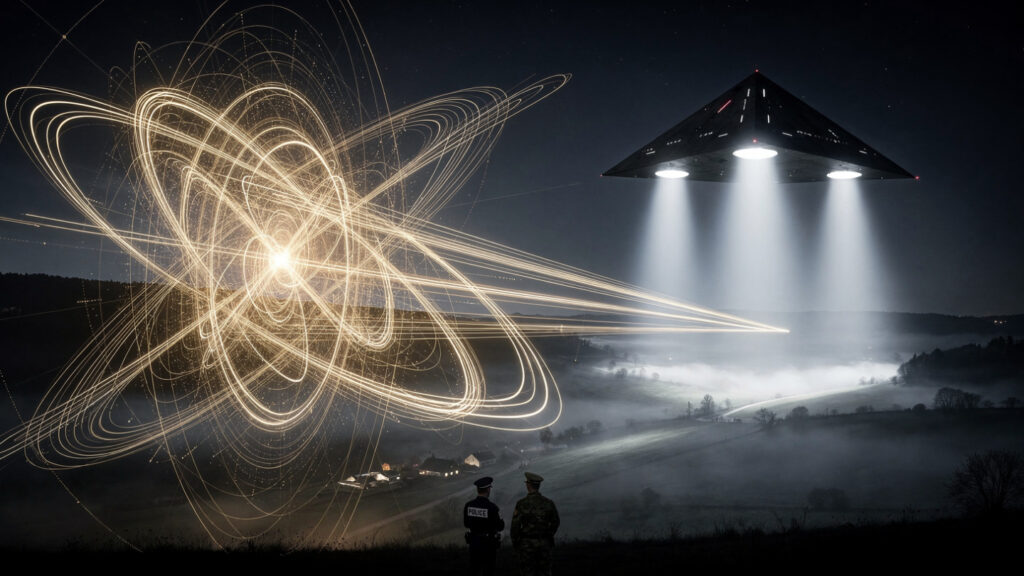
Heinrich Nicoll, a Belgian police officer on routine patrol near the city of Eupen on the night of November 29, 1989, described the object he and his partner Hubert Von Montigny were watching as carrying three huge spotlights pointed at the floor and a red light flashing at the center. The object was triangular. It made no sound. It floated in the air above them while they called their dispatcher to report what they were seeing.
By the time that night ended, at least thirty separate witness groups and three pairs of police officers had independently reported the same object or similar objects over Belgian territory. The reports described the same characteristics consistently across independent accounts from witnesses with no prior contact with each other: triangular form, three bright lights at the corners, single central light, silent flight, low altitude, and slow speed inconsistent with any conventional aircraft.
This was not the end of the Belgian wave. It was the beginning. For the next five months, through April 1990, an estimated 2,000 sightings were reported across Belgium by civilians, military personnel, and law enforcement officers. The Belgian Air Force conducted an official investigation. The Belgian military cooperated with civilian researchers. The United States Embassy in Brussels confirmed in a memo, later made public, that no American stealth aircraft was operating in Belgian airspace during the period in question.
The Belgian wave is the most institutionally recorded UAP case cluster in European history, and the event at its center, the F-16 radar pursuit of March 30, 1990, is one of the most specifically recorded military UAP encounters in the global record.
General De Brouwer and the Institutional Response
Wilfried De Brouwer was the Chief of Operations of the Belgian Air Staff during the wave period, subsequently promoted to Major General. His institutional standing is the credential that makes his recorded account of the Belgian wave the most significant single testimony in the case.
His initial assumption, recorded in his account published in Leslie Kean’s 2010 book UFOs: Generals, Pilots, and Government Officials Go on the Record, was that the American military was testing experimental stealth aircraft in Belgian airspace without informing NATO allies. This was the most institutionally plausible explanation for a triangular aircraft with advanced flight characteristics operating over Belgian territory: the B-2 stealth bomber had made its first flight in July 1989, and advanced stealth technology was in active development in the American military-industrial complex.
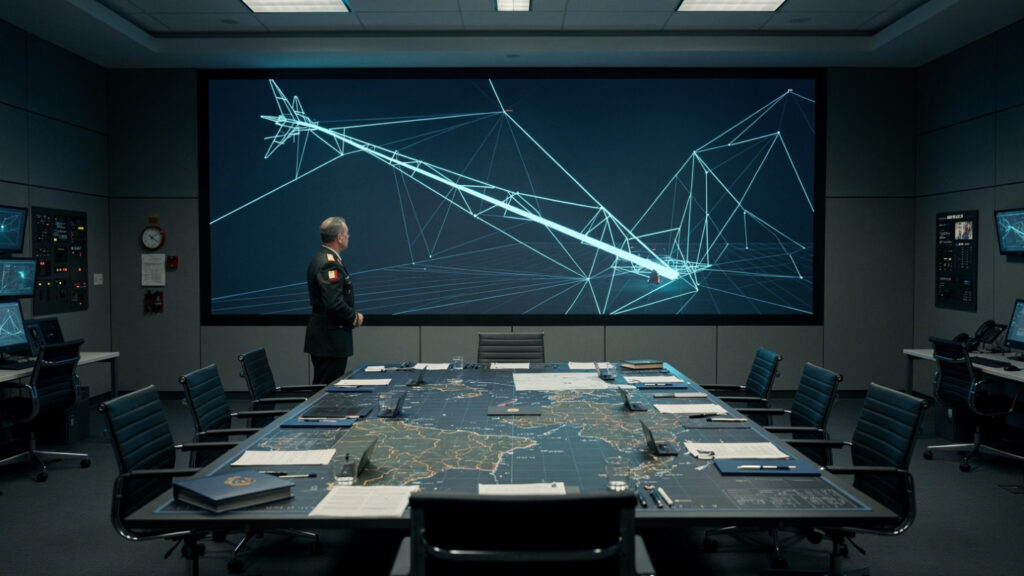
De Brouwer went so far as to register formal inquiries with the US Embassy in Brussels about American stealth operations in Belgian airspace. The response was a memo recorded in Kean’s research, dryly titled Belgium and the UFO Subject, confirming that no USAF stealth aircraft was operating in the area during the periods in question.
This confirmation is the institutional element that eliminates the most parsimonious conventional explanation for the Belgian wave: if the Americans had been testing stealth aircraft over Belgium and wished to avoid acknowledging it, the appropriate response to De Brouwer’s inquiry would have been a classified acknowledgment through military channels rather than a public denial through embassy correspondence. The public denial, combined with the absence of any subsequent acknowledgment of classified American operations in the region, establishes the no-American-stealth-aircraft conclusion as credible rather than as a simple cover story.
De Brouwer’s decision to coordinate with the Belgian Society for the Study of Space Phenomena, whose civilian researchers were conducting parallel investigations of the wave’s sightings, represents the most extensive institutional cooperation between a NATO military and a civilian UAP research organization in the recorded history of the field. The cooperation produced the two-volume SOBEPS report, whose content, more than 2,000 recorded witness accounts analyzed against the available radar and physical evidence, is the most comprehensive single-country UAP investigation report in European history.
De Brouwer’s conclusion, recorded in his published account: the observations during the Belgian wave were not caused by mass hysteria. The witnesses were sincere and honest. They did not know each other. They remain prepared to confirm their experiences.
The March 30 Pursuit
The event that makes the Belgian wave most significant in the global UAP record is the F-16 radar pursuit of March 30, 1990, because it is one of the few UAP encounters in which military radar data was collected, analyzed, and released to the public by the investigating military.
The pursuit was not spontaneous. The Belgian Air Force had prepared for it. Following months of sightings across the country, the Air Force, federal aviation authorities, and police established a protocol: if both police and a military radar station simultaneously confirmed an unidentified object, F-16s would scramble to intercept. De Brouwer describes the protocol and its activation in his account.
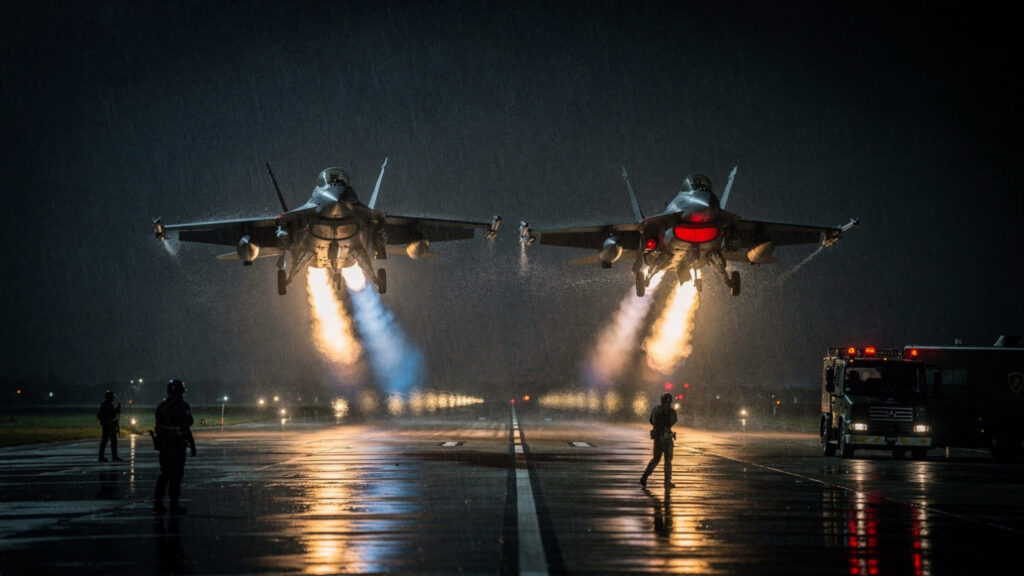
On the night of March 30, the protocol was triggered. Several police units and two military radar stations simultaneously confirmed an unidentified object. Two Belgian Air Force F-16s scrambled from Beauvechain Air Base.
What followed appears in the radar data that the Belgian Air Force subsequently released, in De Brouwer’s published account, and in the SOBEPS investigation report.
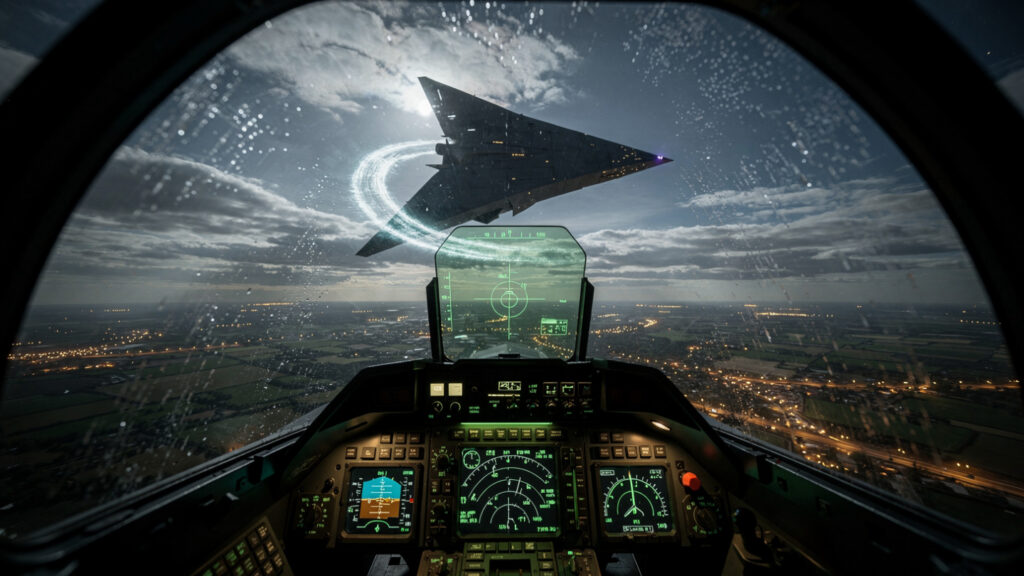
The F-16s attempted to intercept the object. They achieved radar lock on targets multiple times during the approximately one-hour pursuit. Each time a lock was achieved, the target responded with maneuvers that broke the lock. De Brouwer’s description of the recorded target behavior: jumping great distances in seconds, accelerating beyond human capacity, and performing maneuvers that no known aircraft could replicate without destroying the craft’s structure and killing its occupants.
The acceleration data from the radar recordings is the most technically significant element of the Belgian wave’s record. The Belgian Air Force’s analysis of the F-16 radar recordings found that the targets accelerated from approximately 280 kilometers per hour to approximately 1,800 kilometers per hour in seconds, and subsequently decelerated from 1,800 kilometers per hour to zero in seconds. The altitude changes recorded showed similar instantaneous performance, with the target dropping from 3,000 meters to 1,700 meters in one second and subsequently descending to approximately 200 meters above the ground before accelerating away.
These performance parameters, if accurately recorded, represent propulsion and structural capabilities that exceed the performance envelope of any known aircraft by multiple orders of magnitude. The human tolerance for acceleration is approximately 9g for brief periods in trained fighter pilots in specialized suits. The acceleration implied by the Belgian radar recordings, if sustained for more than fractions of a second, would be fatal to any human occupant by a substantial margin. The library’s evidentiary standard requires stating the significant if before going further, because the most detailed technical review of this specific data does not support treating it as confirmed. Auguste Meessen, the physicist at the Catholic University of Louvain who served as SOBEPS’s own scientific consultant on this case, spent years examining the raw F-16 and ground radar tapes in detail and concluded that the extreme acceleration readings were most likely radar processing artifacts rather than the genuine motion of a physical craft. Meessen’s analysis pointed to Doppler radar misinterpreting the F-16’s own relative motion, combined with atmospheric “angel echo” interference from warm, humid convection cells, as the likely source of the false extreme readings. One of the lock-on events even recorded the target at a negative altitude, physically impossible for a real object in flight and consistent with a ground-reflection artifact rather than a descending craft. This finding came from within the pro-investigation research effort itself, not from external skeptics, and it specifically concerns the F-16 radar chase data rather than the broader witness testimony, which remains a separate and more robust body of evidence unaffected by this technical finding.
The Belgian Air Force’s official conclusion from the radar analysis, recorded in De Brouwer’s account, was that the evidence was insufficient to prove that real ships were in the air at the time. Whether this conclusion reflects the Air Force’s genuine uncertainty about the radar data’s interpretation, or reflects institutional caution about acknowledging performance characteristics whose existence would require a fundamental revision of the conventional understanding of what is operating in Earth’s airspace, is the question that the conclusion’s wording and the data it is based on together raise.
The radar data was released publicly. The performance parameters it records are there in the analysis. The conclusion that the data is insufficient to prove real ships were present coexists with performance readings that, taken at face value, no known natural phenomenon or human-built aircraft produces, though Meessen’s own technical review makes clear those readings should not be taken at face value without that caveat attached.
The Radar Data and Its Implications
The Belgian F-16 radar recordings are significant not only for their content but for what their public release implies about the Belgian military’s institutional approach to the UAP phenomenon.
Most military UAP encounters are classified or partially classified, with the performance data either retained in classified archives or released only after decades of FOIA litigation. The Belgian Air Force’s decision to release the F-16 radar data publicly within years of the encounter, combined with De Brouwer’s willingness to publish his personal account in a civilian research publication, represents an institutional transparency that the American and British military UAP programs have not matched.
Whether this transparency reflects Belgian military confidence that the data’s existence would not compromise national security, institutional commitment to public accountability in a democracy, genuine uncertainty about what the data records that made public release seem more appropriate than classification, or some combination of these factors, is not established by the available record. What is established is that the data is public. Whether its content genuinely supports De Brouwer’s description of target performance beyond any known aircraft, or whether Meessen’s own technical review of the same data as radar artifact is the better-supported reading, remains a live question rather than a settled one.
The performance parameters recorded in the Belgian data, instantaneous acceleration to supersonic speeds, simultaneous direction changes that would produce g-forces incompatible with human survival, and descent and ascent rates that exceed any known propulsion system, would be broadly consistent with the performance characteristics recorded in the Nimitz encounter’s FLIR footage and in the testimony of David Fravor and other Nimitz witnesses covered in this library’s dedicated pieces.
Whether the Belgian wave’s targets and the Nimitz encounter’s targets represent the same class of objects is not established by the available evidence, and given the doubt Meessen’s analysis raises about the Belgian radar’s extreme performance readings specifically, that comparison should be read as suggestive rather than as two confirmed data points converging.
The 2,000 Witnesses and What They Consistently Described
The evidentiary value of the Belgian wave’s approximately 2,000 recorded sightings is not their quantity but their internal consistency. The SOBEPS investigation analyzed the witness accounts and found that independent witnesses with no prior contact consistently described the same object characteristics: triangular form, three bright lights at the corners, central flashing red light, silent operation, low altitude, and slow speed.
This consistency across 2,000 independent accounts is the civilian analog to the radar data’s military confirmation: what the witnesses described is consistent with what the radar recorded in terms of the object’s presence and its operating characteristics when moving slowly and at low altitude.
The high-performance characteristics recorded in the F-16 radar data are not what the civilian witnesses described because civilian witnesses observed the objects during their low-altitude, low-speed phases, not during the high-acceleration escape maneuvers that the F-16 pursuit triggered. Whether the low-speed and high-speed phases represent the same objects in different operating modes, or represent different objects with different capabilities appearing in the same general event context, is a question the available data raises without resolving.
Colonel André Amond, the Belgian army officer who observed the lights in December 1989 while driving with his wife, told researcher Leslie Kean decades later: there is still no explanation today. That is a shame because I want to know before I die. Give me a correct explanation of my vision. That is all I can ask for.
Amond was a military officer trained to observe and report accurately. He saw what he saw. He filed his report. He is still waiting for an explanation.
The Petit-Rechain Photograph and the Honest Record
The famous Petit-Rechain photograph, which showed a triangular craft with three lights and became the most widely reproduced image associated with the Belgian wave, was admitted in 2011 by its creator to be a hoax. The photographer described making the model from polystyrene, painting it, and photographing it suspended in the air.
This admission is a matter of public record and should be acknowledged rather than ignored in any honest treatment of the Belgian wave. The photograph’s fraudulent status is established. Whether its fraudulent status affects the evidentiary quality of the 2,000 witness accounts, the F-16 radar data, or De Brouwer’s institutional testimony is the question that honest evidentiary assessment requires.
It does not. A hoax photograph does not invalidate independent witness testimony from hundreds of separate observers. It does not invalidate military radar recordings. It does not invalidate the testimony of a senior Air Force general who coordinated his country’s official investigation. The photograph was fake. The phenomenon it claimed to document has a separate evidentiary basis that the photograph’s fraudulent status does not touch.
The appropriate response to the Petit-Rechain revelation is to remove the photograph from the Belgian wave’s evidentiary record and assess what remains. What remains is 2,000 independent witness accounts whose internal consistency is well established, military radar data whose performance parameters are recorded even if their interpretation is contested, and institutional testimony from named senior officers whose credibility is established by their recorded careers.
This is a more robust evidentiary base than most UAP case clusters possess, and it is robust without the fraudulent photograph.
What the Belgian Wave Establishes
The Belgian wave of November 1989 through April 1990 establishes the following without interpretive assumption:
Approximately 2,000 independent civilian witnesses reported consistent object characteristics across a five-month period in Belgian airspace.
Named military officers including Colonel Amond independently confirmed the civilian sightings.
The Belgian Air Force, after investigating, could not specifically explain the sightings.
The United States Embassy confirmed in a memo, later made public, that no American stealth aircraft was operating in Belgian airspace during the sighting period.
On March 30, 1990, two military radar stations and multiple police units simultaneously confirmed an unidentified object.
Two Belgian Air Force F-16s scrambled to intercept.
The F-16s achieved radar lock multiple times.
The radar recordings show apparent target performance including acceleration to supersonic speeds in seconds, simultaneous deceleration to near-zero, and altitude changes that exceed the performance envelope of any known aircraft, readings that SOBEPS’s own scientific consultant subsequently attributed most likely to radar processing artifacts rather than genuine physical motion.
The Belgian Air Force released the radar data publicly.
General De Brouwer published his account in a civilian research publication.
The case remains unexplained.
Colonel Amond is still waiting for his explanation.
The radar data is still public.
The performance parameters it records are still there.