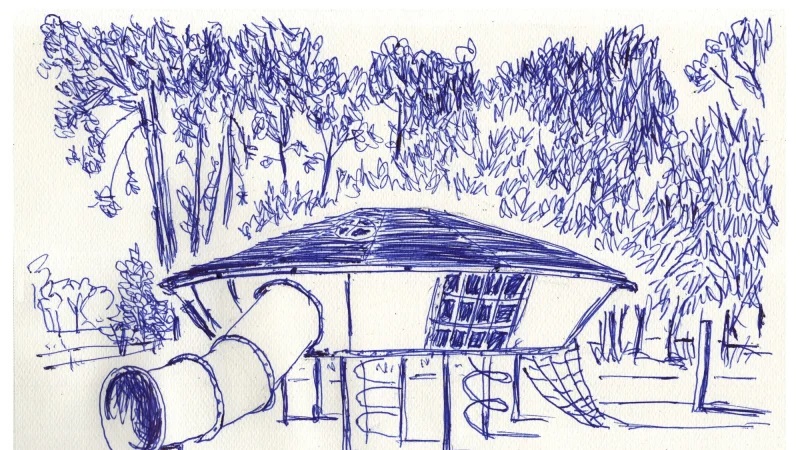




His contributions to Soviet entomology are real: decades of field research in Siberian ecosystems, publication in peer-reviewed Soviet scientific journals, the discovery of several insect species, and expertise in bee biology and agricultural pest management whose institutional recognition appeared in his career at the Siberian Institute of Plant Protection. His illustrated naturalist writing, including his documented memoir My World, showed the observational precision of a trained field biologist whose engagement with the natural world was detailed, patient, and methodologically sound.
Then he claimed he could fly.
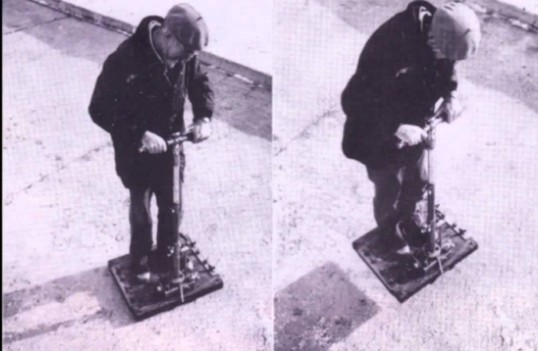
Not metaphorically. Not in a dream. On a platform constructed from the dried wing cases of certain beetles, which he claimed generated a field that cancelled gravitational attraction, allowing him to travel at altitudes of several hundred meters through the Siberian countryside, invisible to observers due to an optical distortion the same field produced. He recorded these flights in hand-drawn illustrations in My World, published after his retirement from institutional science, showing a middle-aged Soviet entomologist hovering over rural landscapes on what appears to be a small wooden board studded with insect carapaces.
The scientific community did not replicate his results. The effect he claimed to have discovered, which he called the Cavity Structural Effect, the proposition that certain geometric cavity configurations in natural materials generate anomalous energy fields capable of affecting gravitational force, has not appeared in any peer-reviewed physics publication as a confirmed phenomenon.
Whether Grebennikov experienced something that his scientific training gave him no framework to accurately describe, fabricated the flying platform narrative for reasons that his personal psychological history might or might not explain, or represented a category of self-deception common in researchers who make discoveries and subsequently overextend their implications, is the question that the Grebennikov anomaly has generated in the fringe science community for three decades without resolving.
What the record shows is the trajectory: a legitimate scientist with substantive training, notable discoveries, and then a claim so far outside known physics that its evaluation became impossible for the institutional science that had previously recognized his work.
What Insect Chitin Actually Does
The material at the center of Grebennikov’s antigravity claim is worth examining for what it is before examining what he claimed it was.
Insect chitin, the structural polysaccharide that forms the exoskeleton and wing cases of beetles and other arthropods, is a known material whose actual properties are sufficiently remarkable to have generated significant research attention in materials science, photonics, and nanotechnology without requiring any appeal to antigravity.
The structural coloration of beetle wing cases ranks among the most sophisticated photonic nanostructures in the natural world. The geometric arrangements of chitin layers in species including Chrysochroa and Dynastes produce iridescence through known photonic crystal mechanisms whose optical properties materials scientists have been attempting to replicate in synthetic materials for decades. The nano-level periodic structures in beetle elytra reflect wavelengths of light through constructive interference rather than through pigmentation, producing structural colors whose brilliance and iridescence exceed what pigment chemistry can achieve.
The electromagnetic scattering properties of these chitin nanostructures are recognized as anomalous in the engineering sense: the interaction between the periodic chitin geometry and electromagnetic radiation produces scattering patterns whose precise calculation requires the full machinery of photonic crystal theory. Whether this electromagnetic anomaly, recorded in the peer-reviewed photonics literature, is what Grebennikov observed and subsequently misinterpreted as antigravity, is the hypothesis that the Grebennikov mythology’s more sophisticated defenders propose.
The transition from a confirmed photonic crystal anomaly to a claimed gravitational field effect is the precise point where the legitimate materials science ends and the fringe physics begins. Whether any connection exists between photonic crystal electromagnetic interaction and gravitational field modification appears nowhere in the physics literature. General relativity’s own framework for the relationship between electromagnetic fields and gravitational effects, the Einstein field equations and their predictions about electromagnetic stress-energy’s contribution to spacetime curvature, does not produce the effect Grebennikov claimed from the geometries and energy scales involved in beetle wing cases.
The chitin is real. The nanostructure is verified. The photonic anomaly is published. The antigravity is not.
Khepri and the Scarab’s Ancient Theology
The intersection that makes the Grebennikov mythology most interesting for the library’s framework is not the physics but the theological tradition that the fringe researchers have attached to it.
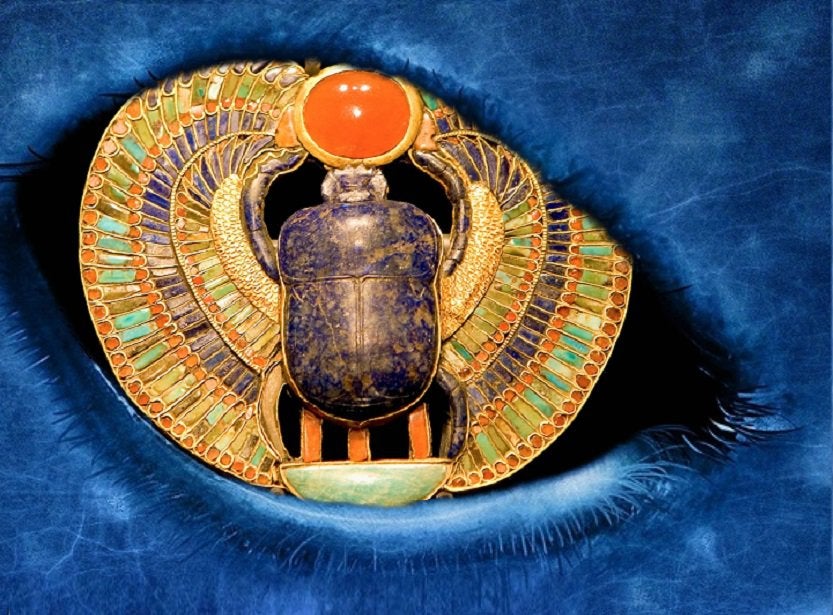
Khepri, the dawn form of the Egyptian sun god Ra, appears in the Egyptian religious tradition as the manifestation of solar force at the moment of creation and at each daily sunrise. The scarab beetle, whose Egyptian name kheper shares its root with the verb meaning to come into existence, to transform, and to become, provided the hieroglyphic sign for Khepri and the theological vehicle for the concept of self-generated creative transformation.
The Egyptian observation that informed this theology appears in their natural history tradition: the dung beetle rolls its egg-containing ball of dung across the ground and buries it, from which new beetles eventually emerge. To the Egyptian theological mind, this behavior expressed the mystery of self-generation: the beetle rolls the ball that contains its future self, just as Khepri rolls the solar disk that contains the day’s creative energy. The beetle’s behavior was not a metaphor for solar movement. It was an instance of the same fundamental cosmic principle expressing itself at different scales.
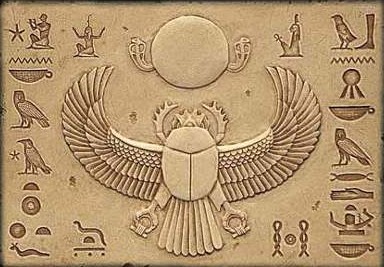
This is, structurally, the as above so below principle recorded in the Emerald Tablet, discussed elsewhere in this library. The scarab’s ball-rolling is to Khepri’s sun-rolling as the microcosm is to the macrocosm. The theological framework is the same Hermetic principle in Egyptian theological language.
The fringe research move that produces the Grebennikov-Khepri intersection is the claim that the ancient Egyptians understood the scarab’s theological significance because they had empirically observed the physical effect that Grebennikov later rediscovered: that certain beetle geometries generate anomalous energy fields. The theological tradition is reinterpreted as encoded technical knowledge about a physical effect whose modern rediscovery by a Soviet entomologist validates the ancient Egyptian interest in the insect.
Whether this reinterpretation has any evidentiary basis is a different question from whether it is culturally interesting. It does not have evidentiary basis. The Egyptian scarab theology is recorded as a sophisticated theological elaboration of observed natural behavior within the Egyptian cosmological framework, not as an encoded technical record of a physical phenomenon.
But the cultural move is interesting because of what it reveals about how fringe research mythology is constructed.
The Myth-Making Mechanism
The process by which the Grebennikov-Khepri intersection was constructed in the alternative research tradition reveals a general mechanism whose understanding is valuable for anyone navigating the space between confirmed anomalous research and unfounded speculation.
The mechanism has four steps whose operation the Grebennikov-Khepri case illustrates clearly.
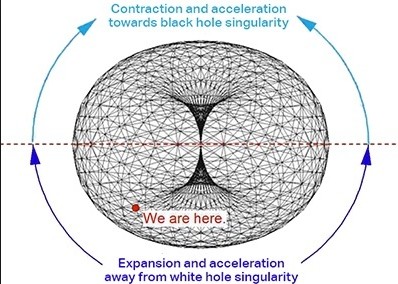
First, identify an anomaly. Beetle chitin nanostructures are anomalous in the photonics sense. This is settled science. The anomaly provides the legitimizing core around which subsequent elaboration will be built.
Second, apply an undocumented theoretical framework that connects the anomaly to a more dramatic effect. Grebennikov’s Cavity Structural Effect proposes that the photonic anomaly is an instance of a broader principle involving geometric cavities and field generation. This is undocumented but not trivially falsifiable, which is the characteristic that makes it useful for the next step.
Third, connect the undocumented theoretical framework to an ancient tradition that can be reinterpreted as encoding technical knowledge of the undocumented effect. The Egyptian scarab theology’s focus on the beetle and its recorded theological framework provides the ancient tradition. The reinterpretation as a technical record of the Cavity Structural Effect is the move that produces the Grebennikov-Khepri intersection.
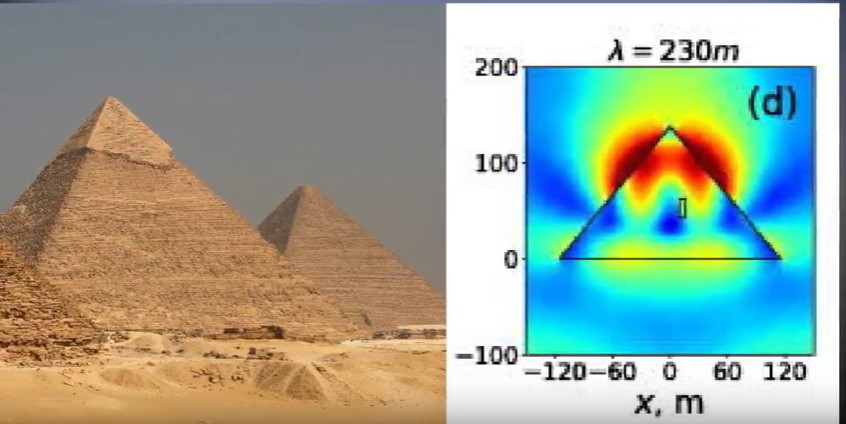
Fourth, propose that the ancient application of the undocumented effect explains an ancient mystery. The pyramid construction problem, whose engineering challenges are well known, provides the mystery. The proposal that beetle-wing antigravity technology was used to move pyramid stones is the application that closes the loop.
The complete narrative is: confirmed anomaly, undocumented mechanism, ancient reinterpretation, ancient mystery application. Each step is connected to the next by a plausible inferential bridge. No step is individually falsifiable in the simple way that directly testable scientific claims are falsifiable. The complete narrative is internally consistent while being disconnected from known physics at the mechanism step.
Whether this four-step construction was consciously engineered or emerged organically from the enthusiasm of researchers who were not trained to identify the point where verified evidence ends and undocumented inference begins, is the question that characterizes the difference between deliberate fringe mythology production and sincere fringe research.
Why the Fringe Research Community Is Obsessed With Insect Chitin
The attraction of insect biology for the fringe research tradition that connects ancient Egyptian technology to discovered or undiscovered physical principles is not arbitrary.
Insects represent the most successful implementation of biological engineering at the nano and micro scale that the natural world contains. The properties of insect structures, including structural coloration, ultralow friction surfaces, the aerodynamic mechanisms of insect flight, fully mapped only through high-speed photography and computational fluid dynamics to establish, and the confirmed electromagnetic properties of various insect species, consistently exceed what simple evolutionary optimization of known physical principles would produce from the engineering perspective.
The case of insect flight itself is instructive: until relatively recently, the aerodynamic theory applied to large-scale aviation could not account for how most insects generate sufficient lift at their wing loading and Reynolds numbers. The resolution, captured in high-speed photography studies showing that insect wings generate leading-edge vortices, clap-and-fling mechanisms, and dynamic stall patterns that fixed-wing aerodynamics does not use, required new aerodynamic frameworks rather than the application of existing ones.
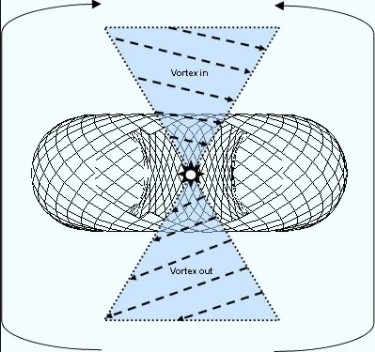
Whether this confirmed aerodynamic novelty, the discovery that insect flight uses mechanisms outside the framework of conventional fixed-wing aviation, is what fringe researchers are pattern-matching to when they propose that insects use mechanisms outside conventional gravity physics, is the connection that explains the chitin obsession without validating it.
The insects are doing something that existing engineering frameworks did not predict. The fringe research tradition takes this known fact and extends it beyond what the documented evidence supports, proposing that the same pattern applies to gravity as it applied to aerodynamics.
The extension is not supported. The original documented aerodynamic novelty is real. The pattern that produces the extension is human rather than physical.
Grebennikov in the Context of Soviet Fringe Science
The institutional context of Soviet science in which Grebennikov developed his claims is relevant to understanding both why the claims emerged in the form they did and why they have the cultural resilience they show.
Soviet science in the mid to late twentieth century was institutionally structured in ways that created conditions for fringe research. The Lysenko affair, the recorded institutional endorsement of Trofim Lysenko’s anti-Mendelian genetics by Stalin’s government and the recorded suppression of legitimate genetics research that followed, demonstrated that Soviet institutional science was capable of officially endorsing pseudoscience and suppressing legitimate research simultaneously. This apparent institutional history produced in Soviet scientific culture a pattern: legitimate researchers with anomalous findings were aware that institutional channels might suppress rather than evaluate their results, creating a practical incentive to publish outside institutional structures.
Whether Grebennikov’s flying platform narrative reflects a phenomenon that he correctly understood the institutional science would suppress, a phenomenon that he incorrectly interpreted as antigravity when it was something else entirely, or a narrative that emerged from the combination of photonic chitin research and the psychological dynamics of an aging scientist reviewing his life’s work, is the question that the institutional context motivates without resolving.
What the Soviet fringe science context reveals is that the relationship between institutional legitimacy and evidentiary quality in Soviet science was sufficiently corrupted by political interference that legitimate researchers had good reason to distrust the institutional evaluation of their claims. This does not validate Grebennikov’s antigravity claims. It does explain why the framing, a discovery suppressed by institutional science that could not accommodate it, has cultural resonance in a community that knows the Lysenko affair happened.
What the Intersection Documents
The Grebennikov-Khepri intersection, as a case study in fringe science mythology construction, reveals several things that are worth preserving in the library’s framework.
It shows the mechanism by which scientific anomalies, confirmed photonic chitin properties, become the legitimizing core of undocumented theoretical frameworks, the Cavity Structural Effect, which become the interpretive key for reinterpreting ancient traditions, Egyptian scarab theology, which become the explanatory framework for ancient mysteries, pyramid construction.
It documents the cultural function of ancient Egypt in the fringe research tradition: Egyptian civilization’s well established extraordinary achievements, whose engineering implications are research questions at the library’s standard, serve as the destination for every undocumented ancient technology hypothesis because the anomalies of Egyptian construction provide sufficient evidentiary foundation to make the extension to undocumented technologies seem less implausible than it would be without that foundation.
It marks the point at which fringe research diverges from anomalous research: not at the identification of anomalies, where fringe and legitimate research often overlap, but at the theoretical framework step, where the mechanism connecting the anomaly to the claimed effect is proposed without any actual experimental support.
And it captures the resilience of mythology at the intersection of legitimate scientific anomaly and ancient tradition: the Grebennikov claim has circulated for thirty years without replication and without institutional recognition because the legitimate elements, actual chitin photonics, an actual pyramid-construction mystery, a documented Soviet institutional pathology, provide sufficient purchase to keep the undocumented framework attached to the parts of the story that check out.
Grebennikov flew through the Siberian countryside on beetle wings, in his own drawings, in a self-published memoir, without a single verified witness.

The scarab rolled the sun across the sky in Egyptian theology for three thousand years, recorded in temple reliefs, funerary papyri, and amulets found in tombs across the Nile valley.
Whether these two traditions are connected by anything more than the fringe research community’s mythology-making mechanism is the question that the intersection makes interesting without the available evidence answering.
The beetle’s nanostructures are remarkable. The Egyptian theology is sophisticated. The physics between them remains undocumented.