



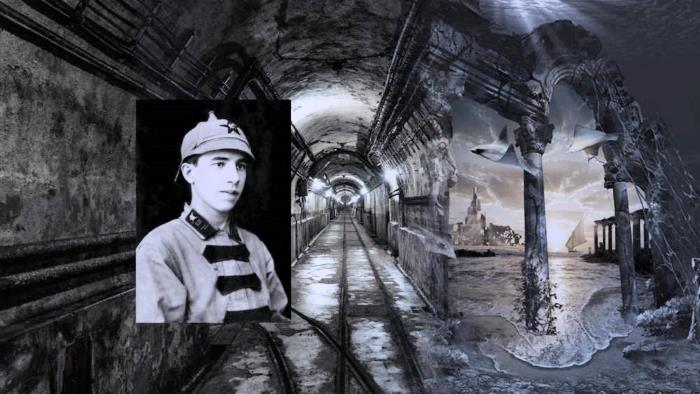
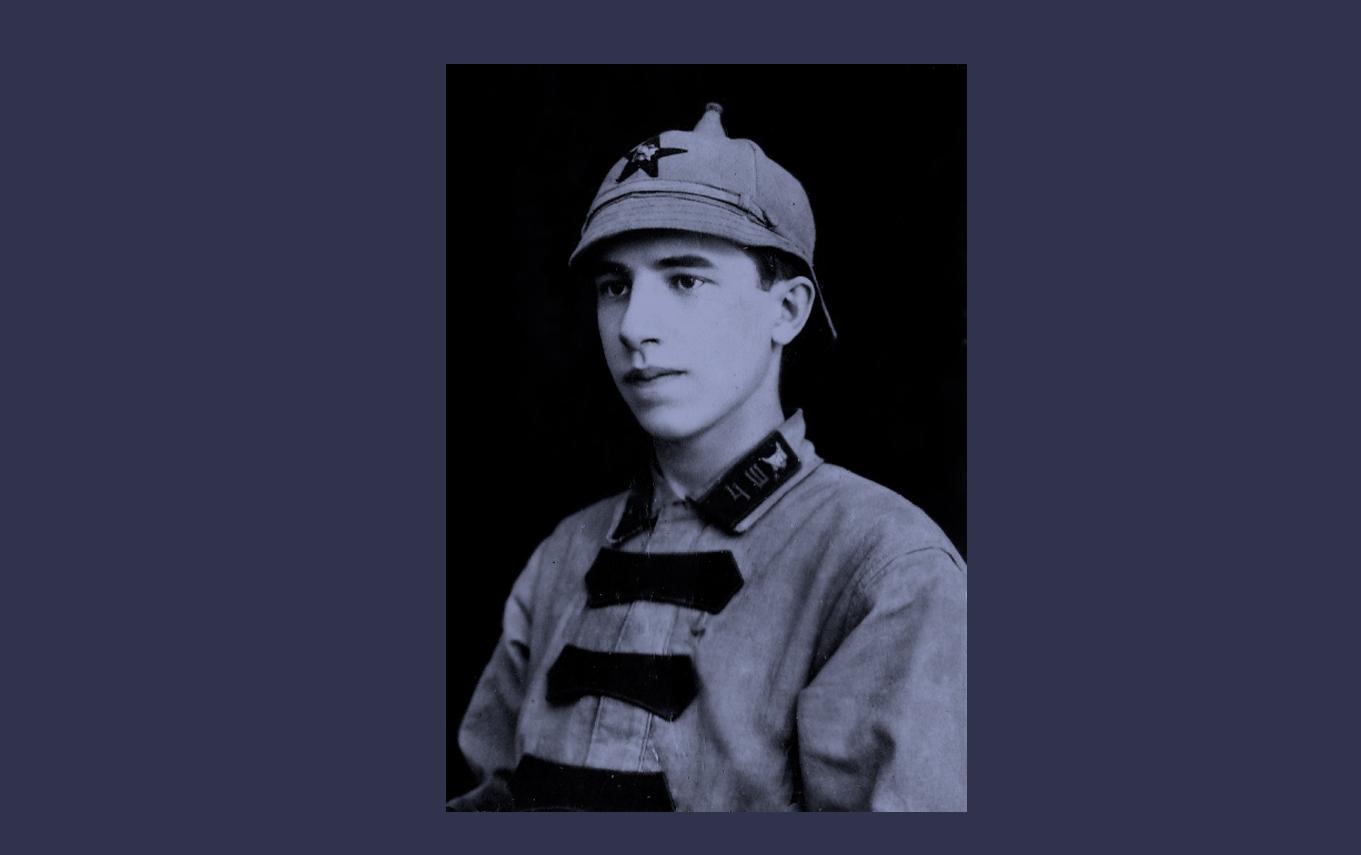
Nikolai Zhirov descended into the Z3 bunker in Weimar in the summer of 1945 as a 42-year-old chemist with a specialist’s interest in phosphors and a gymnasium education that had taken him further than most formally trained scientists of his generation.
He came out a different person.
What he saw underground in the Nazi facility, where captured workers had depressurized containers of unknown substances in an act of sabotage before Germany’s surrender, was something Zhirov never described publicly. He was bound by a state secret whose terms he honored until his death in 1970. Soviet doctors who treated him afterward diagnosed a viral lesion of the central nervous system, an explanation that explained nothing about what agent had damaged him or what he had encountered below.
What is known is what Zhirov did with the remaining 25 years of his life: from a hospital bed at Botkin Hospital in Moscow, where he was admitted as a category one disabled person, he began reading Plato’s accounts of Atlantis and did not stop. By 1964 he had published Atlantis: The Main Problems of Atlantology, a scientific monograph examining the Atlantis question through the disciplines of geology, oceanography, and biogeography whose author held a legitimate doctorate in chemistry from one of the USSR’s most prestigious research institutions.
Whether what Zhirov saw in the Z3 bunker motivated his subsequent 25 years of Atlantis research is the question whose answer he took to his grave.
The connection between the Nazi state’s well established obsession with ancient civilizations and a Soviet chemist’s post-bunker transformation into the USSR’s leading Atlantis researcher is the historical thread whose significance this piece develops.
The Ahnenerbe and What the Nazis Were Looking For
The Nazi research organization Ahnenerbe, whose name translates roughly as Ancestral Heritage, was established by Heinrich Himmler in 1935 as an institutional framework for investigating the historical, archaeological, and esoteric evidence for the primordial superiority of what the Nazi ideological framework called the Aryan race.
Its known activities are extensive and include some of the most extraordinary state-funded alternative archaeology programs in modern history.
The 1938-1939 expedition to Tibet, led by Ernst Schäfer and recorded in published sources, was specifically tasked with finding physical evidence of the ancient Aryan homeland in the Himalayan plateau. The expedition conducted anthropological measurements, collected botanical samples, and made ethnographic recordings whose ideological purpose was the documentation of surviving Aryan genetic lineages in the Tibetan population.
The Canary Islands expeditions, recorded in Ahnenerbe archives, were specifically motivated by the hypothesis that the Canary Islands represented the surviving remnant of the Atlantean continent, and that the indigenous Guanche people, now extinct as a distinct ethnic group, represented the surviving Atlantean racial lineage. The Guanche’s physical characteristics, including a higher frequency of certain blood types and skeletal measurements, were collected and analyzed within the Atlantean hypothesis framework.
The expedition to Bolivia’s Tiahuanaco, the high-altitude pre-Incan ruins at Lake Titicaca, was motivated by Edmund Kiss’s published hypothesis that the city had been built by an ancient Nordic civilization before its submersion during a catastrophic polar shift. Kiss’s published work on Tiahuanaco appears in the Weimar Republic and early Nazi-era literature.
Whether the Ahnenerbe’s research program produced genuine discoveries about ancient civilizations whose existence the mainstream archaeological framework does not accommodate, or produced ideologically motivated pseudo-archaeology whose findings were determined by its conclusions before its investigations began, is the question that the program’s recorded findings must be evaluated against.
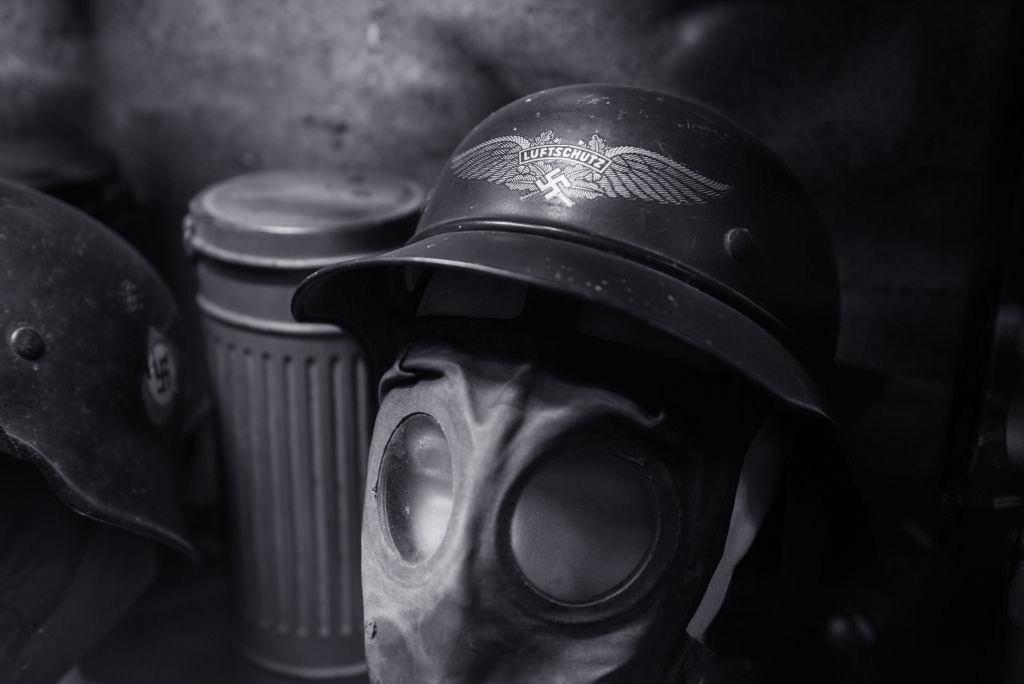
What is established is that the Nazi state invested substantial resources in the systematic investigation of ancient civilization evidence across multiple continents, that this investigation was motivated by a theoretical framework about the origins and nature of ancient high civilization, and that the program’s archives, partially captured by Allied forces in 1945 and partially seized or destroyed, have not been fully published or analyzed in the available historical literature.
Zhirov believed the Nazis had found something in those archives. His conviction was strong enough to occupy the remainder of his life.
Zhirov’s Scientific Case
Atlantis: The Main Problems of Atlantology, published in 1964 by the Soviet scientific press with an introduction by the oceanographer N.N. Zubov, is not a popular speculative work. It is a systematic scientific argument whose methodology applies contemporary geological, oceanographic, and biogeographical evidence to the question of whether a large landmass in the Atlantic could have existed and been submerged within the timeframe of human civilization.
Zhirov’s geological argument is built on the known structure of the Mid-Atlantic Ridge, the underwater mountain chain that runs the length of the Atlantic Ocean and whose volcanic activity is established in the modern geological record. His analysis proposed that the Azores plateau, the elevated submarine region of which the Azores islands are the visible remnant, represented the most likely remnant of a larger landmass whose progressive submersion through a combination of tectonic subsidence and post-glacial sea level rise could have occurred within the period of 8,000-12,000 years ago that corresponds to Plato’s chronology.
The post-glacial sea level rise appears in the geological record: between approximately 14,000 and 7,000 years ago, global sea levels rose by approximately 100-120 meters as the last glacial maximum’s ice sheets melted. This rise was sufficient to submerge substantial coastal and island regions across the Atlantic, and the bathymetry of the Azores plateau, which rises to within a few hundred meters of the current sea surface across a substantial area, is consistent with a region that was above sea level during the post-glacial low-stand.
Whether this geological reality supports the Atlantis hypothesis that Plato describes, with its city, its rings of water and land, its naval power, and its cultural characteristics, is the interpretive question that the geological evidence motivates but does not answer.
Zhirov’s biogeographical argument is the most specifically scientific dimension of his case: he identified correspondences between the plant and animal populations on either side of the Atlantic, in the Azores and Canary Islands, in the Caribbean, and on both the European and American Atlantic coasts, whose distribution patterns suggest a land connection between the Atlantic’s eastern and western sides that would have allowed biological exchange before the connection was submerged. The biological distributions he described are real, though their interpretation as evidence of a transatlantic landmass rather than as evidence of long-distance oceanic dispersal is contested in the biogeographical literature.
Mount Amper and the 1974 Expedition
In 1974, the Soviet oceanographic research vessel MSU Academician Petrovsky conducted a survey of Mount Amper, a seamount in the eastern Atlantic approximately 380 kilometers southwest of Cape San Vicente at the southwestern tip of the Iberian Peninsula.
Mount Amper is a recorded geological feature: a volcanic seamount whose summit reaches approximately 59 meters below the current sea surface, with slopes descending to the surrounding ocean floor at several thousand meters depth. Its location in the eastern Atlantic within the area that Zhirov and other Atlantis researchers have identified as the most geographically plausible location for the Atlantean landmass makes it a target for investigation.
The Petrovsky expedition recorded features at approximately 80 meters depth on Mount Amper’s summit area that the Soviet researchers described as consistent with artificial construction: regular geometric structures whose angular characteristics differed from the expected morphology of natural volcanic rock formations. Photographs were taken and subsequently published in Soviet geological literature.
Whether these features represent genuine archaeological remains of ancient construction submerged by post-glacial sea level rise, natural volcanic geological formations whose geometry produces an architectural impression, or something whose character the available photographs and descriptions do not allow to determine without controlled underwater excavation, is the question that the 1974 findings raised without resolving.
The 1980 return expedition using the Paisys underwater vehicle and the 1981 examination using an underwater bell with divers are recorded as follow-up investigations. Whether the findings from these subsequent expeditions were published and what conclusions the Soviet researchers drew are not established in the available accessible literature.
The Soviet scientific establishment’s subsequent decision to classify Atlantic Atlantis research as an unproductive diversion and redirect resources, combined with the seizure of Zhirov’s archive after his 1970 death, forms the institutional pattern of interest followed by suppression that the broader library traces across multiple research traditions.
Whether the Soviet leadership found something in the 1974 Mount Amper data that motivated increased institutional management of Atlantis research, or simply lost interest in a line of investigation that was not producing results compatible with the materialist scientific framework the Soviet state endorsed, is the question that the sequence of events raises without the evidence available to answer.
The Knowledge the Nazis Had
Zhirov’s hypothesis, that the Nazis had found and used knowledge from an ancient civilization that was ahead of modernity by decades, is the element of his story that connects most directly to the broader library framework.
The Ahnenerbe’s recorded research program, combined with the German technological achievements of the 1930s and 1940s, whose pace and nature have been discussed in both the mainstream historical and alternative research literature, constitutes the circumstantial evidence that motivated Zhirov’s conviction.
Whether the pace of German technological development in the pre-war and wartime period reflects the application of recovered ancient knowledge, the extraordinary concentration of scientific talent that the German research establishment assembled in the 1930s and 1940s, the institutional investment of a state that directed substantial resources to military technology, or some combination of these factors, is the question that the standard historical account treats as resolved and that the alternative research tradition continues to examine.
The technologies that have been proposed as potentially drawing on recovered ancient knowledge, including the jet engine, the rocket program, and several classified weapons programs whose full record remains incomplete in the available literature, are the subject of a research tradition recorded in the library’s existing pieces on Tesla, suppressed physics, and ancient technology.
Whether Zhirov’s hospital-bed conviction that the Nazis had found the source of ancient knowledge, formed after his exposure to the Z3 bunker’s unknown substances and whatever he saw within it, reflects genuine insight from something he encountered underground or the interpretive framework of a damaged mind seeking meaning in the known Ahnenerbe research tradition, is the question that his sealed archive would answer if it were ever opened.
The archive has not been opened. The Z3 bunker materials remain classified.
Whatever Nikolai Zhirov saw below Weimar in the summer of 1945, he spent 25 years trying to understand where it came from.
He published what he could. The state took the rest.