




The timing of the patent’s publication deserves more attention than it has received.
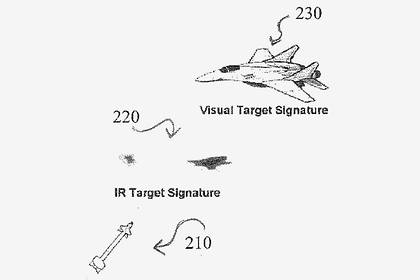
United States Navy patent US10251270B1 was filed in 2018 and published in 2020. It describes a method of generating three-dimensional plasma images in airspace using high-intensity laser systems, designed primarily as a missile countermeasure technology to create false infrared targets that deflect heat-seeking weapons from their intended aircraft. The patent’s language includes an acknowledgment that the system can generate what it calls ghost images in space, two and three-dimensional volumetric objects with no physical substance, visible and detectable to infrared sensors.
In 2019 the United States Navy officially acknowledged three videos filmed by its own pilots and tracked by its own sensor systems: the FLIR footage from 2004 and the Gimbal and Go Fast footage from 2015. The acknowledgment followed a 2017 New York Times investigation and years of public pressure from former AATIP program director Luis Elizondo. The Navy confirmed the videos were real, confirmed the objects in them were unidentified, and declined to offer an explanation.
In 2020, as the public conversation about those acknowledged unidentified objects reached its highest volume in decades, the plasma hologram patent became publicly available.
The patent that describes a Navy technology capable of generating aerial objects in airspace was published in the precise institutional window when the Navy most needed an alternative explanation for aerial objects its own pilots had filmed and its own sensors had tracked across multiple independent systems over two separate decades.
The timing is either a coincidence or it is the most recent application of a mechanism the field has a name for.
The Technical Case Against the Hologram
The plasma filament countermeasure technology described in the patent operates on a physical principle. High-intensity lasers ionize air molecules along a focused beam path, creating a plasma channel that generates an infrared heat signature calibrated to attract and deflect infrared-guided missiles. The system is designed for close-range deployment, mounted to the rear of an aircraft to create a false target that intercepts incoming missiles during their terminal guidance phase.
The physics of laser-induced plasma generation impose operational constraints that are not negotiable by engineering refinement.
Laser coherence degrades with distance. The intensity required to ionize air molecules and sustain a plasma channel decreases as the square of the distance from the source. At the ranges involved in the recorded Navy encounters, the laser power required to generate a detectable plasman object would exceed the power output of any aircraft-mounted system by orders of magnitude. The 2004 Nimitz object was tracked by the USS Princeton’s systems at altitudes of 24,000 meters, exceeding the operational ceiling of the U-2 reconnaissance aircraft. No platform capable of generating the laser power required to create a plasman object at that altitude was in the operational inventory of any nation in 2004 or subsequently.
The Advanced Targeting Forward Looking Infrared sensor, the ATFLIR system whose footage constitutes the primary visual record of the Nimitz encounter, operates on principles fundamentally different from the infrared-guided missile seekers the plasma technology is designed to defeat. The ATFLIR detects actual thermal emissions from physical objects using a cooled infrared focal plane array with spatial resolution and spectral discrimination capabilities that a plasma filament designed to fool a simple missile seeker cannot replicate. The ATFLIR footage shows an object with a thermal signature, spatial geometry, and motion characteristics. A plasma hologram produces none of these.
Plasma without an associated physical object is generally transparent to radar. The USS Princeton’s Cooperative Engagement Capability system tracked the objects continuously for two weeks before the November 2004 encounter, logging consistent radar returns across multiple independent sensors networked through the CEC architecture. The CEC shares targeting data across an entire carrier strike group simultaneously, meaning that multiple ships and aircraft were receiving and confirming the same radar returns from the same objects across the same extended period. Plasma does not produce this. Ice crystals do not produce this. Sensor artifacts do not produce this in a networked multi-platform tracking system specifically designed to eliminate single-sensor false returns.
The Super Hornet radars, the E-2 Hawkeye airborne early warning radar, and the Princeton’s SPY-1 phased array radar all confirmed independent returns from the same objects. Commander David Fravor and his wingman saw them visually. The ATFLIR recorded them. The Princeton tracked them for two weeks.
Every independent sensor system that the Navy deployed in the Nimitz strike group confirmed the presence of physical objects in the airspace. The plasma hologram technology produces objects detectable by none of these systems.
What Fravor Described
David Fravor had seventeen years of combat flight experience when he was vectored toward the Nimitz contact on November 14, 2004. His account, given publicly in a 2017 New York Times interview and in subsequent congressional testimony, has not been materially disputed by anyone with access to the sensor data from the encounter.
The object he found at the contact coordinates was hovering approximately fifty feet above the ocean surface, disturbing the water directly beneath it in a pattern that suggested downward force from a system producing no visible exhaust, no visible rotor, and no visible propulsion mechanism. When he descended toward it in a spiral and it began to ascend, the motions were mirrored, as if the object was tracking his aircraft’s position and responding to it.
When he turned toward it for a direct approach, it accelerated away. Not gradually. Instantly. From hover to beyond the visual range of his aircraft in a time frame his account describes as less than two seconds. His radar could not reacquire it.
The object reappeared on the Princeton’s radar almost immediately, at Fravor’s CAP point, approximately sixty miles from the encounter location, having covered that distance in the time it took him to turn his aircraft. The physics of that transit, sixty miles in under two minutes from a standing hover, implies an acceleration profile that no propulsion system in the known technological record can produce. The plasma hologram that was supposedly explaining this object cannot move. It is a laser-generated image in fixed space. It has no transit capability at any velocity.
Fravor filed his report. The Princeton’s combat systems officer filed her report. Multiple other pilots filed their reports. The reports were collected, classified, and held for thirteen years before the New York Times obtained them.
The Two-Week Pattern
The detail that separates the Nimitz encounter from a typical pilot sighting and that the holographic explanation cannot touch is the Princeton’s two-week continuous tracking record.
For approximately two weeks before the November 14 encounter, the Princeton’s CEC-networked radar systems had been tracking objects appearing at 80,000 feet, which is above the operational ceiling of any known aircraft, descending to sea level in seconds, and disappearing from radar. The pattern repeated daily. The objects appeared in the same general area, demonstrated the same impossible performance characteristics, and departed in the same manner.
A holographic projection system requires a platform. The platform must be in position to generate the projection. Two weeks of daily appearances in a geographic area, each instance tracked by multiple independent radar systems across a networked carrier strike group, requires a platform that was present in the same area for two weeks without being detected by the most sophisticated naval tracking system deployed by the United States military.
No such platform was detected. No unidentified surface vessel, submarine, or aircraft was logged in the operational area during the two-week period. The objects appeared from altitude and departed to altitude. Whatever was generating them, if they were generated, was not in the operational area in any form the Princeton’s systems could identify.
The holographic patent describes a technology that requires a platform within close range of the generated image. The Princeton’s tracking data eliminates the platform. The elimination of the platform eliminates the holographic explanation.
The Distraction Mechanism
The source material raises the mechanism that the holographic patent’s timing implies without developing it fully. The mechanism appears in the historical management of UAP information and it operates on a consistent logic.
When genuine evidence of anomalous aerial phenomena reaches public visibility at a level that cannot be suppressed, a technically plausible alternative explanation is introduced into the information environment. The explanation does not need to be correct. It needs to be technically sophisticated enough that non-specialist audiences cannot immediately reject it, and it needs to be introduced at a volume and through channels with sufficient credibility to establish itself as the default counter-narrative before the genuine evidence can be fully assessed.
The 1947 weather balloon explanation for the Roswell recovery. The swamp gas explanation offered by J. Allen Hynek for the 1966 Michigan sightings, which Hynek himself later described as the most embarrassing statement he ever made. The temperature inversion explanation for the 1952 Washington overflights that required the same temperature inversion to produce identical anomalous returns on multiple independent radar systems on two separate nights. Each explanation was technically sufficient to sound plausible in a news cycle while being physically insufficient to account for the recorded evidence.
The plasma hologram patent in the context of the 2019-2020 UAP acknowledgment follows the same operational logic. It is technically real. The technology exists. Its deployment as an explanation for objects that its own physics cannot account for is the mechanism in operation.
The patent was filed in 2018. The Navy acknowledged the UAP videos in 2019. The patent was published in 2020.
The objects the Princeton tracked for two weeks in 2004 were not holograms. The ATFLIR footage was not a laser projection. Fravor saw a physical object above the ocean with his own eyes in clear daylight from fifty feet above sea level. His navigator saw it. His wingman saw it.
The Navy has a patent for a technology that generates objects in airspace. The Navy also has sensor data from multiple independent systems across a networked carrier strike group recording the presence of physical objects in airspace that no known technology can account for.
These are two separate things. The institutional convenience of conflating them is the mechanism working as designed.
The patent does not explain what the pilots saw. It explains what the institution needed to say when the pilots’ reports became impossible to ignore.