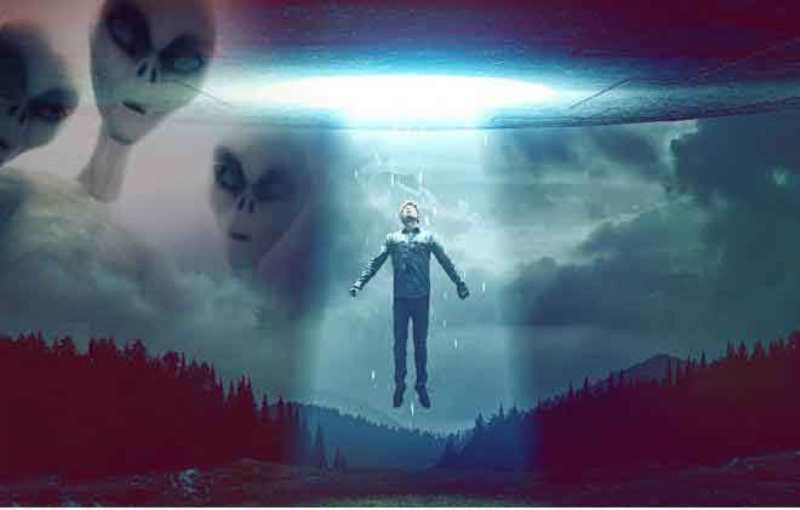





Before humanity existed, Islamic tradition says, there was already another order of created life.
The Quran does not introduce the Djinn as a vague category of folklore. They are named directly, described as a distinct creation, given moral agency, addressed by revelation, and incorporated into the same theological universe as humanity. In Surah Al-Rahman, they are described as created from marij min nar, commonly rendered as a smokeless or scorching flame, while Surah Al-Hijr describes their creation from fire before the creation of Adam.
That distinction matters because the Djinn have accumulated several different identities outside the tradition that produced them. They have been translated as genies, classified as demons, recast as interdimensional beings, compared with extraterrestrials, and, in modern alternative literature, even interpreted as plasma entities.
Those interpretations are not equivalent to what the Quran actually says.
The interesting question is therefore not whether the Djinn can be made to resemble a modern theory. It is what the tradition itself actually describes, what later Islamic scholarship made of that description, and what—if anything—the striking parallels with other traditions allow us to say beyond that.
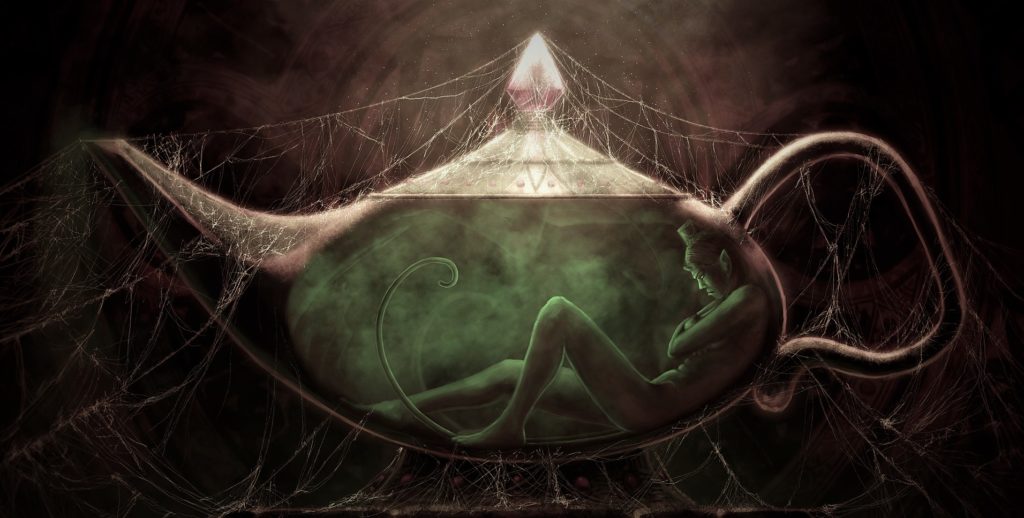
Not Demons in the Western Sense
The first thing to understand is also the easiest to lose in translation: the Djinn are not simply the Islamic equivalent of the Christian devil or of demons in the broad Western sense.
In Islamic theology, the Djinn constitute a separate created order. Like human beings, they possess moral agency. They can believe or disbelieve, act righteously or corruptly, help or harm. They are therefore not a single race of evil beings. The Quran’s Surah Al-Jinn even describes a group of Djinn listening to the Quran and responding to its message.
This is one of the most consequential differences between the Islamic tradition and the simplified image of the “genie” that entered popular Western culture. The Djinn are not merely supernatural monsters waiting to interfere with human life. They occupy a theological category with its own moral and cosmological status.
That does not mean every later story about Djinn belongs to the Quran. Centuries of commentary, folklore, regional traditions and literary elaboration have accumulated around the original texts. Keeping those layers separate is essential if the subject is going to be treated seriously.
Smokeless Fire, Precisely
The phrase that has attracted the greatest amount of modern speculation is the Quranic description of the Djinn as being created from fire without smoke. The Arabic terminology has been translated in several ways, but the central image is unmistakable: their origin is different from the clay associated with humanity and the light traditionally associated with the angels.
Modern readers have inevitably asked whether “smokeless fire” might describe something recognizable to modern physics. Plasma is the most frequently proposed candidate. It is an ionized state of matter found naturally in stars, lightning and the ionosphere, and it can emit light and interact with electromagnetic fields without behaving like an ordinary solid, liquid or gas.
The resemblance is interesting. It is not evidence.
Reading marij min nar as a description of plasma is a modern interpretive move, not an established finding of Islamic theology or physics. The fact that two descriptions can be made to sound compatible does not demonstrate that they refer to the same thing. “Fire” in a seventh-century theological text and plasma in contemporary physics belong to radically different explanatory systems.
This distinction became particularly important with the rise of so-called “Quranic science,” a modern movement that has attempted to identify scientific discoveries inside Quranic descriptions written centuries before modern scientific terminology existed. The approach has also attracted strong criticism from Muslim scientists, including Pakistani nuclear physicist Pervez Hoodbhoy, who has repeatedly argued against attempts to retrofit modern scientific theories into religious language.
None of this diminishes the theological significance of the original description. It simply prevents a modern hypothesis from being quietly promoted into an ancient fact.
A Creation With Moral Agency
The more remarkable feature of the Djinn tradition may not be what they are made from, but what they are capable of choosing.
The Quran presents the Djinn as morally accountable beings. They can hear revelation, accept it or reject it, act well or badly, and ultimately be judged. In this respect, the Islamic cosmology places humanity and the Djinn in an unusual relationship: different creations, but both capable of moral responsibility.
This is why reducing the Djinn to “demons” loses something fundamental. Evil is one possibility within the category, not its definition.
It also explains why the Islamic tradition does not require every encounter with a Djinn to have the same character. A being capable of moral choice cannot be reduced to a single behavioral type. The tradition itself allows for diversity among them.
The Question of Other Traditions
Once the Djinn are understood on their own terms, the comparisons with other traditions become much more interesting—and much more difficult.
The Watchers described in the Book of Enoch tradition, for example, belong to a very different theological system, yet the comparison is striking at the structural level. Both traditions contain non-human beings associated with a world that precedes or exceeds ordinary human experience. Both contain traditions concerning interaction between humans and non-human beings. Both eventually became surrounded by extensive bodies of interpretation.
But structural similarity is not identity.
The fact that two cultures describe beings that interact with humanity does not demonstrate that they encountered the same beings. It may indicate cultural transmission. It may indicate recurring human attempts to explain unusual experiences. It may reflect common features of religious imagination. Or, for those who take the underlying experiences literally, it may raise the possibility that different cultures were describing something real through very different vocabularies.
The surviving evidence does not allow us to choose confidently among those explanations.
Solomon and the Djinn
The traditions surrounding Solomon introduce another layer of the story.
Islamic tradition gives Solomon an extraordinary relationship with the Djinn, describing them as among the beings placed under his authority by God. The Quran describes Djinn performing tasks for Solomon, including construction and other forms of labor. Jewish literature contains its own extensive traditions concerning Solomon’s authority over spirits and supernatural beings, including the famous story of Solomon’s ring.
The parallels are real, but they should not be collapsed into a single story. The Quran, the Talmud, later Jewish literature and the magical traditions surrounding Solomon developed in different historical contexts. Similar motifs can reveal transmission between cultures, shared ancient traditions, or independent elaboration. They do not automatically reveal a historical event behind all of them.
The story becomes especially interesting when placed beside the traditions concerning the construction of Solomon’s Temple. The library has examined the unusual sacred artifacts associated with Solomon, including the Shamir tradition, in which stone could supposedly be worked without conventional iron tools.
Here again, the temptation is to build a technological explanation out of the mythology. The more defensible approach is simpler: several ancient traditions preserve stories in which Solomon possessed extraordinary means of construction and authority over non-human beings. That pattern is historically interesting even when the literal mechanism remains unknown.
The Story of Asmodeus
The figure of Asmodeus demonstrates how complicated these traditions become once they cross religious boundaries.
Asmodeus appears in the Book of Tobit and in Jewish rabbinic literature, most famously in the Talmudic story involving Solomon. Later traditions developed the figure further, eventually incorporating him into the wider demonological literature of the medieval world. Islamic literature contains related traditions concerning Solomon, his authority, and supernatural beings attempting to interfere with that authority.
The similarities invite comparison. They do not justify pretending that every version is the same ancient account.
That distinction is particularly important with religious traditions that developed over centuries. A motif can migrate. A name can change. A story can be absorbed into a new theological framework while retaining recognizable elements of its earlier form.
The result is not necessarily evidence of fabrication. It is evidence that human cultures have been exchanging stories, symbols and cosmologies for a very long time.
A World Beside Our Own
One of the most intriguing features of the Djinn tradition is the relationship it establishes between the human world and a created order that humans do not ordinarily perceive.
Classical Islamic thought developed an elaborate account of the Djinn’s nature, location, behavior and relationship to humanity. They could inhabit places familiar to human beings while remaining outside ordinary human perception. Later Islamic scholarship spent centuries debating questions of possession, interaction, moral responsibility and the boundaries between legitimate religious belief and superstition.

Modern readers sometimes translate this immediately into the language of dimensions, frequencies or parallel physical realities.
That language is useful as analogy. It should not be mistaken for the original theology.
The Quran does not present a modern physics of hidden dimensions. Classical Islamic scholars were not secretly describing quantum mechanics. What the tradition actually gives us is something both simpler and, in its own way, stranger: the claim that creation contains more than the ordinary human senses reveal.
Whether that is a metaphysical truth, a theological description of realities beyond perception, a religious interpretation of unusual experiences, or some combination of those possibilities is a question the tradition invites but does not resolve through modern scientific terminology.
Fourteen Centuries of Interpretation
The longevity of the Djinn tradition is itself significant.
Figures such as Ibn Taymiyyah, Al-Suyuti and Ibn Qayyim Al-Jawziyyah treated questions concerning the Djinn as legitimate subjects of theological and legal reasoning. Their writings show that this was not merely a collection of village stories existing at the margins of Islam. The subject occupied serious scholars working within the intellectual traditions of their time.
That does not establish the physical existence of the Djinn any more than centuries of theological writing about angels establishes their physical existence through historical documentation.
It establishes something different, and something worth understanding: the Djinn are not an accidental piece of Islamic folklore. They are part of the religion’s own cosmological and theological architecture.
Fourteen Centuries Without Resolution
The Quran establishes the Djinn as a distinct created order within Islamic belief. It describes their creation from fire, their moral agency, their capacity for belief and disbelief, and their relationship to humanity. Centuries of Islamic scholarship then developed those foundations into an extensive theological literature.
That is what the historical record can establish.
It cannot establish that the Djinn are plasma beings. It cannot establish that they inhabit a physical dimension described by modern physics. It cannot establish that every similar supernatural being in another culture is the same entity under another name.
But neither does the absence of scientific confirmation make the tradition historically uninteresting.
For more than fourteen centuries, an entire theological tradition has maintained that humanity is not alone within creation, that another order of intelligent beings possesses moral agency, and that the boundaries of ordinary human perception do not exhaust what exists.
That is a claim about reality.
Whether it is also a description of reality in the scientific sense is a different question.
And that distinction is where the subject becomes genuinely interesting.
The mystery does not become smaller when we refuse to pretend that we have solved it.