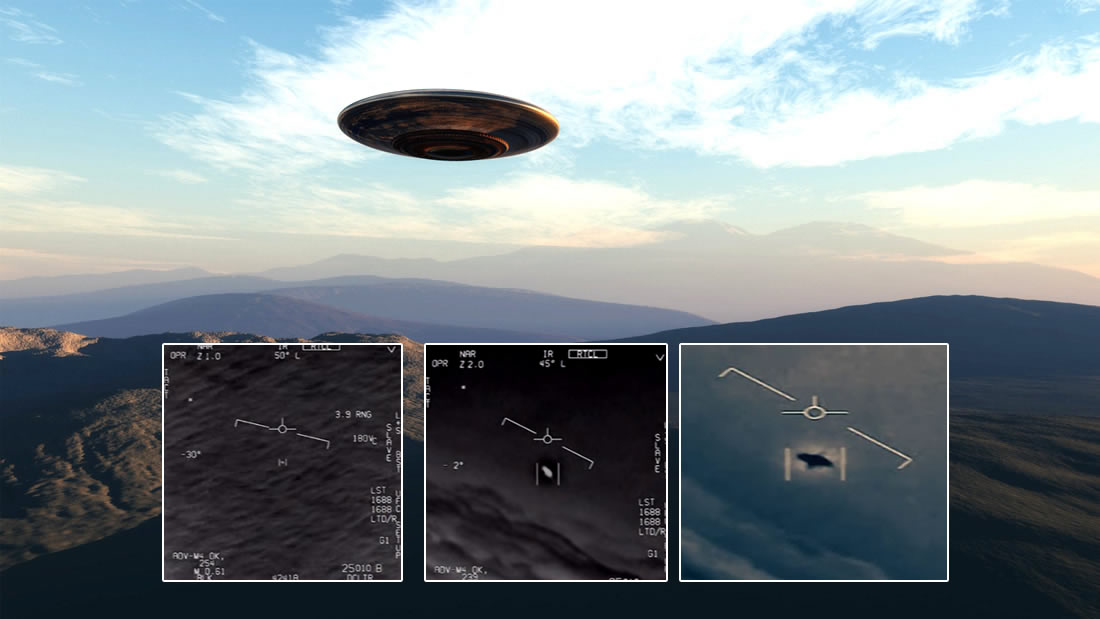
The videos were already public.
To The Stars Academy had released all three between December 2017 and March 2018, and they had been covered by the New York Times, the Washington Post, and every major news organization that decided the footage was credible enough to report. The Navy had confirmed their authenticity in September 2019. Luis Elizondo had been discussing the Advanced Aerospace Threat Identification Program and its findings in public interviews since October 2017.
When the Pentagon officially released FLIR1, GIMBAL, and GOFAST through the Naval Air Systems Command’s FOIA portal on April 27, 2020, the videos themselves were not new information. What was new was the institutional framing: the Department of Defense was now releasing them not as leaked footage whose provenance required authentication, but as official records whose existence and content it acknowledged without reservation.
The language in the Pentagon’s release statement was: the Department of Defense has authorized the release of three unclassified Navy videos, one from 2004 and two from 2015, which have been circulating in the public domain after unauthorized releases in 2007 and 2017. The department is releasing the videos in order to clear up any misconceptions by the public on whether or not the footage that has been circulating was real, or whether or not there is more to the videos.
The statement confirmed: the videos are real. The objects in them are unidentified. The Department of Defense has no explanation for what they show.
Whether this confirmation represents genuine institutional acknowledgment of a phenomenon whose character remains unknown, or represents the managed disclosure that the Von Braun-Rosin threat narrative piece in this library examines, is the question that the institutional framing of the release raises. The objects are unidentified. The release is official. The performance parameters have since been analyzed in the peer-reviewed literature.
The Three Videos and What They Show
The three videos are not equivalent in their evidentiary quality or their content. Treating them as a single body of evidence obscures distinctions that the technical analysis requires.
FLIR1, also called the Nimitz video, is the footage recorded on November 14, 2004 by the F/A-18F Super Hornet crew of Commander David Fravor and Lieutenant Commander Jim Slaight during the USS Nimitz carrier strike group operations off the coast of San Diego. The infrared camera footage shows a white, roughly tic-tac-shaped object maneuvering in a manner that Fravor described in multiple recorded interviews as executing movements he could not explain. The FLIR1 footage shows the object rotating, appearing to accelerate, and executing a lateral movement whose speed the camera tracking system could not compensate for. The footage is approximately 75 seconds.
The technical significance of FLIR1 is the Nimitz context covered in this library’s dedicated piece: the USS Princeton’s SPY-1B radar had been tracking anomalous objects in the operating area for approximately two weeks before the visual encounter. The FLIR1 footage represents the visual confirmation of objects that had been tracked on multiple radar systems simultaneously.
GIMBAL is the 2015 footage recorded by an F/A-18 aircrew off the East Coast of the United States. The infrared footage shows an object whose infrared signature has been the subject of the most extensive technical debate among analysts: the object appears to rotate during the footage, a rotation whose cause is disputed between analysts who attribute it to gimbal rotation in the camera system, hence the video’s informal name, and analysts who argue that the rotation is of the object itself.
The technical controversy about GIMBAL’s rotation, well established among analysts, is important for the library’s framework because it illustrates the methodological challenge of analyzing FLIR footage: camera system artifacts and genuine object behavior can produce similar visual signatures in infrared imaging, and distinguishing between them requires technical knowledge of the camera system’s operating parameters.
GOFAST is the second 2015 East Coast footage, showing an object moving at low altitude over the ocean at high apparent speed. The debate about GOFAST concerns the object’s actual speed versus its apparent speed given the camera angle and the aircraft’s own velocity. Analyst Mick West published a geometric analysis arguing that the GOFAST object’s actual speed, accounting for the parallax effect of the camera angle relative to the ocean surface, was significantly lower than the apparent speed in the footage. Whether this analysis is correct is contested, but it represents the most skeptical technical analysis of any of the three videos and deserves acknowledgment in any honest treatment.
The Kevin Knuth Analysis
The most significant peer-reviewed scientific contribution to the technical analysis of the Navy UAP videos is Kevin Knuth’s 2019 paper published in the journal Entropy, co-authored with Robert Powell and Peter Reali.
Knuth is a professor of physics at the University at Albany, State University of New York, whose academic specializations include information-theoretic approaches to physics and Bayesian probability. His decision to publish a technical analysis of UAP performance parameters in a peer-reviewed physics journal was itself significant: it represents the integration of UAP evidence into the mainstream scientific literature rather than its treatment as a subject suitable only for popular journalism or independent research.
The Knuth paper’s methodology appears in the published work: the authors used available sensor data, witness testimony, and the known flight parameters of the recording aircraft to calculate the acceleration, speed, and energy requirements of the objects recorded in the Nimitz encounter specifically.
Their findings, published in the journal’s open access format and available to any researcher, established that the object observed by Fravor and tracked by the Princeton’s radar demonstrated acceleration capabilities that exceeded known aircraft performance by orders of magnitude. The paper calculated that the observed maneuvers required energy outputs inconsistent with any known propulsion system, and that the instantaneous acceleration changes recorded in the radar track were inconsistent with any aircraft design whose structural integrity would survive the implied forces.
Whether the Knuth paper’s calculations are correct depends on the accuracy of the sensor data and witness testimony used as inputs, whose quality is the limitation the authors acknowledge. The paper’s contribution is not definitive proof of exotic technology but the first peer-reviewed quantitative analysis of what the recorded performance parameters would require if they accurately reflect the objects’ behavior.
The publication of a physics paper analyzing UAP performance in a peer-reviewed journal is a recorded institutional development whose significance for the library’s framework is the same as the Pentagon’s official video release: the phenomenon is no longer confined to institutional denial and popular speculation but has entered the formal scientific literature.
AATIP, Elizondo, and the Institutional Framework
The Advanced Aerospace Threat Identification Program’s existence and funding were revealed in the December 2017 New York Times report by Helene Cooper, Ralph Blumenthal, and Leslie Kean. The program was funded from 2007 to 2012 at approximately $22 million per year through a congressional appropriation secured by Senator Harry Reid of Nevada, directed primarily to Bigelow Aerospace, a private aerospace company.
Luis Elizondo, the program’s director from 2010 to 2017, resigned from the Department of Defense in October 2017 in protest at what he described as excessive secrecy and internal resistance to the program’s work. His subsequent public role at To The Stars Academy and his multiple recorded media interviews are the primary source for claims about AATIP’s findings that have not been officially released.
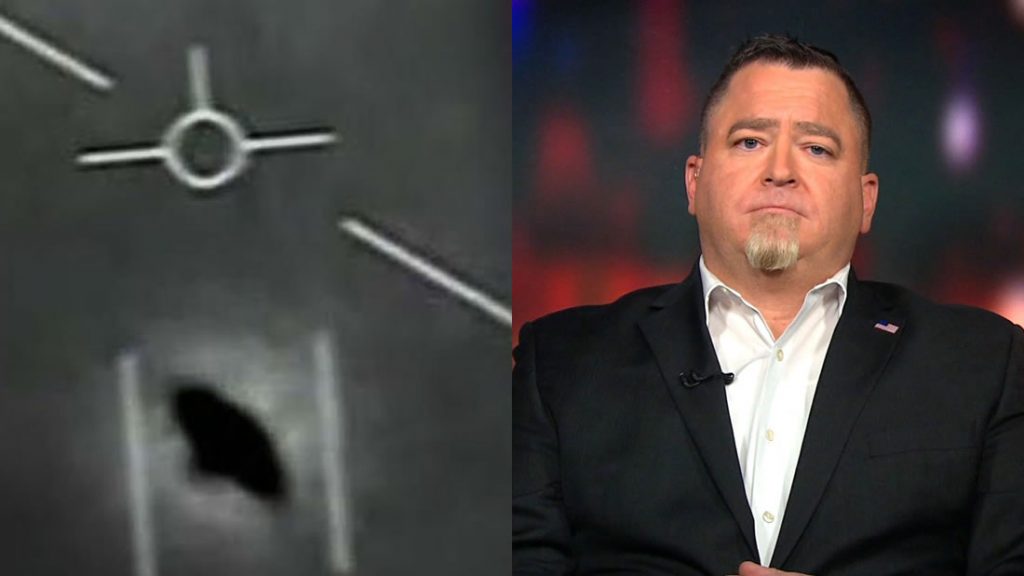
Elizondo’s on-the-record statement that the objects shown in the Navy videos are not in the US inventory and not in any foreign inventory we have knowledge of is the most significant single institutional claim in the public UAP disclosure record prior to the David Grusch 2023 congressional testimony. Whether this statement reflects Elizondo’s personal assessment from his AATIP work, a formally adopted institutional conclusion, or something between these two characterizations, is not fully established by the available public record.
The institutional significance of AATIP is that it establishes a well established 22-million-dollar, five-year classified program specifically dedicated to analyzing UAP technology. Whether AATIP’s findings support the conclusion that the recorded objects are non-human technology, or represent a more nuanced institutional assessment of unknown aircraft whose origin might include conventional or adversarial programs not known to Elizondo’s team, is a question that the classified portion of the record would resolve.
The public portion of the record establishes: the program existed, it cost $22 million, it analyzed the Navy videos and other classified material, its director resigned in protest at what he characterized as excessive secrecy, and its director subsequently stated publicly that the analyzed objects represent technology not known to exist in any human inventory.
The Institutional Significance of Official Release
The April 2020 Pentagon release represents a moment in the institutional history of UAP disclosure whose significance extends beyond the content of the three videos.
The Robertson Panel’s 1953 recommendations, covered in this library’s dedicated piece, established institutional ridicule and debunking as the official policy for managing public UAP perception. The Pentagon’s 2020 official release represents the formal end of this policy: the Department of Defense confirmed that the videos are real, that the objects are unidentified, and that its standard classification framework has no explanation to offer.
Whether this institutional reversal represents genuine acknowledgment of a phenomenon whose character the institutions are still processing, the managed disclosure whose narrative management the Von Braun-Rosin piece examines, or something else whose character the institutional record does not yet fully reveal, is the question that the 67-year gap between the Robertson Panel’s ridicule recommendation and the Pentagon’s official release raises.
The objects in the videos are unidentified. The performance parameters analyzed in the peer-reviewed physics literature exceed known aircraft capabilities. The institutional denial that characterized the period from 1953 to 2017 has been formally reversed.
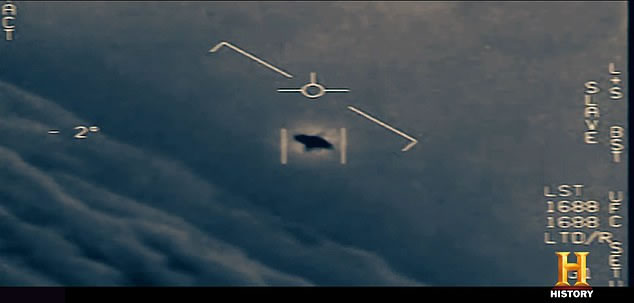
Whatever the objects are, the Pentagon confirmed in April 2020 that they are real and unexplained.
The Nimitz encounter piece in this library covers what happened on November 14, 2004. The FLIR1 footage is the visual record of that encounter. The Pentagon put it on its FOIA portal in 2020 with no explanation attached.
The footage is on the server. The explanation is not.
The 2020 UAP video release did not settle anything on its own. It just gave physicists something they could finally run the numbers on.
The wider story of government secrecy, from MKULTRA to Area 51, is gathered in our secret government programs case files.