Senator Barry Goldwater, Republican of Arizona, wanted to see what was in the Blue Room.
The Blue Room was a classified storage facility at Wright-Patterson Air Force Base in Ohio whose existence was known to senior figures in the American military and intelligence communities. Goldwater believed it contained physical evidence related to the UAP phenomenon. He asked his close friend General Curtis LeMay, former Chief of Staff of the Air Force and one of the most senior military figures in American history, for access.
LeMay’s response, recorded in Goldwater’s subsequent account of the exchange, was direct and unusually emphatic for communication between close personal friends: he was told in the strongest possible terms not to ask about the subject again, that he had no need to know, and that the matter was classified above his clearance level.
Goldwater was a senior senator, former presidential candidate, and ranking member of the Senate Armed Services Committee. His security clearances were among the highest available to any civilian in the United States. Being told that something was classified above his clearance level, by a senior military officer who was his personal friend, is the recorded institutional fact that makes Goldwater’s account most significant: it establishes that whatever was in the Blue Room was being actively withheld not only from the public but from senior elected officials with the highest available clearances.
Goldwater discussed this experience in recorded interviews over multiple decades, including a 1988 Larry King Live appearance and correspondence with UFO researchers in the 1970s and 1980s. His account is consistent across these recorded sources. Whether the Blue Room contained what he suspected it contained is not established by his own account. What is established is that he tried to find out and was refused by the most senior military official he could ask.
Jimmy Carter and the NICAP Report
On January 6, 1969, Jimmy Carter and approximately ten other members of the Lions Club in Leary, Georgia were waiting outside for a meeting to begin at approximately 7:15 PM when they observed an unusual luminous object in the western sky. Carter described it as bright white, as bright as the moon, changing colors from blue to red to white and back, and approximately the size of the Moon from his perspective. The object was observed for approximately ten minutes before it moved away and disappeared.
Carter was not a credulous observer or an individual with a prior commitment to UAP reality. He was a trained nuclear engineer, a former naval officer, and at the time of the sighting a candidate for the Georgia governorship, a political position whose occupant would have strong institutional reasons to avoid association with unconventional claims.
In September 1973, four years after the sighting and while serving as Governor of Georgia, Carter filed a formal sighting report with the National Investigations Committee on Aerial Phenomena, signing the document with his name and gubernatorial position. The report appears in the NICAP archive and has been reproduced in multiple published accounts of presidential UAP sightings.
Carter’s subsequent public statements about the sighting are recorded across multiple interviews. His statement, I am convinced that UFOs exist because I saw one, is on record. His acknowledgment that he does not know what it was that he saw is also on record: Carter consistently distinguished between his conviction that he had seen something real and anomalous, and any conclusion about what that something was.
When Carter campaigned for the presidency in 1975-1976, he made a public statement, later confirmed, that if elected he would make available to the public and to scientists all information that the government had about UFO sightings. After his election and inauguration, Carter directed his CIA director Stansfield Turner to investigate what classified UAP information existed. Turner’s subsequent response indicated that the classified UAP information was minimal and of uncertain scientific value. Whether this assessment was accurate or reflected institutional management of the information’s disclosure is a question that the subsequent AATIP revelations have made more interesting in retrospect.
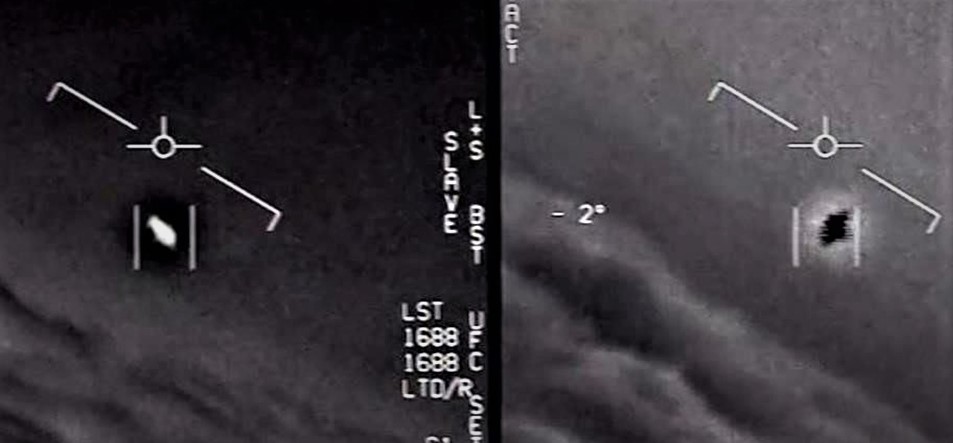
Carter did not make the public disclosure he had promised. Whether this was because he found nothing significant, found something he was persuaded not to disclose, or found that the institutional obstacles to disclosure were insurmountable, is not established in the available record. What is on record is that the president who had filed a signed NICAP report as governor, who had publicly promised disclosure as a candidate, and who had directed his CIA director to investigate, produced no public disclosure as president.
Ronald Reagan and the 1974 Sighting
Ronald Reagan’s 1974 sighting during a Cessna Citation charter flight is one of the most extensively recorded pre-presidential UAP encounters in American political history, with multiple independent witnesses and multiple recorded accounts.
The flight occurred in August 1974 as Reagan, then former Governor of California and preparing to challenge Gerald Ford for the 1976 Republican nomination, was flying with pilot Bill Paynter and campaign officials from Los Angeles to Bakersfield.
Paynter’s account, given to multiple journalists and recorded in published sources, describes a strange light that followed the aircraft for some distance before performing a rapid vertical departure. Paynter described it as elongated and glowing and said it disappeared straight up in a matter of seconds.
Reagan’s account, shared with Wall Street Journal reporter Norman Miller who subsequently wrote about the exchange, described the experience as something he wanted to tell friends about but was reluctant to publicize. Reagan told Miller that he and several others on the plane had seen a strange glowing light that followed the aircraft before disappearing at high speed.
The subsequent trajectory of Reagan’s UAP engagement is the recorded element whose significance has received insufficient attention in the conventional coverage of presidential UAP history. Reagan made repeated references to extraterrestrial threats in multiple subsequent public contexts, most specifically in his 1985 address to the United Nations General Assembly, in which he stated: I occasionally think how quickly our differences worldwide would vanish if we were facing an alien threat from outside this world.
This statement, made to the full General Assembly of the United Nations, was not a casual observation. It was a scripted address by a serving president to the world’s most significant international forum. Whether it reflected Reagan’s genuine belief in an extraterrestrial threat based on classified briefings he had received as president, a philosophical reflection on the value of common threats in unifying divided parties, or something between these interpretations, is a question that the known context, a president who had personally witnessed an anomalous aerial object, raises with force.
Reagan made variations of this extraterrestrial threat observation at least five recorded times in his presidency: to the United Nations in 1985, to Soviet General Secretary Mikhail Gorbachev at their Geneva summit in 1985, to the Class of 1988 at Fallston High School in Maryland, in a speech at the White House to a group of Congressional members, and in his 1988 United Nations address. Whether this repeated pattern reflects a genuine fixed belief or a rhetorical device whose rhetorical utility he found repeatedly applicable, is not established by the available record. What is established is that a president who had witnessed an anomalous aerial object made repeated, well recorded references to extraterrestrial threats as president, in multiple contexts ranging from private diplomatic conversation to United Nations addresses.
Gerald Ford and the Congressional Record
Before Ronald Reagan had his 1974 sighting and before Jimmy Carter filed his NICAP report, Gerald Ford made one of the most significant recorded congressional interventions in UAP institutional history.
In March 1966, a wave of UAP sightings in Michigan, including the well-documented Hillsdale and Dexter sightings that involved multiple witnesses including police officers and a civil defense director, prompted J. Allen Hynek, then serving as the Air Force’s scientific consultant on UAP, to offer the explanation that witnesses had seen swamp gas. The swamp gas explanation for witnesses including trained police officers observing structured luminous objects proved institutionally embarrassing.
Ford, serving as House Minority Leader from the Michigan Congressional delegation, responded by introducing legislation in the House of Representatives calling for formal congressional hearings on the UAP phenomenon. His Congressional Record statement included the assertion: I am firmly convinced that the American people deserve a better explanation than what the Air Force has been giving them. I recommend the creation of a special investigative committee.
Whether Ford’s congressional advocacy reflected genuine concern about UAP suppression, constituent service to Michigan voters who felt their sightings were being dismissed, or some combination, is not established by the available record. What is established is that the future President of the United States used his position as House Minority Leader to formally demand institutional accountability for UAP information in the Congressional Record.
The historical significance of Ford’s Congressional Record statement is that it predates every subsequent formal government UAP investigation and every subsequent presidential-level engagement with the topic. Ford was making this demand in 1966, eleven years before Carter’s presidency, eighteen years before Reagan’s UN address, and fifty-seven years before the UAP congressional hearings of 2023.
Harry Truman and the Recorded Press Conference
The earliest recorded statement by a sitting American president about UAP comes from Harry Truman’s press conference of April 4, 1950, in which a reporter asked whether the president had discussed flying saucers.
Truman’s response, on record: We discussed it at every meeting that we had at the National Security Council. I can assure you that flying saucers, given that they exist, are not constructed by any power on Earth.
The statement appears in the press conference transcript. Whether Truman’s response reflected genuine NSC discussion of UAP phenomena, a rhetorical hedge designed to neither confirm nor deny the reality of the phenomenon, or an accurate characterization of NSC discussions that included the topic, is a question that the subsequent declassification of NSC records from the Truman period would address.
The phrase given that they exist in Truman’s own statement is the interpretive key: he neither affirmed nor denied their existence while making a claim about their origin if they did exist. Whether this carefully conditional phrasing reflected Truman’s genuine uncertainty about the phenomenon’s reality or reflected a deliberate institutional hedge that acknowledged the phenomenon without confirming classified knowledge about it, is a question the press conference record raises without resolving.
The Recorded Pattern
Across eight decades from Truman’s 1950 press conference through Reagan’s 1988 United Nations address, the recorded history of American presidential engagement with the UAP phenomenon shows a consistent pattern: every president who addressed the subject publicly expressed either personal conviction that anomalous aerial phenomena were real, confirmed personal sighting experience, or confirmed awareness of classified information about the phenomenon whose content he either could not or would not disclose.
Carter filed a signed NICAP report as governor and promised disclosure as a candidate. Ford used the Congressional Record to demand institutional accountability. Goldwater was denied access by LeMay and recorded the denial. Reagan witnessed an anomalous aerial object and subsequently made repeated, well recorded references to extraterrestrial threats in presidential addresses.
No sitting president has publicly stated that the UAP phenomenon is without substance and that all observed phenomena have conventional explanations. The absence of this statement, from individuals who had access to the most classified information in the American institutional system, is itself a notable institutional fact whose significance the conventional account of UAP as a fringe concern does not accommodate.
What eight decades of recorded presidential engagement with the UAP phenomenon establishes is not that extraterrestrial vehicles are visiting Earth, a conclusion that none of these statements requires. It establishes that the highest levels of American political authority have consistently treated the phenomenon as real, anomalous, and worthy of serious attention, while consistently declining to provide the public disclosure that several of them explicitly promised.
The classification system that denied Barry Goldwater access to the Blue Room protected its contents from one of the most senior and most clearance-qualified political figures in American history.
Whatever was in the Blue Room was classified above the clearance level of the future Republican presidential nominee.
General LeMay told him not to ask again.
He didn’t.