



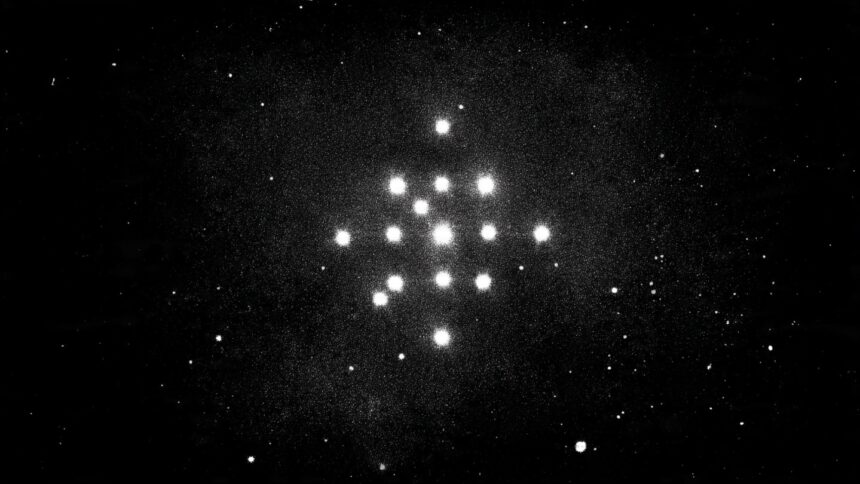
Astronomer Beatriz Villarroel and her team found nine star-like points that appeared and vanished together on a 1950 Palomar Sky Survey plate, published in a peer-reviewed paper. Ivo Busko cross-referenced similar transients in Hamburg Observatory’s independent APPLAUSE archive in 2026. Both events happened. What the researchers say about their own findings is more careful than the confident version circulating online: Villarroel has stated that even if a meaningful fraction of the transients are genuine sky events, “the immediate implication is not aliens.”
A 2024 paper by Hambly and Blair proposed the transients are consistent with plate emulsion flaws instead, a disagreement researchers on both sides are still working through in published journals, not a closed case confirming an orbital surveillance network.
What the VASCO Project Found
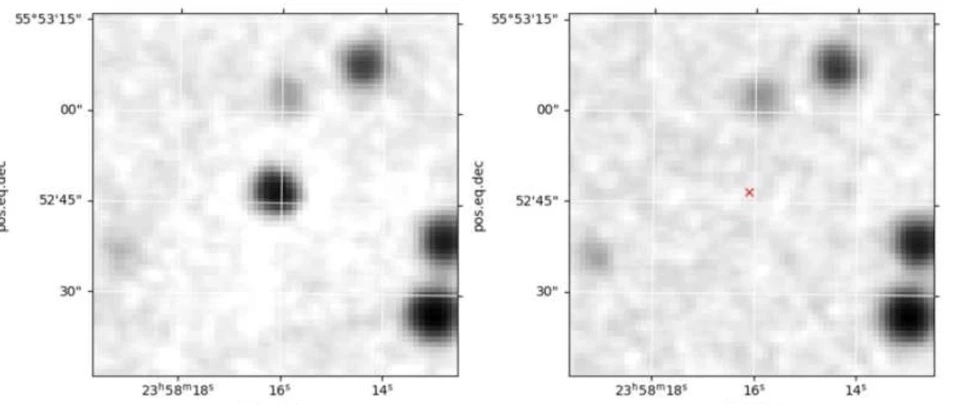
VASCO stands for Vanishing and Appearing Sources during a Century of Observations. The project compares digitized Palomar Sky Survey plates from the early 1950s, before any human satellite existed, against modern sky surveys, looking for objects present in one and absent from the other. In 2021, Villarroel’s team published a startling finding: nine faint, star-like points appearing together and vanishing within a single plate exposure, absent from an earlier plate taken thirty minutes before and a later one taken six days after. The team ruled out known astrophysical explanations for that density and behavior and describes the phenomenon as currently unexplained, which is the register the researchers themselves use, an open question, not a solved one in either direction.
The Busko Cross-Reference Sits Inside a Live Scientific Argument
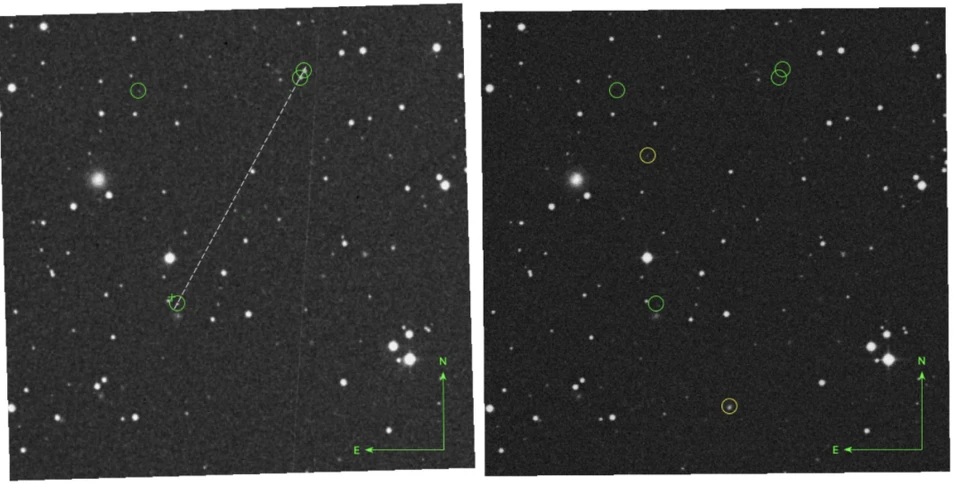
Ivo Busko, a former NASA software developer, published a 2026 paper examining independent Hamburg Observatory plates through the German APPLAUSE digitization archive. He reported transients with narrower, rounder profiles than ordinary stars. That directly answers a 2024 paper by Hambly and Blair, which proposed the original nine transients could be explained by emulsion flaws in the photographic plates, a mundane, plausible technical explanation Busko’s team argues doesn’t fully account for the profile data. Researchers on both sides are publishing in peer-reviewed astronomy journals, disagreeing openly, not delivering a “final nail in the coffin” for skepticism. The published record shows scientists still debating whether these are optical artifacts, atmospheric effects, or something genuinely unexplained. No one publishing in the field has called it confirmed alien hardware.
The Nuclear Testing Correlation, Without the Extra Leap
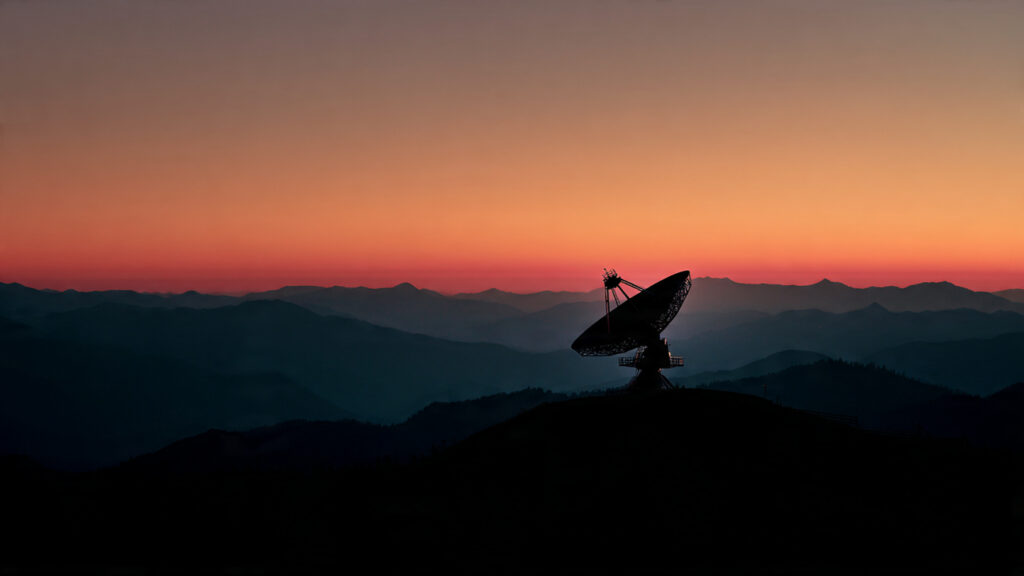
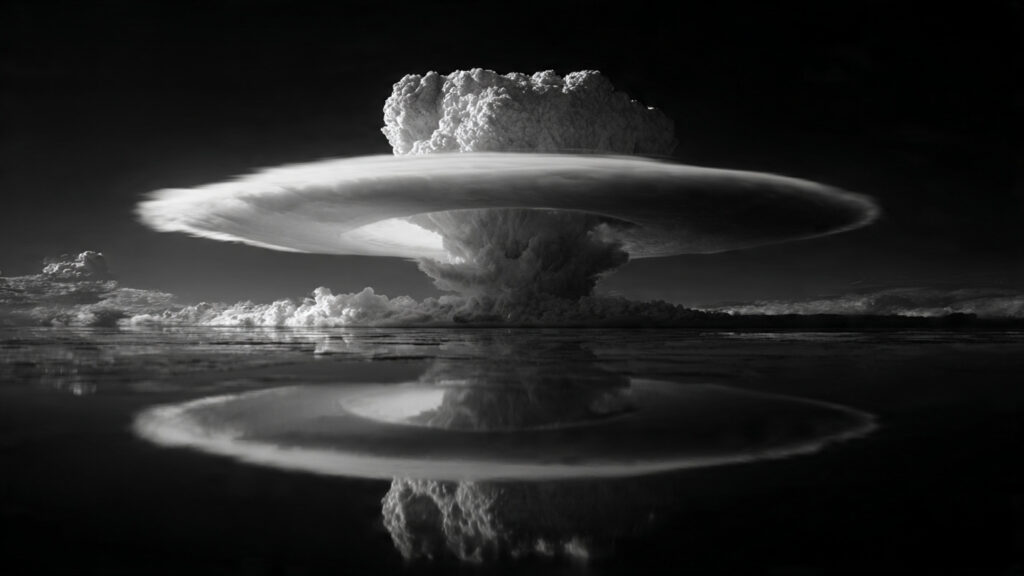
Villarroel’s team published statistical analysis finding a correlation between the timing of atmospheric nuclear tests and transient frequency in the archival plates. That finding is public. What the researchers themselves emphasize is that a statistical correlation is a different achievement from explaining its cause. Villarroel’s own approach has been to propose new, present-day observing programs designed specifically to distinguish between competing explanations, reflection, emission, atmospheric artifact, or something genuinely unexplained, rather than assert the answer is already known. That’s what working science looks like: notice something odd, publish it honestly, build a way to test it further. It isn’t a monitoring program confirmed from a single correlation.
The 1952 Washington Incident Was Never Fully Resolved
Radar operators and pilots reported unidentified returns and visual sightings over Washington D.C. across two weekends in July 1952, investigated as a top priority by Project Blue Book. The Air Force’s official explanation, offered by astronomer Donald Menzel among others, attributed the radar returns to temperature inversion, an atmospheric effect that can bend radar signals. Radar supervisor Harry Barnes and other operators publicly disputed that explanation at the time, saying the returns didn’t behave like inversion artifacts they’d seen before. That disagreement between witnesses and officials was never settled to every party’s satisfaction, which is the honest state of the case, uncertain, not proof of coordinated orbital surveillance timed to nuclear escalation. No Project Blue Book investigator, Villarroel, or Busko has made that claim.

What the Scientists Are Actually Saying
None of this needs an invented monitoring program to stay worth serious attention. VASCO’s transients are published, peer-reviewed, and unexplained, the kind of finding that should prompt further study rather than premature certainty in either direction. Villarroel’s own words are the ones worth trusting most: an intriguing archival signal worth building new instruments to test, not evidence of aliens on its own. Busko’s Hamburg cross-reference adds a data point to a live argument, not a verdict. The 1952 Washington case remains what historians have called it for seventy years, unresolved, with credible witnesses on both sides of an honest dispute. The scientists chasing this mystery are doing what good science looks like: staying curious, publishing carefully, and not claiming more certainty than the data supports.