
Why are humans, alone among the great apes, essentially hairless? It’s an open question in evolutionary biology, and one answer proposed for it, the aquatic ape hypothesis, has spent sixty years occupying an unusual position: taken seriously enough to keep being discussed, never accepted widely enough to become mainstream. What follows covers what the hypothesis actually claims, what evidence supports and complicates it, and where a widely repeated version of it goes seriously wrong.
Every other great ape, chimpanzees, gorillas, orangutans, is covered in dense fur. Humans are not, and the standard textbook explanation, that we lost our hair for thermoregulation on the hot savanna, has a documented problem: other savanna mammals, including ones considerably larger and more heat-stressed than early hominins would have been, kept their fur. Something else needs to explain human hairlessness, and the aquatic ape hypothesis is one serious, if minority, attempt to do that.

Where the Hypothesis Came From
The idea traces to marine biologist Alister Hardy, who first proposed it publicly in a 1960 lecture and a subsequent article in New Scientist, suggesting that human ancestors went through a semi-aquatic phase, wading and foraging in coastal or lakeside shallows, which could explain a cluster of traits that set humans apart from other primates. Desmond Morris discussed the idea in his popular 1967 book The Naked Ape, and the hypothesis found its most persistent and detailed advocate in Welsh writer Elaine Morgan, who developed and defended it across several books from the 1970s through the 2000s, including The Descent of Woman and The Aquatic Ape Hypothesis.

The hypothesis points to a documented cluster of human traits that are unusual among primates and, taken individually, do resemble features found in aquatic or semi-aquatic mammals.
The Traits the Hypothesis Points To
Human hair growth on the torso does run in a pattern some researchers have described as consistent with reduced water resistance, though this observation is actively contested rather than settled. Human babies show a reflexive breath-holding response when their faces are submerged in water, closing the airway automatically in a way infant chimpanzees and gorillas do not. Humans, unlike most other primates, carry a notable layer of subcutaneous fat, and newborns are coated in vernix caseosa, a waxy substance that has been compared, though the comparison is disputed, to protective coatings seen in some marine mammal offspring. Human noses point downward rather than forward, unlike the noses of other great apes. And the human diving reflex, a well documented physiological response involving slowed heart rate and blood redirection during facial submersion in cold water, is shared with genuinely aquatic mammals like seals and otters and is notably stronger in humans than in other primates.
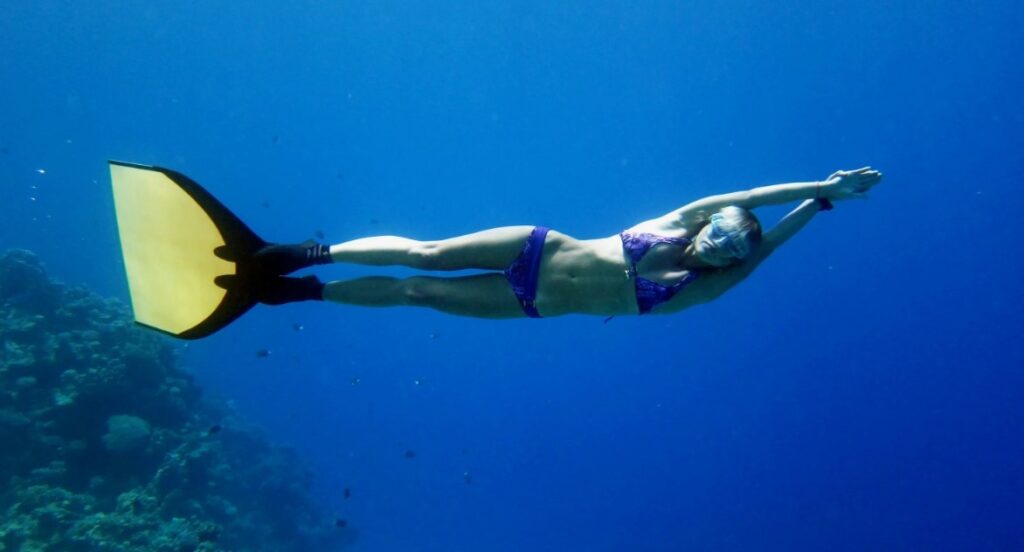
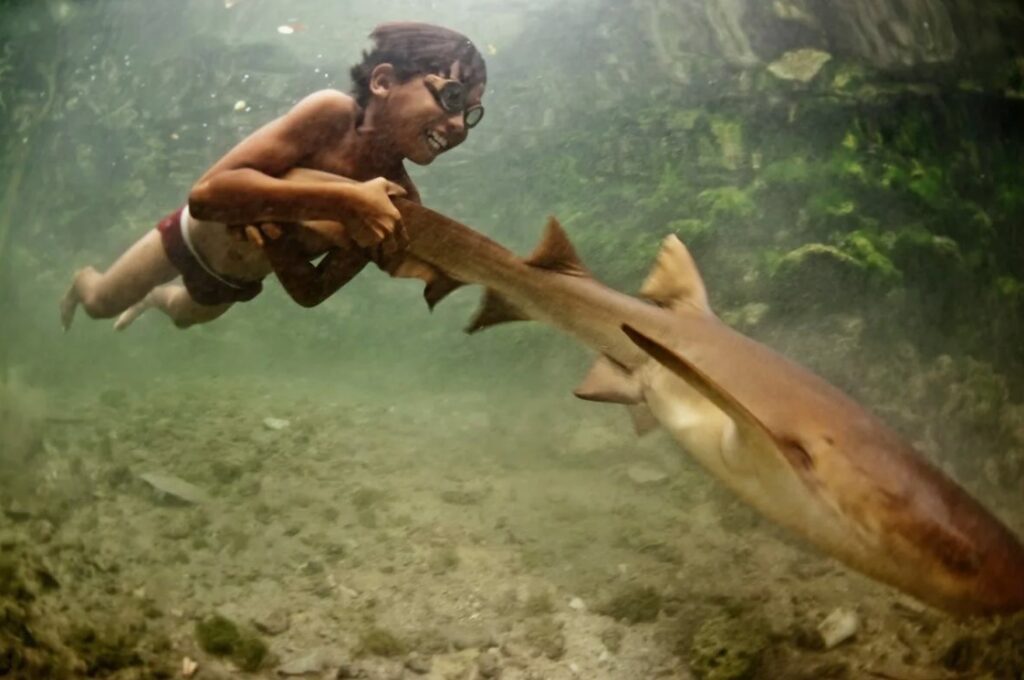
Modern free-diving populations are also remarkable and worth reporting accurately. The Bajau people of Southeast Asia, who have spent generations diving for food, have been found in a 2018 Cell study to have measurably larger spleens than neighboring non-diving populations, an adaptation that assists oxygen storage during breath-hold diving. The Moken people of the Andaman Sea have documented enhanced underwater visual acuity in children, developed through practice rather than inherited difference, according to the researchers who studied them. These are published, peer-reviewed findings, and they are evidence of remarkable human physiological plasticity and adaptation, not evidence for an ancient aquatic evolutionary phase specifically.
The Salt Question
One additional claim sometimes attached to the hypothesis deserves fair treatment on its own terms: humans have a distinctive craving for salt and a documented dietary need for iodine that most other primates don’t share to the same degree, and populations far from the sea have historically suffered from iodine deficiency conditions like goiter and, in severe cases, cretinism. This is well documented public health history, and it’s true that coastal and marine foods are unusually rich, reliable sources of iodine. Whether this reflects an ancestral coastal diet specifically, or simply reflects that iodine is scarce and unevenly distributed in terrestrial soils generally, meaning any human population far enough inland would show these effects regardless of ancestral habitat, is a genuinely open question that nutritional history alone doesn’t resolve. The deficiency pattern is well established. What it proves about deep ancestry is much less certain.
The Skeletal Case, and Its Limits
Advocates of the hypothesis have also pointed to human musculoskeletal patterns, our relatively flat, less prehensile feet compared to other apes, and the well documented burden of lower back problems associated with upright, land-based bipedal posture, as consistent with an ancestry partly spent in buoyant water, where a spine wouldn’t need to bear the same compressive load. This is an interesting anatomical observation, though it runs into the same basic problem as the hypothesis’s other claims: correlation with a plausible-sounding aquatic explanation isn’t evidence of one, when bipedalism itself, walking upright on land, is independently and extensively documented in the fossil record going back millions of years, including species like Ardipithecus ramidus and the various australopithecines, none of which show any skeletal indication of a semi-aquatic lifestyle. The fossil record we do have describes land-based bipedal apes in considerable detail. It simply doesn’t include the aquatic intermediate stage the hypothesis proposes.
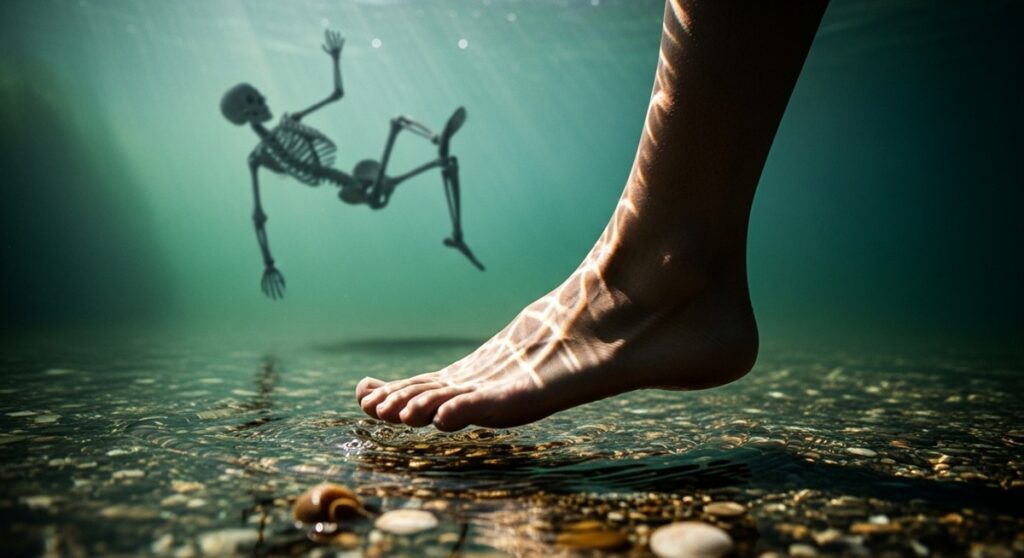
Sahelanthropus tchadensis, a roughly seven-million-year-old hominin fossil discovered in Chad and among the earliest known members of the human lineage, is sometimes cited by aquatic ape proponents because of features suggesting early bipedalism. The fossil’s actual, well documented context is a mixed woodland and savanna environment near ancient lakes and rivers, the kind of landscape that has always supported human and hominin populations without implying an aquatic phase of development. Proximity to water is not the same claim as an aquatic evolutionary adaptation, and treating early hominins living near lakeshores, which is most of them, as evidence for the hypothesis stretches the fossil’s actual documented context further than the excavating paleontologists’ own findings support.

Why Mainstream Paleoanthropology Has Not Accepted It
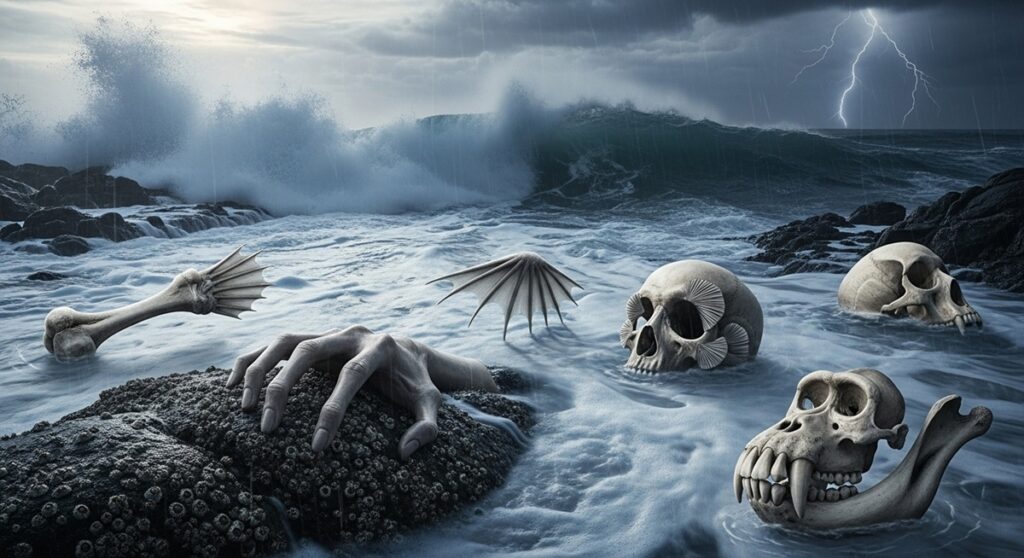
This needs to be stated plainly: the aquatic ape hypothesis is not accepted by mainstream paleoanthropology and evolutionary biology, and it has not been for the sixty years it has been proposed. The central objection, made by paleontologist Henry Gee among others, is straightforward: there is no fossil evidence supporting a semi-aquatic phase in human ancestry. No hominin fossils have been found with the skeletal adaptations, webbed or paddle-like limb structures, for instance, that would be expected in a lineage under sustained selective pressure toward aquatic life. The individual traits the hypothesis points to each have alternative, more widely accepted explanations that don’t require a shared aquatic cause: subcutaneous fat may relate to encephalization and the energy demands of a larger brain, thermoregulation adaptations may relate to endurance running rather than swimming, and the human nose shape has proposed connections to breathing dry air rather than to diving.
A significant rival explanation, proposed by biologists Dennis Bramble and Daniel Lieberman in a 2004 paper in Nature, is the persistence hunting or “endurance running” hypothesis: that human hairlessness, our efficient sweating system, and our distinctive leg and foot anatomy evolved to support long-distance running in pursuit of prey animals across open terrain, a hunting strategy still practiced by some contemporary groups. This hypothesis has substantially more support within mainstream paleoanthropology than the aquatic ape hypothesis does, though it doesn’t claim to explain every trait the aquatic hypothesis addresses either, and the honest scientific position is that human hairlessness likely has multiple contributing causes rather than one single, clean explanation.
What Modern Diving Populations Actually Show
The Bajau and Moken findings deserve more space than a passing mention, because they’re among the most fascinating documented science connected to this whole discussion, and they get frequently overstated in exactly the direction that undermines their actual significance. The 2018 study on the Bajau, led by researcher Melissa Ilardo and published in Cell, found that Bajau individuals have spleens roughly 50 percent larger on average than those of a neighboring, genetically related but non-diving population, the Saluan. Crucially, the study also identified a specific genetic variant, in a gene called PDE10A, associated with this enlarged spleen size and more common in the Bajau population, suggesting natural selection acting on a diving-adapted trait within recorded human history, likely within the last few thousand years at most, given how recently the relevant population split occurred.
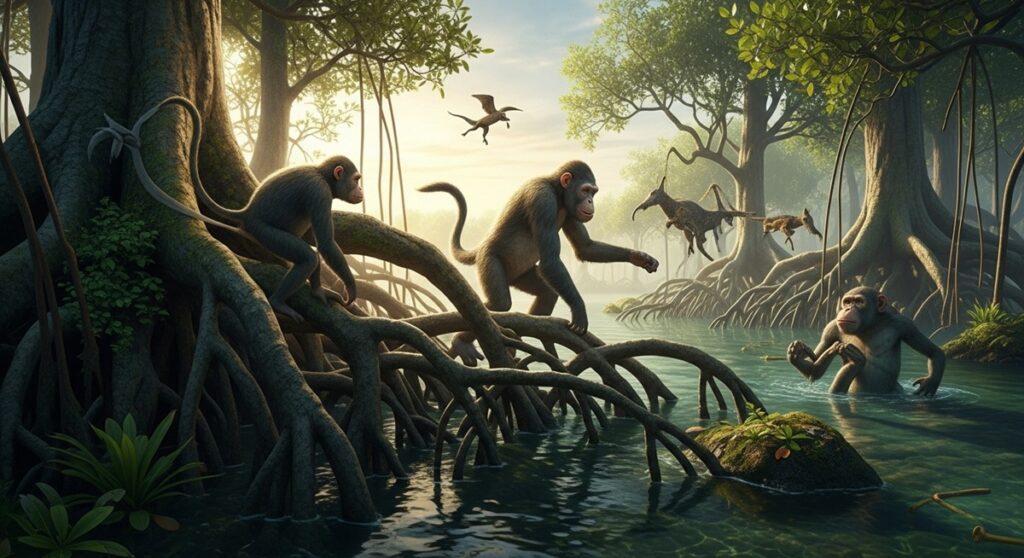
This finding deserves sitting with precisely because of what it demonstrates and what it doesn’t. It demonstrates, convincingly, that the human body can undergo measurable, genetically encoded adaptation toward diving performance within a remarkably short evolutionary timeframe, evidence of just how responsive human physiology can be to a specific environmental demand. It does not demonstrate, and the researchers who conducted the study have not claimed, that this reflects an ancient, species-wide aquatic phase in deep human ancestry. The Bajau’s diving adaptation is a recent, specific, regional development layered onto an already fully modern human body, not a surviving relic of a Pliocene aquatic ancestor. If anything, the Bajau case is a better argument against needing the aquatic ape hypothesis than for it: it shows that impressive aquatic adaptations can and do arise quickly through ordinary natural selection acting on ordinary modern humans, without requiring millions of years of semi-aquatic ancestry to explain them.
The Dolphin DNA Claim, Corrected
A specific claim circulates alongside discussions of the aquatic ape hypothesis, attributed to geneticist Eugene McCarthy, that genetic analysis shows humans are more closely related to dolphins than to other apes. This needs to be corrected directly rather than repeated, because it misrepresents McCarthy’s actual position. McCarthy, a geneticist with a doctorate from the University of Georgia, has proposed a different and unrelated hypothesis: that humans originated from ancient hybridization between chimpanzees and pigs, based on anatomical similarities he has catalogued between the two species. This pig-chimp hybrid hypothesis is itself widely dismissed within mainstream genetics and evolutionary biology, has no supporting peer-reviewed genetic evidence, and is not recognized within academic evolutionary biology. But it is also simply not a claim about dolphins at all, and attributing an “82 percent genetic congruence with dolphins” to McCarthy misrepresents his actual published work.
The underlying genomic picture is well established and not in dispute: humans share approximately 98 to 99 percent of their DNA with chimpanzees and bonobos, our closest living relatives by an enormous margin, confirmed across decades of genomic sequencing. No credible genetic study supports a closer relationship to cetaceans than to other great apes.
Where This Leaves the Hypothesis
The aquatic ape hypothesis occupies a genuinely interesting position in the history of science: not a hoax, not fringe pseudoscience in the way some ideas discussed elsewhere in this library are, but an actual minority hypothesis, proposed by credentialed scientists, that has failed for six decades to produce the fossil evidence that would move it from speculation to accepted theory. Its proponents point to a documented and genuinely puzzling cluster of human traits. Its critics point to a well established and, so far, unfilled gap in the fossil record. Both things are true at once, and the honest summary is that human hairlessness, subcutaneous fat, and diving physiology remain incompletely explained by mainstream science, with several competing partial explanations, of which the aquatic ape hypothesis is one, rather than a single settled answer.

What isn’t true, and shouldn’t be repeated, is that genetics ties humans to dolphins more closely than to chimpanzees, or that Eugene McCarthy’s actual research says anything of the kind. Whatever explains the genuine oddities of the human body, our missing fur, our layer of fat, our unusually strong diving reflex, our salt-hungry physiology, it isn’t that, and this sixty-year history of a legitimate scientific minority hypothesis deserves to be discussed on its own actual terms rather than through a fabricated genetic claim attached to the wrong researcher’s wrong theory. The honest state of the science is a genuinely interesting one on its own: several unresolved puzzles about the human body, several competing partial explanations, and a fossil record that has, so far, sided with the more conventional accounts without fully closing the door on why we look and function the way we do.