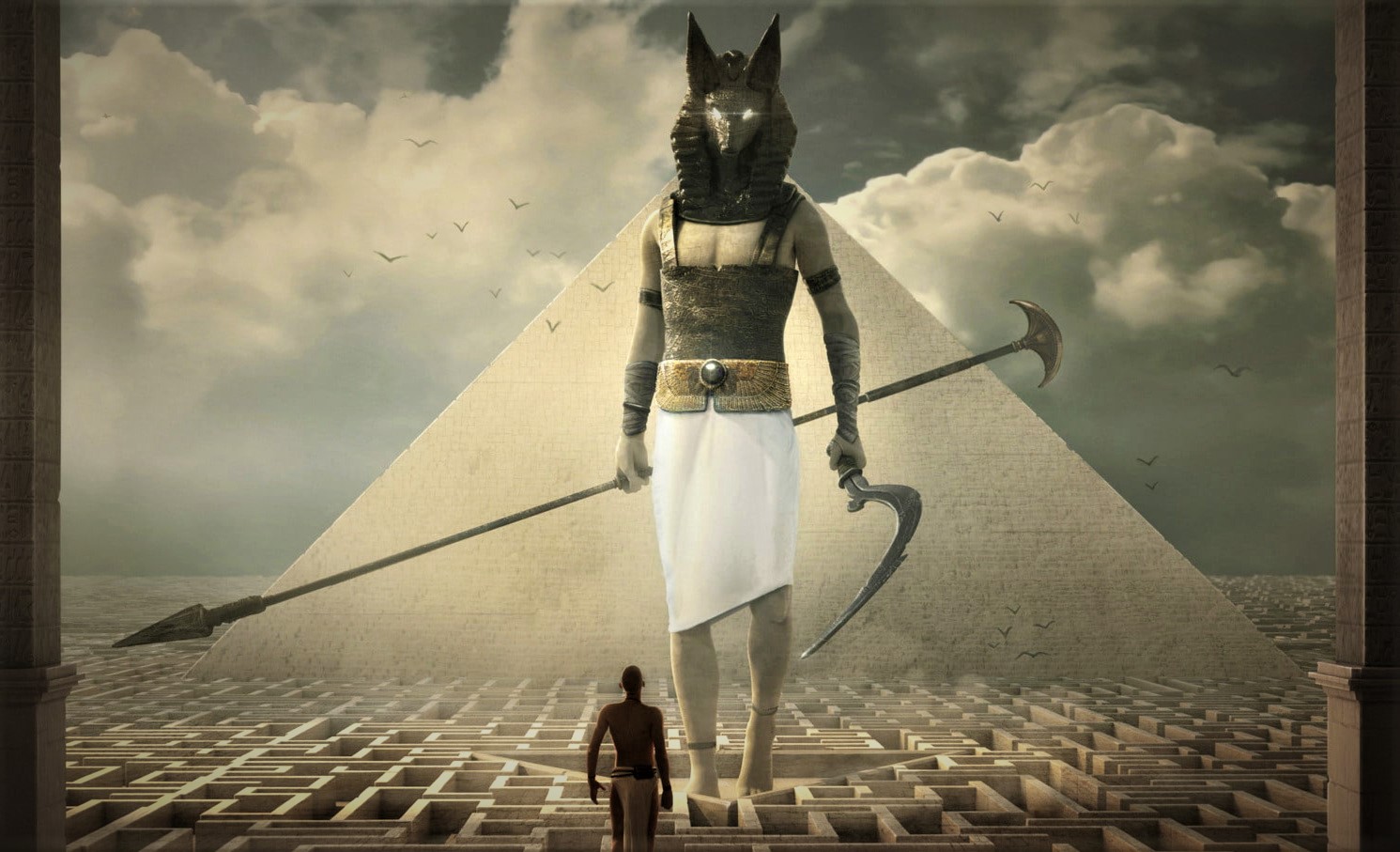





Hermeticism is one of the most influential yet often misunderstood esoteric traditions in human history. Rooted in the established ancient civilizations of Egypt and the Hellenistic Greek world, Hermeticism represents a profound synthesis of religion, science, mysticism, and philosophy. At the heart of this tradition lies a central and revolutionary idea: the fundamental unity of all existence.
Far more than a relic of the distant past, Hermeticism has left an indelible mark on a wide range of human endeavors, including Western spirituality, alchemy, Renaissance philosophy, Christian and Islamic mysticism, Freemasonry, and even modern psychology.
Today, Hermetic teachings offer a unique bridge between ancient wisdom and contemporary spiritual practices, resonating deeply with seekers of truth in an era marked by both technological innovation and spiritual fragmentation.
Historical Origins of Hermeticism | Egypt and Greece United
Understanding Hermeticism accurately requires first exploring its well established dual heritage. Hermeticism arose from the fusion of Egyptian and Greek mystical knowledge during the Hellenistic period, roughly the 4th century BCE to 4th century CE.

The Egyptians revered Thoth, the god of wisdom, writing, alchemy, and magic. Thoth symbolized the cosmic intelligence that structured the universe. When Greek culture encountered Egypt, Thoth was identified with Hermes, the Greek messenger god known for his mastery of language, commerce, and hidden knowledge.
This cultural and theological synthesis gave birth to Hermes Trismegistus, meaning “Hermes the Thrice-Great,” a mythical figure embodying supreme wisdom and serving as the spiritual father of Hermetic teachings.
The Corpus Hermeticum | The Sacred Texts of Hermeticism
The core writings of Hermeticism are collected in the Corpus Hermeticum, a body of 17 philosophical treatises composed in Greek between the 2nd century BCE and the 4th century CE. These dialogues, primarily between Hermes and his disciple, Tat, delve into profound topics such as the nature of God, the structure of the universe, the role of the human mind, the nature of matter and spirit, and the path to enlightenment and self-knowledge.
The unifying message of these works is striking: “God is One, and all things are manifestations of the One.” This concept forms the foundation of Hermetic philosophy, emphasizing that the divine is not separate from creation but is immanent within all aspects of reality.
Key Hermetic Texts and Teachings
Besides the Corpus Hermeticum, other pivotal Hermetic writings include The Asclepius, a detailed treatise focusing on the soul, body, and healing practices, exploring how divine forces influence human health and well-being, and The Emerald Tablet (Tabula Smaragdina), perhaps the most famous Hermetic text, which succinctly captures the essence of Hermeticism with the iconic phrase: “As above, so below; as below, so above.” This axiom expresses the idea that the macrocosm, the universe, and the microcosm, the individual, mirror each other.

Core Principles | The Kybalion and the Seven Hermetic Laws
Hermetic philosophy found renewed interest in the early 20th century with the publication of The Kybalion (1908), authored under the pseudonym “Three Initiates.” This text organizes Hermetic teachings into Seven Hermetic Principles: Mentalism, holding that all is mind and the universe itself is a mental creation of the All; Correspondence, “as above, so below,” the patterns of the cosmos reflecting themselves at all scales; Vibration, the idea that everything is in constant motion and nothing rests; Polarity, the notion that everything has opposites identical in nature but different in degree; Rhythm, everything flowing in cycles, like the rise and fall of tides; Cause and Effect, every cause having its effect and every effect its cause; and Gender, the principle that masculine and feminine forces exist in everything, working toward creation.
These principles have become essential building blocks for many modern spiritual practices, esoteric sciences, and personal development systems.
Scholarly Debate About Hermeticism’s Actual Origins
Adding scholarly context to the Egyptian-Greek synthesis described above matters, since this remains a genuinely active area of academic debate. Scholars including Garth Fowden, whose 1986 book The Egyptian Hermes remains a standard academic reference, and Brian Copenhaver, who produced a widely used critical translation and commentary on the Corpus Hermeticum, have extensively debated how much of the surviving Hermetic corpus reflects genuine ancient Egyptian religious and philosophical thought versus how much represents Hellenistic Greek philosophy dressed in Egyptian symbolic clothing for a Greco-Roman audience fascinated by Egypt’s reputation for ancient wisdom. This ongoing academic question doesn’t diminish Hermeticism’s genuine historical significance, but it’s worth knowing that Egyptologists and classicists continue actively debating the precise balance of Egyptian versus Hellenistic Greek philosophical content within these surviving texts.

The 15th-Century Rediscovery That Sparked the Renaissance Revival
The specific historical moment that brought Hermeticism back into European intellectual life after centuries of relative obscurity is worth expanding on. In 1460, a monk acquired a Greek manuscript containing the Corpus Hermeticum for Cosimo de’ Medici, the powerful Florentine banker and political leader. Cosimo was reportedly so eager to have it translated that he instructed the scholar Marsilio Ficino to set aside his ongoing translation of Plato’s complete works and prioritize the Hermetic texts instead, a recorded decision that reflects how highly Renaissance intellectuals of the period regarded Hermes Trismegistus, whom they genuinely believed, based on then-current chronological assumptions, to have been an actual ancient Egyptian sage predating Moses. This belief in Hermes’s extreme antiquity, later overturned by 17th-century philological scholarship demonstrating the Corpus Hermeticum’s actual, considerably later Hellenistic-era composition, gave Hermetic philosophy enormous intellectual authority throughout the Renaissance period specifically because contemporary readers believed it represented humanity’s oldest surviving wisdom tradition, older even than Greek philosophy itself.
Hermeticism and Alchemy | The Path of Inner Transformation
Alchemy, often misunderstood as the mere pursuit of turning base metals into gold, was deeply spiritual in its Hermetic roots. In truth, Hermetic alchemy symbolized the transformation of the soul: base metals represented the impure human soul, gold symbolized spiritual perfection, and the Philosopher’s Stone was not a literal stone, but the state of spiritual enlightenment and immortality.
Renowned alchemists and philosophers such as Paracelsus, John Dee, and Robert Fludd were profoundly influenced by Hermetic thought, blending spiritual insights with the early scientific inquiry that would eventually birth modern science.

Hermeticism’s Influence on Western Civilization
The ripple effects of Hermeticism throughout history are profound. Isaac Newton, one of the fathers of modern physics, dedicated significant time to studying Hermetic and alchemical texts, including his own translation of the Emerald Tablet. Francis Bacon, a key figure in developing the scientific method, drew heavily from Hermetic ideas of hidden natural laws awaiting discovery. Renaissance artists including Leonardo da Vinci worked within a cultural milieu genuinely saturated with Hermetic and Neoplatonic ideas circulating through figures like Marsilio Ficino’s Florentine Academy. The specific claim that particular symbols in named paintings encode deliberate secret Hermetic messages remains a widely repeated but not rigorously substantiated claim among mainstream art historians, worth distinguishing from the well-established broader Hermetic influence on Renaissance intellectual culture. Carl Jung, the pioneering psychologist, viewed alchemy as an allegory for the process of individuation, the integration of the unconscious and conscious mind.
Hermeticism heavily influenced Gnosticism, Neoplatonism, Christian mysticism, Kabbalah, Rosicrucianism, and Freemasonry. Its emphasis on personal spiritual experience over dogmatic belief made it a wellspring of mystical insight across multiple traditions.
Christian Hermeticism and the Esoteric Christ
This specific interpretive framework represents one historically attested strand of Christian mystical thought among several, worth stating clearly, not the mainstream position of any major Christian denomination, past or present. Historical Christian Hermeticists, including some Renaissance-era clergy who saw genuine compatibility between Hermetic philosophy and Christian theology, worked alongside considerable historical Church suspicion and, at times, outright condemnation of Hermetic and related esoteric practices, particularly following the 17th-century scholarly redating of the Hermetic texts. This historical tension between esoteric Christian interpretation and mainstream Church authority is itself worth understanding as well established intellectual history, rather than assuming either position represents settled Christian doctrine.
In the lens of Christian Hermeticism, Jesus is not merely a savior to be worshipped, but a Master Teacher, transmitting sacred wisdom that unlocks the divine potential within each person. This viewpoint aligns Hermetic Christianity closely with Eastern spiritual systems such as Vedanta in India, Zen Buddhism in Japan, and Sufism within Islamic mysticism, all of which advocate for direct, personal experience of the Divine through inner transformation rather than reliance on external authorities.
Hermeticism in the Modern World
In an era increasingly dominated by technological overload, materialism, and existential anxiety, Hermeticism offers a holistic worldview that integrates rational inquiry, mystical experience, and personal intuition. Many modern disciplines echo Hermetic principles, including meditation practices, manifestation techniques, esoteric psychology, and neuroscience exploring consciousness.
Today, Hermeticism remains a living tradition, guiding seekers toward a profound realization: the universe is an interconnected whole, and knowledge of the self leads to knowledge of the All.
The “Lords of Mind” Cosmology Isn’t Ancient
This needs a clear correction, since it attributes a much later esoteric system to ancient Hermeticism itself. The “Lords of Mind” and the planetary-stage evolutionary scheme, humanity progressing through Saturn, Sun, Moon, and Earth periods alongside ranks of angelic beings, does not appear anywhere in the Corpus Hermeticum, the Asclepius, or the Emerald Tablet. This specific cosmological framework is directly traceable to early 20th-century Theosophical and Rosicrucian esoteric writing, most closely resembling the planetary evolution schemes developed by Theosophical writers including Alice Bailey and related Rosicrucian fellowship teachings, which drew loosely on Hermetic terminology while constructing an entirely new cosmological system centuries after the actual historical Hermetic texts were written.

This is worth stating plainly rather than blending the two traditions together: the ancient meaning of “Thrice-Great” comes from actual, documented ancient sources, including the Greek Magical Papyri and Hermetic texts themselves, which use the title to signify supreme mastery across three domains, generally understood as philosophy, priesthood, and kingship, or alchemy, astrology, and theurgy depending on the specific ancient source. The “descending three levels of angelic hierarchy” explanation is a genuine feature of 20th-century esoteric systems worth knowing about on its own terms, but it should be clearly labeled as a modern esoteric development rather than presented as authentic ancient Hermetic cosmology.
Ongoing Academic Study of Hermeticism Today
Hermeticism remains genuinely, actively studied as an academic subject rather than existing only within spiritual practice communities. The Amsterdam Centre for the History of Hermetic Philosophy and Related Currents, an established academic research institute at the University of Amsterdam, has spent decades producing peer-reviewed scholarship on Hermeticism and related esoteric traditions, treating them as a significant field within the broader history of Western religion and philosophy rather than as fringe curiosities. Academic journals, including Aries: Journal for the Study of Western Esotericism, regularly publish research examining Hermeticism’s actual historical development, textual transmission, and influence, an ongoing scholarly conversation entirely independent of the modern spiritual practices Hermetic ideas have also inspired. This academic field is worth knowing about for anyone curious about Hermeticism’s actual documented history, since it offers a rigorous, source-grounded alternative to less carefully sourced popular retellings.
Hermeticism as a Living Path
In summary, Hermeticism is not merely an ancient curiosity or a secret teaching locked away in dusty tomes. It is a vibrant, living philosophy, offering transformative insights into the nature of reality, human consciousness, and the Divine.
By following the Hermetic path, individuals can awaken their intuition, harmonize mind, body, and spirit, experience the unity of all existence, and participate consciously in the great cosmic dance.
As the Emerald Tablet so beautifully declares: “Verily, without deceit, certain, and most true: that which is Below corresponds to that which is Above, and that which is Above corresponds to that which is Below, to accomplish the miracles of the One Thing.”