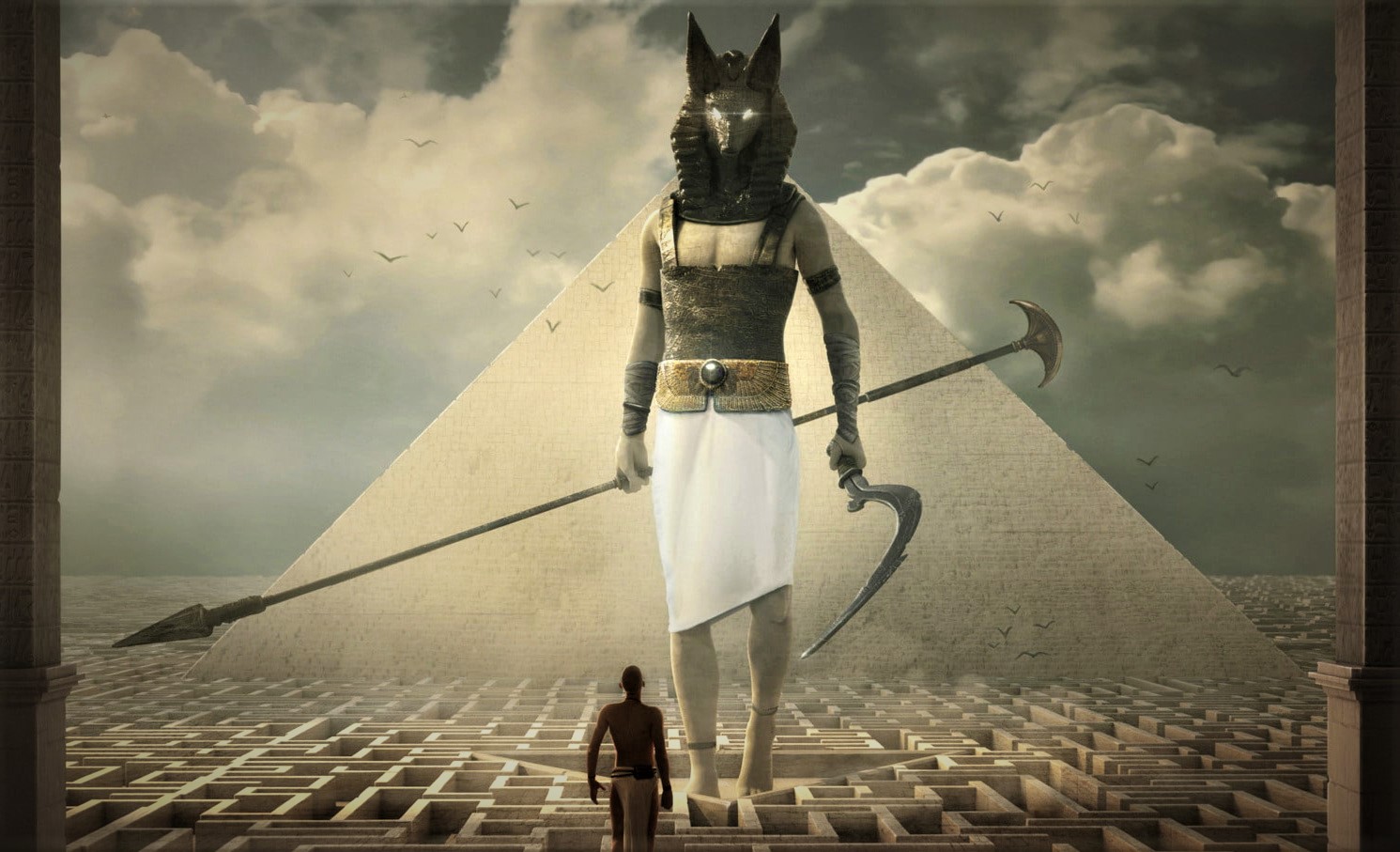




Long before psychiatry had a name, people were already trying to explain the most frightening things a human body could do: seizures, convulsions, hallucinations, sudden changes in personality, unexplained violence, voices that seemed to come from nowhere, and illnesses that appeared to seize control of the person suffering them. In many cultures, the answer was not that the body had malfunctioned. Something had entered it.
That explanation is ancient, but it was never as simple as “our ancestors believed every illness was a demon.” The historical record is stranger and more sophisticated than that. Mesopotamian healers could observe symptoms in extraordinary detail while attributing some of them to gods or demons. Greek physicians developed natural explanations for epilepsy while supernatural interpretations continued alongside them. Christian authorities eventually formalized exorcism but also insisted that illness must not automatically be mistaken for possession. The demon was therefore not simply the opposite of medicine. For much of human history, the two systems occupied the same world.
The Demon Was Older Than Christianity
The idea of a hostile supernatural being entering or afflicting a human body did not begin with Christianity. Ancient Mesopotamian cultures developed elaborate traditions of demons, protective spirits, exorcists, incantations, omens, and ritual medicine centuries before the New Testament existed. Their supernatural world was also considerably more complicated than the later Christian image of “the Devil.” Mesopotamian beings could be protective, dangerous, ambiguous, localized, associated with disease, or connected to particular circumstances. The modern habit of collapsing all of these entities into one category called “demons” can therefore erase the very distinctions ancient sources were trying to make.

Christianity inherited part of this older supernatural vocabulary and reorganized it around a theological conflict between God, angels, Satan, and evil spirits. In Christian tradition, demons became associated with the forces opposed to God, while possession came to mean a particularly dramatic form of demonic influence over a person. But even here the historical picture was never simply “strange behavior equals demon.” Christian writers debated causes, physicians continued to treat physical and mental illness, and ecclesiastical authorities eventually developed procedures intended to distinguish suspected possession from disease.
The Babylonian Patient Who Was “Seized”
One of the most revealing examples comes from ancient Mesopotamia, where the boundary between medicine and exorcism looks nothing like the modern boundary between hospital and church. The Babylonian diagnostic tradition known as Sakikkū contains systematic descriptions of symptoms and attempts to determine both diagnosis and prognosis. Its received form is associated with the scholar Esagil-kin-apli, who served under the Babylonian king Adad-apla-iddina in the eleventh century BCE. The tradition was not primitive in the sense of being careless. It was an organized attempt to observe what happened to sick people and interpret those observations within the intellectual universe available at the time.
Epilepsy is where the story becomes especially striking. Ancient Mesopotamian texts describe seizure phenomena in ways that historians of medicine can recognize today, including falling, convulsive movements, altered consciousness, and distinctive stages surrounding an attack. The terminology itself could connect seizure with being “seized” or possessed. In the ancient explanatory framework, the observed physical event could therefore be real and carefully described while its cause was assigned to a supernatural agent. Modern neurology changes the explanation, not the fact that the ancient observer was watching a real neurological event.

This distinction matters. It is tempting to look backward and laugh at the diagnosis because the proposed cause was wrong. But the surviving texts show something more interesting: people were capable of observing bodies accurately while interpreting those observations through a completely different causal model. The same intellectual problem still exists today. We see an event first. We construct an explanation second.
Epilepsy Was Never Exclusively a “Demon Disease”
There is an important correction to the popular story here. Ancient people did not universally believe epilepsy was supernatural. Greek medical tradition provides a direct counterexample. The Hippocratic work commonly known as On the Sacred Disease argued against treating epilepsy as uniquely sacred and attempted to explain it through physical processes. Later medical traditions continued developing naturalistic accounts even while supernatural interpretations remained culturally powerful.
The history therefore isn’t a clean march from “demons” to “science.” Competing explanations existed for centuries. A person could believe in spirits and still seek medical treatment. A physician could accept supernatural possibilities while carefully recording symptoms. A religious authority could perform rituals while insisting that ordinary illness required ordinary care. Even Byzantine sources show how unstable the boundary could become: epilepsy could be interpreted medically in one context and described as demonic possession in another, sometimes because the accusation itself served a political or religious purpose.
When Possession Became a Diagnosis of Its Own
Centuries later, European medicine began developing its own vocabulary for people who believed themselves possessed. The term cacodemonomania, meaning a pathological conviction or delusion involving possession by an evil spirit, belongs to the history of psychiatry rather than to ancient medical terminology. Nineteenth-century psychiatric writers used related language to classify forms of delusion, and twentieth-century clinicians continued to encounter patients whose experiences were interpreted through religious frameworks.
That creates an uncomfortable historical reversal. The belief in possession itself can become part of the symptom being studied. A person may genuinely hear voices, experience altered states, develop an overwhelming conviction that another being controls them, or interpret disturbing sensations through the religious language available in their culture. The experience is real as an experience even when the supernatural explanation cannot be established. Modern psychiatry therefore asks a different question from the exorcist: not “Which spirit has entered this person?” but “What is happening to this person’s perception, cognition, body, and sense of agency?”

That does not make the history of possession meaningless. Quite the opposite. Spirit-possession beliefs occur across an enormous range of cultures, and researchers have studied them as religious, psychological, social, and anthropological phenomena. The mistake is assuming that because a culture interprets an experience spiritually, the experience itself must be imaginary—or that because the experience is intense and inexplicable to the person experiencing it, a supernatural cause has therefore been demonstrated.
The Ritual Was Part of the Explanation
Once possession was understood as an external force, defeating it required more than treating the body. The response became ritual. Mesopotamian exorcists used incantations and ceremonies, a formalized tradition of protective ritual documented in detail in how ancient people protected themselves from evil spirits. Later Christian traditions developed prayers, sacred objects, blessings, fasting, confession, and eventually formal rites of exorcism. The underlying logic was consistent even when the rituals differed: if the affliction came from a hostile spiritual agency, the appropriate response was to invoke a greater spiritual authority.

But one of the most revealing details in the Christian record is how much caution eventually entered the ritual itself. The Catholic Church’s modern instructions explicitly distinguish exorcism from medical treatment and state that psychological illness belongs to the field of medical science. The Church’s official presentation of the modern rite, promulgated in 1999 as De Exorcismis et Supplicationibus Quibusdam, likewise cites Canon Law 1172 directly and says that an exorcism should not be performed casually and that suspected possession must be distinguished from illness. In other words, even within a tradition that accepts demonic influence as a religious possibility, the institutional rule is not “every disturbed person has a demon.”
The Bell, the Cross, and the Things We Added Later
This is where many modern retellings become unreliable. Stories about bells physically vibrating demons out of human bodies, universal rules about which objects repel which spirits, or demons possessing one standardized physical appearance often combine fragments from different centuries and cultures into a single imaginary “ancient tradition.” The historical record is messier. Bells certainly acquired powerful religious and protective symbolism in European Christianity, and sacred objects certainly played roles in rituals against evil, but that does not establish a universal ancient doctrine that the sound of bronze literally shook demons loose from their hosts.
The same caution applies to the supposed anatomy of demons. There was no single ancient species called “the demon,” with one standardized body, habitat, color, and diet. Mesopotamian, Greek, Jewish, Christian, Islamic, Slavic, and later European traditions describe supernatural beings in radically different ways. Some are monstrous. Some are human-looking. Some are invisible. Some are associated with particular diseases or locations. Some are moral tempters. Some are guardians. Others occupy categories that have no clean modern equivalent at all.
The “Energy Harvest” Is a Modern Metaphor, Not Ancient Science
One particularly seductive modern interpretation says demons feed on fear, anger, hatred, or other negative human emotions as though these emotions generate a measurable energy that supernatural beings consume. It is an evocative metaphor, but it should not be presented as an established teaching of ancient medicine or as a scientific description of reality. There is no established physical mechanism demonstrating that demons harvest emotional energy from human beings.
What is historically defensible is the older intuition underneath the metaphor: fear can become self-reinforcing. A frightened person becomes more vigilant, ambiguous sensations become threatening, threatening interpretations increase fear, and the resulting physiological arousal can make the original interpretation feel even more convincing. A culture that describes that loop as a demon feeding on fear is giving supernatural language to a pattern of human experience. The language is different from neuroscience. The underlying observation—that fear can amplify itself—is not.
What Ancient Possession Actually Tells Us
The deepest historical lesson is not that ancient people were foolish enough to confuse demons with disease. It is that humans have always needed explanations for experiences that threaten the boundary between self and world. A seizure can make the body appear temporarily commandeered. A hallucination can make an invisible presence feel physically near. A sudden change in personality can make relatives describe the person they knew as having been replaced. When the available intellectual vocabulary is supernatural, the explanation naturally becomes supernatural.
And yet the old records contain something more impressive than superstition. They contain observation. The Babylonian diagnostician watched the seizure closely enough to distinguish patterns, a record examined in detail in the mysterious case of the epilepsy demon tablet. Greek physicians argued about natural causes. Medieval and early modern religious authorities developed procedures for spiritual intervention. Modern psychiatry encountered people who experienced possession as subjectively undeniable. Each period inherited the mysteries of the previous one and attempted to place them inside a coherent model of reality.
Where This Leaves Us
There is one final idea worth rescuing from the old stories, provided it is kept in its proper category. The ancient demon can be read literally as part of a religious worldview, but it can also be read symbolically—as humanity’s oldest personification of everything that seems capable of taking control of us: addiction, rage, obsession, fear, illness, despair, and the destructive impulses we experience as though they belong to someone else.
That symbolic reading does not prove that demons exist, any more than the medical explanation proves that every historical possession account was simply a disguised neurological disorder. History rarely gives us such clean answers. What it gives us is the record of human beings standing in front of experiences they could not fully explain and inventing languages powerful enough to contain them, the same impulse behind traditions claiming humans gained knowledge from demons themselves.
The demon was one of those languages. The seizure was real. The fear was real. The suffering was real. The explanation changed.
And perhaps that is why the old stories survived. They were never really about monsters hiding in the darkness. They were about the terrifying possibility that something can happen inside a human being that the human being cannot control—and the equally enduring human need to understand what, exactly, has taken hold.