

The mountain was sacred before any written record in the region existed.
The Wintu, Modoc, and Shasta peoples have maintained continuous sacred beliefs associated with Mount Shasta for a period that the available archaeological and ethnographic record places at several thousand years minimum. What each holds is not uniform, because these are distinct peoples with distinct cosmological frameworks, but they share a convergence: Mount Shasta is a place where contact between the human world and another order of intelligence is possible, and where that contact has occurred within living memory across generations.
Wintu belief specifically describes the mountain as the dwelling place of the Chief of the World, a being of significant power whose relationship to the human population is custodial rather than hostile. The nature of this being, whether it is understood as a spiritual intelligence without physical form or as a physical being who inhabits the mountain’s interior, varies in the accounts. What is consistent is the mountain’s designation as a contact point rather than a merely sacred landscape feature.
Modoc belief includes accounts of encounters with beings associated with the mountain who are described in terms that overlap with the Lemurian descriptions recorded in the Inner Earth piece in this library: tall, luminous, with physical characteristics that distinguish them from ordinary human beings. The Modoc accounts appear in the ethnographic literature of the late nineteenth and early twentieth centuries, before the New Age Mount Shasta belief that the source material primarily references had developed.
The Shasta people’s beliefs are the most directly tied to the mountain as a physical home of intelligences rather than as a contact point for purely spiritual beings. Their accounts describe a subterranean world within the mountain whose inhabitants occasionally emerge, with physical descriptions that are consistent across independent accounts.
Three independent indigenous belief systems, recorded before the Mount Shasta New Age tourism literature developed, describe the mountain as a location of contact with types of non-human intelligence. The consistency across belief systems that have no established coordination is the starting point for taking the Mount Shasta phenomenon seriously rather than dismissing it as accumulated folklore.
The Mountain’s Physical Properties
Mount Shasta is the second highest peak in the Cascade Range at approximately 4,322 meters. It is a stratovolcano with a complex eruption history, last erupting significantly in 1786 and remaining volcanically active in the sense of recorded fumarolic activity, seismic events, and hydrothermal features. Its most recent significant activity, the 1786 eruption, was observed and recorded by the crew of a French naval vessel off the California coast.
The USGS geological survey of the region has recorded a significant magnetic anomaly associated with the mountain. The anomaly reflects the magnetic properties of the volcanic rock and the complex geological structure of the mountain’s interior, which includes extensive cave systems whose full mapping has not been completed. The cave systems are real, numerous, and in some cases of considerable size and complexity.
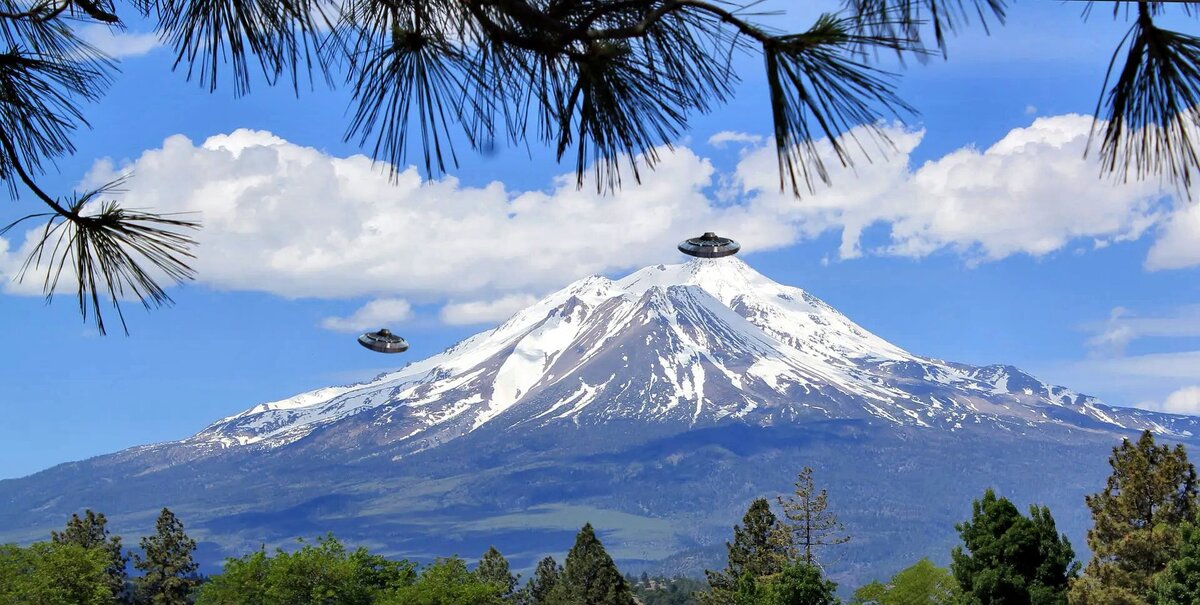
The lenticular clouds that form above Mount Shasta are among the most dramatic examples of this atmospheric phenomenon in the continental United States. Lenticular clouds form when stable moist air flows over a significant topographic obstacle, creating a standing wave downstream in which the moisture condenses at the wave crest. The result is a smooth, lens-shaped cloud that appears stationary despite strong upper-level winds because the condensation and evaporation maintain it in a fixed position relative to the mountain. Mount Shasta’s height, isolation, and position in the predominant airflow patterns of the region make it a consistent generator of lenticular formations, sometimes stacked in multiple layers, that can appear remarkably structured and even craft-like in certain lighting conditions.
The distinction between the genuine atmospheric phenomenon, well recorded and photographable, and the claimed observation of structured craft within or behind the cloud formation, is precisely the kind of distinction that the monkeyandelf evidentiary standard requires. The lenticular clouds are real. The observations of craft within them are individual testimony without corroboration that permits independent verification.
The Rosicrucian Influence
The Mount Shasta Lemurian belief in its current form was significantly shaped by the Rosicrucian movement’s engagement with the mountain beginning in the early twentieth century. Rosicrucianism itself, recorded in the Gnostic Transmission piece in this library as part of the broader esoteric transmission chain from Alexandria through Hermetic thought, brought a cosmological framework to its interpretation of Mount Shasta.
The Rosicrucian cosmology, drawing on the Theosophical root race framework recorded in the Atlantis piece in this library, placed the survivors of the destroyed Lemurian civilization as the predecessors of the current root race, and located communities of these survivors in various geographically isolated or underground locations. Mount Shasta was identified by Rosicrucian writers including Harvey Spencer Lewis as one of the primary locations of continued Lemurian presence, specifically in a subterranean city known as Telos.
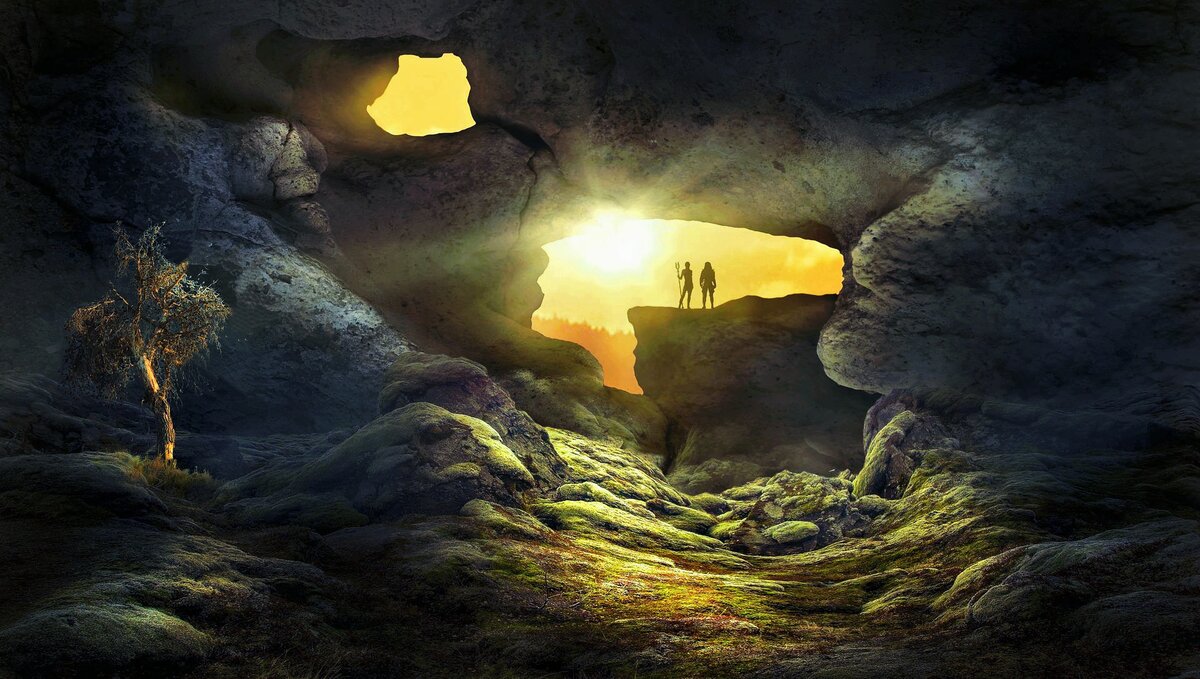
The source material correctly notes that the Telos story derives from Frederick Spencer Oliver’s 1894 novel A Dweller on Two Planets, whose protagonist encounters Lemurian survivors in an underground city beneath Mount Shasta. The novel is fiction. The Rosicrucian movement that subsequently built on it treated it as channeled transmission rather than invention, in the same way that Blavatsky’s writings were understood as transmitted rather than composed.
Whether Oliver’s account was purely fictional invention or drew on actual older accounts that he encoded in a fictional frame is not established by the available record. What is established is that the Telos story that Mount Shasta New Age culture centers on has a traceable origin in a nineteenth-century novel, which does not make it false but does require treating it as a claimed transmission rather than a historical record.
The Rosicrucian engagement with Mount Shasta, as part of the broader transmission chain in which esoteric orders preserved and transmitted ancient knowledge frameworks, connects the mountain’s spiritual significance to the longer history covered in this library rather than treating it as an isolated local folklore development.
J.C. Brown and the Cave
The J.C. Brown account represents a category of Mount Shasta claim that is enough to take seriously as testimony while being unverifiable in any of its details.
Brown claimed to have been employed by the British mining company of Lord Cowdray to survey the Mount Shasta region for mineral resources in the early twentieth century. During the survey he reportedly entered a cave system that extended deep into the mountain and discovered gold shields, artifacts, and what he described as mummies, some of abnormal size. He recorded the location and reportedly prepared to lead a group of investigators to the site in 1934 when he disappeared.

The Cowdray mining interests are established historical entities with operations in North America during the relevant period. The survey Brown claimed to conduct is not recorded in any verifiable record. His disappearance is reported in accounts that derive from the same Mount Shasta enthusiast community that recorded his claims, without independent verification.
The structural template of Brown’s account follows the pattern that the anomalous skeletal remains piece in this library covers across multiple cases: a credentialed observer discovers remains of anomalous size in an inaccessible location, prepares to present the findings publicly, and disappears before the presentation occurs. Whether Brown’s case follows this pattern because it is a genuine instance of the suppression mechanism or because the template has been applied to a fabricated account in a community that knows the template, is not determinable from the available evidence.
What the account provides is a reported finding, gold artifacts and oversized mummies in a cave system beneath Mount Shasta, that is consistent with the broader Lemurian survival and underground civilization frameworks covered across this library. Whether it is true depends on evidence that the available record does not contain.
What the Mountain Actually Is
Mount Shasta’s significance in the context of this library’s framework is not primarily about the claims New Age belief has made about it, most of which are unverifiable at the individual claim level. It is about the convergence of established physical properties and independent cultural accounts that the conventional framework dismisses as a unit when it should examine as individual claims of varying quality.
The magnetic anomaly is recorded by the USGS. The cave systems are confirmed and partially mapped. The three independent indigenous belief systems predate New Age belief and appear in the ethnographic literature. The atmospheric phenomena are real and among the most dramatic examples of their kind in the continental United States. The Rosicrucian and Theosophical frameworks connecting the mountain to Lemurian belief are part of the broader esoteric transmission chain whose broader significance this library has established.
The convergence of these established elements with the claimed encounters, the cloaked figures, the underground mechanisms, the subterranean city, places Mount Shasta in the same category as Skinwalker Ranch in the monkeyandelf framework: a location where the recorded physical evidence and cultural accounts are significant enough to take seriously, and where the claimed encounters are testimony that warrants recording rather than dismissal, even where individual claims cannot be independently verified.
The Wintu say the Chief of the World lives in the mountain. The Modoc describe encounters with luminous beings associated with it. Shasta belief describes subterranean inhabitants who occasionally emerge. The physical mountain has cave systems whose full extent is not mapped, a magnetic anomaly whose cause reflects complex interior structure, and atmospheric properties that produce phenomena visible from hundreds of kilometers away.
The New Age belief system that has grown around these foundations contains genuine elements and fictional ones. The fiction does not invalidate the foundations. The foundations are there regardless of what the nineteenth-century novels and twentieth-century channeling sessions said about them.
Mount Shasta is the highest unresolved question in the Lemurian and Inner Earth framework that this library has been building. The indigenous beliefs that predate every modern claim about it are describing something specific. What that something is has not been determined by any investigation that the available evidence permits calling definitive.
The mountain is still there. What the Wintu believe is still maintained. The cave systems have not been fully mapped. The magnetic anomaly has not been fully characterized. The lenticular clouds form above it regularly and the people who watch them continue to report what they see.
The framework exists. The investigation is incomplete.