




The document is in the public record. It has been there since its declassification. Anyone can read it.
Captain Henry S. Shields of United States Air Forces in Europe wrote a formal military intelligence report on the events of September 18-19, 1976 above Tehran and submitted it through Defense Intelligence Agency channels. The DIA’s evaluation form attached to the report assigned the incident’s information content a rating of Excellent and its reliability a rating of Confirmed. These are not informal characterizations. They are formal categories in the DIA’s assessment taxonomy, the same categories applied to intelligence products from human assets in hostile territory.
The distribution list on the document includes the Secretary of State, the National Security Agency, the Central Intelligence Agency, and the White House Situation Room. The report was considered significant enough to reach every major intelligence and policy organ of the United States government simultaneously.
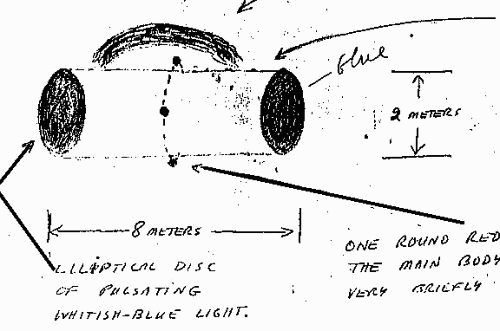
It describes a craft that deactivated an F-4 Phantom II interceptor’s weapons control system at the exact moment the pilot achieved a targeting lock. It describes a second craft that separated from the primary, pursued the F-4 through a high-G evasive maneuver, maintained position four nautical miles behind the aircraft, and then returned to the primary. It describes a third craft that separated and landed on a dry lake bed, illuminating an area of three kilometers with a sustained light output. It describes a fourth craft, cylindrical, eight meters in length, hovering over the aircraft during the recovery flight.
The radiation survey of the landing site was conducted. The results were classified.
Nobody has explained what the pilots saw.
The Night It Started
Tehran on the night of September 18, 1976 was a city under the government of Mohammad Reza Shah, eight months before the revolutionary pressures that would end the imperial period. The Iranian Imperial Air Force maintained standard surveillance operations from its command post in the capital. At 0030 the first civilian call came in reporting anomalous lights over the northern part of the city.
Then three more calls arrived within minutes of each other from separate parts of the city’s periphery.
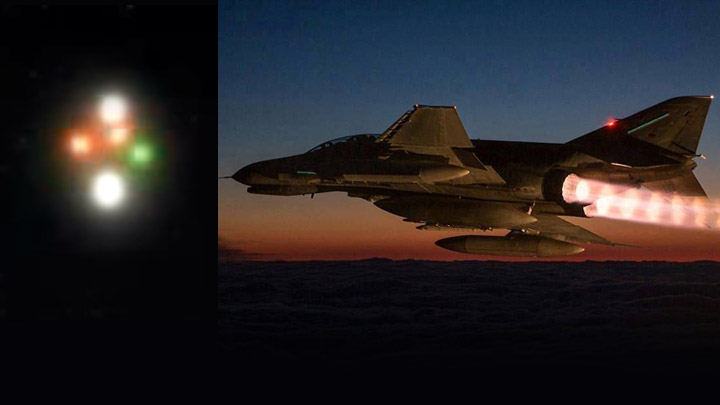
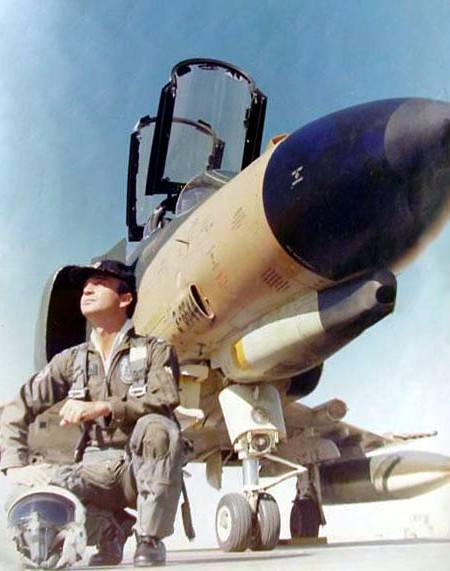
The duty officers went outside and looked. What they saw was not stars or planets and not any aircraft configuration they recognized. An F-4 interceptor was dispatched immediately. Lieutenant Yaddi Nazeri was the pilot. He reported the object as a brilliantly lit body visible at seventy miles distance, which for a non-luminous object at altitude would be impossible and for a self-luminous object implies a radiance significantly exceeding any conventional aircraft lighting system.
When Nazeri closed to twenty-five nautical miles, his entire instrument suite and communication system went dark simultaneously. Every electronic system on the aircraft failed at the same moment. The failure resolved when he turned away and increased his distance. When the distance increased, the systems returned. The correlation between proximity to the object and total electronic failure was direct and reproducible.
Nazeri returned to base. A second F-4 was dispatched within ten minutes.
What Jafari’s Aircraft Recorded
Lieutenant Parviz Jafari and his navigator closed on the object from a different vector. On radar the return was comparable to a Boeing KC-135 Stratotanker, a large four-engine refueling aircraft with a significant radar cross-section. The size implied by the radar return was inconsistent with what they could see visually: a pattern of strobe lights in a rectangular configuration alternating between blue, green, red, and orange at a frequency so rapid that all four colors appeared simultaneously.
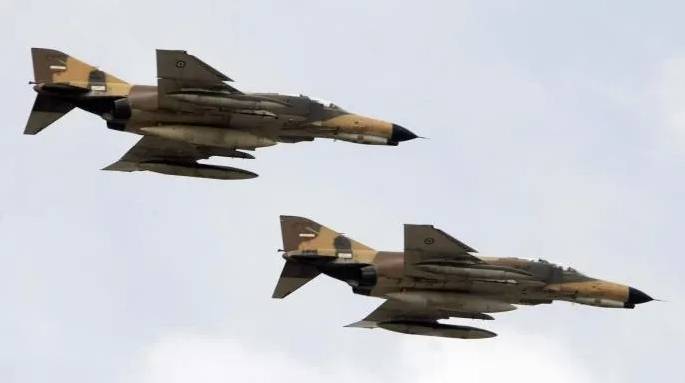
The object maintained a constant distance from the F-4 as Jafari pursued it south over Tehran, tracking him at exactly his speed, decelerating when he decelerated, accelerating when he accelerated, holding the separation constant. It was not fleeing. It was matching.
When a second, smaller luminous object detached from the primary and moved directly toward the F-4, Jafari initiated a weapons engagement sequence. He brought the AIM-9 Sidewinder into targeting mode and achieved a confirmed infrared lock on the approaching object.
The fire control panel went dark. The UHF communications system failed simultaneously. The internal communications between Jafari and his navigator went down.
The AIM-9 requires a confirmed heat source lock before the fire control system will authorize launch. The lock had been confirmed. The system had authorized. Jafari’s finger was on the trigger. At that moment, and not before it, the entire weapons and communications suite on a military interceptor over a major capital city deactivated.
In his public testimony at the National Press Club in Washington DC in 2007, Jafari, then retired at the rank of General, was specific about the timing. The deactivation did not occur when he entered the proximity zone. It did not occur when he initiated the targeting sequence. It occurred at the confirmed lock moment, at the exact instant the system registered that a missile was ready to fire and the pilot had initiated the launch authorization.
Whatever the craft was, it knew what the fire control system was doing in real time and responded to it at the moment that response was required.
The Three Objects
The smaller craft that had approached and triggered the weapons deactivation returned to the primary after Jafari’s evasive maneuver. As it reintegrated with the main object, a third luminous body separated from the primary and dropped at high speed toward the ground below.
Jafari and his navigator tracked it visually and on instruments, expecting an explosive event on impact. The object did not impact. It slowed and came to rest on the surface of a dry lake bed, maintaining a sustained luminous output that illuminated a radius of approximately three kilometers. The illumination continued while the F-4 made a low pass to determine the exact location for reporting to base.
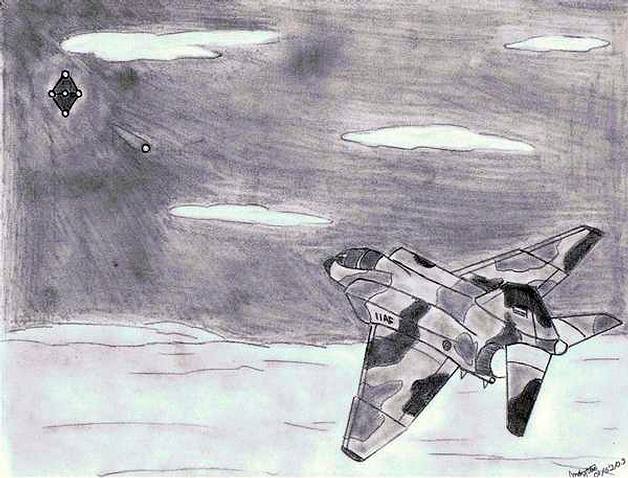
As Jafari pulled out of the low pass and began the return to base, he and his navigator observed a fourth object hovering above them. Cylindrical. Approximately eight meters in length. Fixed lights at each end and a flashing light at its center. When Jafari asked Tehran Control whether they had a radar contact on this object, they did not. A civilian airliner in the area at the same time subsequently reported identical communication system interference without reporting any visual sighting.
The following morning a military helicopter transported the F-4 crew to the landing site on the dry lake bed. The site appeared undisturbed. A survey team was dispatched to conduct tests including radiation measurement. The survey team conducted its work. The results were classified and have not been released in the forty-nine years since the event.
The Pattern
The Tehran incident is not an isolated event in the recorded history of military encounters with craft demonstrating this capability.
Nine years before Tehran, on March 16, 1967, USAF Captain Robert Salas was the missile launch officer on duty at Malmstrom Air Force Base in Montana. In the early morning hours, security personnel above the underground launch control facility reported a glowing red oval object hovering above the facility’s perimeter. While Salas was on the phone with his topside commander, the first of the ten Minuteman I nuclear missiles in the facility’s flight went into no-launch status. Then the second. Then all ten, in rapid sequence, within seconds of each other.
Each Minuteman missile is in a hardened underground silo separated from the others by significant distances. Each has its own independent guidance, power, and fire control system. The simultaneous failure of all ten to no-launch status is not achievable by any single point of failure in the facility’s known architecture. The probability of simultaneous independent failure across ten separate hardened systems is not within the range of conventional equipment failure.
Salas testified to this under oath at the National Press Club in 2010. He filed a FOIA request for the incident report and received it. The report confirms the incident. It does not explain it.
The Washington DC overflight of July 1952, the most visually well recorded UAP event in American history before the Nimitz incident, included multiple cases of Air Force interceptors whose weapons systems became non-operational in proximity to the tracked objects. The failure mode was the same as Tehran: fire control systems deactivating at the moment of targeting lock.
Three separate incidents. Three separate decades. The same behavioral pattern. At the moment a human weapons system achieves a targeting lock on one of these craft, the weapons system stops working.
This is not random electromagnetic interference from an exotic propulsion system. Random interference does not target fire control systems specifically at the moment of weapons lock. It does not leave navigation systems operational and communications systems operational while selectively deactivating the weapons authorization circuit at the precise moment it is activated.
This is a capability being demonstrated. The demonstration has been consistent across nearly seven decades of recorded encounters.
What the Distribution List Means
The Shields report was distributed to the Secretary of State, the NSA, the CIA, and the White House Situation Room because someone in the DIA assessment chain determined that the Tehran incident required the attention of every major decision-making body in the American national security apparatus simultaneously.
The DIA’s formal ratings of Excellent for information content and Confirmed for reliability are not ratings applied to ambiguous or uncertain intelligence products. They are the ratings applied to information that the assessment process has determined to be accurate and complete. The institution that rates intelligence products for distribution to the White House assigned its highest confidence ratings to an account of a craft that deactivated a military jet’s weapons system at the moment of firing.
The White House received this report. The NSA received it. The CIA received it. The Secretary of State received it. None of these institutions have publicly disclosed what conclusions, if any, they drew from the information they received.
The Shields report is in the National Security Archive at George Washington University. It has been publicly available since its FOIA declassification. The full distribution list is in it. The DIA ratings are in it. The classified radiation survey results are not.
Jafari is alive. He has told his story publicly, under his own name, at a named venue in Washington DC, with his full military service record attached to the testimony. His account has not been formally refuted by any institution that received the Shields report.
The craft demonstrated its capability to the Iranian Air Force, to the US intelligence community, and to the White House. The demonstration appeared in a formal military report. The report was distributed to the highest levels of the American government. The results of the radiation survey conducted the following morning have been classified for forty-nine years.
Whatever the craft in these three cases are, they share a consistent behavioral signature: weapons systems failing specifically at the moment of lock, across three separate militaries and three separate decades. What that signature means, whether it reflects a deliberate policy, an incidental side effect of the craft’s own systems, or something else the available evidence does not distinguish between, is the question these cases raise rather than answer.
The Tehran report is the most formally recorded version of that demonstration in the declassified record. The White House read it in 1976. Nobody has explained what the pilots saw.