




The glass in Tutankhamun’s pectoral is the most consequential starting point.
The pectoral ornament found in the boy pharaoh’s tomb at Luxor in 1922 contains a carved scarab beetle at its center. The beetle is carved from a pale yellow-green translucent stone that Howard Carter catalogued as chalcedony, a form of quartz. Decades passed before anyone looked closely enough at the stone’s properties to realize the identification was wrong.
In 1999, Italian mineralogist Vincenzo de Michele reanalyzed the stone and confirmed what the optical and chemical properties had been indicating: the scarab is carved from Libyan Desert Glass, a material found in one field in the Egyptian-Libyan desert approximately 800 kilometers west of Cairo. The ancient Egyptians had collected a piece of material from a remote desert field, transported it over 800 kilometers, and carved it into the most symbolically significant element of their most sacred royal ornament.
Why this material from this location was considered worthy of a pharaoh’s burial pectoral is a question that the Libyan Desert Glass field’s properties make more interesting rather than less.
The glass formed at temperatures exceeding 1600 degrees Celsius, significantly higher than the melting point of the local sandstone, approximately 1100 degrees Celsius. The field covers an area of approximately 6,500 square kilometers. The glass is approximately 29 million years old. Its silicon dioxide content is approximately 98 percent, making it the purest naturally occurring silica glass known. The impurities it contains, iridium, nickel, and certain platinum group elements at concentrations consistent with extraterrestrial material, connect it to a high-energy event involving material from outside Earth.
The conventional explanation is a meteorite airburst, an atmospheric explosion of a large incoming body before surface impact, similar to the 1908 Tunguskan event but significantly more energetic. The airburst hypothesis explains the absence of a crater, since an airburst does not excavate a crater, and the high formation temperature, since an airburst produces intense thermal radiation at the surface below the explosion point.
Whether the airburst hypothesis accounts for all of the Libyan Desert Glass field’s characteristics is a matter of ongoing research whose conclusions are not fully settled. The field’s extent, 6,500 square kilometers, is significantly larger than the area affected by the 1908 Tunguska airburst, whose blast damage covered approximately 2,000 square kilometers. The formation temperature required exceeds what the airburst models for Tunguska-scale events consistently produce.
The Egyptians who carved the scarab had no airburst hypothesis. They had a piece of glass from the desert that was harder than any other natural stone, clearer than any other natural material, and unlike anything else in the known world. They considered it appropriate for a pharaoh’s burial.
The Tektite Fields
Libyan Desert Glass is one member of a global class of materials called tektites, natural glasses formed by the melting and rapid cooling of terrestrial material during high-energy impact events. Tektites are found in geographic fields whose distribution across the Earth’s surface records the locations of ancient impact events.
The four major tektite fields are distributed in a way that is not random and is not fully explained by the current impact record.
The Australasian tektite field is the largest, covering approximately 10 percent of the Earth’s surface across Australia, Southeast Asia, and the Indian Ocean floor. The tektites in this field are dated to approximately 770,000 years ago. No impact crater of the appropriate size and age has been identified for the event that produced them. An impact large enough to scatter tektites across 10 percent of the Earth’s surface should have left a crater of approximately 30 to 50 kilometers in diameter. The crater has not been found.
The North American tektite field, containing the material called bediasites in Texas and georgiaites in Georgia, is dated to approximately 34 million years ago and corresponds to the Chesapeake Bay impact crater, whose identification in 1994 resolved the previously missing source crater problem for this field.
The Central European moldavite field, whose characteristic green tektites are found across the Czech Republic, Austria, and Germany, dates to approximately 14.8 million years ago and corresponds to the Nördlinger Ries crater in Bavaria, a confirmed impact structure of approximately 24 kilometers in diameter.
The Ivory Coast tektite field dates to approximately 1.07 million years ago and corresponds to the Lake Bosumtwi crater in Ghana, a confirmed impact structure.
Three of the four major tektite fields have identified corresponding impact craters. The Australasian field does not. The missing crater for the world’s largest tektite field is one of the most significant unresolved questions in impact geology. Whether the crater is concealed beneath the ocean floor, has been obliterated by subsequent geological activity, or reflects a different type of event than the standard impact model proposes, has not been determined.
The Atacama Glass
In 2012, researchers from the University of Antofagasta in Chile and collaborating institutions published a paper in the journal Geology describing a field of silica glass in the Atacama Desert in northern Chile. The glass was dated to approximately 12,000 years ago and covered an area along a corridor approximately 75 kilometers long.
The formation temperature required for the Atacama glass, in excess of 1,700 degrees Celsius, exceeds the melting point of the local silicate sand and is consistent with the thermal effects of a meteorite airburst rather than ground impact, since no impact crater was identified in association with the glass field.
The chemical analysis of the Atacama glass included the identification of mineral phases and metallic spherules whose composition suggests an extraterrestrial contribution to the melt, consistent with the vaporization of an incoming meteorite and its mixture with the local surface material during the airburst event.
The 12,000-year date places the Atacama airburst event at the beginning of the Younger Dryas-to-Holocene transition, the period of maximum post-glacial climate disruption that the Lost Civilizations and Atlantic crossing pieces in this library connect to the end of the pre-Holocene civilizational period. Whether the Atacaman event was a contributing factor to the climate and environmental disruptions of that period, or is a coincident but independent event, is not established.
The Atacama glass field is one of the most recent discoveries in the growing catalog of ancient high-energy surface events whose physical evidence is preserved in the geological record but whose full extent and frequency have not been systematically surveyed.
Mohenjo-Daro in Its Physical Context
The vitrified material at Mohenjo-Daro appears in the peer-reviewed literature through Davenport and Vincenti’s 1979 paper in the journal East and West, published by the Istituto Italiano per il Medio ed Estremo Oriente.

The findings: a stratum of fused material at Mohenjo-Daro whose formation required temperatures in excess of 1,500 degrees Celsius. The distribution of the vitrified material in a pattern consistent with a point source of energy rather than a spreading fire. The skeletal remains in the streets suggesting sudden death rather than organized burial following illness. The elevated radiation levels in certain skeletal samples documented by Davenport and Vincenti’s analysis.
The conventional archaeologist’s response to these findings is that the vitrified material reflects normal pottery kiln or furnace activity, and that the skeletal distribution reflects the rapid abandonment and violent death associated with the conventional account of Mohenjo-Daro’s end around 1900 BCE. The problem with this response is the formation temperature: pottery kilns operate at 900 to 1200 degrees Celsius, and the vitrified material at Mohenjo-Daro required 1,500 degrees Celsius or above, a temperature range that Bronze Age pottery kilns do not achieve.
The radiation elevation in skeletal samples is the most contested finding, because radiation measurements on ancient skeletal material require rigorous methodology to distinguish between cosmic ray exposure over millennia, radon gas exposure in the burial environment, natural uranium and thorium in the surrounding soil, and elevated radiation from a historical event. Davenport and Vincenti’s methodology has been questioned on these grounds, and the library’s evidentiary standard requires reporting the strongest available test of the claim rather than stopping at the dispute over methodology: a subsequent independent investigation of the site, using Geiger counters to check the claim directly, was unable to detect the elevated radiation Davenport and Vincenti had reported. A direct instrumental recheck failing to reproduce the original finding is stronger evidence against the radiation claim specifically than a methodological critique alone, even though it does not by itself resolve the separate vitrification and formation-temperature questions.
The skeletal distribution itself is also less unified than the sudden-catastrophe framing suggests. Archaeologists who have examined the stratigraphy note that the skeletons at Mohenjo-Daro were recovered from different occupation levels rather than a single layer, indicating deaths across a span of time rather than a single mass-casualty event. That does not resolve the separate question of what produced the vitrified material, but it means the skeletons cannot be read as a single population killed in one moment.
The distribution of the vitrified material, concentrated in a pattern consistent with a point source rather than dispersed in a pattern consistent with widespread kiln activity, is the element that the pottery kiln explanation handles least convincingly. Widespread kiln activity across a city leaves a distributed pattern of vitrification. A point source event, whether meteorite impact, airburst, or directed energy weapon, leaves a concentrated pattern with radially decreasing intensity.
The Mohenjo-Daro vitrification pattern is concentrated. The conventional explanation is distributed in character. The physical evidence and the proposed explanation are in tension.
The Brahmastra in the Mahabharata
The Sanskrit texts of ancient India describe weapons of devastating power in terms whose physical specificity goes significantly beyond the metaphorical weapon descriptions typical of epic literature.
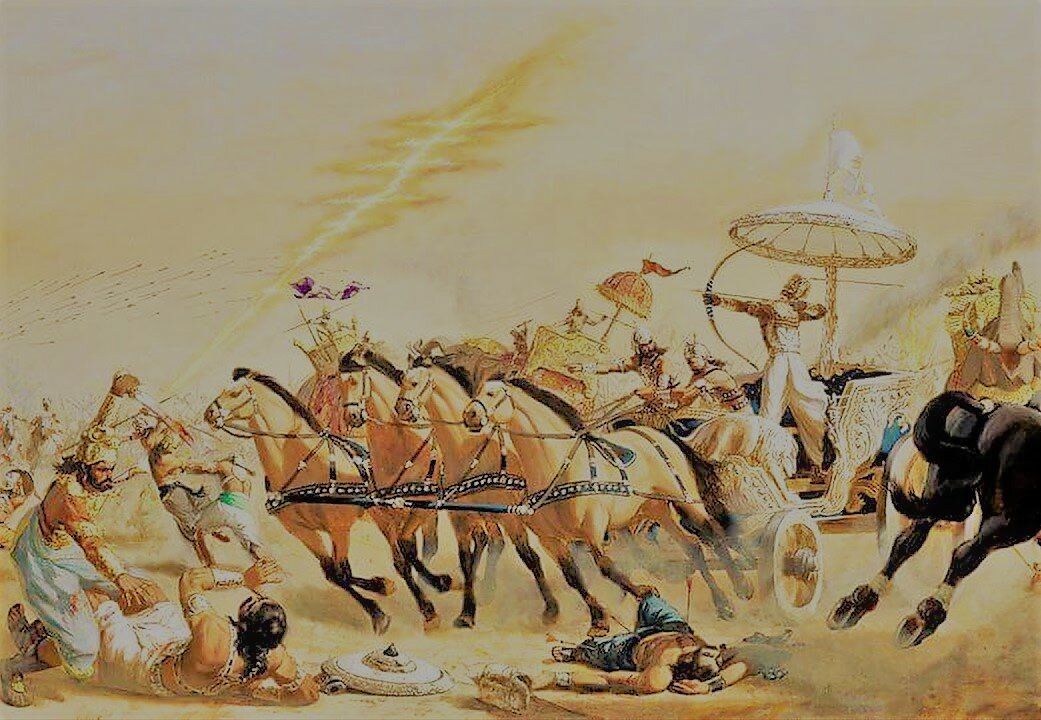
The brahmastra is described in the Mahabharata and the Ramayana as a weapon of absolute destructive power whose discharge produces physical effects on its targets and on the surrounding environment. The effects described in the texts include:

A brilliant light brighter than ten thousand suns, associated with the weapon’s discharge. The complete destruction of all life in the affected area. Survivors experiencing loss of hair and nails, skin disorders, and illness consistent with radiation sickness. Animals and birds in the area dying or fleeing in distress. Water becoming contaminated and unfit for consumption. Food in the area becoming inedible. The affected landscape becoming barren for an extended period.
The Mahabharata passage describing the brahmastra’s discharge, translated by various scholars and preserved across multiple manuscript traditions, contains the symptom catalog that researchers including J. Robert Oppenheimer, who quoted the Bhagavad Gita’s related passage at the Trinity test in 1945, have noted as consistent with the effects of nuclear weapon deployment.

Oppenheimer’s quotation, from the Bhagavad Gita rather than from the brahmastra passages specifically, reflects his awareness of the correspondence between the ancient text’s descriptions and the weapon he had just detonated. Whether he believed the ancient texts described literal historical nuclear weapons or philosophical and metaphorical descriptions of cosmic power is not clearly established from the available record of his statements. What is established is that he drew the parallel at the moment of the first nuclear test.
The brahmastra’s described decontamination procedure is the most specific element of the texts’ apparent understanding of radiation effects. Survivors are described as bathing and submerging themselves in water to remove contamination from their bodies. This procedure, recorded in the ancient text, corresponds to the decontamination protocol developed for nuclear weapon fallout exposure: immediate water immersion and skin washing to remove radioactive particles before they can be absorbed through the skin. The ancient text describes this procedure as the appropriate response to brahmastra exposure.
Whether this procedure description reflects genuine ancient knowledge of radiation decontamination from actual historical nuclear weapon use, or represents a coincidental correspondence between a general ritual purification procedure and modern decontamination protocol, is the interpretive question that the physical vitrification evidence at Mohenjo-Daro makes more interesting rather than less.
The Jodhpur Radioactive Zone
Approximately 10 kilometers from Jodhpur in the state of Rajasthan in India, a high background radiation zone has been recorded in a geographic area. The elevated radiation levels in this area were identified during the period when the Indian government was surveying sites for potential uranium deposits, and the character of the radiation, elevated gamma radiation from a shallow surface source rather than the geological uranium and thorium concentrations that would indicate a natural deposit, produced a finding that the survey team did not expect.

The Indian government is on record as having restricted construction and habitation in the affected zone. The cause of the elevated radiation has not been publicly explained in a way that provides a definitive conventional account.
The geographic proximity of the Jodhpur radioactive zone to the ancient sites of the Rama civilization recorded in the Mahabharata and in Rajasthan’s archaeological record has been noted by researchers in the alternative archaeology tradition. Whether the radiation elevation reflects ancient high-energy weapon deployment, natural geological uranium concentration, historical nuclear test fallout dispersal from Indian or Pakistani nuclear programs, or some other source, is not established by the available record.
The finding is known through the construction restriction rather than through published geological analysis. The restriction itself is the primary evidence for the radiation elevation’s reality. Its cause remains unspecified in the public record.
The Tektite Field That Has No Crater
The Australasian tektite field is the most significant unresolved problem in the physical record of ancient high-energy events, and the one whose scale places it in the most direct connection with the ancient catastrophe traditions.
The tektites distributed across 10 percent of the Earth’s surface from the Australasian event dated to 770,000 years ago represent the physical debris of an impact or airburst event of extraordinary scale. The energy required to melt, eject, and distribute material across this geographic extent significantly exceeds the Tunguskan event and approaches the energy of nuclear weapon exchanges at civilizational scale.
The absence of a crater for an event of this magnitude is the anomaly. Impact events large enough to distribute tektites across 10 percent of the Earth’s surface leave craters of at minimum 30 to 50 kilometers in diameter that persist in the geological record for hundreds of millions of years. The 770,000-year age of the Australasian event is recent enough that any crater formed should be readily identifiable. It has not been found.
The proposed candidate impact sites include multiple locations in Southeast Asia, with the Bolaven Plateau in Laos identified in a 2019 paper by Kerry Sieh and colleagues as the most probable impact location based on the tektite distribution pattern and the identification of a large circular geomorphological feature buried under volcanic rock. This candidate site has not been confirmed as an impact crater by core drilling or geophysical survey.
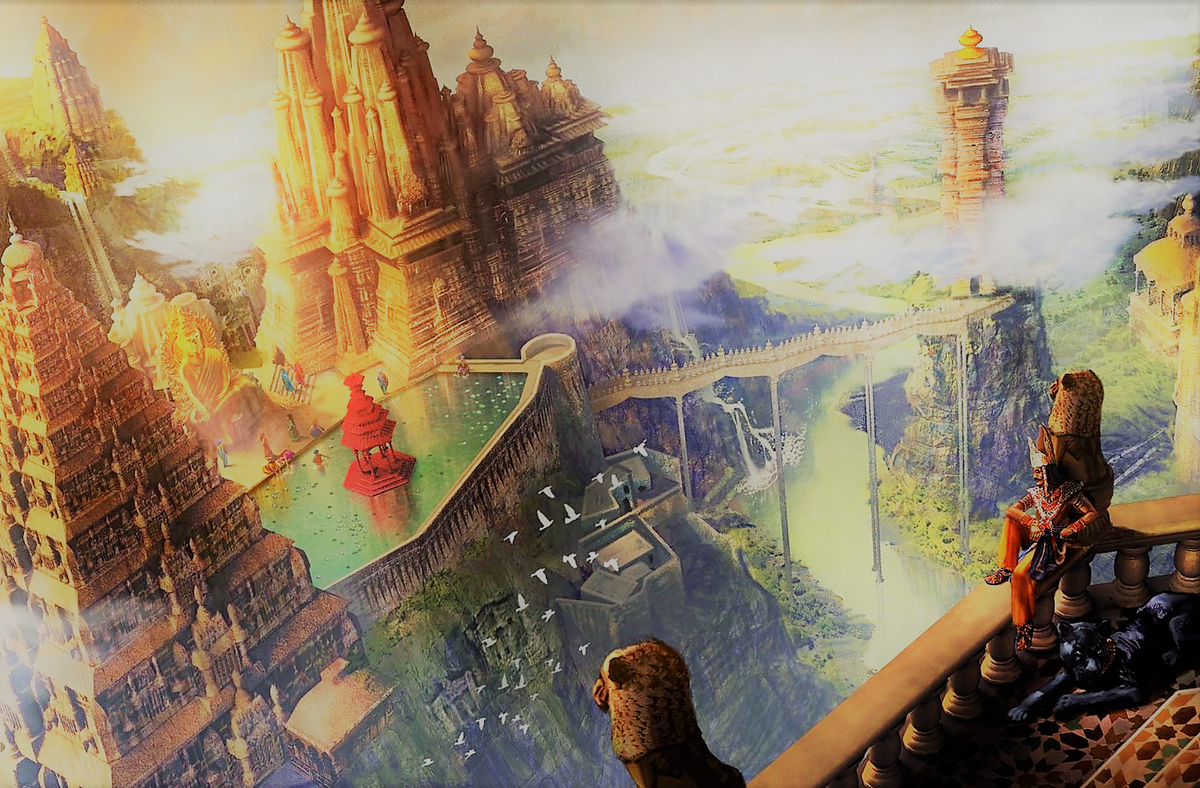
Whether the Australasian tektite field’s missing crater is concealed beneath the Bolaven Plateau volcanic cover, is located under the ocean, or reflects an anomalous event type that does not fit the standard impact model, remains an active research question in impact geology.
The 770,000-year date places the Australasian event significantly before the conventional timeline of human civilization, making its direct connection to ancient texts more difficult to establish. However the event’s physical evidence, the tektites themselves, is distributed across archaeological sites that contain human occupation layers, and the psychological impact of a civilizational-scale high-energy event on the human populations present in the affected regions at 770,000 years ago, early members of the Homo erectus and archaic Homo sapiens lineages, would have been severe.
The Pattern Across the Physical Record
The physical record of ancient high-energy surface events is more extensive and more anomalous than the conventional geological literature emphasizes.
Libyan Desert Glass: 29 million years old, 6,500 square kilometer field, formation temperature exceeding 1,600 degrees Celsius, missing crater, found in Tutankhamun’s royal burial pectoral.
Australasian tektites: 770,000 years old, 10 percent of Earth’s surface, missing crater, largest tektite field on the planet.
Atacama Desert Glass: 12,000 years old, 75-kilometer corridor, formation temperature exceeding 1,700 degrees Celsius, Younger Dryas boundary event.
Mohenjo-Daro vitrification: approximately 4,000 years old, point-source distribution pattern, formation temperature exceeding 1,500 degrees Celsius, elevated radiation in skeletal samples.

The pattern across these four cases includes a consistent anomaly: events large enough to melt surface material across significant geographic areas, at temperatures exceeding what conventional sources of the relevant periods could produce, with either missing craters or with physical characteristics that the conventional explanation handles imperfectly.
The four events span 29 million years and four continents. They do not constitute a coherent historical narrative of prehistoric nuclear warfare between ancient civilizations. The Libyan Desert Glass formed 29 million years before any hominin existed. The Australasian tektites formed 770,000 years before any civilization of the kind the Mahabharata describes.
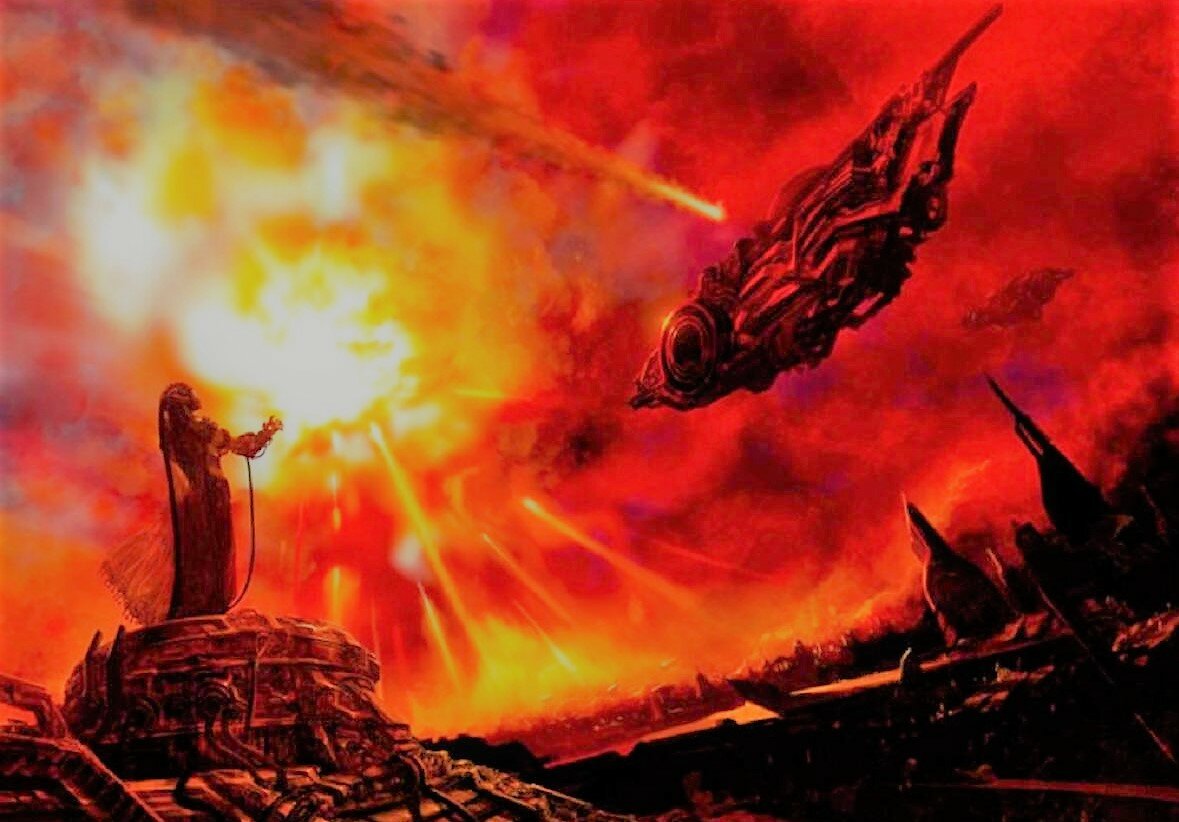
What they constitute is a physical record establishing that high-energy surface events capable of melting rock across large areas have occurred multiple times in Earth’s history, that these events leave physical signatures in the geological record, that the conventional catalog of these events is incomplete in demonstrable ways, and that the most recent confirmed events, the Atacama glass at 12,000 years and the Mohenjo-Daro vitrification at 4,000 years, occur in geographic and temporal proximity to the ancient civilizations whose texts describe weapons with the physical effects that high-energy events produce.
The Mahabharata’s brahmastra symptoms match the physical effects of high-energy events. The Mohenjo-Daro vitrification matches the physical signature of a high-energy event. The Jodhpur radiation zone is in the same geographic region as the ancient Rama civilization.
The physical evidence and the textual evidence are not in the same evidentiary category. The physical evidence is in the geological record. The textual evidence is in literary transmission. The correspondence between them is enough that treating it as coincidental requires more argument than treating it as potentially connected.
The glass in Tutankhamun’s pectoral came from an event that produced no crater and left glass across 6,500 square kilometers. The pharaoh’s artisans found the most remarkable material in the desert and carved it into the form of the god of transformation.
Something made that glass. The conventional explanation is incomplete. The temperatures required were real. The glass is still there.