



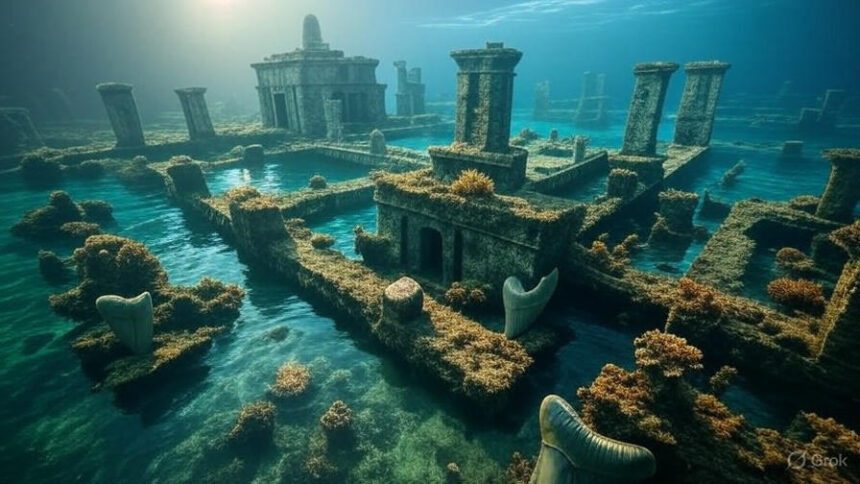
The ocean is Earth’s least explored frontier, and several credentialed discoveries beneath its surface have already reshaped serious archaeology and marine science.
What follows keeps those findings intact while directly correcting several specific claims that don’t hold up against the actual scientific and archaeological record.
The Unexplored Depths, Accurately Stated
The ocean covers roughly 71 percent of Earth’s surface, and the commonly cited figure that only a small percentage of it has been mapped in detail is worth stating precisely: as of the mid-2020s, roughly a quarter of the seafloor has been mapped at modern high resolution through international efforts like the Seabed 2030 project, an improvement on the low single-digit estimates often quoted from a decade ago, though most of the deep ocean remains unmapped in fine detail. The Mariana Trench does reach depths of roughly 11 kilometers, with pressures exceeding 1,000 times sea-level atmospheric pressure. This is remarkable territory that doesn’t need embellishment to be worth exploring.
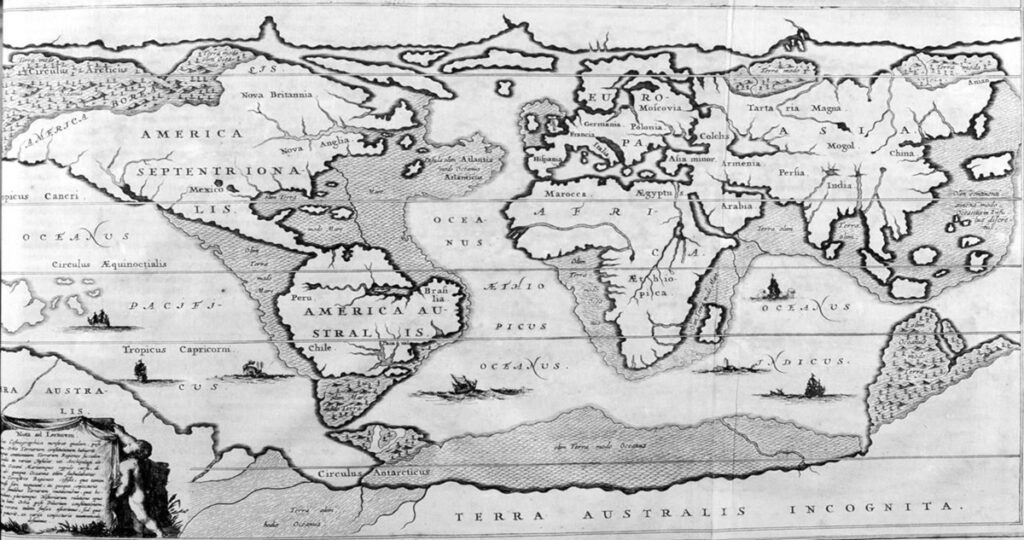
Athanasius Kircher’s 1675 Map
Jesuit scholar Athanasius Kircher did publish a map depicting a post-flood world as part of his 1675 work on Noah’s Ark, a historical document reflecting his era’s biblical flood geology framework. Underwater archaeological sites do exist off Florida’s coast, including submerged sites with Ice Age-era artifacts found in what are now underwater sinkholes and rivers, reflecting post-glacial sea level rise that submerged coastal land between roughly 10,000 and 7,000 years ago. This archaeological pattern doesn’t require treating Kircher’s specific 17th-century biblical-flood map as a predictive or “prescient” document, coastal archaeology and Kircher’s speculative theological cartography are two separate things that happen to share a general topic.
Patrick Nunn’s Peer-Reviewed Research
This is one of the strongest, best-sourced claims in this entire topic area. Patrick Nunn, a professor of geography at the University of the Sunshine Coast in Australia, has published peer-reviewed research demonstrating that Aboriginal Australian oral traditions describing coastline changes correspond with geological evidence of post-glacial sea level rise that occurred roughly 7,000 years ago, some of the oldest verified oral traditions in human history. This is legitimate, credentialed academic research, published in journals including Australian Geographer, and it represents a significant finding about the reliability and depth of indigenous oral history as a historical record.
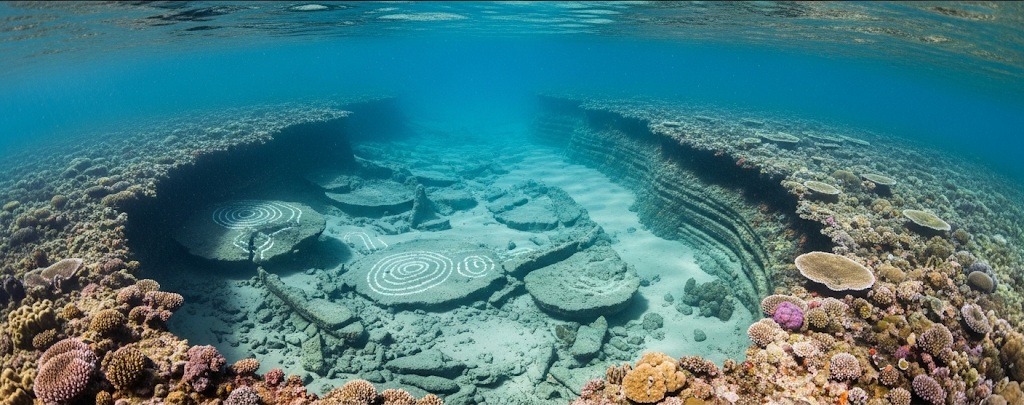
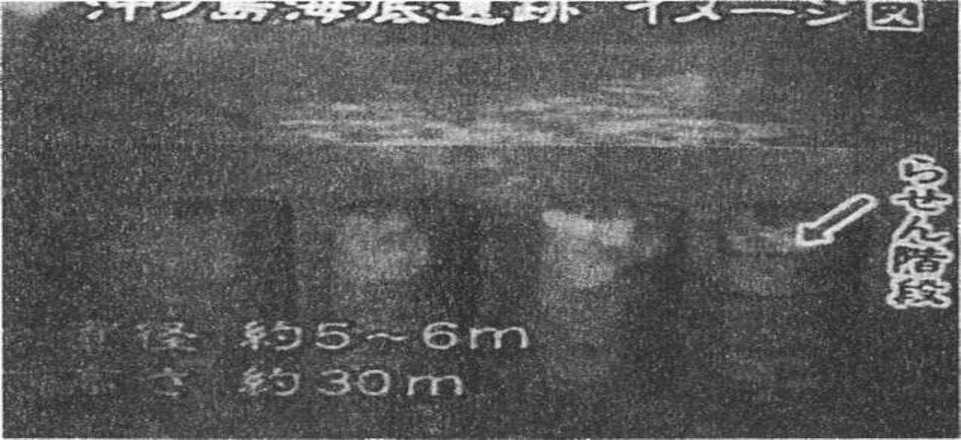
The Yonaguni Monument | A Genuinely Contested Site
This is one of the few claims in this topic area that deserves to stay presented as an honest, open question rather than requiring correction toward either extreme. Discovered in 1986 off Japan’s Yonaguni Island at a depth of roughly 30 meters, the formation’s origin, natural sandstone erosion along existing fracture lines versus deliberate human shaping, remains an unresolved question among geologists and archaeologists, without mainstream scientific consensus in either direction.
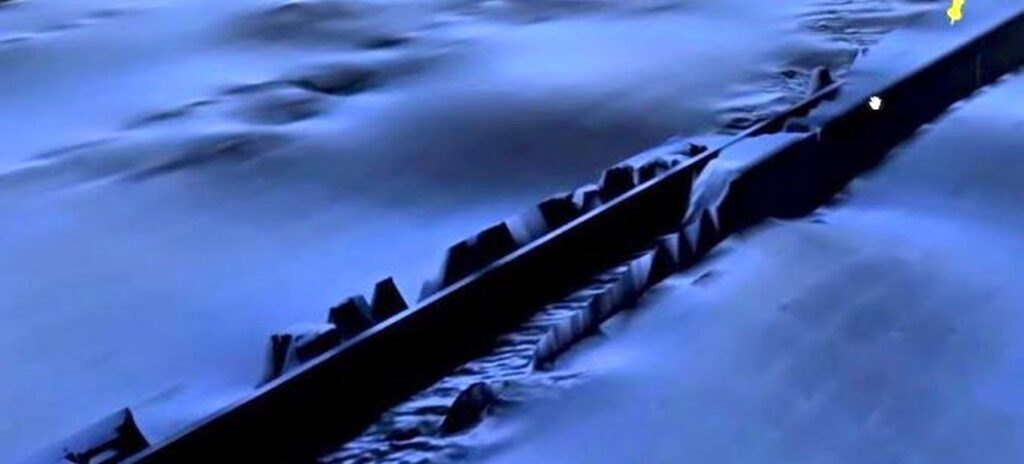
The “Great White Wall”
This claim needs substantial correction. A famous dive site called the White Wall does exist in Fiji’s Rainbow Reef, renowned among divers for spectacular soft coral growth descending along a reef wall. It’s a beautiful, popular scuba destination, not a “megastructure stretching from the Pacific to beneath Antarctica” spanning thousands of kilometers. No credible geological survey, oceanographic institution, or peer-reviewed publication describes any single continuous underwater structure of the scale this claim describes. This appears to be an extreme exaggeration of a well-documented, considerably more modest coral reef feature into an entirely different, unsupported claim.
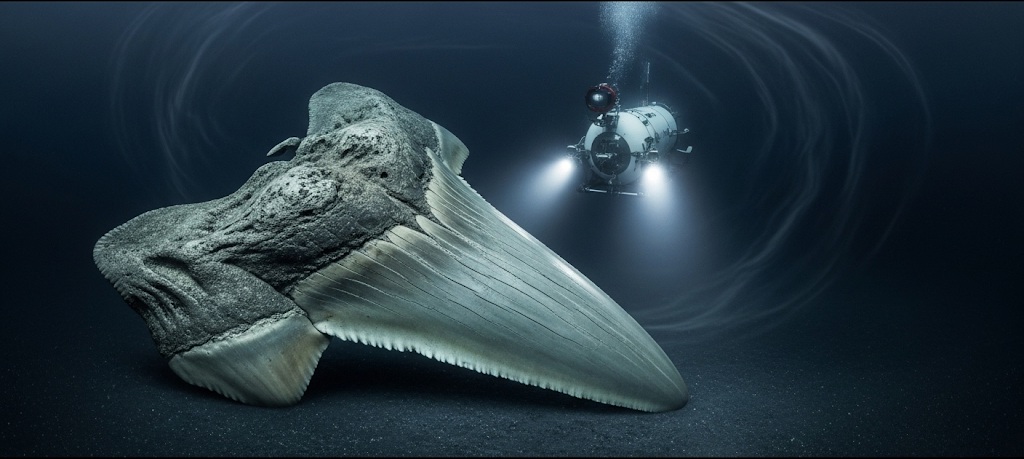
Young Megalodon Teeth
This is the most seriously incorrect claim covered here, and it traces to a specific, long-debunked source worth naming. The claim that megalodon teeth dated to 11,000-24,000 years old have been found originates from a 1959 study by Wladimir Tschernezky, who dated two teeth dredged near Tahiti during the 1875 HMS Challenger expedition using manganese dioxide accumulation rates, a dating method long recognized by paleontologists as invalid and unreliable for this purpose. A more recent attempt using the same flawed method produced similarly unreliable results in the 1980s. The actual, current scientific consensus, established by a rigorous 2019 study published in the peer-reviewed journal PeerJ by paleontologist Robert Boessenecker and colleagues at the College of Charleston, which vetted every known fossil occurrence worldwide, places megalodon’s extinction firmly at approximately 3.6 million years ago, with great white shark competition proposed as a leading contributing factor. No credible fossil evidence supports megalodon survival anywhere near such recent dates.
The Peruvian “Pot Lid” | Unverified
No verification could be found for the specific 6.8-kilometer circular formation described at the given coordinates against any named research institution, published survey, or peer-reviewed geological source. It should be treated as unverified rather than repeated as an established discovery pending a specific, checkable source.
The “Lost City of Cuba” | A Real Claim, Widely Disputed
This 2001 claim by researchers Pauline Zalitzki and Paul Weinzweig, based on sonar imaging off Cuba’s western coast, is real and did receive media attention at the time. It deserves accurate context: no peer-reviewed archaeological confirmation of artificial construction has ever been published, and multiple professional geologists who reviewed the sonar data have suggested the formations are more consistent with natural geological features than deliberate architecture. This claim should be presented as an unconfirmed and widely disputed sonar interpretation, not an established discovery. It’s also worth correcting a specific factual error: the Tiwanaku, or Tiahuanaco, culture referenced in connection with this claim is located in modern-day Bolivia, near Lake Titicaca, not Mexico.
The Urartian Fortress at Lake Van
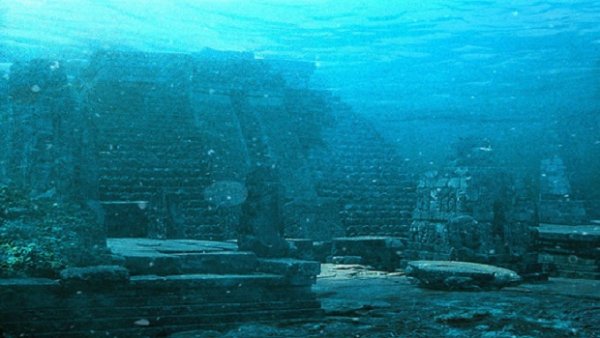
This is credentialed archaeology. A submerged fortress attributed to the ancient Urartu civilization, which flourished in eastern Anatolia roughly 3,000 years ago, was genuinely discovered underwater in Lake Van, Turkey, and Dr. Tahsin Ceylan, who led the underwater expedition, gave the account attributed to him here. This is a legitimate, published archaeological finding demonstrating real Urartian engineering skill, worth appreciating on its own merits.
The Lake Michigan Site | Real Discovery, Overstated Details
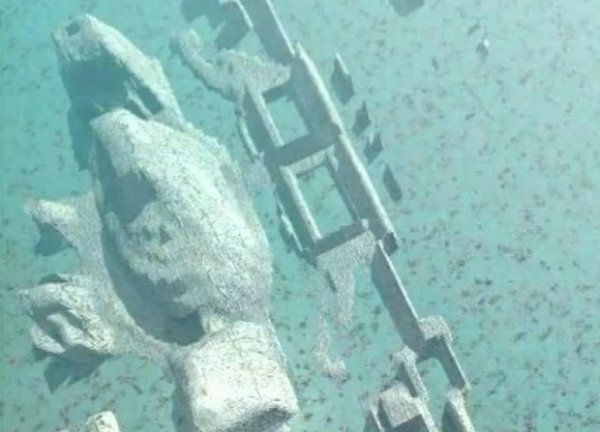
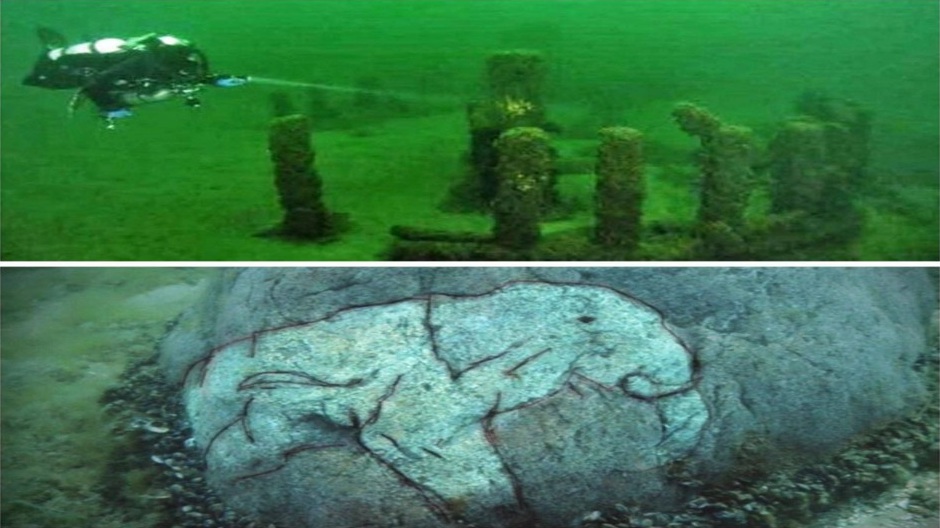
An underwater boulder formation was discovered by archaeologist Mark Holley in Michigan’s Grand Traverse Bay in 2007, informally nicknamed a “Stonehenge” by local media, a comparison the site’s own investigators have described as considerably overstated given its modest scale compared to the actual English monument. One stone in the formation has been tentatively suggested to show a possible petroglyph resembling a mastodon-like shape, though this identification has not been confirmed through formal, peer-reviewed archaeological analysis, and the site’s precise age has not been firmly established at the specific “9,000 years” sometimes claimed. This should be reported as an interesting underwater discovery still awaiting fuller professional archaeological investigation and confirmation, not a settled, dated site with confirmed ancient animal carvings.
The “Dark Oxygen” Discovery
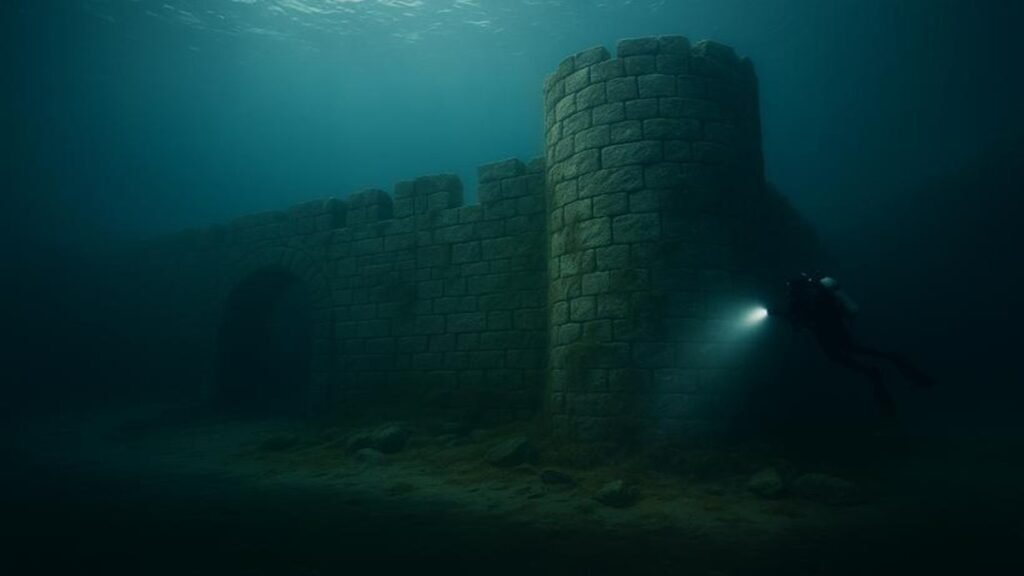
This is exciting, peer-reviewed science. In 2024, a team led by Andrew Sweetman at the Scottish Association for Marine Science published research in the journal Nature Geoscience documenting oxygen production at roughly 4,000 meters depth in the Pacific’s Clarion-Clipperton Zone, generated by polymetallic nodules containing cobalt, manganese, and nickel acting as natural geobatteries, driving electrolysis independent of photosynthesis. This is a legitimate, significant finding with implications for understanding oxygen production and life’s origins, published through standard peer review and covered extensively in scientific press.
Why Real Discoveries Get Mixed With Exaggerated Ones
A topic this rich in findings, real Aboriginal oral history research, a submerged Urartian fortress, dark oxygen production, attracts fabricated and exaggerated additions for a recognizable reason worth explaining. Each discovery here legitimately did challenge some previous scientific assumption, exactly the kind of surprising finding that makes headlines and, unfortunately, makes readers more receptive to further claims of a similar shape and scale. A reader who has just learned that oxygen-producing rocks exist four kilometers underwater, a claim that does sound implausible until you check the actual peer-reviewed source, may reasonably extend similar credulity to the next claim in the same list, even when that next claim, unlike the oxygen discovery, has no comparable peer-reviewed source behind it at all. Recognizing this pattern is useful precisely because the genuinely surprising findings are what make the fabricated ones plausible by association, not because the findings themselves are suspect.

What Seabed 2030 Is Actually Finding
The ongoing international mapping effort mentioned above deserves expanding on, since it represents the actual, current state of underwater exploration rather than any single dramatic discovery. Seabed 2030, a collaborative project between the Nippon Foundation and the General Bathymetric Chart of the Oceans, aims to produce a complete, publicly available high-resolution map of the entire ocean floor by the year 2030, an ambitious scientific goal. As of recent progress reports, the project has mapped a growing percentage of the seafloor using ship-based sonar surveys, satellite-derived bathymetry, and crowdsourced data from research vessels and even commercial shipping routes. This is the methodical, unglamorous process actually driving new ocean floor discoveries, careful survey work accumulating gradually across international collaboration, rather than the isolated dramatic revelations that circulate more easily online.
Separating Real Discoveries From Exaggerated Claims
The strong findings covered here, Patrick Nunn’s Aboriginal oral history research, the Lake Van Urartian fortress, the dark oxygen discovery, and the honestly unresolved Yonaguni debate, are substantial and don’t need embellishment from fabricated or debunked claims layered alongside them. The corrected claims, the Great White Wall’s actual modest scale, megalodon’s real 3.6-million-year-old extinction date, and the disputed status of the Cuban sonar findings, deserve accurate representation specifically because doing so protects the credibility of the genuinely remarkable discoveries they were mixed in with.
A Practical Guide to Evaluating Claims Like These
A practical framework for evaluating any future underwater discovery claim is worth closing with, since the same basic checks apply across all of them. A genuinely credible claim generally has a named research team affiliated with an institution, a specific publication in a peer-reviewed journal or presented at a recognized academic conference, and, where physical materials are involved, existing specimens or data available for independent researchers to examine and potentially challenge. The strongest claims discussed here, Nunn’s Aboriginal oral history research, the Lake Van fortress, the dark oxygen discovery, all meet this standard clearly. The claims requiring correction generally failed one or more of these checks: no named source for the Great White Wall’s exaggerated scale, a dating method paleontologists rejected decades ago for the megalodon teeth, and no peer-reviewed confirmation for the Cuban sonar interpretation. This isn’t a complicated standard to apply, and it works reliably across any genuinely new discovery claim not yet covered here too.

The Future of Underwater Exploration
Advances in sonar mapping, remotely operated vehicles, and AI-assisted analysis are expanding what’s accessible to marine researchers, and initiatives including the Ocean Exploration Trust continue this legitimate work. As mapping efforts like Seabed 2030 progress, new discoveries will continue to emerge, and they deserve to be reported with the same accuracy and appropriate hedging that the strong findings covered here, Nunn’s research, the Urartu fortress, and the dark oxygen discovery, actually received from their original, credentialed researchers.
The ocean remains an enormous frontier for discovery. It doesn’t need fabricated megastructures or debunked shark teeth to stay worth exploring.