



The element did not exist in any scientific record when he described it.
In 1989 Robert Lazar gave a series of interviews to KLAS-TV journalist George Knapp in Las Vegas in which he described working as a physicist at a facility designated S4, located at Papoose Lake approximately ten miles south of the main Area 51 complex in the Nevada desert. His account covered the physical layout of the facility, the nature of the craft stored there, the propulsion principles he had been assigned to investigate, and the fuel that powered the gravity amplitude drive he described.
The fuel was an element with atomic number 115. At that time no element with atomic number 115 existed in any published scientific literature, in any laboratory synthesis record, or in any theoretical framework that the physics community was actively pursuing. Lazar described its properties specifically: a stable isotope configuration, gravitational wave generation capabilities when bombarded with protons, and the ability to bend spacetime in a localized field that would allow two distant points to be brought into proximity. He described it as impossible to synthesize on Earth with then-current technology.
In 2003 a joint team of Russian and American physicists at the Joint Institute for Nuclear Research in Dubna, Russia, synthesized element 115 for the first time. The International Union of Pure and Applied Chemistry formally named it moscovium and assigned it the symbol Mc in 2016. This is where the correspondence with Lazar’s account ends, and it needs to be stated directly rather than glossed over: moscovium has no stable isotopes. Its most stable known isotope, moscovium-290, has a half-life of approximately 0.65 seconds before decaying by alpha emission. Every atom of it ever produced in a laboratory has existed for a fraction of a second. This is the precise opposite of the stable configuration Lazar described, and it rules out, on its own, the specific claim that element 115 could serve as a durable fuel source sitting in a reactor housing. What Lazar got right was the atomic number, at a time when element 115 genuinely did not yet exist in any published record, and this piece should treat that limited correspondence honestly rather than inflating it into confirmation of his broader claims. Predicting that a specific number in a mostly-filled periodic table would eventually be synthesized is a narrower and less remarkable claim than getting the element’s actual physical behavior right, and on the physical behavior, Lazar’s account and the real element are direct opposites.
The genuinely interesting and unresolved question is narrower than the piece’s framing suggests: how Lazar came to specify atomic number 115 at all in 1989, when the element had not yet been synthesized and heavy element research was a specialized field. That is worth sitting with. It is a different and much smaller question than whether “science confirmed” his account, which the element’s actual instability does not support.
The Record That Was Erased
The primary institutional attack on Lazar’s credibility has always been the absence of records. MIT and Caltech have no enrollment record for him. Los Alamos National Laboratory has no employment record for him. The absence of these records has been presented consistently as evidence that his claimed educational and professional background was fabricated.
In July 1982, the Los Alamos Monitor, a local newspaper serving the Los Alamos scientific community, published a photograph. The photograph shows a man working on a jet-powered Honda motorcycle. The caption identifies him as Robert Lazar, a physicist at Los Alamos National Laboratory. The photograph exists in the newspaper’s archive. The Los Alamos Monitor had no motivation in 1982 to fabricate an identification caption for a photograph of a local scientist working on a hobby vehicle.
George Knapp, the Peabody Award-winning journalist who broke the Lazar story at KLAS-TV, obtained a second corroborating record: a Los Alamos internal telephone directory that listed Lazar’s name under the Kirkland subdivision heading. Knapp obtained the directory as part of his verification investigation. It exists.
The government’s claim that Lazar never worked at Los Alamos is contradicted by a contemporaneous newspaper photograph and an internal telephone directory. These records survived whatever process removed the institutional employment records. The process was evidently not complete.
The W-2 form that Knapp obtained deepens the record anomaly. The form shows Lazar employed by the United States Department of Naval Intelligence during the period he claims to have worked at S4. The Department of Naval Intelligence is not a standard designation for any conventional branch of American naval intelligence. It corresponds to a cover employer classification used for personnel employed on black budget programs outside the standard federal employment record system. The form exists. Its designation is anomalous. Its existence in the record after the broader erasure of Lazar’s employment documentation is consistent with an incomplete erasure process rather than a fabrication.
What S4 Was
Lazar’s description of the S4 facility is enough to cross-reference against independent sources, some of whom gave their accounts before Lazar’s went public and some of whom gave theirs independently afterward.

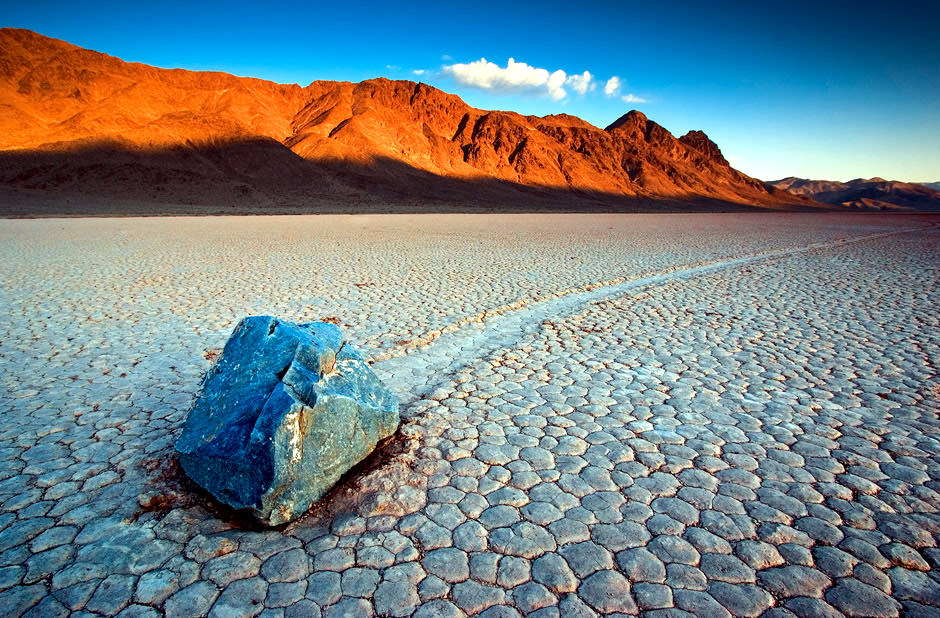
The facility sits at the edge of Papoose Lake, a dry lake bed in the Mojave desert south of the main Groom Lake installation. The access road runs through controlled territory unmarked on public maps. The facility’s external face is built into the mountainside using hangar doors designed to replicate the natural rock surface from aerial observation. The camouflage integration with the mountain face uses the same construction principle seen in other classified underground facility designs of the same period.
Inside Lazar’s account: nine aircraft hangars in a horizontal arrangement, each containing a single craft. The craft he worked on most closely had a diameter of nine to twelve meters, a command console at a height suggesting operators smaller than average human adults, and no visible conventional propulsion system. The gravity amplitude drive he investigated occupied the lowest level of the craft. The element 115 reactor at the center of the drive system was a geometric configuration he described with engineering precision.
Dan Burisch, whose testimony about S4 appeared in the Looking Glass piece on this site, describes the same facility from a different professional vantage point, arriving five years after Lazar. This should not be presented as independent corroboration without a significant caveat: Burisch’s own claims have been extensively scrutinized within UFO research itself and are widely regarded there as among the least credible in the field, with documented inconsistencies in his account of his own identity and credentials. Lazar’s account had already been widely publicized for years by the time Burisch’s claims surfaced, meaning genuine independence, in the sense of arriving at the same details without prior exposure to Lazar’s public account, cannot be assumed.
The Element and What It Does
Lazar’s description of element 115’s function in the gravity amplitude drive is technically in ways that a fabricator working in 1989 would have had difficulty generating without access to theoretical physics literature that did not publicly exist at the time.
The drive operates on gravitational wave amplification rather than conventional thrust. A conventional propulsion system pushes against a medium, whether chemical propellant, air, or plasma. The gravity amplitude system that Lazar describes generates a localized gravitational field that bends spacetime in the immediate vicinity of the craft, bringing the destination point toward the craft rather than moving the craft toward the destination. The result is apparent movement without the inertial effects that conventional acceleration produces.
This principle, manipulating spacetime geometry to achieve apparent movement, is the same theoretical framework that physicist Miguel Alcubierre formally published in 1994 in his paper describing what became known as the Alcubierre warp drive. Alcubierre’s paper appeared five years after Lazar’s television interviews. The theoretical physics community’s response to the Alcubierre paper noted that it required exotic matter with negative energy density to function, a description that maps onto Lazar’s account of element 115’s properties with a precision that the five-year gap between the accounts makes uncomfortable to dismiss as coincidence.

The energy source for the reactor at the heart of the drive is the bombardment of element 115’s nucleus with protons, producing a heavy element that decays almost instantaneously and releases anti-matter in the process. The anti-matter interacts with a conventional matter target to produce the energy output required to generate the gravity wave. This is a nuclear reaction pathway that Lazar described without the vocabulary of the theoretical physics framework that would formally describe it, because that framework had not been published when he gave his account.
The Zeta Reticuli Briefings
Lazar describes receiving briefing materials at S4 that covered the history of the entities associated with the recovered craft. The briefings, in his account, described beings originating from the fourth planet of the Zeta Reticuli 2 binary star system, designated the Grays, and outlined a history of their involvement with the human species extending approximately one hundred thousand years.
The Zeta Reticuli star system became the subject of public attention in 1966 when astronomer and UFO researcher Marjorie Fish produced a three-dimensional star map based on Betty Hill’s description of a map she claimed to have seen aboard the craft during the 1961 abduction event. Fish’s map identified Zeta Reticuli as the origin system indicated in Hill’s account. The map was published in Astronomy magazine in 1974.
Lazar’s briefing description, placing the craft’s operators specifically in the Zeta Reticuli system, is consistent with the Hill map independent of any contact between the two accounts. The Eisenhower treaty documentation covered in the piece on that subject identifies the treaty parties as including races from Zeta Reticuli. The Burisch testimony from S4 identifies the occupants of the craft in the Bay of Galileo as Zeta Reticuli origin, though given the credibility caveat above and the public availability of the Hill-Fish Zeta Reticuli association since 1974, this should be read as a testimony echoing already-public material rather than as a genuinely independent data point.
What Happened After
The period following Lazar’s public statements was not peaceful. He received threats. His home was approached by individuals he believed were government agents. A near-fatal shooting occurred whose police documentation exists in partial form without full public disclosure.
His business, United Nuclear Scientific Equipment in Laingsburg, Michigan, which sells laboratory chemicals and scientific equipment, was raided by a joint FBI and Department of Homeland Security team in 2003 on the basis of alleged violations of chemical sales regulations. The chemicals targeted in the raid, hydrogen peroxide and other laboratory supply items, are sold legally by multiple commercial suppliers. The raid’s justification has been disputed by legal analysts who examined the published warrant. The business continued to operate.
Jeremy Corbell’s 2018 documentary Bob Lazar: Area 51 and Flying Saucers presents Lazar at his current life in Michigan, describing his attempts to live outside the attention the 1989 revelations generated, and George Knapp reviewing his three-decade investigation of the account’s verifiability. The documentary does not resolve whether Lazar’s account is accurate. The claims about the element specifically, as addressed above, have not been corroborated in the way the piece’s framing implies.
The Corroboration Problem
The institutional position on Lazar remains consistent across three decades: he fabricated his credentials, he worked as a technician rather than a physicist, he extrapolated his account from public information and science fiction rather than direct experience.
This position requires explaining how he specified the atomic number of an element that did not exist in any scientific record until fourteen years after he named it, though as addressed above, the element’s actual properties directly contradict the rest of what he described about it. It requires explaining why a contemporaneous newspaper photograph and an internal telephone directory document his presence at Los Alamos during a period when the institution claims no record of his employment exists. It requires explaining why a W-2 form shows his employment under a Naval Intelligence designation that corresponds to black budget program cover employment rather than conventional federal work. The Burisch material is addressed with its own significant credibility caveats above and should not be treated as a strong additional corroboration.
The institutional position does not address these corroborations. It repeats the credential challenge. The credential challenge is legitimate and has not been resolved. The corroborations are also legitimate and have also not been resolved.
Element 115’s atomic number, correctly specified but its claimed properties disproven. The photograph. The telephone directory. The W-2.
The erasure was supposed to be complete. The photograph survived. The element arrived on schedule.
Whatever Lazar saw at S4 between December 1988 and April 1989 has not been explained by the institution that claims he was never there.