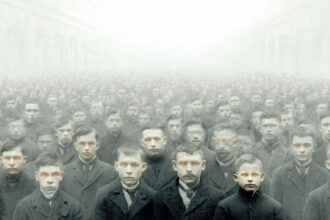





A work of speculative fiction. What follows is an original story in the walk-in tradition of ufological folklore, the belief that advanced beings sometimes inhabit human bodies with the occupant’s consent. It’s not a claimed record of real events or a real person, and no such record exists to verify.
It’s offered here in the same imaginative register as the site’s other original fiction, built the way the best entries in this tradition are built: specific enough to feel lived-in, anonymous enough to never quite be checked, and quiet enough in its own claims that it never has to shout to be unsettling.
The Chicago Confession
In this story, a nanny working in Chicago in the summer of 1997 grew close to an elderly man named Eugene Randall, a regular presence in the building where she cared for a family’s children. He had the quiet, measured gravitas of a lifelong academic, someone who seemed to watch the world less like a participant and more like a researcher taking careful notes on a subject he found endlessly interesting and only occasionally alarming.
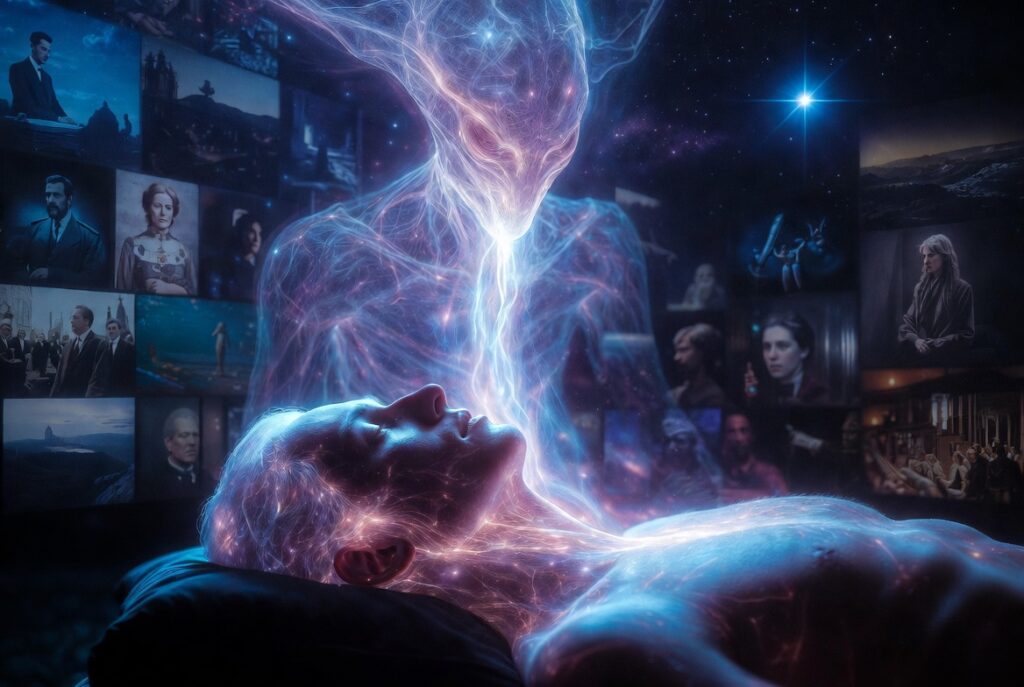
One evening, the story goes, he set the pretense down entirely. His name, he told her, wasn’t really Eugene. It was Shimicus Etois, and his journey to Earth had begun near the star humans call the North Star, aboard what he described only as a flying city, a vessel large enough to be its own small civilization, built for a voyage that spanned generations. He’d arrived, by his account, somewhere around 1000 BCE, in the age of the Trojan War and the first great empires, and he had been walking among humans, quietly, ever since.
Three Thousand Years of Borrowed Bodies
The obvious question, how does anyone survive three thousand years on a planet built for a lifespan a fraction that long, he answered plainly, without theater. His people were near-immortal in their original form, he said, but couldn’t remain in it here, not without drawing exactly the kind of attention that would end the mission before it accomplished anything at all. To live among humans, they had to borrow human bodies, and when a body began to fail, usually somewhere between sixty and eighty years in, the mind within it would move on to a new one, carrying forward whatever it had learned and leaving behind only the ordinary grief of a family that assumed, reasonably enough, that they had simply lost someone they loved.
It was never taken by force, he insisted, in this telling. A person was found, told plainly what was being asked of them, and given the choice to let their own awareness recede and share the vessel, rather than have it seized. The story leans here on the old ufological idea of the walk-in, a soul that steps into a body its original occupant has willingly set down. He described one such arrangement during the Cold War, a volunteer somewhere in the old Soviet Union who agreed to the exchange specifically so his people could keep a quiet presence on both sides of a standoff that, more than once, came closer to ending everything than most people ever learned.
Eight Thousand Watchers
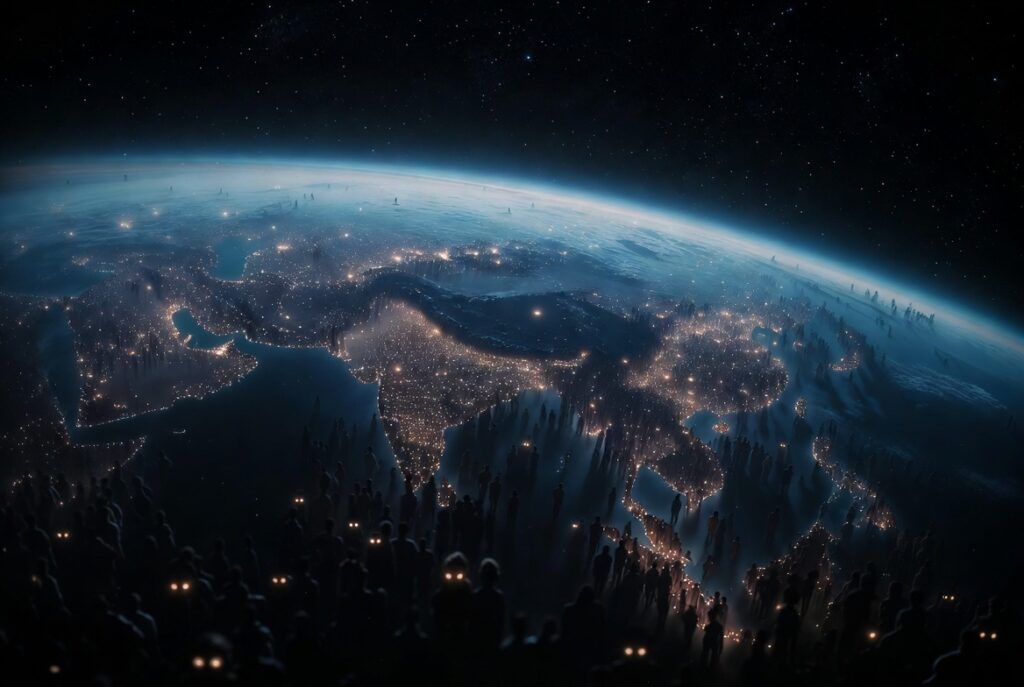
Asked how many of his kind walked the Earth, he gave a number without hesitation: roughly eight thousand. Scattered across the globe, in ordinary jobs and, occasionally, in rooms where real decisions got made, not to rule, he said, but to nudge, gently and rarely, away from the mistakes that end civilizations rather than merely inconvenience them. Eight thousand against a species of billions isn’t an occupying force. It’s closer, in the story’s own logic, to a small, patient hand resting lightly on a very large wheel.
Conquerors, Once

The conversation, as the story tells it, turned genuinely uncomfortable when it reached his people’s own history. They hadn’t always been peaceful observers. Long before Earth, they’d been conquerors, the kind of civilization that took what it wanted from others and called it destiny. What changed them, in this telling, was a single figure, something like a prophet or a teacher, who showed them a different way to be a civilization, and the shift that followed was total enough that guiding younger species away from their own worst instincts became less a mission than an act of penance.
“Like Primitive Tribes”
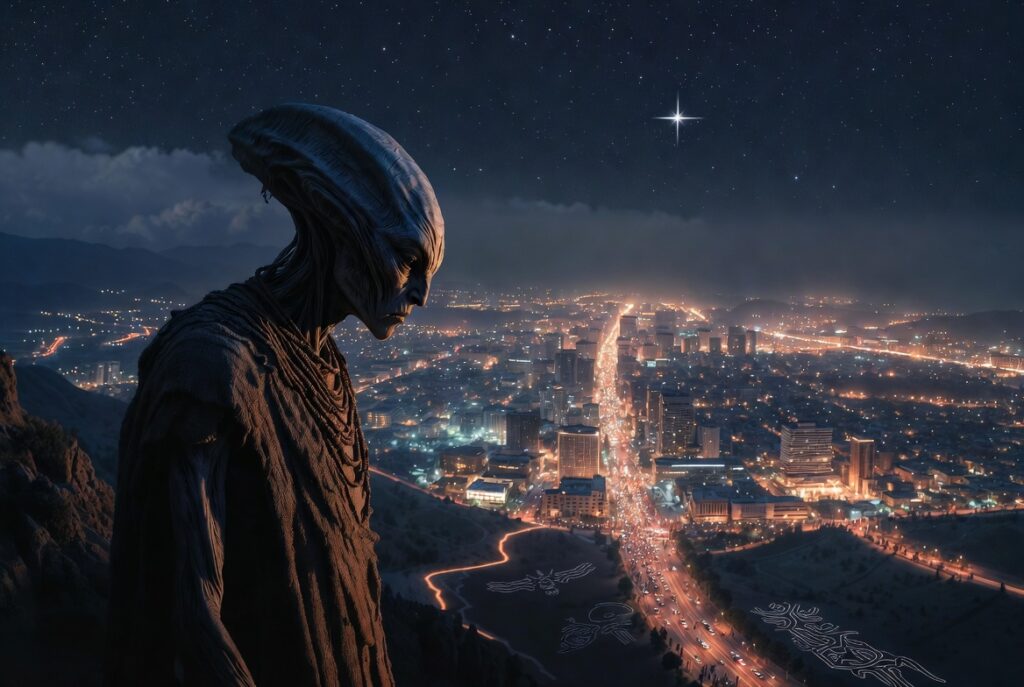
“Like primitive tribes.”
That was his verdict on humanity, delivered slowly and, the story insists, without contempt. Not a superior being sneering down, but something closer to an anthropologist naming a stage of development plainly: a species still reaching for violence first, still drawing hard lines around borders and tribes and ideologies, still fighting over what could, in principle, be shared. His own people had passed through that same fork in the road three thousand years earlier, and he seemed to carry the memory of it less as pride than as something closer to grief for how long it had taken.
The Warning About Nuclear Fire
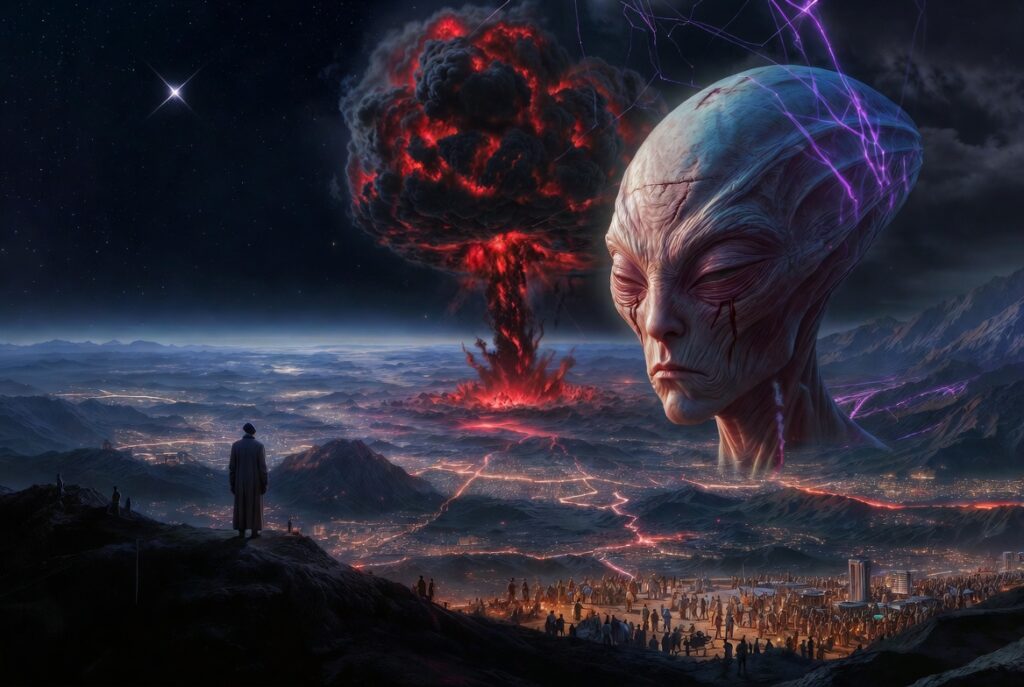
“You’re playing with forces you don’t understand,” he cautioned.
The concern, in this story, went beyond the obvious devastation. He described every nuclear detonation as leaving something behind, a scar not in the ground but in the underlying fabric of things, invisible to any instrument humanity had yet built, but real enough that it rippled outward past the planet itself. In his telling, the danger was never only local.
The Flood, Retold
Asked about the Biblical flood, he offered a version stripped of anything divine: one of his people’s own ships, four thousand years earlier, had gone down in the Arctic, and the energy released in the crash triggered a sudden, catastrophic melt that drowned the world humans remembered afterward as a punishment. In this version, Noah’s Ark wasn’t salvation handed down from above. It was ordinary human survival following an accident that was never meant to happen, and one he said his people still carried the weight of, centuries later.

Bloodlines
The story’s most delicate turn touches on hybrid children, born, in this telling, from relationships formed while inhabiting a human body fully enough to love and be loved in return. He said the nanny herself carried that lineage, which was offered as the quiet explanation for why she’d recognized something in him before he ever told her the truth. He gave no count of how many others like her might exist, only the implication that the number wasn’t small.

A Quiet War
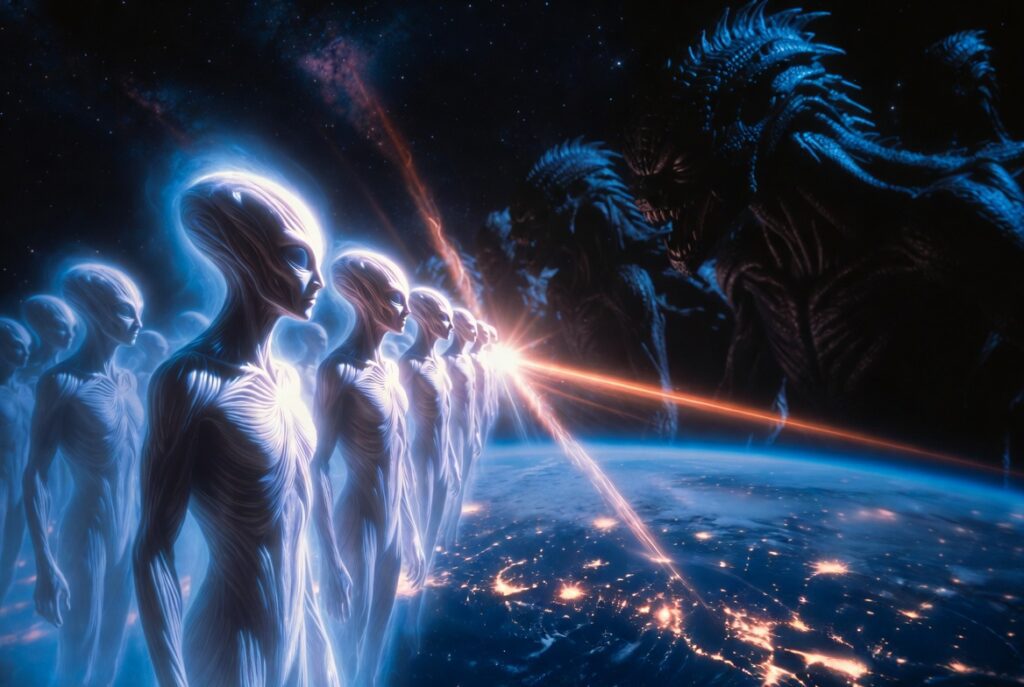
Earth, in this account, was never just a place to be studied. It was contested ground, a meeting point for other, less patient visitors who hadn’t set down the old habits of conquest the way Shimicus’s people had, the ones responsible, in this telling, for the abduction stories too frightening and too involuntary to fit the gentler walk-in framework. His people worked to limit them where they could, bound by a code that forbade anything like open confrontation, which left the whole arrangement feeling less like a war and more like a long, careful standoff conducted almost entirely out of sight, fought in boardrooms and quiet conversations rather than anything a human observer could ever hope to photograph or record.
The Elevator
Only once, in this story, did the mask slip in a way anyone else witnessed. An elevator in Chicago, a stranger stepping in at the wrong moment, and a glimpse, brief and unexplained, of what Shimicus and a companion he called Andronicus actually looked like beneath the borrowed shape. The stranger’s reaction was pure, wordless panic, and the story never tries to describe what was seen closely enough to explain it. Some things, in fiction as much as in folklore, work better left at the edge of the frame.

Why the Walk-In Story Endures
The walk-in idea itself has real roots worth naming, separate from any particular story built on it. It grew out of the broader New Age and channeling movements of the 1960s and 70s, particularly popularized by writer Ruth Montgomery, who described a walk-in as an advanced soul taking over a body whose original occupant had, in some sense, given up or moved on, a gentler cousin of possession stripped of anything demonic and reframed as compassionate rescue. What makes the concept durable, decades later, isn’t evidence. It’s the shape of the question it answers: everyone has met someone who seems, in some hard-to-name way, older than their years, calmer than their circumstances should allow, watching a room instead of simply being in it. The walk-in story gives that ordinary, slightly eerie feeling a name and a mythology, which is exactly what good folklore is supposed to do, turning a fleeting, half-formed impression into something with a shape you can hand to someone else and watch them recognize it too.
Stories like this one about Shimicus Etois sit in a long tradition of anonymous testimony passed hotline to hotline, forum to forum, each retelling sanding off whatever detail made the last version checkable, until what remains is a narrative built to feel plausible precisely because it can never quite be confirmed or denied. That’s not a flaw unique to this story. It’s the actual mechanism by which this entire genre of folklore has always spread, generation after generation of half-remembered testimony reshaped slightly with each retelling, and naming that mechanism doesn’t make the story less enjoyable to read. It just means reading it as the fiction it is, rather than as a confession that happened to slip through the cracks of a hotline transcript.
The Actual Fascination With Polaris
The story’s choice of origin point, the North Star, isn’t arbitrary, and it’s worth noting why it works so well as a piece of fiction. Polaris has held genuine, real symbolic weight across an enormous range of human cultures for exactly the reason the story leans on: it’s the one star in the northern sky that appears, to the naked eye, to hold still while everything else wheels around it, the fixed point navigators have oriented by for millennia. That real astronomical fact, a star that seems changeless while the rest of the sky turns, makes it an almost too-perfect symbol for a narrator who claims the same quality for himself: unmoving, patient, watching a much younger and more chaotic world spin through its growing pains. Good fiction borrows real facts and lets them do quiet symbolic work, and the story’s choice of Polaris over any other star is a small, effective piece of exactly that craft.
After 1997
The story ends the way these stories usually do: without an ending. After 1997, Eugene Randall simply isn’t mentioned again. Maybe, in the world of the story, his borrowed body finally gave out and the mind inside it moved on to another city, another name, another quiet decade of watching. Maybe the confession itself, however brief and anonymous, drew exactly the kind of attention he’d have wanted to avoid.
What the story is actually good for, if it’s good for anything, isn’t a literal claim about who’s walking among us. It’s the old, familiar unease every walk-in story trades on: that quiet person at the edge of the room, the one who watches more than they speak, might simply be quiet, and probably is. The story only works because, every so often, you look a little longer than you meant to before you’re sure. That’s the entire craft of this kind of folklore, laid bare: not proof, not evidence, just a well built enough shape that the ordinary and the uncanny become briefly, pleasurably hard to tell apart, and then, once the story ends, easy enough to set back down, at least until the next quiet stranger gives you a reason to wonder again.