
The block did not start as a door.
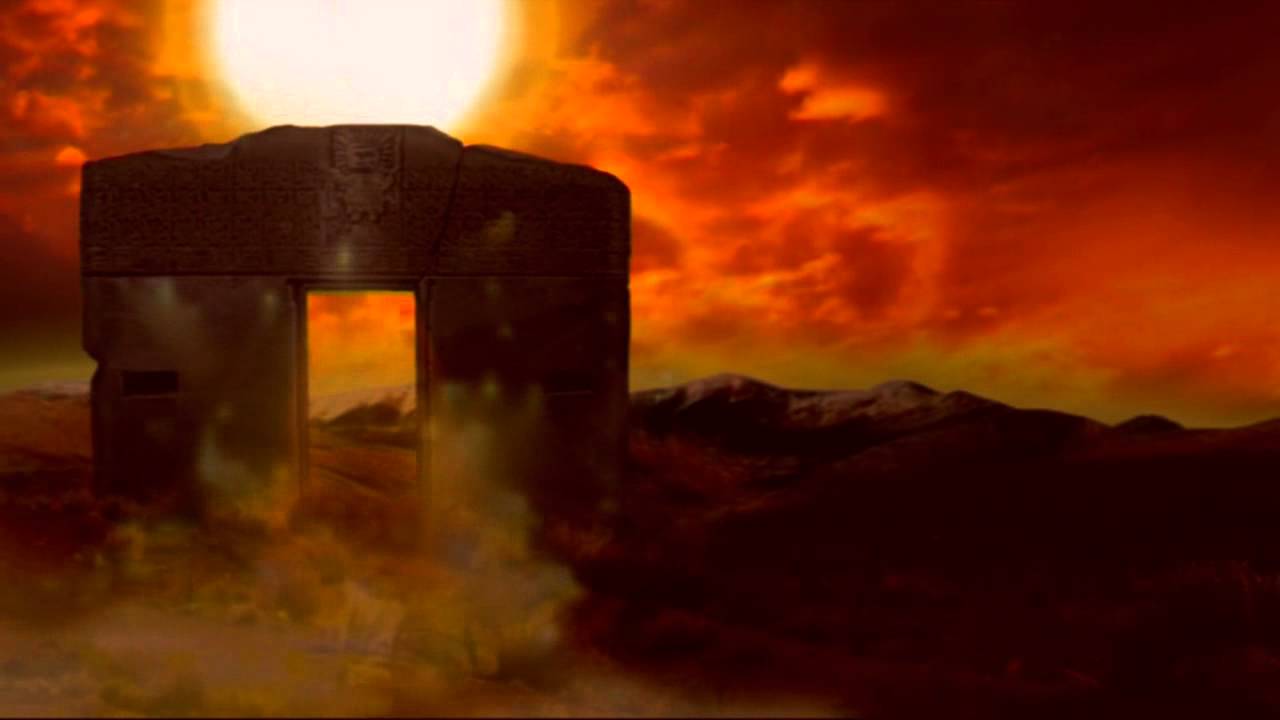
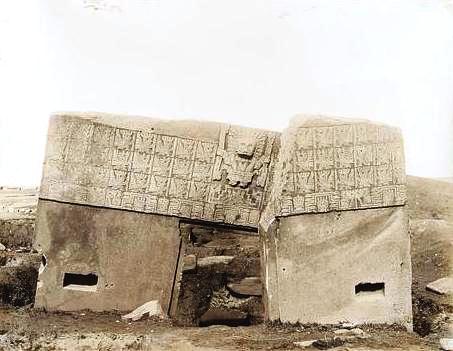
The Puerta del Sol at Tiahuanaco in western Bolivia was carved from a single piece of andesite weighing approximately ten tons. The quarrying location for the andesite used at Tiahuanaco has been identified as the Copacabana peninsula across Lake Titicaca, approximately ninety kilometers from the site. Whether the Tiahuanaco culture transported the ten-ton block by lake raft, by overland sledge, or by a method whose evidence has not survived in the available archaeological record, is a question that the block’s current position at more than 3,800 meters above sea level and ninety kilometers from its source stone makes specifically consequential.
Whatever the transportation method, the block arrived. And then someone carved it with a precision that the available documentation of Tiahuanaco’s tool inventory, bronze implements and stone tools, does not fully account for.
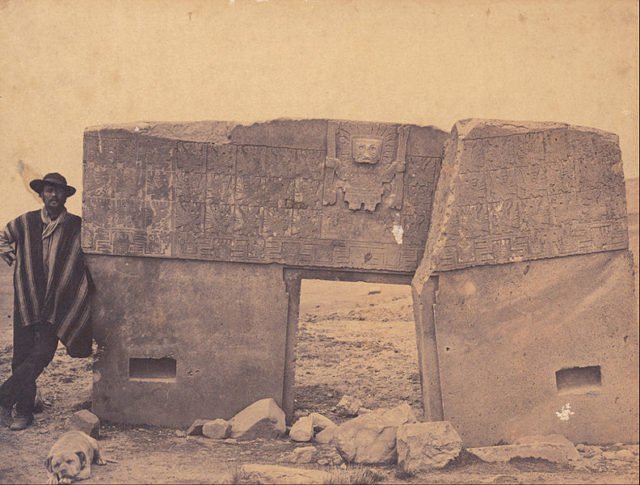
The Puerta del Sol’s central carved figure stands three meters tall within the gate’s overall dimensions of approximately 3.8 meters high and 3.96 meters wide. The figure holds two staff-like objects whose terminations show symbolic forms. Its face radiates what the standard iconographic interpretation identifies as solar rays, some of which terminate in condor heads. Below each eye, two condor heads flow downward in the position that other representations of Viracocha in the Andean tradition describe as tears.
Flanking this central figure in three horizontal registers are forty-eight smaller figures: thirty-two with human faces shown in profile, kneeling with one knee, each holding a staff-like object, and sixteen with condor heads in the same posture. The flanking figures face the central figure, their bodies turned toward it, their postures subordinate.
This compositional structure, a dominant frontal figure flanked by kneeling attendants in symmetric registers on either side, is the Master of Animals pattern covered in this library’s dedicated piece across Mesopotamian cylinder seals, Minoan seal stones, Egyptian temple reliefs, Indus Valley tablets, and Bactrian metalwork, spanning five thousand years and three continents before its appearance on a stone block at 3,800 meters elevation in the Bolivian highlands.
The geographic distance between the Puerta del Sol and the nearest previously known instance of the same compositional pattern, approximately 8,000 kilometers to the nearest Mesopotamian example, is not explained by the conventional model of cultural diffusion, which operates through documented contact routes and exchange networks whose evidence in the pre-Columbian Andes is absent for this period.
Viracocha and the Gate
The Viracocha tradition covered in this library’s dedicated piece connects the Puerta del Sol to the broader cross-cultural civilizing figure pattern across four thousand years of Andean religious history.
The figure on the Puerta del Sol is identified as Viracocha by multiple lines of iconographic correspondence: the frontal posture, the staff-holding, the solar association, and the flanking attendant arrangement all correspond to the Viracocha tradition’s documented iconographic vocabulary across the Tiahuanaco, Wari, and subsequent Andean cultures.
The detail of tears flowing from the figure’s eyes in the form of condor heads is the most specifically Viracochan element: the documented Viracocha tradition describes the god weeping when he sees the suffering of the creatures he had created. Whether this emotional attribute of the creator deity reflects genuine historical memory of a being who wept, theological encoding of a cosmological principle about the relationship between creation and suffering, or something whose character the available tradition does not fully convey, is the question that the tear detail raises in conjunction with the documented Viracocha tradition’s account of a being who walked among humanity in disguise and was moved by their condition.
The forty-eight flanking figures present an astronomical hypothesis that has been proposed by multiple researchers: if the figures represent calendar units, forty-eight half-months of approximately fifteen days each would produce a 720-day year that does not correspond to the solar calendar. Whether the figures encode a more astronomical calendar whose decoding requires the full iconographic context of the gate’s program rather than simple counting, or whether the forty-eight represents a different system entirely, is the question that the figures’ number raises for the astronomical interpretation tradition.
Posnansky and the 15,000 BCE Question
Arthur Posnansky spent more than forty years studying Tiahuanaco before publishing his four-volume Tiahuanaku: The Cradle of American Man in the early twentieth century. His archaeoastronomical dating argument is the most challenge to the conventional archaeological chronology of the site and deserves honest examination rather than simple dismissal or uncritical acceptance.
The Kalasasaya, the large temple enclosure where the Puerta del Sol currently stands, has alignment characteristics that Posnansky measured and used for his dating calculation. The Kalasasaya’s alignment to sunrise and sunset positions at the solstices is the data whose astronomical interpretation drives his 15,000 BCE proposal.
Earth’s axial tilt changes slowly over geological time through the cycle documented in Milankovitch orbital mechanics. The current axial tilt of approximately 23.4 degrees was different at different periods in the past: at 15,000 BCE the tilt was approximately 24 degrees, producing slightly different solstice sunrise and sunset azimuths than those observed today. If the Kalasasaya was built to align with the solstice sunrise and sunset positions at 15,000 BCE, its alignment angles would differ measurably from a structure aligned to current solstice positions.
Whether Posnansky’s alignment measurements accurately reflect the Kalasasaya’s intended astronomical orientation, and whether his calculation correctly identifies 15,000 BCE as the period when those alignments would have been precisely correct, is the question that subsequent researchers including the American archaeoastronomer Neil Steede, who conducted independent measurements and calculations in the 1990s, have addressed. Steede’s work confirmed that the Kalasasaya shows solstice alignments whose azimuth values are more consistent with a construction date significantly earlier than the conventional 400-600 CE estimate, though his proposed date of approximately 10,000-12,000 BCE differs from Posnansky’s 15,000 BCE.
Whether the alignment data supports any pre-conventional date, and whether the alignment was intentional astronomical precision or accumulated measurement error, is a question that requires the complete archaeoastronomical analysis rather than a simple counting of what date produces the best fit to the observed alignments.
The conventional archaeological community’s response to Posnansky’s dating, that the alignment represents the Tiahuanaco culture’s knowledge of the solstice positions in their own time during the first millennium CE rather than an inherited alignment from a much earlier period, is the alternative that the mainstream literature maintains. Whether the alignment values fit the first millennium CE or a significantly earlier period is the empirical question whose answer the available alignment data is contested on.
The Unfinished Work
The Puerta del Sol’s incomplete figures are among its most specifically documented anomalies. Multiple figures in the gate’s iconographic program show partially carved states whose incompleteness is inconsistent with planned artistic reduction or stylistic convention.
In conventional Andean archaeological interpretation, incomplete work is attributed to the site’s abandonment, the culture’s collapse, or the redirection of labor to other projects. Whether the pattern of incompleteness on the Puerta del Sol reflects a sudden interruption rather than a gradual reduction in work is a question that the distribution of incomplete areas within the gate’s iconographic program would allow to address: if the incompleteness is distributed randomly, it suggests gradual abandonment; if it shows a spatial pattern consistent with work stopped at a particular stage, it suggests sudden interruption.
The crack that divides the gate’s upper right portion is the physical damage that most directly reflects whatever event, whether lightning strike, earthquake, or the legendary throwing of the gate to the ground in a catastrophic event, affected the structure after its carving was interrupted or completed.
The Aymara tradition recorded in the source preserves a claim about the gate: it contains a secret that the ancient Aymaras left hidden to help future humanity in trouble. Whether this tradition encodes genuine encoded content in the gate’s iconographic program whose cipher has not been identified, or represents the standard tradition of ancient monuments containing hidden wisdom whose content the tradition preserves in the abstract rather than in detail, is the question that the documented Aymaran oral tradition raises.
Puma Punku and the Site’s Broader Anomalies
Any serious treatment of the Puerta del Sol’s construction anomalies requires contextualizing it within the broader Tiahuanaco site’s most extensively recorded engineering mysteries: the H-blocks and other stone elements at Puma Punku, located approximately one kilometer from the Kalasasaya.
The Puma Punku stone elements are carved from andesite and red sandstone and show machining precision whose characteristics have been documented by engineers and stone-cutting specialists. The internal right-angle cuts, whose geometry requires a cutting tool capable of maintaining consistent depth and direction through hard andesite, the interlocking H-shaped fittings whose tolerances are measured in fractions of millimeters, and the smooth planar surfaces whose flatness exceeds what hand-held stone tools typically produce, are the documented features that the mainstream interpretation attributes to skilled use of bronze and stone tools and that the alternative research tradition attributes to technology more advanced than the conventional Tiahuanaco culture possessed.
Whether the Puma Punku elements were produced by the same culture that carved the Puerta del Sol, by an earlier culture whose construction the Tiahuanaco civilization subsequently occupied and modified, or by something whose institutional history the available archaeological evidence does not fully reconstruct, is the question that the site’s complex stratigraphy and the extreme precision of the best-preserved elements together raise.
The Puerta del Sol sits within a site whose full engineering implications have not been resolved by the conventional archaeological framework. The master iconographer who carved the central Viracocha figure with its documented tears and staff-holding posture was working within sight of stone elements whose cutting precision the best available conventional explanation struggles to account for.
Whatever civilization produced both the Puerta del Sol’s iconographic program and the Puma Punku’s machined stone elements, it was doing things at Lake Titicaca that the conventional technological history of the Andean cultures does not fully explain.