On his 81st birthday, Nikola Tesla skipped the dinner. Instead he issued a prepared written statement to the press, and buried inside it, between attacks on Einstein and a passing mention of an interplanetary communication device, was a single sentence that nobody at the time knew what to do with: he had worked out a dynamic theory of gravity in all details, and hoped to give it to the world very soon. That was July 10, 1937. He died five and a half years later. He never gave it to the world, and within hours of his death, the United States government made sure nobody else could either.
This is one of the cleaner cases in the Tesla mythology, not because the outcome is any less mysterious, but because the actual chain of events is thoroughly attested and doesn’t require embellishment. What Tesla claimed, what happened to his papers, and what has and hasn’t been recovered since are all matters of public record, spread across biographers, declassified federal files, and contemporary press coverage that has never fully agreed on what to make of it. The gaps that remain are real gaps, not invented ones.
What Tesla Actually Said
The foundational research behind the claim predates the 1937 announcement by more than four decades. Tesla dated the underlying discoveries to 1893 and 1894, describing them as two far-reaching results he had worked out completely during that period, one of which was the gravity theory. The public announcement came decades later, in the form of that birthday statement, which argued that a field of force, rather than the curvature of space Einstein’s general relativity proposed, better accounted for the motion of bodies under gravity. Tesla called Einstein’s curved-space model a “fantastic” and self-contradictory idea, and said his own theory would put an end to what he considered idle speculation on the subject.
A second, less certain account places a related lecture in the hands of the Institute of Immigrant Welfare on May 12, 1938. That detail comes from William R. Lyne, a self-published Tesla researcher and author of “Occult Ether Physics,” who has written extensively about tracking down fragments of Tesla’s later statements. Lyne’s account is worth citing because it’s the source most retellings of this story draw from, directly or not, but it should be treated as exactly that: one researcher’s citation of a document he says he traced, not an independently verified primary source. The 1937 birthday statement, by contrast, is confirmed independently by Tesla’s biographers and was reported in the press at the time. That’s the version with the firmer footing, and it’s the one that should anchor any account of what Tesla actually claimed.
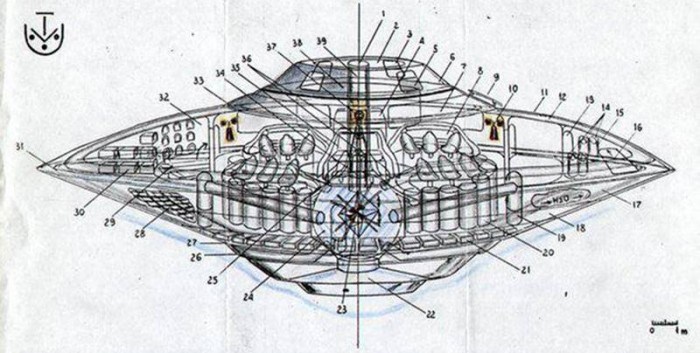
What he never did, in either version, was publish the mathematics. No equations, no derivations, nothing beyond the assertion that the work existed and was complete. That absence is the reason mainstream physics never engaged with the claim as a serious rival to relativity. A theory that exists only as a promise, however confidently made, isn’t something other physicists can test, extend, or refute. It simply sits outside the process science uses to establish whether an idea is right.
The Papers, and What Happened to Them
Tesla died on January 7, 1943, alone in his room at the Hotel New Yorker. His nephew, Sava Kosanović, a Yugoslav official, arrived at the hotel the morning after and suspected, by his own account, that someone had already been through his uncle’s belongings before he got there.
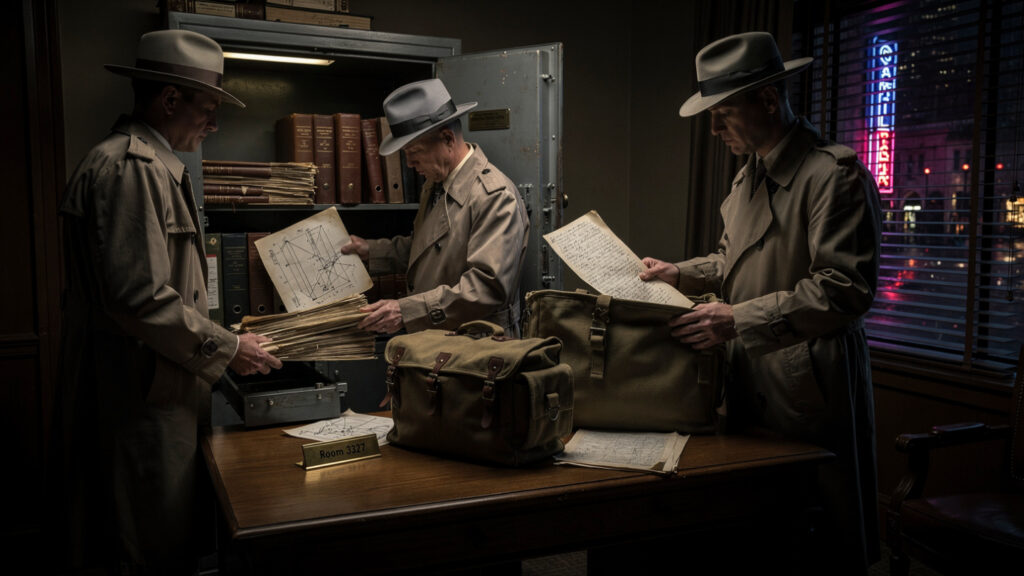
The federal government moved fast. Acting on wartime concerns, Tesla had claimed for years to have developed a powerful particle-beam weapon, a “death ray,” and officials were unwilling to risk that kind of claim falling into the hands of the Axis or, as the war’s alignment shifted, the Soviets. The Office of Alien Property took physical possession of Tesla’s effects, doing so at the direction of the FBI, whose director, J. Edgar Hoover, had the material classified “most secret.” Three weeks later, MIT electrical engineer Dr. John G. Trump, whose family name would become considerably more famous decades later through his nephew, was brought in to assess whether the papers contained anything of real scientific value. His verdict, later confirmed in declassified files, was blunt: the material was primarily speculative, philosophical, and promotional in character, and did not include sound, workable principles for achieving the results Tesla had claimed.
Kosanović spent years fighting for his uncle’s estate. A U.S. court finally recognized him as the rightful heir in 1952, and Tesla’s remaining papers and effects were shipped to Belgrade. By most accounts, roughly eighty trunks of material were sent. Only about sixty arrived. What happened to the other twenty, whether they were lost, withheld, or simply miscounted at some stage of the process, has never been resolved, and no government agency has offered an account that closes the discrepancy.

The FBI held onto its own files on the matter for decades before beginning to release them under the Freedom of Information Act, starting with roughly 250 pages in 2016 and followed by additional releases through 2018. Those documents confirm the broad outline above: the seizure, the classification, the Trump assessment, Hoover’s ongoing interest in Kosanović’s movements. They do not contain a lost gravity theory. If Tesla’s mathematics for the dynamic theory of gravity survived anywhere, it has not surfaced in any release to date, and the bulk of what remains of his archive now sits at the Nikola Tesla Museum in Belgrade, available to researchers but, as far as the public record shows, containing no completed unified theory of gravity.
The Vindication Claim That Doesn’t Quite Hold Up
A detail worth correcting directly, because it circulates constantly in retellings of this story: the discovery of gravitational waves is frequently cited as proof that Tesla was right and Einstein was wrong. The actual history runs the opposite direction. In the 1970s and 1980s, observations of the binary pulsar PSR 1913+16 showed the two neutron stars losing orbital energy at precisely the rate general relativity predicted if that energy were being radiated away as gravitational waves, a result that earned its discoverers the Nobel Prize and stands as one of the strongest confirmations of Einstein’s theory, not a challenge to it.
Tesla’s dynamic theory of gravity, to the extent it can be reconstructed from his public statements, was explicitly built to eliminate curved spacetime altogether. A discovery that confirms curved spacetime’s predictions to high precision confirms the framework Tesla was arguing against, not the one he was proposing. It’s a case where the retelling reverses what the evidence actually shows.
The Claim That Actually Drove the Seizure
It’s worth being clear about why the government moved as fast as it did, because the gravity theory itself wasn’t the trigger. Tesla had spent his final years publicizing a different and, to federal officials, far more urgent claim: a particle-beam weapon capable of destroying aircraft at a distance, which he referred to in public statements as a “teleforce” device and which the press nicknamed a death ray. He offered it, unsuccessfully, to several governments in the years before his death, framing it as a deterrent that could end offensive warfare outright. Whether the device was ever more than a concept Tesla was confident he could build is exactly the question Dr. Trump’s assessment was brought in to answer, and his conclusion, that the papers showed no workable new principles, applied as much to the death ray claims as to the gravity theory.
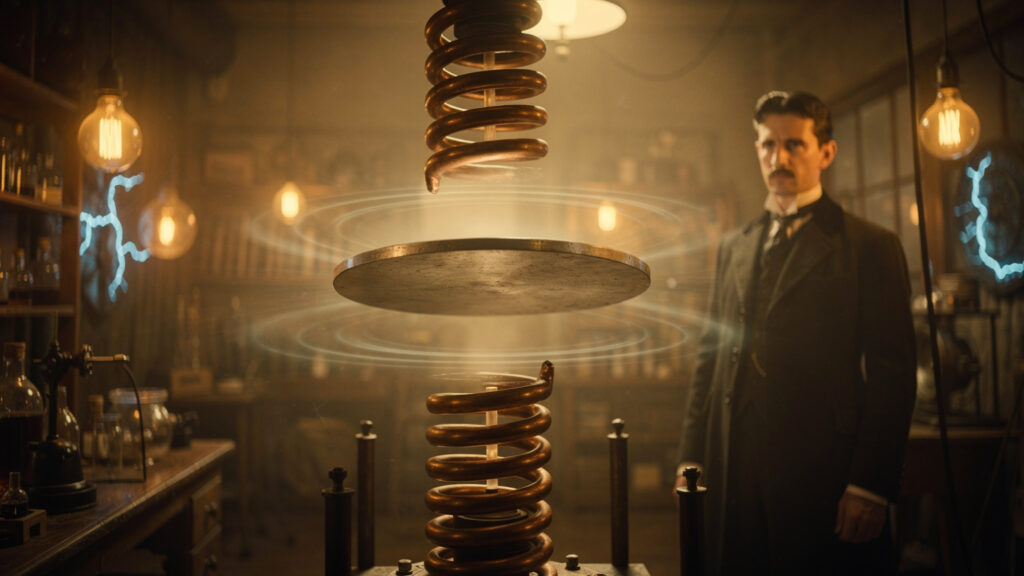
Wright-Patterson Air Force Base personnel reportedly took the death ray claims more seriously than Trump’s civilian review did, creating the same pattern seen throughout Tesla’s later career: confident public claims, private government disagreement about their merit, and no resolution released to the public before his archive was split between an American assessment that dismissed it and a Belgrade museum that preserved it without settling the question either way.
What’s Actually Left Unresolved
None of this requires inflating the story to make it worth telling. A man who held hundreds of patents and had already reshaped how electricity moves through the world made a specific, confident claim about having solved one of physics’s hardest problems, then died without writing any of it down where anyone could check it. The government that seized his papers concluded, in writing, that there was nothing usable there, and then lost roughly a quarter of what it shipped overseas. Sixty trunks made it to Belgrade. Twenty did not. No completed theory of gravity has ever turned up in any archive, declassified file, or museum catalog since.
Whether that’s because the theory never existed beyond the confidence of its announcement, or because it’s sitting in the missing twenty trunks somewhere it hasn’t yet been found, is not a question anyone has been able to answer in the eighty-plus years since Tesla made the claim. The birthday statement is the last time he spoke publicly about it. Nobody has spoken for him since.