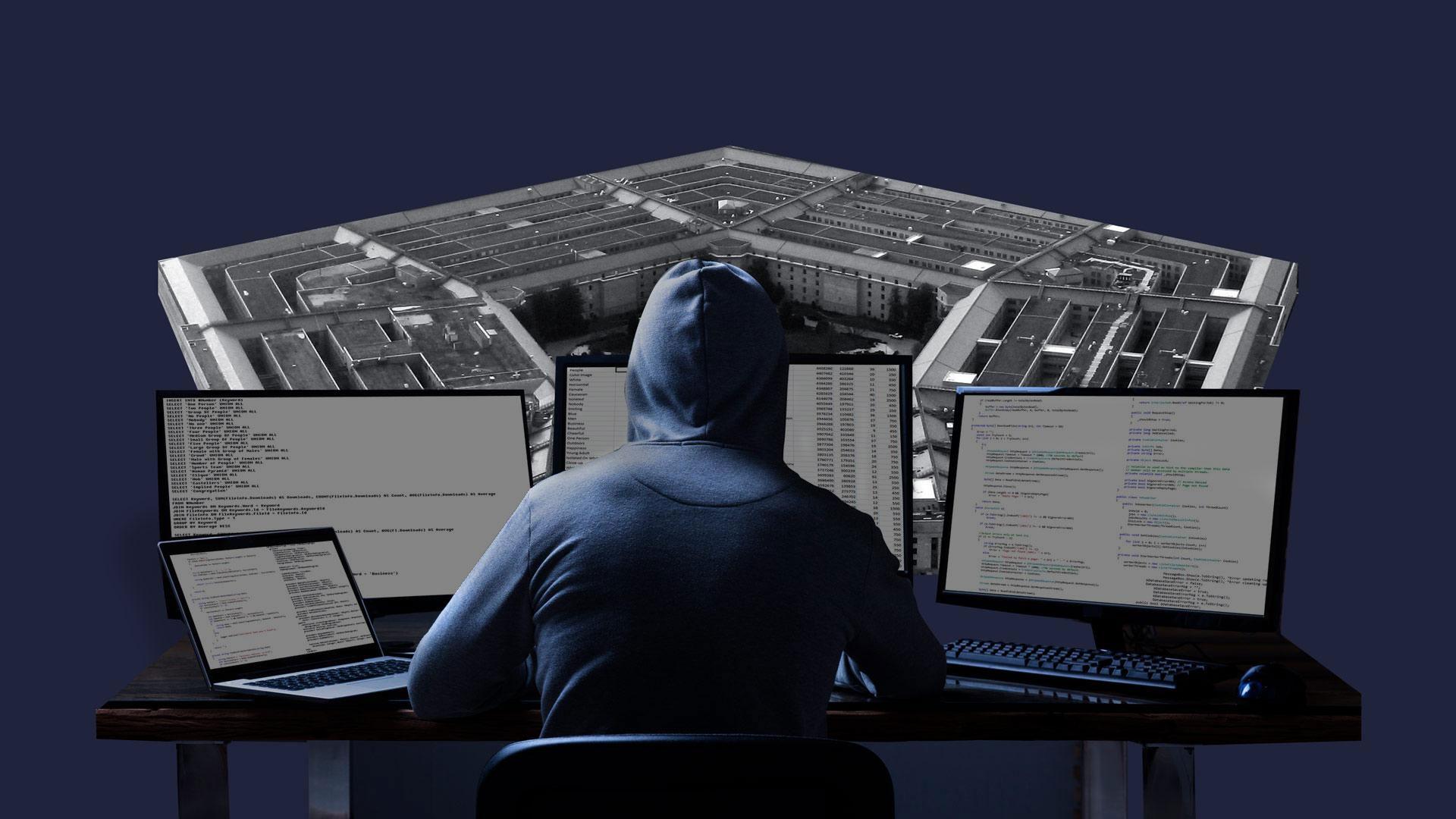
A Scottish hacker who became interested in the Disclosure project hacked the Pentagon and NASA computers over the course of the year in search of classified information about UFOs.
The password field was empty.
Gary McKinnon, a systems administrator from London, had written a Perl script that scanned US military computer networks for machines with administrator-level access and no password protection. In early 2001, sitting at his girlfriend’s aunt’s house in north London on a 56k dial-up connection, he ran the script against Pentagon systems for the first time.
The results came back with more open machines than he had expected.
For the next thirteen months, McKinnon accessed hundreds of computers across the Pentagon and NASA, working during American night hours to avoid detection, navigating through classified systems on a connection so slow that downloading a single high-resolution satellite image took several hours. He was looking for things: evidence of antigravity propulsion systems, zero-point energy technology, and the UFO information that the Disclosure Project’s witness testimonies had convinced him existed in classified government databases.
He found two things he had not expected.
The first was a satellite image database at NASA’s Johnson Space Center whose existence he had been told about by Disclosure Project witnesses. He could access the database but not download from it at any useful speed. In low-resolution preview mode, he found an image showing what he described as a large cigar-shaped object hovering above the Earth’s surface, photographed from orbit. The object had no visible seams. It had geodesic lines along both sides. It appeared manufactured rather than natural. He could not save it before his connection was interrupted.
The second finding was the one that has generated the most sustained discussion in the UAP research community.
In a file he accessed on a Pentagon network, McKinnon found a spreadsheet he described as a list of non-terrestrial officers: a table containing names, ranks, and ship assignments for what appeared to be a military personnel roster. The ships named in the spreadsheet did not correspond to any vessel in any public US Navy registry. The designation was non-terrestrial officers, not stationed aboard conventional naval vessels.
He did not print the file. He did not copy it. He read it on screen and his connection was terminated before he could record it in any other form.
This is the recorded account of what Gary McKinnon found. It appears in his own testimony, given to multiple journalists and in interviews over more than a decade, and it is consistent across those accounts. It has not been corroborated by any independent source. The spreadsheet he describes has not been independently located or confirmed. The satellite image has not been independently confirmed. The Pentagon has neither confirmed nor denied the files he describes.
What is independently verified is the hacking itself, the legal battle that followed, and the accusations the US government made about what he had done.
The Disclosure Project and Its Claims
Stephen Greer founded the Disclosure Project in 1993 with an institutional mission: to collect and present testimony from credentialed witnesses to UAP phenomena and government UAP programs, specifically targeting witnesses whose professional backgrounds and institutional positions gave their testimony a level of credibility that civilian witness accounts typically lack.

By 2001, the Disclosure Project had compiled testimony from approximately four hundred witnesses including former NASA employees, retired military officers, FAA officials, and intelligence community personnel. The project’s May 9, 2001 press conference at the National Press Club in Washington DC, held two months before McKinnon made his first Pentagon intrusion, presented two dozen of these witnesses before a press corps and produced the most extensive single-day collection of credentialed UAP witness testimony in the public record to that date.
Whether the Disclosure Project’s claims about government UAP programs are accurate depends on the credibility of its individual witnesses and the corroboration available for their testimony. The OES piece in this library covers the institutional framework of the Office of Naval Intelligence’s UAP research program whose existence was confirmed through FOIA and through subsequent congressional testimony. The Grusch congressional testimony piece covers the 2023 confirmation under oath of the program’s existence and scope.
What motivated McKinnon was not the general claim that UAP existed, which the Disclosure Project’s witness testimonies addressed. It was the claim, made by certain Disclosure witnesses, that classified databases within the Pentagon and NASA contained documentary evidence of UAP programs, including satellite imagery and program records, that the public had not been shown.
He decided to look for himself.
What Non-Terrestrial Officers Means
The finding that has generated the most sustained research interest from the McKinnon case is the non-terrestrial officer spreadsheet, not because it proves anything about US government contact with non-human intelligence, but because of what it implies if McKinnon’s description is accurate.
A spreadsheet listing officers designated as non-terrestrial with ship assignments whose vessel names do not appear in any public naval registry is consistent with several interpretations of varying plausibility.
The most straightforward interpretation within conventional military reality is that the spreadsheet relates to a classified space program whose personnel are designated as non-terrestrial in the sense of operating in the non-terrestrial environment of space, and whose vessels are classified spacecraft not publicly acknowledged. The US Space Force was not formally established until 2019, but classified military space operations including the X-37B orbital spacecraft program and earlier classified satellite programs have been confirmed as ongoing since at least the 1990s. A classified military space fleet whose vessels are not publicly acknowledged and whose personnel are designated as non-terrestrial in the operational sense is consistent with the known history of US military space programs.

The second interpretation, that the spreadsheet relates to a program involving non-human intelligences directly, is the interpretation that the UAP disclosure community has most often proposed. Whether any confirmed evidence supports a program of this character, beyond the Grusch congressional testimony’s general claims about non-human retrieved materials and programs hidden from congressional oversight, is not established in the publicly available record.
The third interpretation is that McKinnon misread or misremembered what he saw, that the spreadsheet had a different designation whose meaning he interpreted through the framework of the UAP information he had been reading before the intrusion.
McKinnon has been consistent in his description across more than two decades of interviews. Consistency of testimony over time is one of the factors that makes a witness account more credible rather than less, though it is not definitive evidence that the described object or document exists as described.
The non-terrestrial officer list remains the most significant claim in the McKinnon case and the one whose confirmation or denial by any independent source would most directly advance the question of what he actually found.
The Legal Battle and What It Revealed
The US government’s response to McKinnon’s intrusion was, from an institutional perspective, one of the most disproportionate legal responses in the history of computer crime prosecution, and the disproportionality itself is informative about the sensitivity of what McKinnon had accessed.
The US Department of Justice sought McKinnon’s extradition from the United Kingdom on charges whose maximum combined sentence was approximately sixty years. The charges included not only unauthorized access but allegations that his intrusions had deleted critical files, damaged systems, and compromised US defense capabilities in the immediate aftermath of the September 11 attacks.
McKinnon denied these allegations consistently and specifically: he said he had browsed systems and left messages mocking security practices but had not deleted or damaged anything. The distinction matters for the legal case because it is the difference between unauthorized access, a serious offense, and sabotage of defense systems, a catastrophically serious one.
Whether the damage allegations were accurate, or whether they were added to the charges to increase the extradition pressure and the potential sentence, is a question the British courts never definitively resolved because the case was eventually terminated without McKinnon facing trial in either country.
The British legal system’s decade-long resistance to extradition was unusual. The 2003 UK-US Extradition Treaty, which removed the requirement for the US to show prima facie evidence before British courts, was specifically designed to make extradition faster and easier. Its application to McKinnon should have been straightforward by its own terms.
The political intervention of Boris Johnson, then Mayor of London, Sting, Stephen Fry, and multiple members of Parliament in support of McKinnon’s case produced a level of public and political pressure that was disproportionate to the case’s conventional criminal significance. Computer intrusion prosecutions do not typically mobilize pop stars and future prime ministers.
Whether the political mobilization reflected genuine public concern about the disproportionate sentencing risk, genuine belief in McKinnon’s claims about what he had found, or a broader institutional instinct that something about the case required protection from American prosecution, is a question the public record suggests but does not definitively answer.

In October 2012, Home Secretary Theresa May blocked the extradition on human rights grounds, citing McKinnon’s Asperger syndrome diagnosis and the risk that extradition and potential imprisonment would produce a real risk of suicide. The Crown Prosecution Service subsequently announced it would not prosecute McKinnon in the United Kingdom because the evidence was located in the United States and a UK prosecution was not viable.
McKinnon faced no trial in either country. He was never cross-examined under oath about what he found. His claims were never tested against the institutional record in any formal proceeding.
The Pentagon’s files about what he accessed remain classified. The non-terrestrial officer spreadsheet, if it exists as he described, is in those files.
The Institutional Context
McKinnon’s intrusion occurred in 2001 and 2002, the same period as the Disclosure Project’s National Press Club testimony and several years before the series of UAP disclosure developments covered across this library’s UAP cluster.
The timeline of the broader UAP disclosure framework is relevant to evaluating McKinnon’s case. The Grusch congressional testimony in 2023 described programs hidden from congressional oversight that involved non-human retrieved materials and technology. The Nimitz encounter occurred in 2004. The Pentagon’s acknowledgment of the AATIP program came in 2017. The Navy’s acknowledgment that UAP represented a genuine phenomenon requiring systematic investigation came in 2019.
McKinnon’s 2001 intrusion preceded all of these. If he found a non-terrestrial officer spreadsheet in Pentagon systems in 2001, he was looking at documentation from a program that was not acknowledged to exist for the next two decades.
Whether the program he encountered in 2001 is the same program that Grusch described in 2023, or a different program, or no program at all, is the question that the two accounts’ shared general framework and separated details cannot resolve.
What the McKinnon case contributes to the broader recorded pattern is a claimed internal document, accessed from inside Pentagon systems by an individual with no institutional stake in its content, describing personnel and vessels whose designation is non-terrestrial. Whether the document he describes exists and contains what he described, or whether his account reflects a misreading of a document with a different meaning, or a false memory produced by the high-stakes emotional context of the intrusion, is the question that only access to the relevant Pentagon files would resolve.
Those files are classified. McKinnon cannot leave Britain. The vessels he described appear in no public registry.
What McKinnon Has Said Since
McKinnon’s post-case career as an SEO consultant is the biographical detail that the popular coverage of his case consistently misses as significant. A person who fabricated dramatic claims about UFO evidence to support a legal defense would have every incentive to continue amplifying those claims for commercial or reputational benefit. McKinnon has not done this. He gives occasional interviews and maintains consistent accounts of what he found, but has not built a media or commercial career around the claims.
This consistency is worth noting but should not be overweighted: a well-rehearsed account, true or invented, tends to stay consistent once it has been told many times, so consistency alone does not strongly distinguish genuine memory from a settled narrative. It is one small point in his favor, not decisive evidence.
The absence of the files themselves remains the definitive limitation. McKinnon described what he saw. He could not save any record of it. Whatever record exists is in classified systems he accessed once on a 56k modem connection that timed out before he could save anything.
He found a list of names and ships that appear in no public registry. He described a photograph of an object that matches no known aircraft or spacecraft. He read a designation that, if accurate, indicates a military personnel program operating outside the terrestrial environment.
He could not prove any of it.
The Pentagon spent a decade trying to put him in prison for finding it.