He delivered the final cut of Eyes Wide Shut to Warner Brothers on March 3, 1999.
He was dead four days later, on March 7. The official cause was a heart attack in his sleep at Childwickbury Manor in Hertfordshire, England. He was seventy years old. His family physician confirmed the death.
The timing is on record. The cause of death is on record. Whether the timing is coincidental requires asking what Stanley Kubrick had just delivered to a major Hollywood studio after fifteen years of work, and what that film contained.
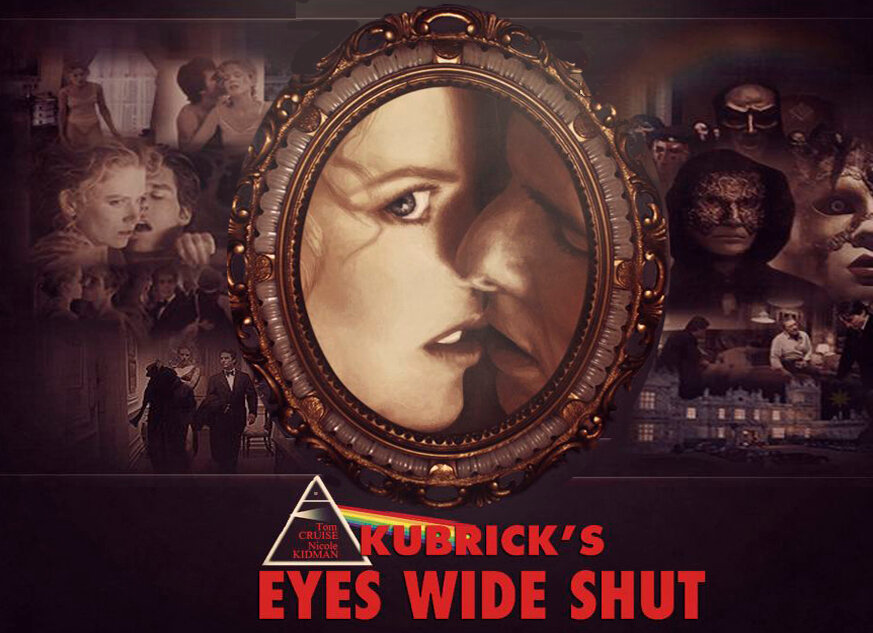
Eyes Wide Shut depicts a secret society whose membership includes figures at the apex of New York financial and political life. The society holds rituals whose sexual and ceremonial character the film presents not as exotic fantasy but as the operational reality of power in late twentieth century America. The film’s protagonist, a Manhattan physician, stumbles into one of these rituals and is subsequently warned, with calm and credible menace, that his survival depends on his silence about what he has witnessed.
Whether Kubrick intended this depiction as a literal exposé, a symbolic representation, or a dramatization of an atmospheric sense about elite behavior that he had acquired over decades of proximity to the most powerful figures in American entertainment and politics, he did not live to clarify.
The film was his last. The gap between the final cut’s delivery and his death was four days.
The Man and His Methods
To understand the significance of Kubrick’s death, his character and working methods need to be understood as well recorded rather than as constructed by posthumous conspiracy.
Kubrick’s perfectionism appears in the accounts of everyone who worked with him. He was known for taking years or decades between films. The Shining required 127 days of shooting for a single scene in some cases. Eyes Wide Shut took 400 days of principal photography spread across fifteen months, a shooting schedule so extended that it set a Guinness World Record for the longest continuous movie shoot. He controlled every aspect of his productions with an intensity that his collaborators described as bordering on obsession and that he himself described as the necessary condition for making the work he wanted to make.
His fear of flying, recorded in multiple accounts, was not manageable anxiety. It prevented him from traveling internationally for the last three decades of his life. He shot Eyes Wide Shut entirely in England, reconstructing New York locations in Pinewood Studios rather than filming in New York, specifically to avoid flying. This reconstruction, recorded in the production records, is one of the most elaborate production design achievements in film history.
The recorded paranoia of his final years is more ambiguous. His family and collaborators describe him as genuinely believing that he was being monitored and that his communications were intercepted. His daughter Vivian describes a father who became increasingly preoccupied with the dangers of disclosure in the years he was working on Eyes Wide Shut. Whether this represented delusional deterioration, the intensification of a personality trait that had always been present, or a rational response to knowledge he had acquired about something real, the people who knew him best have not reached a consensus.
Eyes Wide Shut’s Content
The Fidelio ritual sequence in Eyes Wide Shut is the film’s most discussed element and the one whose content has generated the most sustained interpretive attention.
A large gathering of masked and robed figures performs a ceremony in a country estate. The ceremony has a hierarchical structure, with a figure in red presiding and participants in black robes forming a ritualistic audience. The sexual component of the ceremony is presented not as the point of the gathering but as one element within a larger ritual whose full meaning the protagonist, and the audience, cannot access. The presiding figure speaks incantations before the ceremony begins. When the protagonist is discovered as an uninitiated intruder, the response is not confusion or embarrassment but a swift and ceremonially organized challenge that makes clear his life is at risk.

Kubrick adapted the sequence from Arthur Schnitzler’s 1926 novella Traumnovelle, in which the equivalent scene is a bourgeois erotic gathering rather than a specifically ritualized ceremony. The changes Kubrick made to Schnitzler’s source material, the addition of the ceremonial structure, the robes, the presiding figure, and the specifically menacing organizational response to the intruder, represent Kubrick’s own contribution to the scene rather than adaptations from the source.
Whether Kubrick drew on knowledge of actual elite ritual practices or constructed a symbolic composite from the cultural materials available to someone who had spent decades at the intersection of money, power, and creative work, the design choices he made in constructing the scene suggest a filmmaker who had formed a definite view about what he was depicting and wanted to depict it accurately.
The Rothschild connection has been recorded in the production design choices: Kubrick filmed the exterior of the estate at Luton Hoo in Bedfordshire, a country house historically associated with the Wernher family. The interior rituals were filmed at Mentmore Towers in Buckinghamshire, a Rothschild family property. Whether these location choices represent deliberate attribution or simply the availability of appropriate architectural settings for the required period and scale is not established by any known statement from Kubrick.
The NASA Relationship and 2001
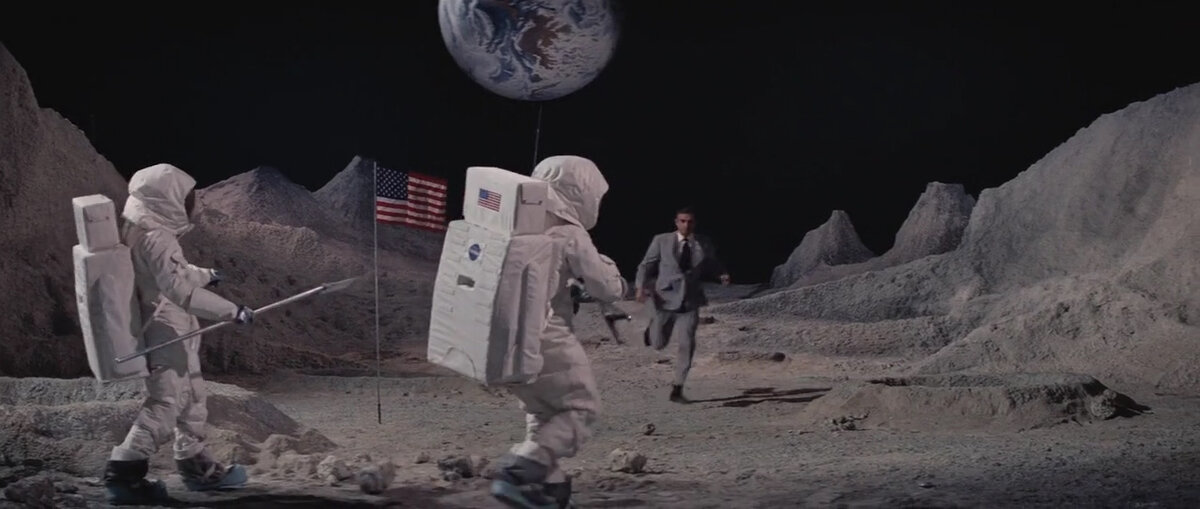
The well established relationship between Kubrick and NASA during the production of 2001: A Space Odyssey provides the factual foundation that the moon landing staging conspiracy theory builds on, even though the conspiracy claim is not supported by the evidence.
NASA provided technical consultants to 2001 during its production from 1964 to 1968, during the period when the Apollo program was being developed and before any moon landing had occurred. The consultation appears in the production records and in the accounts of production designer Harry Lange, former NASA employee Douglas Trumbull, and other participants. NASA’s motivation for consulting on 2001 is on record: the agency believed that an accurate depiction of space travel in a major film would build public support for the space program and for the Apollo missions specifically.
The visual sophistication that 2001’s depictions of space travel achieved, particularly the zero-gravity sequences and the lunar surface footage, was significantly more realistic than any previous film depiction of space. The techniques Kubrick and his production team developed, including the front projection technique used for the Dawn of Man sequence and the rotating set used for the zero-gravity sequences, established a new benchmark for visual realism in science fiction cinema.
The conspiracy argument uses this established competence to support the claim that Kubrick was subsequently commissioned to produce the Apollo landing footage when the actual landings proved technically or logistically impossible. This argument is not supported by the evidence and is specifically contradicted by the Soviet Union’s independent tracking and confirmation of the Apollo missions, the retroreflectors that observatories worldwide have been using for laser ranging experiments since their deployment, and the Apollo geological samples that independent laboratories worldwide have analyzed and catalogued.
The relationship between Kubrick and NASA is interesting and worth examining because it establishes a proximity between the most technically sophisticated filmmaker of his period and the most ambitious technological project of the same period, and because it provides the factual foundation for a conspiracy theory that, whatever its inaccuracies about moon landing staging, raises genuine questions about the relationship between creative and political power in the Cold War period.
The Shining’s Visual Program
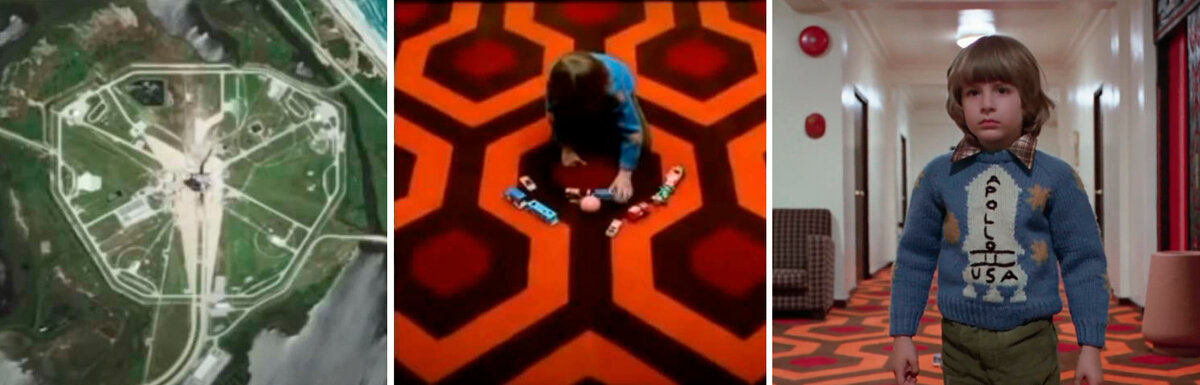
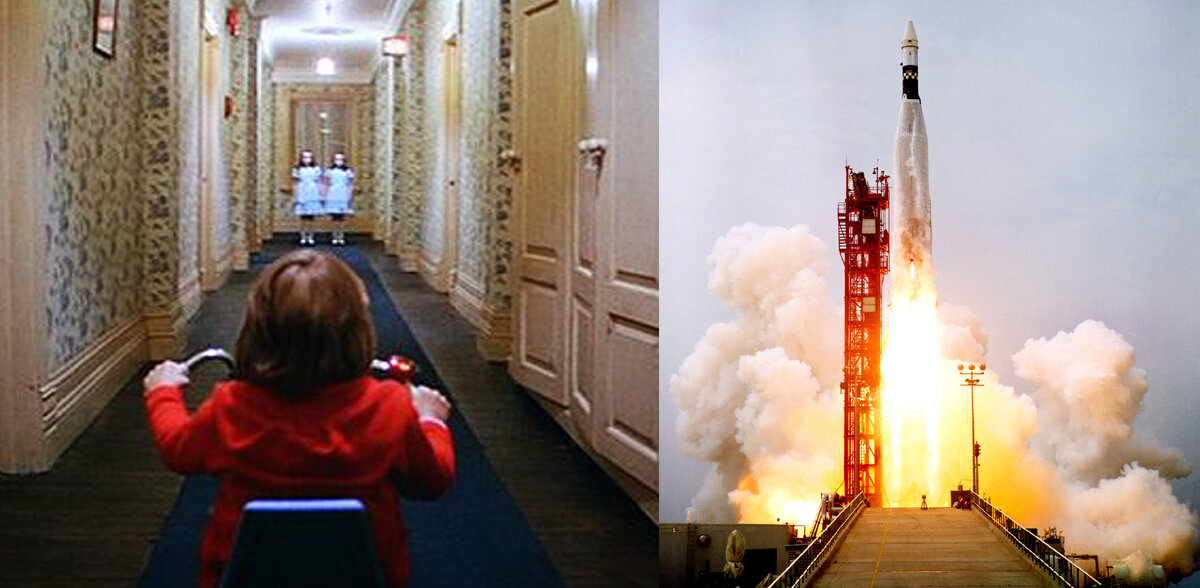
The visual elements of The Shining that conspiracy researchers have identified as symbolic references to the Apollo program appear in the film and their presence is not disputed. The interpretation of those elements as a conscious confession about moon landing staging is not recorded in any statement from Kubrick and is contradicted by the known facts about the Apollo missions.

Danny’s Apollo 11 sweater appears in the film’s visual record. The hexagonal carpet pattern has been noted by multiple researchers. Room 237’s numerical designation has been connected to the approximate Earth-Moon distance of 237,000 miles by conspiracy researchers. These elements are present in the film.
The documentary Room 237, produced by Rodney Ascher in 2012, covers multiple incompatible interpretive frameworks that different researchers have applied to The Shining’s visual program, including the Apollo conspiracy reading, a Native American genocide reading, a Holocaust reading, and others. The documentary’s presentation of these competing readings without endorsing any of them is the intellectually honest approach to the film’s visual density.

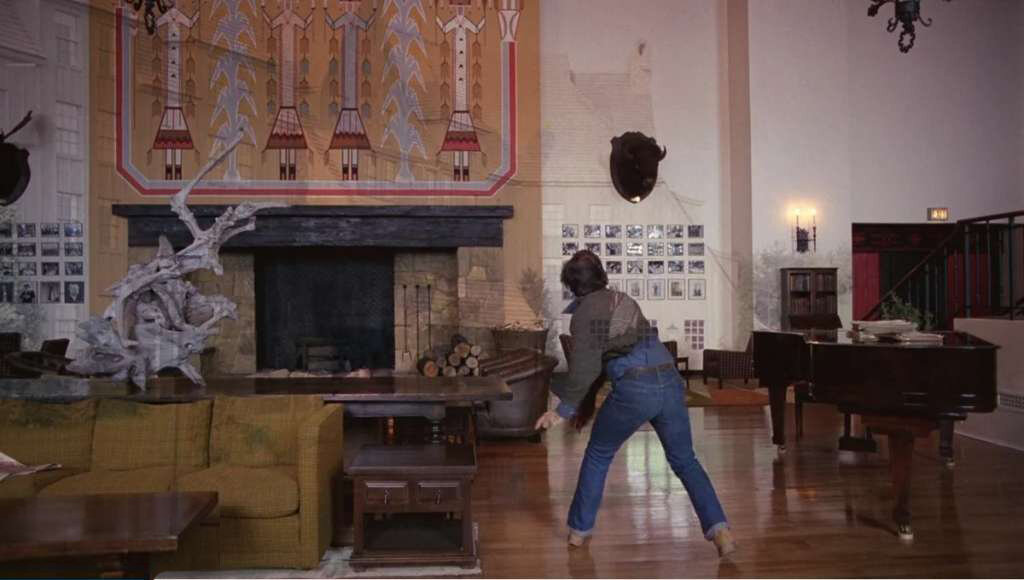
Kubrick’s visual intelligence and his well known practice of embedding multiple layers of meaning in every frame of his films makes The Shining genuinely amenable to symbolic reading. His well established working method, in which every element of the frame was consciously chosen rather than incidentally present, means that the presence of visual elements cannot be dismissed as coincidental. Whether those elements encode a confession about Apollo staging, a general commentary on American mythology, or something that resists reduction to any single reading is a question whose answer requires either firm evidence of Kubrick’s intentions or the kind of careful visual analysis that takes the film’s full context into account rather than selecting confirming details.
What the Death Establishes
Kubrick’s death on March 7, 1999 is a matter of record. The circumstances are recorded by his family and his physician. No autopsy was conducted. An autopsy was not legally required given that he died in the presence of his physician and under circumstances consistent with the cardiac event that was recorded as the cause of death.
The absence of an autopsy is not itself evidence of suspicious death. Most deaths in England do not require autopsy, and the presence of a treating physician at the time of death satisfied the legal requirements for certification without autopsy. The absence of toxicological analysis means that the claim that Kubrick was poisoned by a substance that simulates cardiac arrest cannot be ruled out by the available evidence, but neither can it be ruled in.
The four-day gap between the final cut’s delivery and the death is on record and remains one of the most striking coincidences in the history of cinema, regardless of its causal significance. Whether it is a coincidence or a consequence depends on whether Eyes Wide Shut contained knowledge that was considered dangerous by the people it depicted or by institutions with the capacity and motivation to act on that assessment.
The confirmed fact that Warner Brothers subsequently edited Eyes Wide Shut after Kubrick’s death, inserting digitally created figures to obscure explicit content in order to achieve the R rating that the studio required, produced allegations from Kubrick’s collaborators that the version released to the public was not the version Kubrick had delivered on March 3. Whether the studio’s editing was purely motivated by the commercial rating requirement or whether it affected the film’s substantive content in ways connected to its elite ritual depictions is not established by the available record.
Kubrick said he wanted to make films that used a language that went beyond words, that created an experience that the viewer did not have to comprehend intellectually to feel. His last film depicted an elite secret society’s rituals with a specificity that its director’s well known methods suggest was deliberate and researched rather than casually assembled. He delivered the final cut four days before he died.

Whether he told a story that was too close about something too real, or whether he crafted one final nightmare of suggestion and ambiguity to end a career built on the controlled deployment of dread, the record does not unambiguously resolve.
The film is still showing. Kubrick is not available to clarify.